
The invention of the modern bra, a garment that has become a ubiquitous part of most women’s wardrobes, is a relatively recent phenomenon in the grand sweep of human history. For millennia, women navigated their lives, their comfort, and their stylistic expressions without the undergarments we take for granted today. Understanding what women wore before bras isn’t just an exercise in historical curiosity; it offers a fascinating glimpse into evolving societal norms, the practicalities of daily life, technological advancements (or lack thereof) in textile and garment construction, and the very concept of the female form and its presentation.
While the modern bra as we know it emerged in the early 20th century, the need to support, shape, or simply conceal the breasts has always existed. The solutions adopted varied dramatically across cultures, time periods, and even social strata. These pre-bra garments were not always solely about support; they were also integral to modesty, hygiene, warmth, and fashion. Examining these historical practices reveals a rich tapestry of ingenuity and adaptation, often reflecting the materials and technologies available at the time, and the societal expectations placed upon women.
The journey before the bra is a story of natural fibers, clever tailoring, and a nuanced understanding of the female body in its varied stages of life. It’s a narrative that challenges our modern assumptions about necessity and comfort, reminding us that what we deem essential is often a product of recent innovation and cultural conditioning.
The Dawn of Garmentry: Early Forms of Breast Support
Long before the advent of elastic and structured cups, women relied on simpler, yet often highly effective, methods to manage their breasts. The earliest forms of clothing were driven by necessity: protection from the elements and a degree of modesty. In prehistoric and ancient societies, garments were often rudimentary, fashioned from readily available materials like animal hides, woven plant fibers, or rough spun wool.
Ancient Civilizations: Beyond the Simple Tunic
In ancient Egypt, depictions show women wearing simple linen garments that often covered the breasts, or sometimes left them exposed depending on the context and social standing. When concealment or a degree of support was desired, variations of a band or a wrap were common. These might have been simple strips of cloth, tightly wound around the torso and chest. The primary goal was often to prevent discomfort, particularly during physical labor or activities like breastfeeding.
The Greeks and Romans also utilized wrapped fabrics. The strophion in ancient Greece was a band of wool or linen that could be tied around the breasts. This was not a rigid structure but rather a form of binding that offered support and could be adjusted for comfort. Similarly, Roman women might wear a fascia, which served a similar purpose. These were essentially long bandages that could be wrapped in various ways to provide a custom fit. Their effectiveness would have been dependent on the tightness of the wrap and the material used. Wool, being somewhat elastic, might have offered more give than rigid linen.
The practicalities of life in these eras meant that clothing had to be functional. Women were actively involved in agriculture, domestic duties, and childcare. Garments that restricted movement or were prone to slipping would have been impractical. The wrapped band approach offered a degree of adjustability that could accommodate different body types and varying needs throughout the day, especially for nursing mothers. The visible absence of anything resembling a modern bra in ancient art is striking, suggesting that if support was provided, it was achieved through integrated garment design or discreet external bands.
The Medieval Period: Layering and the Looser Silhouette
In medieval Europe, the prevailing fashion for women often featured loose-fitting tunics and gowns. The silhouette was generally less form-fitting than in later periods, and as a result, overt breast support was less of a sartorial focus. However, layering was a crucial aspect of clothing construction. Women would wear chemises or smocks – undergarments typically made of linen – directly against the skin. These chemises often extended to the knee or even the ankle.
While not designed for uplift or shaping, the multiple layers of fabric provided a degree of modesty and a subtle buffer against the elements. The neckline of these chemises could vary, from high necks for warmth and modesty to lower cuts that might be revealed by outer gowns. Some historical interpretations suggest that the chemise, when drawn snugly, could offer a minimal level of support. The focus of medieval fashion was on flowing lines and often rich fabrics for outerwear, which tended to obscure the natural shape of the body rather than emphasize it.
For women engaged in strenuous physical work, the layered approach would have offered some practical benefits, such as absorbing sweat and providing a degree of protection. Nursing mothers would have found the ease of access provided by the chemise particularly advantageous, allowing them to nurse their babies without completely disrobing. The absence of a structured undergarment for breast support during this period underscores a different aesthetic and a less emphasized focus on accentuating the bust.
Evolving Needs and Early Innovations: From Binding to Banding
As societies evolved and fashion trends shifted, so too did the approaches to breast management. The Renaissance and subsequent periods saw a gradual move towards more structured garments and a greater emphasis on defining the female form. This shift created a demand for undergarments that could shape and support the body in new ways.
The Corset: A Precursor to Support and Shaping

The corset, which became a dominant garment for women from the 16th century onwards, played a significant role in the history of undergarments. While primarily designed to cinch the waist and create an hourglass figure, corsets also extended upwards to the bust. Early corsets were often made of stiff materials like whalebone or heavy canvas, and were designed to create a smooth, conical shape from the bust down to the hips.
Crucially, the upper part of the corset provided significant support and lift to the breasts. They were often shaped with seams and sometimes even with padded cups to achieve the desired fashionable silhouette. The breast area of the corset could be quite structured, pushing the breasts upwards and together. This was a far cry from the loose garments of earlier eras, reflecting a burgeoning interest in altering and enhancing the natural body shape for aesthetic purposes.
However, the corset was a restrictive garment. Its rigidity and tight lacing could lead to discomfort, breathing difficulties, and even physical deformities over time. Despite these drawbacks, it remained a staple of women’s fashion for centuries, demonstrating the lengths to which women would go to conform to the prevailing beauty standards. The corset, in its way, served as a functional predecessor to the bra, fulfilling the need for breast support and shaping, albeit in a more all-encompassing and often less comfortable manner.
The 19th Century: The Rise of Separate Supports
As the 19th century progressed, there was a growing recognition of the discomfort and potential health issues associated with the full corset. This led to a greater interest in garments that focused specifically on breast support without the extreme waist-cinching. The concept of a separate breast support began to emerge.
Early iterations of what we might recognize as a precursor to the bra started to appear. These were often simple bandeaus or camisoles with some form of integrated support. Some designs featured drawstrings or lacing at the front or back to adjust the level of support. Others might have incorporated internal cups or pockets for the breasts, offering a degree of separation and lift. These garments were typically made from lighter fabrics than corsets and aimed to provide comfort alongside a modicum of shaping.
The technological advancements of the Industrial Revolution, such as improved sewing machines and the availability of new materials like elastic, also began to influence garment construction. While elastic was not yet widely used in its modern form, the principles of elasticity and stretch were starting to be explored in textiles. The increasing availability of ready-made clothing also played a role, as standardized patterns allowed for the production of more consistent and accessible undergarments. The late 19th century was a period of experimentation, laying the groundwork for the more specialized and comfortable breast support garments that would soon follow.
The Birth of the Modern Bra: From Innovation to Everyday Essential
The early 20th century marked a turning point, with the development and popularization of garments specifically designed as individual breast supports. This period saw a convergence of social change, technological innovation, and evolving fashion trends that led to the bra we know today.
Early 20th Century Innovations: The “Brassiere” Emerges
The term “brassiere” itself hints at its origins. It was derived from the French word for “arm,” reflecting early designs that might have encompassed the bust and upper torso. Several inventors and designers are credited with creating early versions of the modern bra. Mary Phelps Jacob (later Caresse Crosby) is famously credited with patenting the first modern bra in 1914, using two handkerchiefs and some ribbon. Her design offered a lighter, more flexible alternative to the boned corset, allowing for greater freedom of movement.
Another key development was the increasing use of elastic. By the 1920s, elastic was becoming more readily available and was incorporated into bra designs to provide a snug, yet comfortable, fit. This allowed for better shaping and support without the rigidity of earlier garments. The concept of cups, designed to hold and separate the breasts, also became more refined.
These early bras were often quite simple in design, focusing on function. They were made from fabrics like cotton and silk, and were available in a range of sizes, though sizing was not as standardized as it is today. The societal shift towards more active lifestyles for women, particularly after World War I, further fueled the demand for less restrictive clothing and undergarments.
The Bra’s Ascendancy: From Niche to Necessity
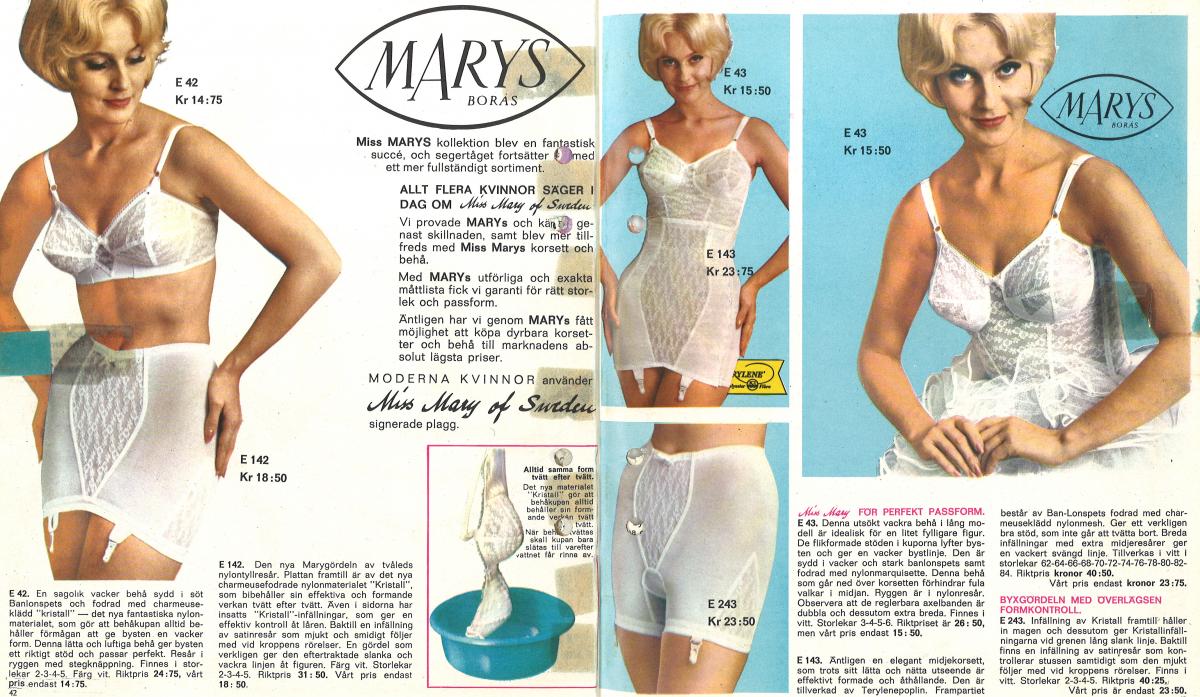
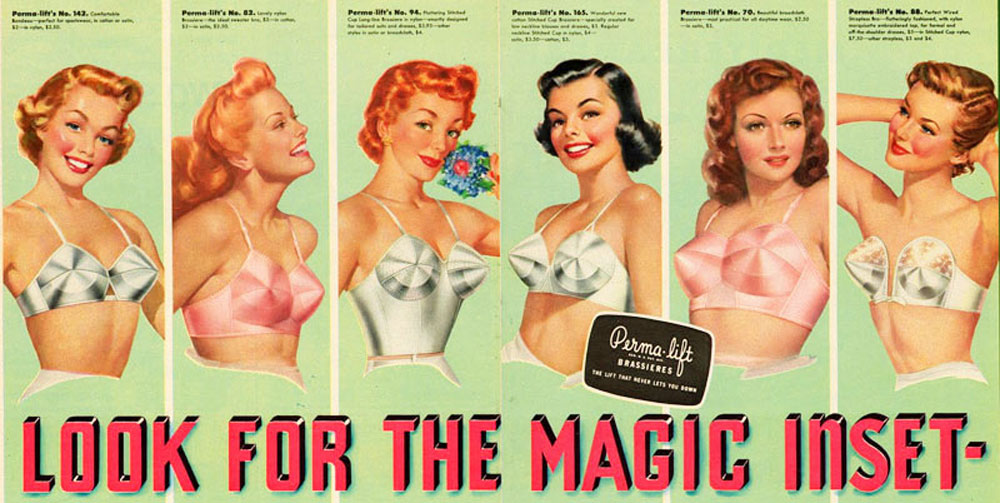
The 1930s and 1940s saw the bra gain significant traction in popular culture. Hollywood actresses, with their emphasis on glamorous silhouettes, helped popularize the idea of a well-supported bust. The development of new manufacturing techniques and materials, including the rise of synthetic fabrics like nylon, further refined bra design and made them more durable and affordable.
The post-World War II era witnessed the bra solidify its place as an indispensable item in most women’s wardrobes. Different bra styles emerged to cater to various fashion needs and desired silhouettes, from the pointed “bullet” bras of the 1950s to the more natural shapes that became popular later. The concept of “uplift” and “support” became central to bra marketing.
The evolution of the bra mirrors broader societal changes concerning women’s roles, fashion, and perceptions of the female body. From the natural forms of ancient times, through the restrictive reshaping of the corset, to the specialized design of the modern bra, the journey reflects a continuous negotiation between comfort, aesthetics, practicality, and the ever-changing cultural landscape. What women wore before bras is a testament to human adaptability and the enduring quest for garments that serve both function and form.
aViewFromTheCave is a participant in the Amazon Services LLC Associates Program, an affiliate advertising program designed to provide a means for sites to earn advertising fees by advertising and linking to Amazon.com. Amazon, the Amazon logo, AmazonSupply, and the AmazonSupply logo are trademarks of Amazon.com, Inc. or its affiliates. As an Amazon Associate we earn affiliate commissions from qualifying purchases.