
The Colosseum stands today as an enduring, albeit weathered, testament to the architectural prowess and imperial ambition of ancient Rome. Its iconic silhouette, even in ruin, commands awe and wonder, drawing millions to its formidable presence each year. Yet, for all its current grandeur, the mind naturally wanders: what did this colossal amphitheater truly look like in its heyday, vibrantly alive and teeming with tens of thousands of spectators? How did its pristine facade, its intricate interior, and its dynamic operational systems function visually? Answering this seemingly simple question is anything but straightforward, demanding a fascinating interplay of historical research, archaeological discovery, and, increasingly, cutting-edge technology. Far from a mere academic exercise, the quest to digitally reconstruct the Colosseum’s past appearance is a vibrant field within technological innovation, pushing the boundaries of 3D modeling, virtual reality, and data visualization to bridge millennia.
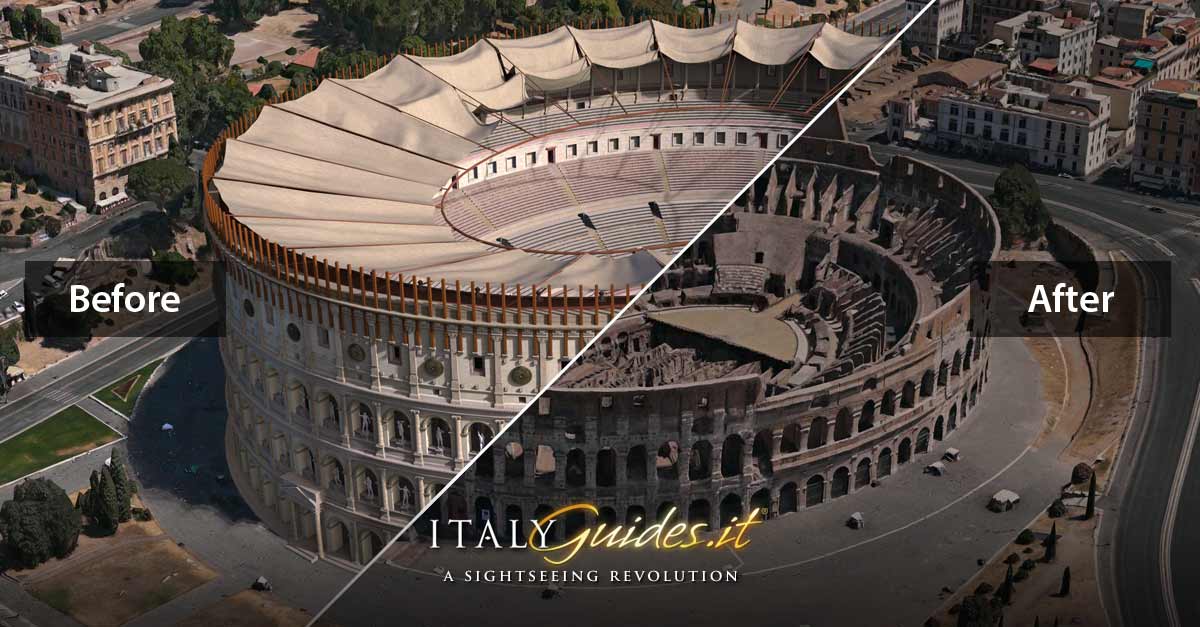
The Elusive Grandeur: Why Reconstructing Ancient Roman Architecture is a Tech Challenge
Understanding the true visual splendor of the Colosseum as it stood in the 1st century AD is a monumental undertaking. Time, human intervention, and the elements have taken an immense toll on what was once a gleaming marvel. Recreating its original appearance requires more than just imagination; it necessitates a rigorous, data-driven approach, often enabled by the latest technological advancements.
The Ravages of Time: Degradation and Loss of Original Features
The Colosseum, officially known as the Flavian Amphitheatre, was inaugurated in 80 AD. For centuries, it served as the epicentre of Roman entertainment, a stage for gladiatorial contests, animal hunts, and public spectacles. However, its glorious reign eventually succumbed to decline. Earthquakes, particularly devastating ones in 847 and 1349, caused significant structural damage. Neglect followed, and the Colosseum became a convenient quarry for building materials during the Middle Ages and Renaissance. Its marble seating, decorative statues, and outer façade stones were systematically plundered to construct palaces, churches, and other structures across Rome. What remains today is largely the inner concrete and brick skeleton, stripped of much of its decorative skin. This extensive loss of original features means that any attempt to visualize its complete appearance must contend with vast missing data points.
Piecing Together the Past: The Scarcity and Interpretation of Historical Records
Beyond the physical ruins, historians and archaeologists rely on a mosaic of historical records to inform their reconstructions. Ancient texts, Roman coins depicting the amphitheater, fragments of marble maps like the Forma Urbis Romae, and contemporary artwork offer tantalizing glimpses into the Colosseum’s initial form and function. However, these sources are often incomplete, subject to interpretation, or represent idealized rather than strictly accurate portrayals. Descriptions might focus on events rather than architectural specifics, and artistic representations may prioritize symbolic meaning over precise detail. The challenge lies in synthesizing these diverse and often fragmented sources, interpreting their implications for architectural form, and discerning which elements were original versus later additions or modifications. This complex interpretative process is where technological tools can offer consistency, scalability, and the ability to test hypotheses visually.
The Imperative for Accuracy: Bridging Gaps with Technological Innovation
Given the significant gaps in both physical evidence and historical documentation, modern technological innovation becomes indispensable. Digital tools offer the means to meticulously document what does remain, extrapolate what has been lost based on comparative archaeology and architectural principles, and present these reconstructions with a high degree of fidelity and interactivity. The imperative is not merely to create an aesthetically pleasing image, but to build a scientifically accurate, verifiable, and adjustable model that can evolve as new evidence emerges. This demands robust software, powerful computing, and a multidisciplinary approach combining classical scholarship with advanced digital expertise.
Digital Archaeology and 3D Modeling: Rebuilding the Colosseum Brick by Digital Brick
The core of modern Colosseum reconstruction lies in digital archaeology and 3D modeling. These technologies transform raw data from existing ruins and historical documents into comprehensive, photorealistic virtual representations.
Laser Scanning and Photogrammetry: Capturing Every Available Detail
The first step in any accurate digital reconstruction is to capture the existing physical structure with extreme precision. Laser scanning uses high-definition scanners to emit laser pulses that bounce off surfaces, creating millions of data points (a “point cloud”) that accurately map the dimensions and contours of the remaining Colosseum. This process is non-invasive and incredibly detailed, capturing even the minutiae of weathered stones and eroded surfaces. Similarly, photogrammetry involves taking thousands of overlapping photographs from various angles and using specialized software to stitch them together into a 3D model. This method is particularly effective for capturing texture and color information. Together, these techniques provide an unparalleled digital blueprint of the Colosseum as it stands today, forming the bedrock upon which the lost elements can be virtually reinstated.
CAD and 3D Reconstruction Software: From Data Points to Detailed Structures
Once the existing structure is digitally mapped, archaeological and architectural expertise takes over within sophisticated Computer-Aided Design (CAD) and 3D modeling software. Engineers and artists use programs like AutoCAD, Revit, SketchUp, Blender, or 3ds Max to interpret the laser scan data. They then “sculpt” the missing elements – the outer marble facade, the intricate statuary in the arches, the retractable awnings (velarium), and the multi-tiered seating – based on historical records, analogous Roman structures (such as the Theatre of Marcellus or the Colosseum’s sister amphitheater in Capua), and educated archaeological inferences. This process involves painstaking attention to detail, ensuring that architectural styles, proportions, and construction methods align with Roman engineering practices. Different layers of information can be added, allowing for the visualization of various construction phases or hypothetical interpretations.
Materiality and Color: Simulating Original Textures and Finishes
Beyond mere form, recreating the Colosseum’s appearance demands an understanding of its original materials and colors. Ancient texts describe the use of gleaming white travertine limestone for the exterior, adorned with marble statues and decorative elements. The interior seating was also marble, likely in various shades, while the arena floor was covered in sand (arena, from which the term derives). Digital artists leverage advanced rendering engines to simulate these materials with photorealistic accuracy. They research the types of marble used, their original hues before centuries of exposure and pollution, and the presence of painted details or bronze accents. This involves creating digital textures and shaders that mimic the reflectivity of polished marble, the roughness of stucco, or the warmth of painted frescoes, bringing a vibrant, historically informed color palette back to the structure.
Immersive Visualization: Bringing the Colosseum’s Past to Life Through VR and AR
Digital reconstructions are not just static images; they are dynamic environments that can be experienced. Virtual Reality (VR) and Augmented Reality (AR) technologies are revolutionizing how audiences interact with the Colosseum’s past, transforming passive viewing into active, immersive exploration.
Virtual Reality Tours: Stepping Back into Imperial Rome
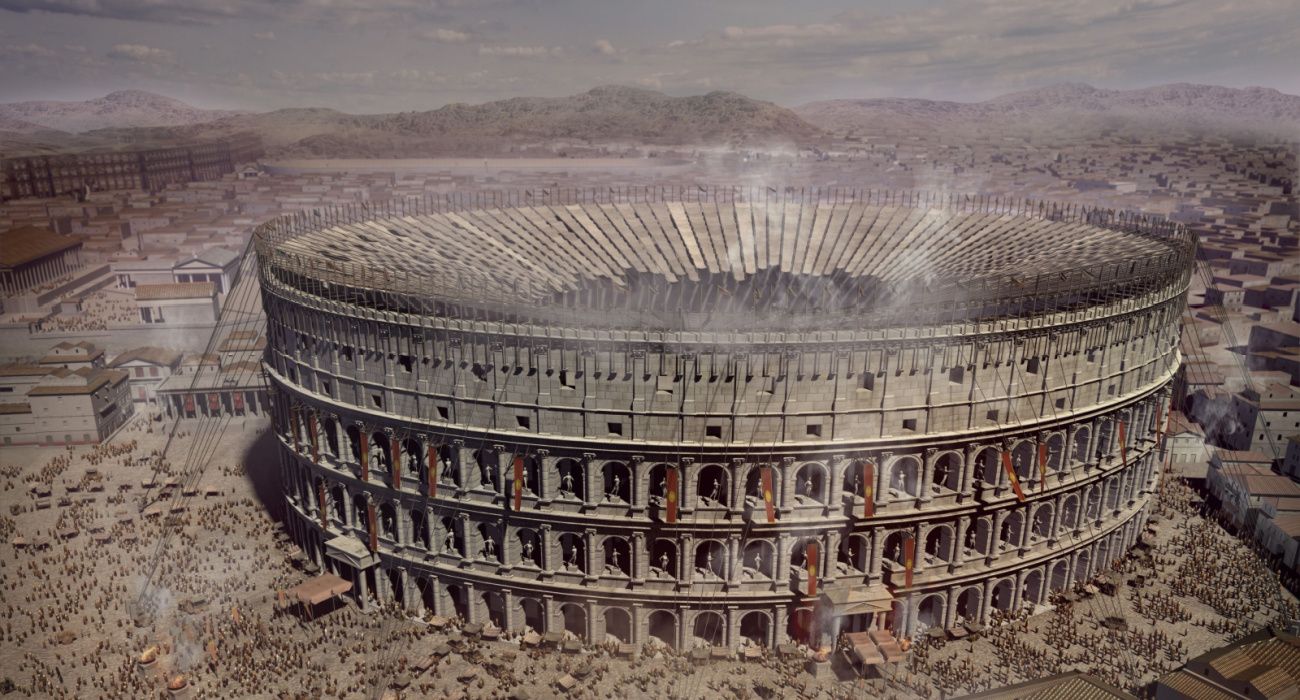
VR applications allow users to don a headset and be transported directly into a fully reconstructed Colosseum of 80 AD. These experiences are far more profound than simply viewing a video; they allow for free movement within the digital space, offering 360-degree views from various vantage points – from the emperor’s box to the gladiators’ holding cells beneath the arena. Users can witness the bustling crowds, hear the roar of the audience, and even observe the intricate mechanisms of the hypogeum (underground network) in action. Companies like HistoryView and Parco Colosseo have developed such experiences, offering visitors to Rome or users worldwide the chance to experience the amphitheater as it once was, complete with digitally recreated shows and soundscapes, providing an unparalleled sense of presence and historical context.
Augmented Reality Overlays: Experiencing History On-Site
Augmented Reality offers a different, yet equally powerful, form of immersion. Visitors to the actual Colosseum can use AR-enabled smartphones or tablets to hold their device up to the ruins and see a real-time overlay of the reconstructed structure appear on their screen. This allows for a direct comparison between the present-day ruins and their former glory, helping to visualize the missing walls, statues, and decorative elements precisely where they once stood. This “see-through” approach enhances the understanding of the site in situ, making the history tangible and personal. AR apps can also provide interactive information, highlighting specific architectural features or explaining the functions of different areas as viewed through the digital lens.
Interactive Digital Exhibits: Engaging New Generations
Beyond dedicated VR/AR experiences, interactive digital exhibits play a crucial role in bringing the Colosseum’s appearance to a wider audience. Large touchscreens in museums and visitor centers can host detailed 3D models that users can rotate, zoom into, and explore at their own pace. These exhibits often feature clickable hotspots that provide textual, audio, or video explanations of different architectural elements, construction techniques, or historical events associated with specific parts of the amphitheater. Such platforms are particularly valuable for educational purposes, making complex archaeological information accessible and engaging for students and general enthusiasts alike, fostering a deeper appreciation for Roman history and architecture.
Beyond Structure: AI, Big Data, and the Nuances of Ancient Aesthetics
While 3D modeling and VR excel at reconstructing physical forms, advanced technologies like Artificial Intelligence (AI) and Big Data analytics are beginning to push the boundaries further, helping to infer the more nuanced, sensory aspects of the Colosseum’s ancient appearance.
Predictive Modeling: Inferring Lost Decoration and Artistry
Much of the Colosseum’s interior decoration, including frescoes, stucco work, and marble revetments, has been lost. AI-powered predictive modeling, trained on vast datasets of surviving Roman art and architectural fragments from other sites, can help hypothesize the likely appearance of these lost elements. By analyzing patterns in Roman decorative styles, iconography, and color palettes, AI algorithms can suggest probable designs for the missing sections, generating plausible visual reconstructions that are informed by extensive historical context rather than purely artistic speculation. This allows archaeologists to create more complete and richly detailed visualizations than ever before.
Analyzing Historical Texts and Iconography: AI for Contextual Accuracy
The interpretation of ancient texts and iconography is a time-consuming and often subjective process. AI, particularly Natural Language Processing (NLP), can analyze vast quantities of ancient Latin and Greek texts, identifying recurring themes, specific descriptive terms related to architecture and decoration, and cross-referencing these with archaeological findings. Similarly, AI image recognition can scour thousands of ancient coins, sculptures, and wall paintings for depictions of the Colosseum or similar structures, helping to confirm or challenge existing architectural theories. By quickly processing and correlating information that would take human scholars lifetimes to sift through, AI enhances the accuracy and contextual richness of digital reconstructions.
Simulating Environmental Factors: Light, Sound, and the Atmosphere of the Arena
The Colosseum’s appearance wasn’t just about its static form; it was about the dynamic interaction of light, sound, and atmosphere. Advanced rendering engines, often enhanced by physics-based simulations, can recreate the play of sunlight and shadow on the facade throughout the day, or model how the light from torches and oil lamps would have illuminated the interior at night. Acoustic modeling can simulate how sound would have reverberated within the arena, from the roar of the crowd to the clashing of gladiatorial weapons. Big data analytics, drawing on meteorological records and understanding of ancient Roman urban planning, can even help approximate the ambient smells and temperatures within the structure. These sophisticated simulations move beyond mere visual form to recreate a truly multi-sensory experience of the Colosseum’s appearance and ambiance.
The Digital Preservation Imperative: Safeguarding the Colosseum’s Visual Legacy for Tomorrow
The application of technology to understand “what the Colosseum looked like” extends beyond mere curiosity; it encompasses a vital imperative for digital preservation and the future of historical education and research.
Archiving Digital Reconstructions: A Permanent Record
Digital reconstructions, built on meticulous data and scholarly interpretation, create a permanent, accessible archive of our current understanding of the Colosseum. As new archaeological discoveries are made or new interpretive theories emerge, these digital models can be updated and refined, creating a living repository of knowledge. This digital archive serves as a crucial safeguard against the continued erosion of the physical site and ensures that its historical appearance, as best understood, is never truly lost. These digital assets can be stored in cloud-based repositories, accessible to researchers globally, ensuring their longevity and utility.
Education and Research: Democratizing Access to Ancient Rome
The high-fidelity digital models of the Colosseum democratize access to ancient Roman history. Students who may never visit Rome can still explore the amphitheater in detailed VR environments. Researchers can virtually test hypotheses about construction techniques, sightlines, or crowd flow without risking damage to the physical site. This accessibility fosters new generations of historians, archaeologists, and technologists, inspiring them to engage with the past in innovative ways. Online platforms and open-access digital libraries can share these models widely, breaking down geographical and financial barriers to cultural heritage.
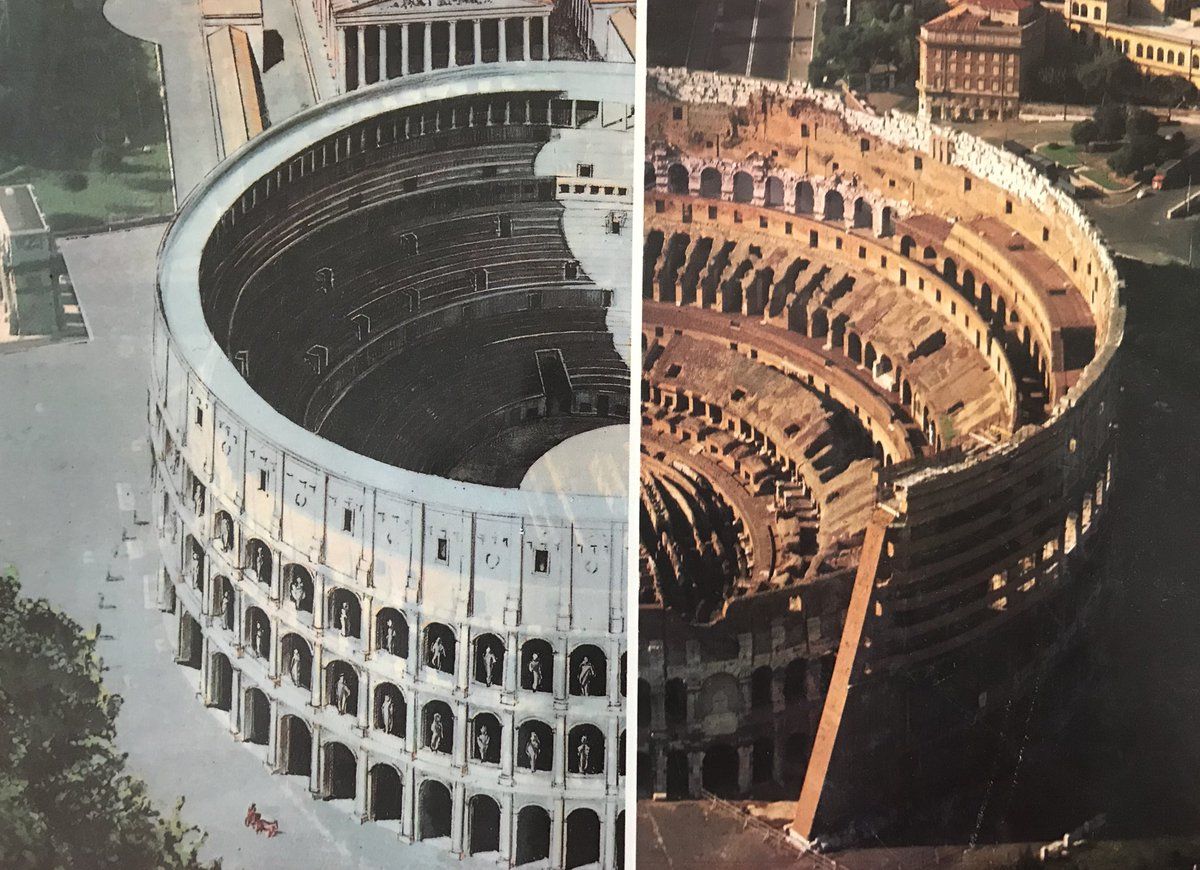
Evolving Technologies: The Continuous Quest for Greater Fidelity
The technology used to reconstruct the Colosseum is continuously evolving. Advances in AI, quantum computing, haptic feedback, and even brain-computer interfaces promise even more immersive and accurate experiences in the future. As scanning technologies become more precise, rendering engines more powerful, and AI more sophisticated in interpreting fragmented data, our ability to visualize the Colosseum as it truly looked will only increase. The journey to fully understand “what the Colosseum looked like” is an ongoing testament to human ingenuity, a powerful fusion of ancient history and cutting-edge technology, ensuring that the legacy of this Roman marvel continues to resonate across centuries.
aViewFromTheCave is a participant in the Amazon Services LLC Associates Program, an affiliate advertising program designed to provide a means for sites to earn advertising fees by advertising and linking to Amazon.com. Amazon, the Amazon logo, AmazonSupply, and the AmazonSupply logo are trademarks of Amazon.com, Inc. or its affiliates. As an Amazon Associate we earn affiliate commissions from qualifying purchases.