
Hanukkah, the Festival of Lights, is a beloved Jewish holiday celebrated annually. Unlike holidays that are fixed to a specific date on the Gregorian calendar, like Christmas or New Year’s Day, Hanukkah’s timing is a fascinating dance between ancient observances and the celestial movements. This seemingly fluid date is not arbitrary; it’s a testament to a sophisticated system that has guided Jewish practice for millennia. To understand what determines the date of Hanukkah, we need to delve into the interconnected worlds of religious tradition, the Jewish calendar, and the intricate relationship between lunar and solar cycles.

The Lunar Heartbeat: Understanding the Hebrew Calendar
The bedrock of Hanukkah’s date is the Hebrew calendar, also known as the lunisolar calendar. This calendar system, unlike the purely solar Gregorian calendar we commonly use, is primarily based on the moon’s cycles, with adjustments to keep it synchronized with the solar year.
The Moon’s Influence: Rosh Chodesh and Lunar Months
The Hebrew calendar divides the year into twelve lunar months, each beginning with the new moon. A lunar month is approximately 29.5 days long. This means that some months have 29 days, and others have 30. The observed sighting of the new crescent moon traditionally marked the start of a new month, a significant event known as Rosh Chodesh.
However, a year based on twelve lunar months (12 x 29.5 days = 354 days) is about eleven days shorter than a solar year (approximately 365.25 days). If left uncorrected, this discrepancy would cause the seasons to drift significantly over time. Imagine Passover, a spring festival, occurring in the summer or winter! This is where the “solar” aspect of the lunisolar calendar comes into play.
The Solar Correction: Leap Months and Seasonal Balance
To prevent this seasonal drift, the Hebrew calendar incorporates an intercalary, or “leap,” month. This leap month is added seven times within a nineteen-year cycle. This cycle, known as the Metonic cycle, is a remarkable astronomical observation that demonstrates how the lunar and solar cycles can be reconciled over a longer period.
By adding an extra month (Adar II) in these leap years, the Hebrew calendar effectively adds approximately 30 days to the year, bringing it closer to the length of a solar year. This ensures that festivals remain in their designated seasons. For example, Sukkot, the harvest festival, consistently falls in the autumn, and Passover, commemorating the Exodus from Egypt, always occurs in the spring.
Hanukkah’s Place in the Lunar Cycle
Hanukkah begins on the 25th day of the Hebrew month of Kislev. Kislev is one of the months that can have either 29 or 30 days. This variability within the lunar month itself can contribute to slight shifts in the Gregorian date of Hanukkah.
The month of Kislev often falls in November or December on the Gregorian calendar. Because the start of Hanukkah is tied to the 25th of Kislev, and the length of Kislev can vary, Hanukkah can begin in late November, but more commonly falls in December. It always lasts for eight nights and days, culminating on the 2nd of Tevet.
The Historical and Halakhic Framework: The Miracle of the Oil
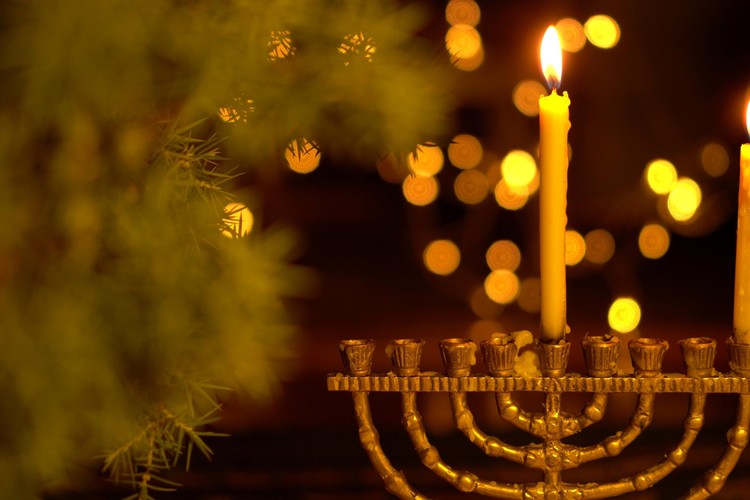
While the celestial cycles dictate the timing, the significance of Hanukkah, and thus its placement, is rooted in historical events and religious law (Halakha). The holiday commemorates the rededication of the Second Temple in Jerusalem in the 2nd century BCE, after the Maccabean Revolt against the Seleucid Empire.
The Rededication of the Temple: A Victory of Faith
The story tells of a miraculous event during the rededication. The Maccabees, having cleansed the Temple, sought to relight the Menorah, the sacred candelabrum. They found only a small jar of pure olive oil, enough to burn for a single day. Miraculously, this oil lasted for eight days, providing enough time to prepare new, ritually pure oil.
The Eight Days: Symbolism and Tradition
The eight days of Hanukkah are thus intrinsically linked to this miracle of the oil. The lighting of the hanukkiah (a nine-branched menorah, eight for the nights of the miracle and one for the shamash, the helper candle) each evening is the central ritual. The duration of the holiday is fixed at eight nights, regardless of the specific day of the week it begins. This eight-day observance is a constant, a steadfast pillar of the celebration, ensuring its recognition and practice year after year.
Bridging the Calendars: Practical Implications and Modern Observance
The interplay between the Hebrew and Gregorian calendars presents practical considerations for modern celebrants, especially in secular societies.
Navigating Different Calendars: A Matter of Translation
For most people today, the date of Hanukkah is communicated using the Gregorian calendar. This requires a conversion from the Hebrew date (25th of Kislev) to the Gregorian equivalent. Jewish calendars, both printed and digital, and various online resources provide these conversions, ensuring that individuals and communities can plan their celebrations.
Technological Aids: Digital Calendars and Apps
The advent of technology has made tracking Jewish holidays remarkably accessible. Many digital calendar applications (like Google Calendar, Outlook, etc.) allow users to subscribe to Hebrew calendar feeds, automatically displaying the dates of holidays like Hanukkah. Dedicated Jewish holiday apps also provide detailed information, including candle-lighting times and traditional blessings, further simplifying the observance. These tools leverage the underlying algorithms that accurately predict the Hebrew calendar’s progression, ensuring consistent and accurate date calculations, even with the complexities of leap years and lunar variations.

Community and Family Planning: Synchronizing Celebrations
Knowing the date of Hanukkah in advance is crucial for planning family gatherings, gift exchanges, and community events. The Gregorian calendar’s predictable structure provides a framework for making arrangements, allowing for shared celebrations that can bridge different cultural and religious observances. This synchronization is a testament to the adaptability of ancient traditions in the face of modern life.
In conclusion, the date of Hanukkah is a beautiful synthesis of astronomical observation and historical narrative. It’s determined by the ancient Hebrew lunisolar calendar, which meticulously tracks lunar cycles and incorporates leap months to align with the solar year. This celestial framework ensures that the holiday consistently falls within the season of winter. More importantly, the eight days of Hanukkah are a direct echo of a miraculous event, a testament to faith and perseverance, solidifying its place in the annual cycle of Jewish observance. While the precise Gregorian date may shift, the spiritual significance and the core traditions of Hanukkah remain a constant beacon of light.
aViewFromTheCave is a participant in the Amazon Services LLC Associates Program, an affiliate advertising program designed to provide a means for sites to earn advertising fees by advertising and linking to Amazon.com. Amazon, the Amazon logo, AmazonSupply, and the AmazonSupply logo are trademarks of Amazon.com, Inc. or its affiliates. As an Amazon Associate we earn affiliate commissions from qualifying purchases.