
In the world of software engineering, data science, and system administration, the question “What day number is it today?” transcends a simple glance at a desk calendar. While a casual observer might see a date like “October 24th,” a computer system or a developer often sees “Day 297.” This numerical representation, known as the ordinal date, is a fundamental building block in everything from database indexing and log rotation to machine learning and global synchronization protocols.
Understanding the “day number” is essential for managing temporal data efficiently. In this comprehensive guide, we will explore the technical architecture of date tracking, the programming logic used to calculate day numbers, and the critical role these values play in modern technology stacks.

1. The Mechanics of Date Tracking in Modern Software
To understand why day numbers matter, we must first look at how computing systems interpret time. Unlike humans, who rely on the cyclical nature of months and weeks, machines prefer linear, incrementing values.
The Julian vs. Gregorian Perspective
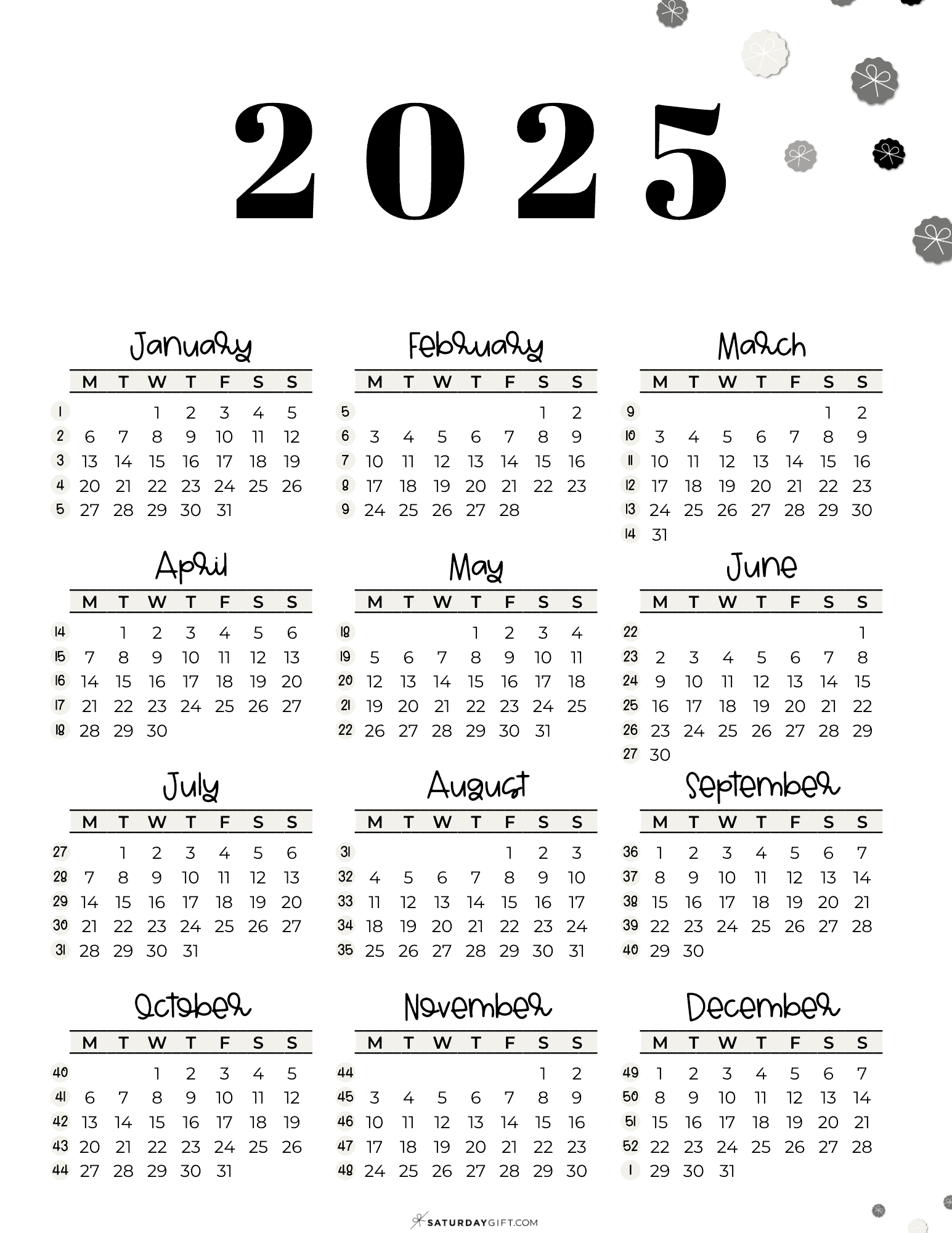
Historically, the concept of a “day number” can be traced back to the Julian Period, introduced by Joseph Scaliger in 1583. The Julian Day (JD) is the continuous count of days since the beginning of the Julian Period (January 1, 4713 BC). Today, astronomers and software systems often use Modified Julian Dates (MJD) to simplify calculations. However, most modern web and software applications operate on the Gregorian calendar, where the “day number” usually refers to the Ordinal Date—the day of the year from 1 to 365 (or 366 in a leap year).
Epoch Time and the Unix Timestamp
In the realm of DevOps and Backend Engineering, the ultimate “day number” is often derived from the Unix Epoch. Unix time is defined as the number of seconds that have elapsed since 00:00:00 UTC on Thursday, 1 January 1970. To find the current day number in a Unix-based system, one must divide the total seconds by 86,400 (the number of seconds in a standard day). This provides a precise, absolute integer that avoids the complexities of time zones and daylight savings when performing server-side calculations.
The ISO 8601 Standard
Standardization is the backbone of interoperability. The ISO 8601 standard provides a strictly defined format for representing dates and times. Under this standard, the ordinal date is formatted as YYYY-DDD. For example, “2024-298” identifies the 298th day of the year 2024. This format is widely used in high-performance computing because it allows for easy sorting and eliminates the ambiguity of “MM/DD” versus “DD/MM” formats.
2. Implementing Day Number Logic in Programming
For developers, calculating “what day number it is” involves utilizing specific libraries designed to handle the nuances of leap years and Gregorian shifts.
Python’s Datetime and Strftime
Python remains one of the most popular languages for data manipulation, and its datetime module is the industry standard for temporal logic. To retrieve the current day number, a developer uses the %j format code:
from datetime import datetime
day_of_year = datetime.now().strftime('%j')
print(f"Today is day number: {day_of_year}")
This simple line of code abstracts a complex algorithm that checks if the current year is divisible by 4, not divisible by 100, unless also divisible by 400—the classic leap year logic.
JavaScript and the ISO 8601 Standard
In web development, particularly in front-end frameworks like React or Vue, calculating the day number is slightly more manual. Since the native JavaScript Date object doesn’t have a direct “day of year” method, developers often calculate the difference between the current date and the first day of the year:
const now = new Date();
const start = new Date(now.getFullYear(), 0, 0);
const diff = now - start;
const oneDay = 1000 * 60 * 60 * 24;
const dayNumber = Math.floor(diff / oneDay);
This logic is crucial for creating “streaks” in SaaS applications, building heatmaps (like the GitHub contribution graph), or managing subscription renewals where “Day X of the Year” determines a billing cycle.
Efficient Indexing in Databases
In SQL and NoSQL databases, storing a day number as an integer is significantly more performant than storing a full timestamp string. When querying millions of rows of data—such as financial transactions or IoT sensor logs—filtering by an integer “dayofyear” column allows the database engine to utilize B-tree indexes much more effectively, reducing query latency from seconds to milliseconds.
3. The Role of Day Numbers in Automation and AI
Beyond simple display, the day number is a vital variable in the logic of automation and the training of artificial intelligence.
Scheduling Cron Jobs and Batch Processing
System administrators use “day numbers” to manage system maintenance. A “Cron Job” might be set to run a full system backup only on Day 1 of the year, or every 30th day. By utilizing the ordinal day, scripts can avoid the “last day of the month” problem (where some months have 28, 30, or 31 days). If you need a process to run every 10 days regardless of the month, the absolute day number is the only reliable metric.
Temporal Data in Machine Learning Models
In data science, “feature engineering” is the process of selecting variables for a predictive model. When predicting electricity demand or retail sales, the “day number” is a critical feature. For instance, an AI model might learn that sales spikes consistently occur around Day 350 (the height of the holiday shopping season).
Converting a date into a cyclical numerical representation (often using sine and cosine transformations of the day number) allows a neural network to understand that Day 365 and Day 1 are temporally close, despite being numerically far apart. This is essential for time-series forecasting in supply chain tech and algorithmic trading.
4. Tools and APIs for Real-Time Date Retrieval
In a distributed microservices architecture, ensuring every server agrees on “what day number it is” is a significant technical challenge.
RESTful APIs for Time and Date
Many developers rely on external APIs like WorldTimeAPI or Google’s Time Zone API to synchronize clocks. These tools return JSON payloads containing the current day of the year, the week number, and the offset from UTC. This is particularly important for mobile applications where the user’s device clock might be manually adjusted or incorrect. By fetching the day number from a trusted NTP-synchronized source, the app ensures that logic—such as a “Daily Reward” in a game—cannot be bypassed by changing the phone’s system time.
System Hooks and OS-Level Time Syncing (NTP)
The Network Time Protocol (NTP) is the unsung hero of the internet. It allows computers to synchronize their clocks to within a few milliseconds of Coordinated Universal Time (UTC). This synchronization ensures that when a distributed database like Amazon DynamoDB or Google Spanner writes a record, the “day number” and timestamp are consistent across data centers in different continents. Without this, transactional integrity would collapse, leading to data corruption and “race conditions.”
5. Future-Proofing Date Systems: Beyond the 2038 Problem
As we look toward the future of technology, the way we calculate and store day numbers must evolve to handle increasing complexity and scale.
The Year 2038 Problem (Y2K38)
The technology world is currently bracing for the “Epochalypse.” On January 19, 2038, 32-bit Unix timestamps will overflow, as the signed 32-bit integer reaches its maximum capacity. This could cause systems to revert to 1901, wreaking havoc on day number calculations. Modern tech infrastructure is currently migrating to 64-bit time representations, which will accurately track days for the next 292 billion years.
Scaling Time Data for Global Infrastructure
As we move toward multi-planetary exploration and edge computing in space (e.g., SpaceX’s Starlink or lunar communication arrays), the concept of “what day number is it today” becomes even more complex. Relativistic effects and different planetary rotations mean that our current UTC-based day numbering will eventually require a more universal, “galactic” timestamp system. Engineers are already researching “Optical Lattice Clocks” to provide the precision needed for this next era of tech.

Conclusion
The question “What day number is it today?” is a gateway into the core of how humans have digitized the physical world. From the simple %j in a Python script to the global synchronization provided by NTP and the complex feature engineering in AI, the ordinal day is an indispensable tool in the technologist’s toolkit. By understanding the mechanics, implementation, and future challenges of temporal data, professionals can build more robust, scalable, and intelligent systems that stand the test of time. Whether you are optimizing a database query or scheduling a mission-critical backup, the humble day number remains one of the most powerful integers in computing.