
In the world of personal finance and retail arbitrage, timing is more than just a convenience—it is a financial strategy. For the savvy consumer or the dedicated side-hustler, understanding the inventory lifecycle of a major retailer like HomeGoods is essential for maximizing the return on investment (ROI) for both time and money. HomeGoods, a subsidiary of TJX Companies, operates on a “treasure hunt” business model that thrives on high inventory turnover and off-price retailing.
To answer the question of when HomeGoods restocks, one must look beyond a simple calendar date and analyze the logistical patterns that govern their supply chain. Understanding these patterns allows shoppers to secure high-value items at a fraction of their market price, whether for personal use or for profitable resale.

1. Decoding the Restock Schedule for Maximum Savings
The primary challenge of shopping at HomeGoods is the unpredictability of its inventory. Unlike traditional department stores that receive seasonal shipments, HomeGoods receives shipments multiple times per week. However, from a financial efficiency standpoint, not all shopping days are created equal.
The Mid-Week Advantage: Monday Through Friday
For those looking to optimize their personal budget, the best time to visit is typically weekday mornings, specifically Tuesday, Wednesday, and Thursday. Most HomeGoods locations receive shipments four to five times a week. Logistics teams generally work early morning shifts to unload trucks and stock shelves before or during the first few hours of operation.
Shopping on these days ensures you are seeing the “fresh” inventory before the weekend rush. From a financial perspective, this reduces the “opportunity cost” of your trip. If you visit on a Saturday afternoon, you are competing with the highest volume of foot traffic for a depleted selection, effectively lowering the value of the time you spent traveling to the store.
The Myth of the Weekend Restock
A common misconception is that stores restock heavily on Friday nights to prepare for the weekend. In reality, many stores scale back restocking on Saturdays and Sundays because the floor is too crowded with customers for staff to safely and efficiently move large furniture or pallets of goods. If your goal is to find high-end designer collaborations or luxury cookware—items that often carry the highest resale margins—the weekend is often the least productive time to shop.
Regional and Store-Specific Variations
While the Monday-to-Friday rule is a solid baseline, the specific “delivery window” can vary based on the store’s proximity to a distribution center. Savvy shoppers treat this as a data-collection exercise. By politely asking a store manager or a floor associate, “When do your biggest furniture trucks usually arrive?” you gain “insider” financial intelligence that allows you to schedule your visits with surgical precision.
2. Leveraging HomeGoods for a Resale Side Hustle
The rise of the “side hustle” economy has turned HomeGoods from a simple retail destination into a sourcing hub for professional resellers. Retail arbitrage—the practice of buying products at a discount and selling them for a profit on platforms like eBay, Poshmark, or Facebook Marketplace—is a viable income stream for those who understand the HomeGoods inventory cycle.
Identifying High-Margin Categories
To turn a profit, you must focus on items where the “HomeGoods price” is significantly lower than the “MSRP” or “Market Value.” Key categories include:
- High-End Cookware: Brands like Le Creuset or All-Clad often appear at 40-60% off retail prices.
- Designer Home Decor: Limited-run collaborations or high-end candles (e.g., Nest or Voluspa) have high liquidity in online marketplaces.
- Niche Stationery and Craft Supplies: These items are lightweight, easy to ship, and often have a dedicated following.
Calculating Your ROI and “Burn Rate”
When sourcing for a side hustle, you must account for more than just the sticker price. A professional approach involves calculating your “Net Profit” after factoring in:
- Sourcing Time: How many hours did you spend driving and scanning?
- Platform Fees: Most resale sites take 10-20%.
- Shipping Costs: HomeGoods items can be bulky; the cost of shipping can quickly erode your margins.
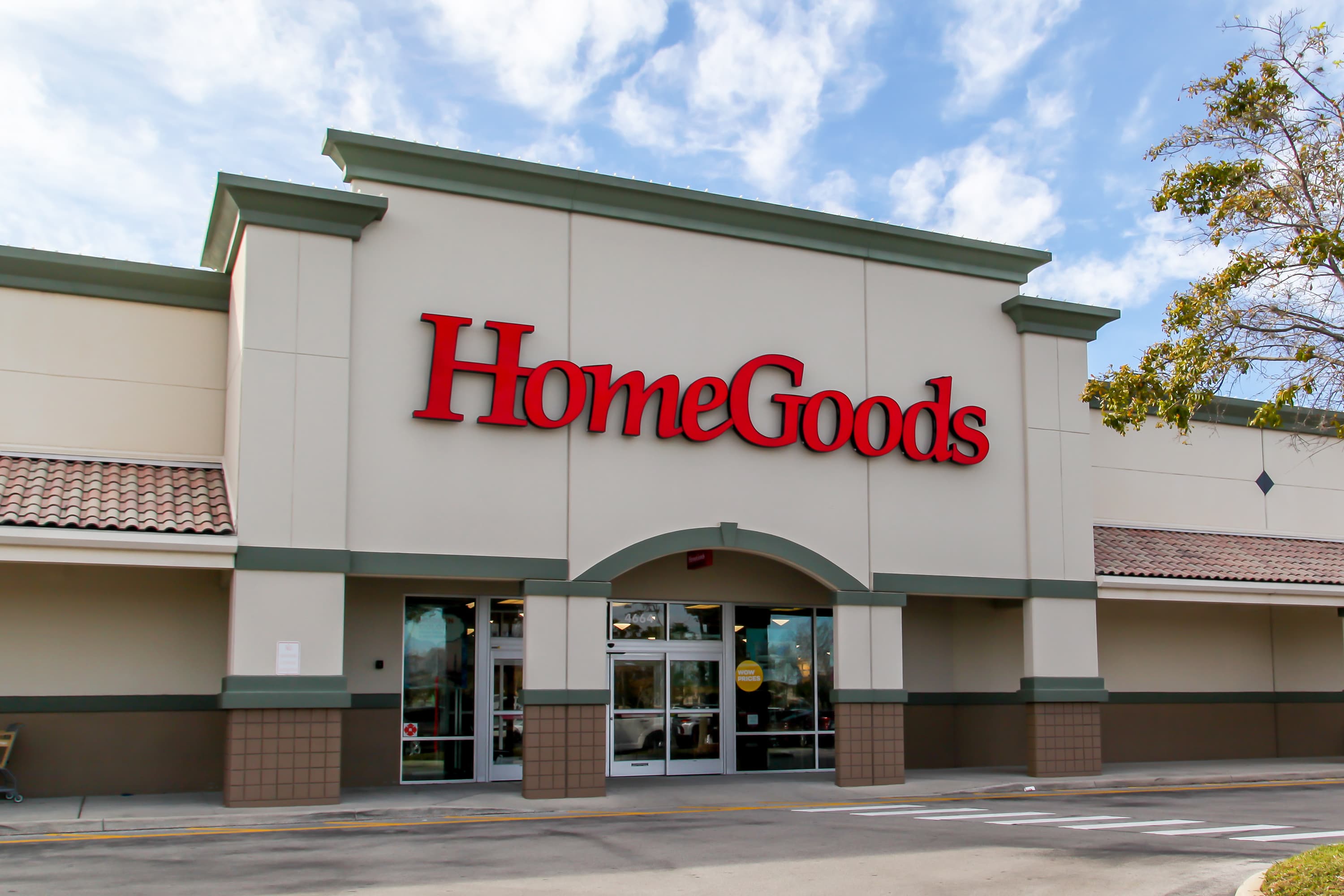
By aligning your sourcing trips with restock days, you increase the likelihood of finding “banger” items—those high-demand products that sell within 24 hours—thereby increasing your capital turnover rate.
The Importance of the “Yellow Sticker”
In the finance of retail, the yellow sticker is the gold standard. HomeGoods uses a tiered marking system. White stickers are the initial price, red stickers indicate a standard markdown, and yellow stickers represent the final clearance price. For a reseller, yellow-sticker items represent the highest potential ROI, often allowing for markups of 200% or more when sold in the correct secondary market.
3. Financial Strategies for the Conscious Consumer
Beyond knowing when to shop, the financially literate shopper uses specific tools to further lower their “cost of goods sold” (COGS). Whether you are furnishing a home on a budget or stocking an online store, these financial levers are essential.
The TJX Rewards Ecosystem
The TJX Rewards credit card offers 5% back in rewards for every dollar spent at HomeGoods, Marshalls, and TJ Maxx. From a personal finance standpoint, if you are a frequent shopper, this is an immediate 5% discount on top of the already reduced prices. However, this strategy only makes sense if the balance is paid in full monthly to avoid high-interest charges that would negate any savings.
Discounted Gift Cards
Another sophisticated money-saving tactic is the use of secondary gift card markets. Websites like Raise or CardCash often sell TJX gift cards at a 3% to 7% discount. By purchasing these cards in advance, you are essentially locking in an additional discount before you even step foot in the store. This “stacking” of discounts—shopping on restock day + using a discounted gift card + looking for red stickers—is how one masters the economics of off-price retail.
Seasonal Inventory Flushes
Every fiscal quarter, HomeGoods must clear out old inventory to make room for new seasonal arrivals. These “flushes” typically happen in late January (after the holiday rush) and July (mid-year inventory). During these periods, the frequency of restocks might decrease, but the volume of markdowns increases. This is the optimal time for “value investors” in the home goods space to buy non-perishable items like linens, organizational tools, and furniture.
4. The Macro-Economics of Off-Price Retail: Why Restocks Happen
Understanding why HomeGoods restocks the way it does can help you predict future inventory trends. HomeGoods does not rely on a steady manufacturing pipeline; instead, they capitalize on the inefficiencies of other retailers.
Cancelled Orders and Overstock
When a high-end department store cancels an order or overestimates demand, the manufacturer is left with “excess” capital tied up in physical goods. To liquefy this asset, they sell it to TJX Companies at a steep discount. This is why you might see a sudden influx of specific Italian glassware or high-end rugs—it is the result of a corporate-level financial liquidation.
The “Treasure Hunt” as a Retention Strategy
From a brand-finance perspective, the “randomness” of the restock is a feature, not a bug. By not having a standardized, public restock schedule, HomeGoods creates a sense of “FOMO” (Fear Of Missing Out). This psychological trigger encourages more frequent visits, increasing the “Customer Lifetime Value” (CLV). As a consumer, recognizing this tactic allows you to remain disciplined with your budget, ensuring you only buy what offers true value rather than succumbing to the impulse of the “find.”
Conclusion: Turning Information into Capital
Success at HomeGoods—whether measured by a beautiful home or a profitable bank account—requires a blend of logistical knowledge and financial discipline. By targeting mid-week restock windows, understanding the tiered markdown system, and utilizing financial tools like rewards cards and discounted gift cards, you transform a casual shopping trip into a strategic financial move.
The “restock day” is the entry point, but the “smart money” is made through consistency and an understanding of the underlying retail economics. Whether you are a homeowner looking to stretch your paycheck or an entrepreneur building a resale empire, the key to winning the HomeGoods game is knowing not just when to show up, but how to value what you find.
aViewFromTheCave is a participant in the Amazon Services LLC Associates Program, an affiliate advertising program designed to provide a means for sites to earn advertising fees by advertising and linking to Amazon.com. Amazon, the Amazon logo, AmazonSupply, and the AmazonSupply logo are trademarks of Amazon.com, Inc. or its affiliates. As an Amazon Associate we earn affiliate commissions from qualifying purchases.