
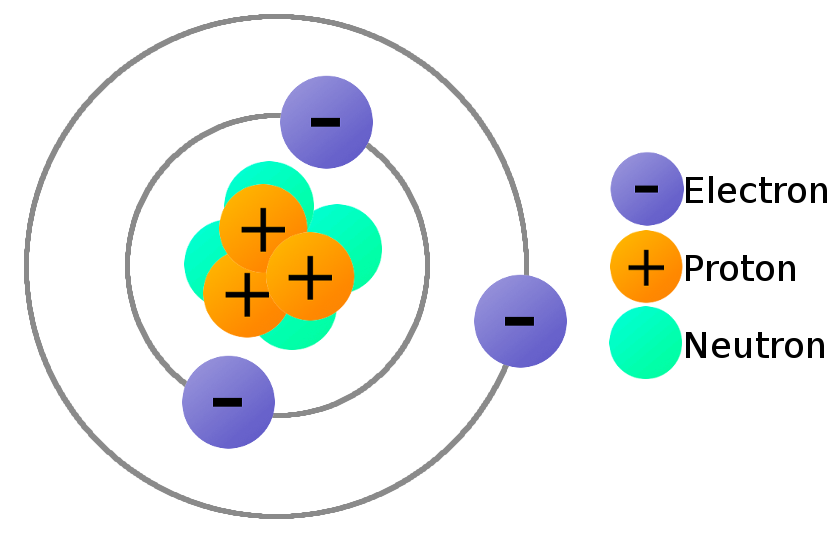
In the realm of subatomic physics, the question “what charge does a neutron have?” yields a simple, foundational answer: zero. While the proton carries a positive charge and the electron a negative one, the neutron remains electrically neutral. In the context of pure science, this neutrality is what allows atoms to maintain stability within the nucleus. However, in the context of the modern technology sector, this “zero charge” is not just a scientific fact—it is a powerful tool.
The unique properties of neutrons are currently driving some of the most sophisticated advancements in hardware manufacturing, energy production, and quantum computing. Because they lack an electric charge, neutrons can penetrate deep into materials that stop X-rays or electrons in their tracks. This article explores how the humble neutron, defined by its lack of charge, has become a cornerstone of the next generation of global technology.

Neutron Imaging and the Evolution of Semiconductor Manufacturing
The tech industry’s obsession with miniaturization has pushed traditional manufacturing to its limits. As we move toward 2-nanometer and 1-nanometer chip architectures, the ability to inspect and validate the integrity of these components becomes exponentially more difficult. This is where the neutral charge of the neutron becomes a technological game-changer.
Non-Destructive Testing at the Atomic Level
Traditional imaging techniques, such as X-rays, interact primarily with the electron clouds of atoms. This means they are often reflected or absorbed by heavy metals, making it difficult to see “inside” complex electronic assemblies. Neutrons, however, interact with the nucleus. Because they have no charge, they pass through dense metal casings with ease but are sensitive to lighter elements like hydrogen or lithium. This allows engineers to perform non-destructive testing (NDT) on high-end hardware, identifying microscopic fractures or impurities in lithium-ion batteries and circuit boards without damaging the components.
Advancing Chipset Design through Neutron Scattering
In the semiconductor niche, “neutron scattering” is used to analyze the magnetic and structural properties of new materials. By firing a beam of neutrons at a silicon wafer or a new superconducting material, tech researchers can observe how the neutrons bounce off. Since neutrons possess a magnetic moment despite their lack of charge, they are uniquely qualified to map the magnetic landscapes of future processors. This is essential for the development of spintronics—a field of tech that aims to use the “spin” of electrons rather than their charge to process data, potentially leading to faster and more energy-efficient computers.
The Future of Energy: Neutron Control in Clean Tech
As the global demand for sustainable energy grows, the tech sector is looking toward advanced nuclear solutions. The neutron is the primary driver of nuclear reactions, and our ability to manipulate these uncharged particles is the key to unlocking the next generation of carbon-free power.
Small Modular Reactors (SMRs) and Digital Twins
One of the most significant trends in energy tech is the development of Small Modular Reactors (SMRs). Unlike traditional large-scale power plants, SMRs are designed to be manufactured in factories and shipped to their locations. The safety and efficiency of these reactors depend on “neutron economy”—the precise management of neutron flux within the core. Modern AI tools and “Digital Twin” technology are now being used to simulate neutron behavior in real-time. By modeling how neutrons move through various shielding materials, software engineers can optimize reactor designs for maximum safety and minimal waste.
The Role of Neutrons in the Fusion Breakthrough
Nuclear fusion, the “holy grail” of energy technology, relies on the high-energy neutrons produced when isotopes of hydrogen fuse together. Because the neutron has no charge, it can escape the magnetic fields used to contain the plasma and carry energy out to be converted into electricity. The tech challenge currently facing companies like Helion or Commonwealth Fusion Systems is creating materials that can withstand this constant neutron bombardment. The development of “neutron-resistant” materials is currently a multi-billion dollar niche within materials science tech, bridging the gap between theoretical physics and industrial application.
Quantum Computing and the Precision of Neutral Particles
Quantum technology represents the next great frontier in computing, promising to solve problems that would take classical supercomputers millennia to crack. The neutron’s lack of charge makes it an ideal candidate for high-precision quantum measurements and experiments that define the limits of what quantum hardware can achieve.
Neutron Interferometry and Quantum Sensing
In the world of quantum tech, “noise” is the enemy. Electric and magnetic fields can easily disrupt the delicate state of a quantum bit (qubit). Because neutrons are electrically neutral, they are less susceptible to certain types of environmental decoherence. Neutron interferometry—a technique that splits a beam of neutrons and then recombines it—allows researchers to test the fundamental principles of quantum mechanics with unparalleled precision. This research is directly informing the design of quantum sensors, which are used in everything from GPS-independent navigation to deep-sea mineral exploration.
Securing the Future with Quantum-Resistant Algorithms
While neutrons are helping build quantum computers, the tech industry is also preparing for the “Quantum Apocalypse”—the moment when quantum computers become powerful enough to break current encryption. The study of neutron behavior at the subatomic level contributes to our understanding of complex mathematical lattices. These lattices form the basis of lattice-based cryptography, a type of software security designed to be resistant to quantum attacks. Thus, the science of the neutron is indirectly helping to secure the digital financial systems and private data of the future.
The Security Frontier: Neutron-Based Detection Systems
As digital security becomes more sophisticated, physical security technology must keep pace. The unique ability of neutrons to “see” what X-rays cannot has led to a surge in neutron-based scanning tech in the defense and logistics sectors.
Defending Digital and Physical Infrastructure
Modern data centers and tech hubs are vulnerable to more than just cyberattacks; they are also physical targets. Neutron Activation Analysis (NAA) is a high-tech method used to identify the chemical composition of unknown substances. By bombarding an object with neutrons, security systems can detect the specific gamma-ray signatures of volatile chemicals or rare-earth metals. This technology is being integrated into automated cargo scanning systems at ports, ensuring that the global supply chain for tech components remains secure from sabotage or smuggling.
AI Integration in Neutron Data Analysis
The data generated by neutron sensors is incredibly complex and high-volume. To make this information actionable, tech companies are deploying machine learning algorithms to interpret neutron scattering patterns in real-time. This intersection of “hard tech” (neutron hardware) and “soft tech” (AI) is creating a new market for intelligent scanning solutions. Whether it is identifying a microscopic flaw in a jet engine or detecting illicit materials in a shipping container, the combination of neutron neutrality and AI processing power is setting a new standard for industrial security.

Conclusion: Why the “Zero Charge” Matters to the Future of Tech
Returning to the original question—”what charge does a neutron have?”—we find that the answer “none” is exactly what makes the particle so valuable to the technology industry. Its neutrality is its greatest asset, allowing it to bypass the electrical barriers that limit other particles.
From the clean rooms of semiconductor giants to the experimental halls of fusion startups, the neutron is the silent workhorse of modern innovation. As we continue to refine our ability to detect, manipulate, and simulate these neutral particles, we will see even more breakthroughs in material science, energy, and computing. For the tech professional, the neutron is a reminder that sometimes the most powerful impact comes from the absence of force—in this case, the absence of an electric charge that opens the door to the future of engineering.
aViewFromTheCave is a participant in the Amazon Services LLC Associates Program, an affiliate advertising program designed to provide a means for sites to earn advertising fees by advertising and linking to Amazon.com. Amazon, the Amazon logo, AmazonSupply, and the AmazonSupply logo are trademarks of Amazon.com, Inc. or its affiliates. As an Amazon Associate we earn affiliate commissions from qualifying purchases.