
Low water pressure is a common household nuisance, transforming a refreshing shower into a dribbling disappointment and making everyday tasks like washing dishes a frustratingly slow process. While often perceived as a plumbing issue, the roots of diminished water flow can extend beyond the visible pipes within your home. Understanding the various factors contributing to low water pressure is crucial for diagnosing the problem and, more importantly, implementing effective solutions. This article delves into the technical intricacies that lead to this persistent issue, exploring the common culprits from your municipal supply to the very fixtures in your home.
I. Systemic Issues Beyond Your Property Line
The journey of water from its source to your tap is a complex network, and problems can arise long before the water even reaches your home. These systemic issues, often outside of your direct control, can manifest as widespread low water pressure affecting an entire neighborhood or even a larger municipality. Identifying these external factors is the first step in determining whether your low pressure is an isolated incident or part of a broader challenge.
A. Municipal Supply and Infrastructure Degradation
The water you use originates from a municipal water treatment plant and travels through a vast network of underground pipes. Over time, these pipes can degrade due to age, corrosion, or seismic activity.
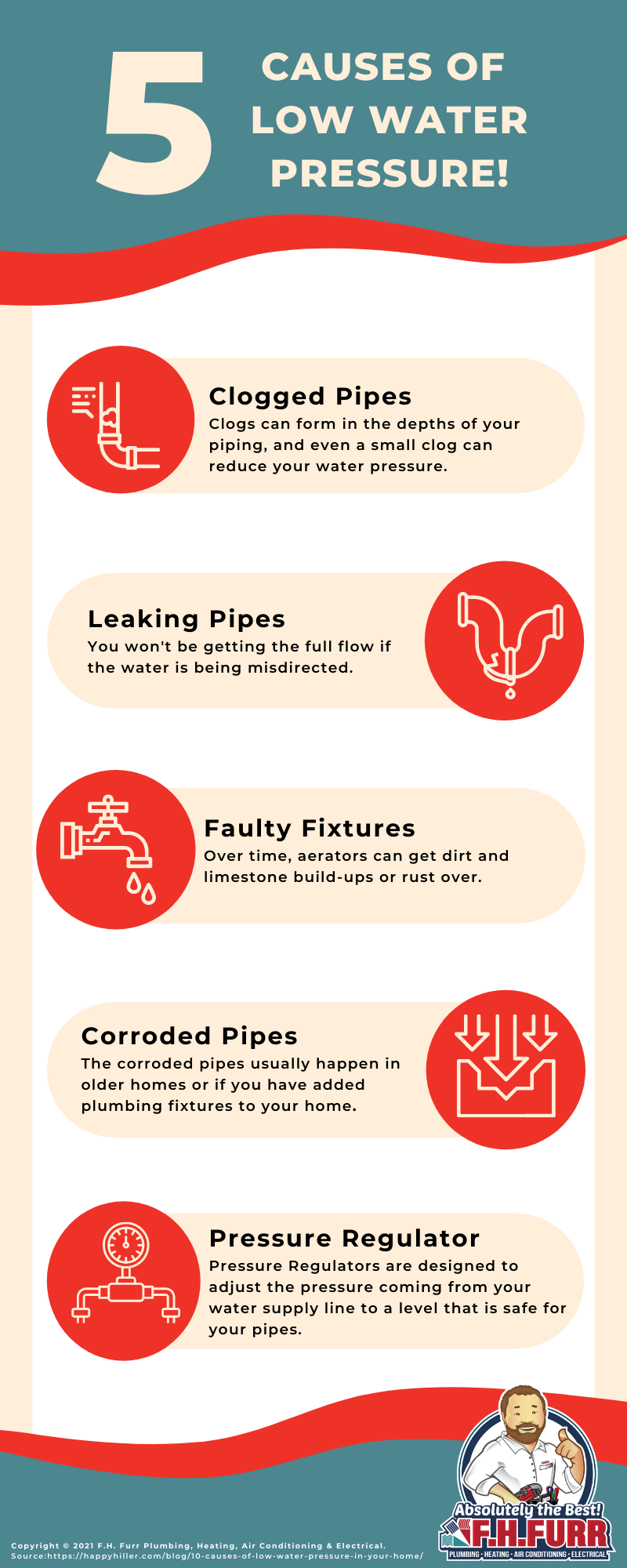
- Aging Infrastructure: Many water mains are decades, if not centuries, old. As materials like cast iron and steel corrode, they can develop leaks, significantly reducing the volume of water reaching distribution points. This corrosion can also lead to the formation of internal blockages.
- Pipe Blockages and Buildup: Sediment, mineral deposits, and debris can accumulate within water mains. This buildup acts like arterial plaque, constricting the flow and reducing the overall pressure available to your home. In older systems, even the presence of roots from nearby trees can infiltrate and obstruct pipes.
- Leaks in the Main Distribution Lines: A significant leak in a primary water main can divert a substantial amount of water, leading to a noticeable drop in pressure for all connected properties. These leaks are often underground and can be difficult to detect until they become substantial.
- Seasonal Demand Fluctuations: During peak usage periods, such as hot summer months when irrigation is high, or during widespread appliance use like laundry cycles in a community, the demand for water can outstrip the supply capacity of the municipal system. This increased demand can lead to temporary drops in pressure.
- Maintenance and Repairs: Water utilities periodically undertake maintenance or repairs on their systems. This can involve temporarily shutting off water to sections of the network, which will inevitably result in zero or very low pressure for affected areas. While often temporary, it’s a direct cause of low pressure.
B. Water Pressure Regulation and Pumping Stations
Municipal water systems rely on sophisticated pressure regulation and pumping stations to ensure consistent water delivery. Malfunctions or inefficiencies in these systems can have a cascading effect on your home’s water pressure.
- Faulty Pressure Regulators: Water utilities employ pressure-reducing valves (PRVs) to maintain a safe and consistent pressure within the distribution network. If these PRVs malfunction, they can either restrict flow too much, causing low pressure, or fail to maintain the set pressure, leading to fluctuations.
- Pumping Station Issues: Pumping stations are essential for moving water from its source to higher elevations or across longer distances. If pumps are operating at reduced capacity, are malfunctioning, or if there are power outages affecting them, the overall pressure within the system will suffer.
- System Overload or Design Limitations: In rapidly growing communities, the existing water infrastructure might not be designed to handle the current demand. This can lead to chronic low pressure, especially in newer developments or at the extremities of the distribution network, as the system struggles to deliver adequate flow to a larger user base.
II. Issues Within Your Property Boundary
While external factors can be the source of low water pressure, the problem often lies within the boundaries of your property, originating from your connection to the municipal supply and extending to the individual fixtures you use daily. These issues are typically more localized and can often be addressed with interventions on your property.
A. The Main Water Shut-off Valve
The main shut-off valve is a critical component controlling the flow of water into your entire house. If it’s not fully open, it can severely restrict water pressure.
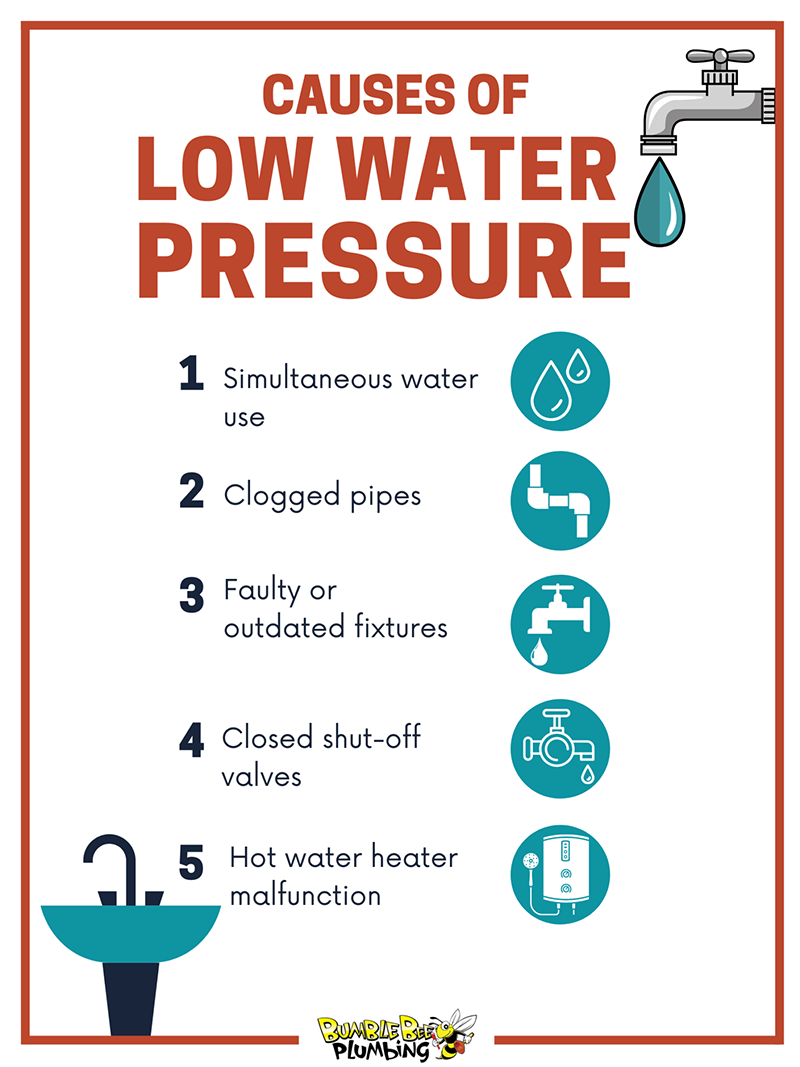
- Partially Closed Valve: This is one of the most common and easily rectifiable causes of low water pressure. The valve might have been accidentally bumped, or a previous repair or maintenance activity may have left it partially closed. It’s essential to locate your main shut-off valve (often found where the water line enters your house, in the basement, crawl space, or utility closet) and ensure it is in the fully open position.
- Corrosion and Obstruction: Over time, the valve itself can become corroded or accumulate debris within its mechanism. This internal obstruction can hinder the full opening of the valve, even if the handle appears to be in the correct position, thus limiting water flow.
B. Issues with the Pressure Regulator (Home Level)
Many homes, particularly those in areas with high municipal water pressure, are equipped with a Pressure Reducing Valve (PRV) installed on the main water line just after the shut-off valve. This device is designed to protect your plumbing system and appliances from excessive pressure.
- Malfunctioning PRV: Similar to municipal regulators, a home PRV can fail over time. If the diaphragm inside the valve wears out or gets clogged with sediment, it can restrict water flow, leading to consistently low pressure throughout the house. A faulty PRV may also fail to adequately open, even when incoming pressure is sufficient.
- Incorrect Setting: While less common, a home PRV can be incorrectly set to a lower pressure than optimal for your home’s needs. This is usually adjusted by a plumber during installation or if pressure issues are suspected.
C. Clogged or Damaged Pipes
The network of pipes within your home, while seemingly straightforward, can be a significant source of pressure loss.
- Internal Pipe Corrosion and Scale Buildup: Older homes, especially those with galvanized steel pipes, are prone to internal corrosion. This rust and mineral buildup can create a rough interior surface and constrict the diameter of the pipes, significantly reducing water flow. This is a gradual process, and older homes often suffer the most from this.
- Pipe Leaks: Small, undetected leaks within your walls or underground on your property can reduce the overall water pressure available at your fixtures. While a major leak would be obvious, smaller pinhole leaks can silently siphon off water, impacting pressure.
- Pipe Damage: Physical damage to pipes, perhaps from construction work, digging, or freezing, can lead to kinks or partial blockages that impede water flow.
III. Fixture-Specific Problems
Sometimes, the low water pressure isn’t a house-wide issue but is confined to a specific faucet, showerhead, or appliance. This localized problem is often the easiest to diagnose and fix, pointing towards an issue with the fixture itself or its immediate connection.
A. Clogged Aerators and Showerheads
Aerators are small screens found at the tip of most faucets, designed to mix air with water, improving flow and reducing splashing. Showerheads also contain small nozzles and screens.
- Mineral Deposits and Sediment: Over time, mineral deposits (like calcium and magnesium) and tiny sediment particles from the water supply can accumulate within the fine mesh of aerators and the openings of showerheads. This buildup restricts the water’s ability to pass through freely, leading to a noticeable reduction in flow and pressure at that specific fixture.
- Easy Solution: This is often the most straightforward cause of low pressure. Unscrewing the aerator from a faucet or the showerhead and cleaning it with a brush or soaking it in vinegar can quickly restore normal pressure.
B. Faulty Cartridges and Valves
Inside faucets and shower controls are cartridges or valves that regulate the flow and temperature of water.
- Worn-Out Cartridges: In faucets and especially in shower valves, cartridges can wear out over time. This wear can lead to internal leaks or a failure to open fully, restricting the water flow to the fixture. In shower valves, a faulty cartridge can also lead to the hot and cold water lines not opening to their full capacity.
- Sediment Buildup in Valves: Sediment can also accumulate within the internal components of the faucet or shower valve, impeding its operation and reducing water flow.
C. Issues with Water-Using Appliances
While less common as a cause of overall low water pressure, problems with specific appliances can mimic low pressure at that point of use.
- Kinked Hoses: The inlet hoses for washing machines or dishwashers can become kinked during installation or over time. This kink significantly restricts the water supply to the appliance.
- Internal Appliance Filters: Some appliances have internal water filters that can become clogged with sediment, reducing the water flow into the appliance.
- Internal Valve Problems: Similar to faucets, the internal valves that control water entry into appliances can malfunction or become clogged, leading to slow filling times and the appearance of low pressure.
By systematically investigating these potential causes, from the municipal infrastructure to the smallest faucet aerator, you can effectively diagnose and resolve the frustrating issue of low water pressure, restoring a more satisfying and efficient flow to your home.
aViewFromTheCave is a participant in the Amazon Services LLC Associates Program, an affiliate advertising program designed to provide a means for sites to earn advertising fees by advertising and linking to Amazon.com. Amazon, the Amazon logo, AmazonSupply, and the AmazonSupply logo are trademarks of Amazon.com, Inc. or its affiliates. As an Amazon Associate we earn affiliate commissions from qualifying purchases.