
In the pursuit of the title “fastest car in the world,” the finish line is a moving target. What was once a quest of brute force and displacement has evolved into a sophisticated discipline of high-level physics, material science, and computational intelligence. To answer the question of which car is the fastest, one must look beyond the speedometer and into the technological architecture that allows a machine to pierce the air at over 300 miles per hour. This is no longer just about automotive manufacturing; it is the pinnacle of modern technology.
The Evolution of Propulsion Systems: Beyond Internal Combustion
The fundamental tech behind speed begins with the powertrain. For decades, the recipe for speed was simple: more cylinders, larger turbochargers, and higher fuel consumption. However, the modern era has introduced a technological schism between high-output Internal Combustion Engines (ICE) and the burgeoning power of Electric Vehicle (EV) drivetrains.
Internal Combustion and the Limits of Physics
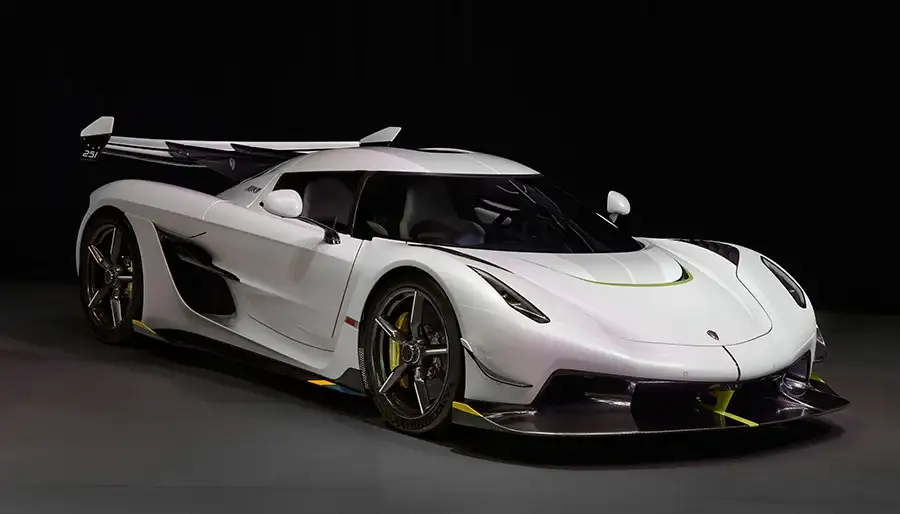
The reigning kings of top speed, such as the Koenigsegg Jesko Absolut and the Bugatti Chiron Super Sport 300+, rely on highly refined ICE technology. These machines are marvels of mechanical engineering. The Jesko, for instance, utilizes a 5.0-liter twin-turbo V8 capable of producing 1,600 horsepower when running on E85 biofuel.
The technology that sets these engines apart is the reduction of “turbo lag” through innovative air-injection systems. By utilizing a small compressor and an air tank to pre-spool the turbochargers, engineers can ensure that power delivery is instantaneous. Furthermore, the use of flat-plane cranks allows these engines to rev higher and more efficiently, pushing the mechanical limits of what a piston-driven engine can achieve before heat and friction become insurmountable barriers.
The Electric Revolution: Instant Torque and Battery Management
In the contemporary landscape, the Rimac Nevera and the Pininfarina Battista have redefined acceleration through electric propulsion. The technology here is fundamentally different. Unlike ICE cars, which must climb a power curve, electric motors provide 100% of their torque at zero RPM.
The technological challenge in the EV sector isn’t reaching high speeds; it is managing the immense heat generated by the batteries during high-discharge cycles. The Rimac Nevera employs a liquid-cooled 120kWh battery pack designed with a unique H-shaped architecture to optimize weight distribution and thermal efficiency. The “fastest” EV is, in reality, the one with the most sophisticated thermal management software, allowing the motors to sustain peak output without melting the internal components.
Aerodynamics and Computational Fluid Dynamics (CFD)
At speeds exceeding 250 mph, air behaves less like a gas and more like a viscous fluid. The technology required to navigate this environment is borrowed directly from aerospace engineering. To build the fastest car, engineers must balance two opposing forces: drag and downforce.
Reducing Drag: The Pursuit of the Lowest Coefficient
Drag is the primary enemy of top speed. The Koenigsegg Jesko Absolut is a masterclass in drag reduction, featuring a streamlined rear end that eliminates the massive downforce-generating wings found on its track-focused siblings. The technology used to perfect this shape is Computational Fluid Dynamics (CFD).
Through CFD, engineers can run thousands of hours of virtual simulations, visualizing how air molecules interact with every millimeter of the car’s surface. This allows for the design of “laminar flow” bodies that keep the air attached to the car as long as possible, reducing the low-pressure wake that acts as a vacuum, pulling the car backward.
Active Aero: Smart Wings and Dynamic Downforce
While low drag is essential for top speed, downforce is essential for stability. Without it, a car at 300 mph would essentially become an unguided projectile. The technological solution is Active Aerodynamics.
Modern hypercars use sensors and high-speed actuators to adjust the angle of spoilers, flaps, and diffusers in real-time. This is controlled by a central processing unit that monitors steering angle, throttle position, and longitudinal G-forces. When the car detects a high-speed straight, it “trims” the wings to a neutral position to minimize drag. Conversely, during heavy braking or cornering, the software deploys these surfaces to act as air brakes or to glue the tires to the asphalt. This synergy between hardware and software is what differentiates a fast car from a record-breaking machine.
Materials Science and Lightweighting Technologies
Speed is a function of the power-to-weight ratio. As engines become more powerful, the materials used to house them must become lighter and stronger. The “tech” of the fastest cars is heavily rooted in advanced metallurgy and composite chemistry.
Carbon Fiber Monocoques and Advanced Composites
The chassis of almost every world-record contender is a carbon fiber monocoque. However, the technology has progressed far beyond basic carbon weaves. Engineers now use “pre-preg” carbon fiber—where the resin is pre-impregnated into the fabric—and cure it in high-pressure autoclaves to ensure maximum rigidity with minimum weight.
Newer technologies, such as forged carbon fiber and Dyneema-reinforced composites, are being integrated into the structural components of cars like the Hennessey Venom F5. These materials offer the tensile strength of steel at a fraction of the mass, allowing the car to maintain structural integrity even under the crushing loads of 300+ mph wind resistance.
3D Printing and Topology Optimization
A burgeoning tech trend in the pursuit of speed is the use of Additive Manufacturing (3D printing). Companies like Czinger are utilizing AI-driven “topology optimization” to design parts. In this process, software determines the absolute minimum amount of material needed to support a specific load.
The resulting components often look organic or “alien” because they are designed by algorithms, not humans. These 3D-printed titanium and aluminum parts are significantly lighter than their cast or forged counterparts, shedding crucial grams from the unsprung mass of the vehicle, which directly translates to faster acceleration and higher top-end velocity.
The Role of Software and AI in Record-Breaking Performance
In the 21st century, the fastest car is not just a mechanical object; it is a rolling computer. The integration of Artificial Intelligence and high-frequency data processing is the “secret sauce” of modern performance.
ECU Tuning and Predictive Traction Control
Managing 1,500+ horsepower is impossible for a human driver without technological intervention. Electronic Control Units (ECUs) now process millions of data points per second. Predictive traction control systems use sensors to detect micro-slips in the tires before the driver even feels them. By adjusting ignition timing or modulating motor torque in milliseconds, the software ensures that every ounce of power is converted into forward momentum rather than smoke and burnt rubber.
Digital Twins: Simulating Speed Before the Road
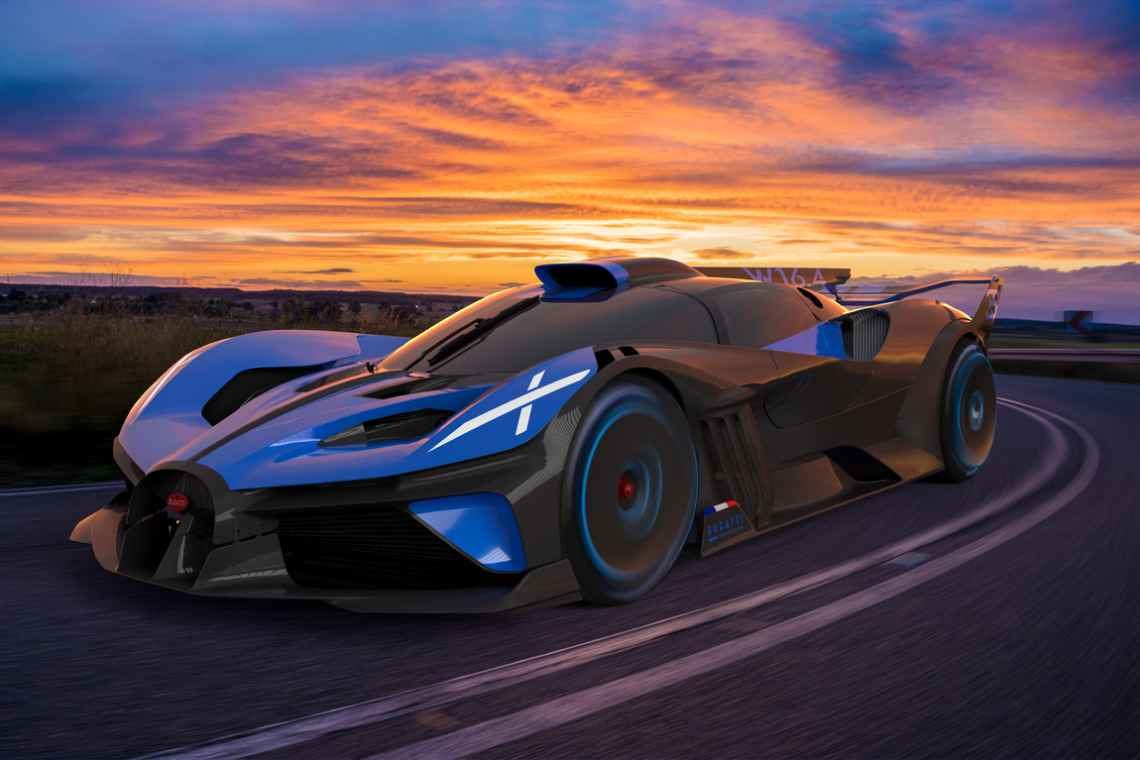
Before a car like the Bugatti Bolide ever touches a track, it exists as a “Digital Twin.” This is a high-fidelity virtual model that reacts to physics exactly like the physical car. Engineers use these digital twins to run millions of “what-if” scenarios. What happens if the ambient temperature rises by 5 degrees? What if the pavement has a 2% grade? By solving these problems in a virtual environment using supercomputers, manufacturers can optimize the software maps and mechanical setups, ensuring that the car is perfectly tuned for a record attempt the moment it hits the tarmac.
The Future of Speed: Solid-State Batteries and Synthetic Fuels
As we look toward the next decade of speed, the technology is shifting again. The limitations of current lithium-ion batteries—namely weight and heat—are the primary bottlenecks for EV top speeds. The development of solid-state batteries promises to double the energy density while significantly reducing the fire risk and cooling requirements. This could allow an EV to maintain 300 mph without the massive weight penalty current batteries impose.
Simultaneously, the development of carbon-neutral synthetic fuels (e-fuels) may give the internal combustion engine a new lease on life. This technology allows high-revving, high-output engines to continue pushing the limits of velocity without the environmental footprint of fossil fuels.
Ultimately, “what car is the fastest” is a question that will always be answered by the state of current technology. Whether through the refinement of the piston, the optimization of the electron, or the mastery of the air itself, the pursuit of speed remains the ultimate laboratory for the technological innovations that eventually trickle down to the vehicles we drive every day. Speed is not just a number; it is the most visible manifestation of human ingenuity and our mastery over the physical world.
aViewFromTheCave is a participant in the Amazon Services LLC Associates Program, an affiliate advertising program designed to provide a means for sites to earn advertising fees by advertising and linking to Amazon.com. Amazon, the Amazon logo, AmazonSupply, and the AmazonSupply logo are trademarks of Amazon.com, Inc. or its affiliates. As an Amazon Associate we earn affiliate commissions from qualifying purchases.