
In the current landscape of high-performance software and interactive entertainment, Black Myth: Wukong stands as a monumental achievement in Unreal Engine 5 development. For players navigating this complex digital odyssey, understanding the “critical path”—the series of mandatory objectives required to complete the software’s narrative—is essential. Unlike open-world titles that offer total freedom, Black Myth: Wukong utilizes a semi-linear structural design where specific “boss” encounters act as hardware-taxing gateways to subsequent chapters.
This guide provides a technical breakdown of which bosses are mandatory to reach the credits, filtering out the optional “Yaoguai Chiefs” and “Kings” to focus exclusively on the encounters that trigger progress within the game’s code.

The Architecture of Progression: Understanding Mandatory Encounters
Before diving into the specific list, it is vital to understand how Game Science, the developer, structured the progression logic of Black Myth: Wukong. The game functions on a “gate-and-key” system. While the world feels expansive, the software monitors specific flags—usually the defeat of a primary boss—to unlock new zones or trigger cinematic transitions.
The Gating Mechanism of Mandatory Encounters
In technical terms, a mandatory boss is an entity whose “Death Event” is a prerequisite for the game to update the player’s quest state. These bosses are often located at the end of a map’s branch or within a bottleneck pass. Defeating them usually rewards the player with a “Mind Core” or a specific “Relic,” which are the mechanical markers of chapter completion.
Defining “Mandatory” vs. “Optional” in Game Logic
While Black Myth: Wukong features over 80 unique boss encounters, roughly only 25 to 30 are strictly required to finish the story. Optional bosses often provide “Spirits” or crafting materials that make the mandatory fights easier, but they are not hard requirements in the game’s code. Identifying the mandatory path is a common strategy for “speed-runners” or players focused on narrative completion over 100% exploration.
Chapter-by-Chapter Guide to Mandatory Bosses
The journey of the Destined One is divided into six chapters, each with its own set of environmental assets and technical challenges. Below is the breakdown of the essential encounters for each segment.
Chapter 1: Black Wind Mountain
The first chapter serves as a tutorial for the game’s core mechanics and AI behavior.
- Bull Guard: This is the first mandatory roadblock. It introduces the “Immobilize” spell mechanic, which is a fundamental tool in the player’s software kit.
- Lingxuzi: A giant wolf boss that tests the player’s ability to manage camera tracking and large-scale hitboxes.
- Black Wind King: Encountered halfway through the chapter; he introduces phase-shifting mechanics.
- Black Bear Guai: The final boss of Chapter 1. Defeating him is the only way to trigger the transition to Chapter 2 and receive the first Relic.
Chapter 2: Yellow Wind Ridge
Chapter 2 expands the technical complexity with wind-based environmental hazards and multi-stage boss fights.
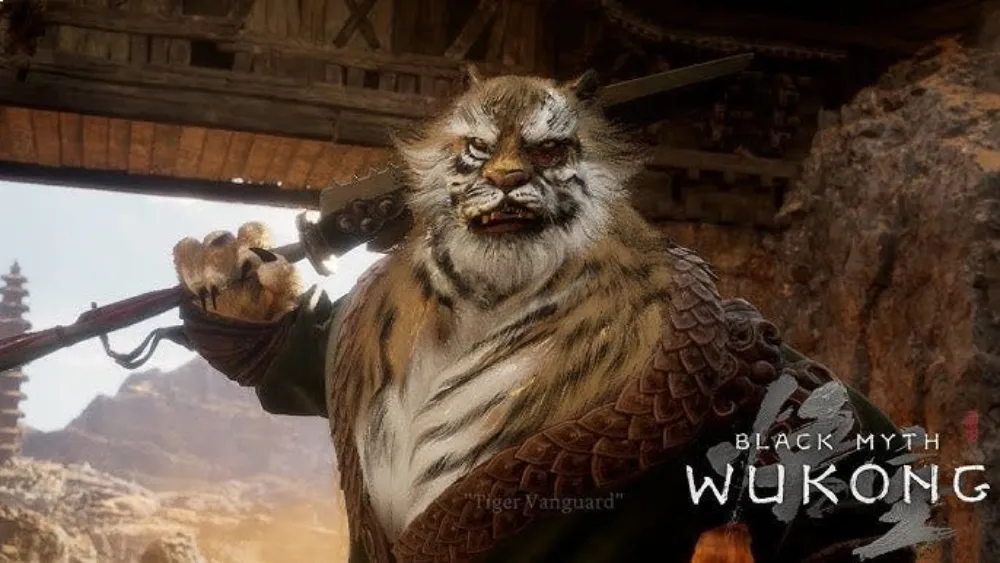
- Tiger Vanguard: Found in the Temple of Crouching Tiger, this boss is a strict skill check. His defeat is necessary to drain the blood pool and access the lower levels.
- Stone Vanguard: Essential for obtaining the “Sterness of Stone” or “Keenness of Tiger” items required to open the path to the final arena.
- Yellow Wind Sage: The central antagonist of the chapter. This fight requires high-level resource management and is mandatory to unlock Chapter 3.
Chapter 3: The New West
This chapter is the longest in terms of geographic scale and contains several scripted sequences that cannot be bypassed.
- Kang-Jin Star: An aerial encounter that tests the game’s vertical combat physics.
- Captain Wise-Voice: Located in the Pagoda Realm, this boss manages a “health-drain” mechanic that affects the player’s UI and stats; he must be defeated to escape the prison area.
- Kang-Jin Loong: Another mandatory dragon encounter on the frozen lake.
- Yellowbrow: The final boss of the chapter. This is a multi-phase fight involving different “arena” instances that the software swaps in real-time.

Chapter 4: The Webbed Hollow
Chapter 4 focuses on claustrophobic environments and status effects like Poison.
- The Second Sister: An introductory boss for the spider-caverns.
- Violent Spider: A mandatory encounter deep within the hollow.
- Hundred-Eyed Daoist Master: The final gatekeeper of the chapter. Defeating him triggers the cinematic transition to the flaming mountains of Chapter 5.
Chapter 5: Flaming Mountains
- Father of Stones: A mandatory gatekeeper early in the chapter.
- Red Boy / Yaksha King: This is a two-part mandatory encounter that represents one of the most significant narrative shifts in the game.
Chapter 6: Mount Huaguo
The final chapter changes the gameplay loop by introducing the Cloud-Somersault, a high-speed traversal mechanic.
- Supreme Inspector: The first mandatory encounter upon reaching the mountain.
- The Gold Armored Rhino, Cloudtreading Deer, Feng-Tail General, and Emerald-Armed Mantis: These four must be defeated to collect the legendary Wukong equipment set.
- Stone Monkey / The Great Sage’s Broken Shell: The final software objective. Defeating this entity triggers the end-credits sequence.
The Technical Design of Combat: AI Patterns and Player Interaction
What makes these mandatory bosses more than just “static enemies” is the sophisticated AI underlying their behavior. Game Science utilized machine learning and complex state machines to ensure that bosses react dynamically to player inputs.
Responsive AI and Frame-Perfect Dodging
The mandatory bosses in Black Myth: Wukong are designed around “frame windows.” For a player to succeed, the software requires an input (like a dodge or parry) within a specific millisecond range of the boss’s animation trigger. This level of technical precision is why the game is often compared to the “Souls” genre, though its logic is more rooted in traditional action-game architecture.
Scripted Sequences and Cinematic Integration
Many mandatory fights transition into “cutscenes” or scripted events mid-battle. This is a technical feat of seamless integration where the game switches from the player-controlled state to a pre-rendered or real-time cinematic state without a loading screen. These transitions often serve as checkpoints, saving the boss’s health status in the game’s temporary memory.
Optimizing the Experience: Hardware and Performance Tips
To successfully clear these mandatory bosses, the software must run at a stable frame rate. Frame drops can lead to “input lag,” making mandatory encounters significantly more difficult than intended.
Hardware Requirements and Ray Tracing
Black Myth: Wukong is a heavy application. For the best experience during complex boss fights—which often feature high-particle effects like fire, wind, and fur physics—an NVIDIA RTX 40-series GPU is recommended. The use of DLSS 3.5 (Deep Learning Super Sampling) allows the game to use AI to generate additional frames, ensuring that the fast-paced animations of bosses like the Yellow Wind Sage remain fluid.
Settings Optimization for Stable Framerates
If you are struggling with a mandatory boss due to performance issues, consider the following technical adjustments:
- Lower Shadow Quality: Shadows in UE5 (Lumen) are computationally expensive.
- Enable Frame Generation: If your hardware supports it, this is the single best way to reduce perceived latency.
- Shader Pre-compilation: Always allow the game to finish its shader compilation at the main menu. This prevents “stutter” during boss phase transitions, which can be the difference between victory and a “Game Over” screen.
By focusing on these mandatory encounters and ensuring your hardware is optimized to handle the game’s technical demands, you can navigate the story of the Destined One efficiently. While the optional bosses offer deep lore and power-ups, the path outlined above is the definitive technical route to completing Black Myth: Wukong.