
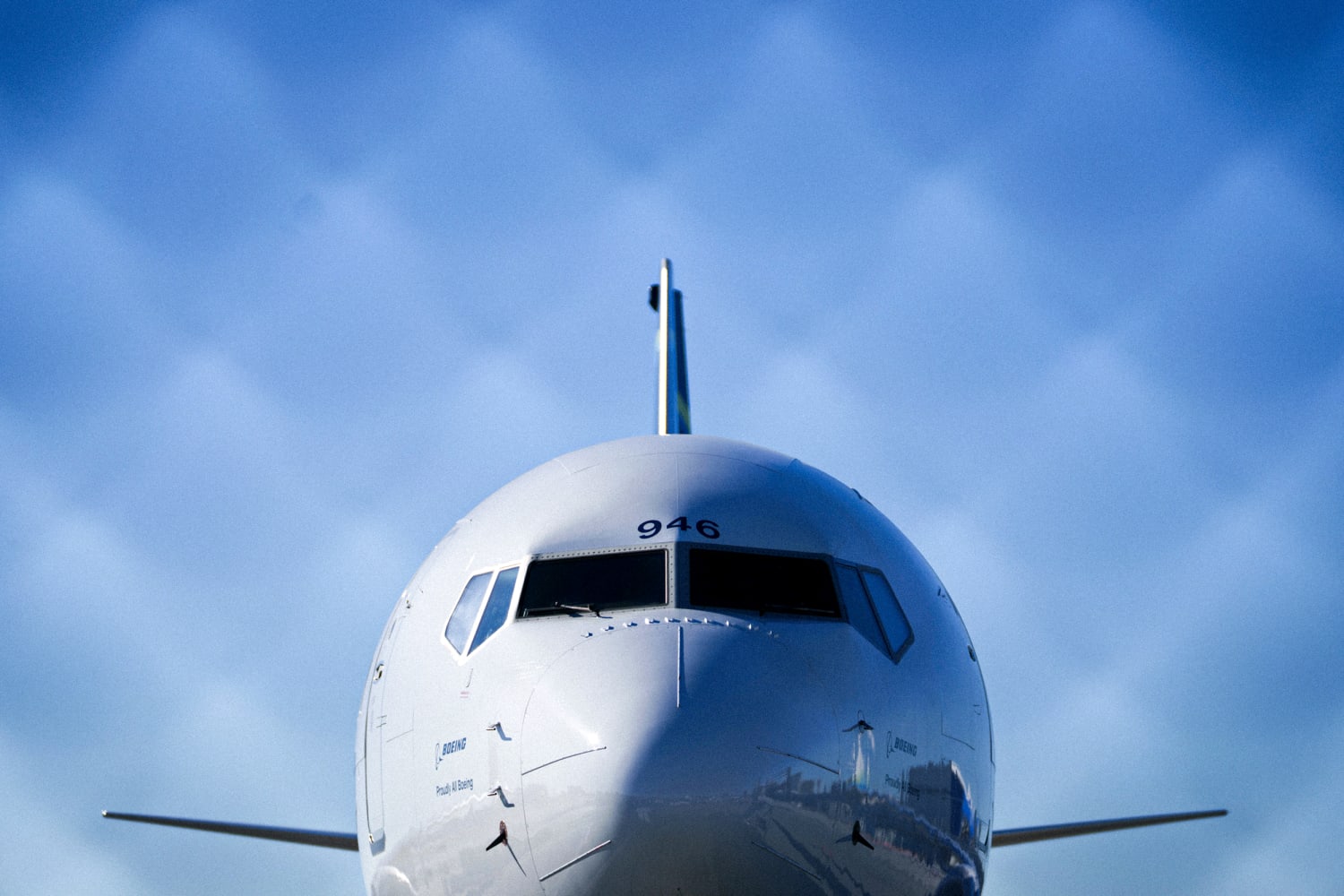
The aerospace industry is a domain where precision, reliability, and cutting-edge technology are not just desirable but absolutely paramount. For decades, Boeing has been a titan in this field, synonymous with innovation and flight. However, recent events and persistent concerns have raised critical questions about the safety and performance of certain Boeing aircraft models. This article delves into the technological intricacies and systemic issues that have led to scrutiny, offering insights into which Boeing planes warrant caution, not from a financial or brand perception standpoint, but from a purely technological and engineering perspective. We will explore the underlying technical challenges, the software and hardware integrations that have come under fire, and the implications for aviation safety from a technological viewpoint.
The Evolving Landscape of Aircraft Design and Safety Protocols
Modern aircraft are incredibly complex systems, representing the apex of human engineering. The design and manufacturing processes involve intricate software systems, advanced materials, and sophisticated control mechanisms. The safety of these marvels of engineering relies on a delicate balance of these elements, where even minor deviations can have significant consequences.
The Digital Revolution in Aviation
The integration of digital technologies has transformed aviation, bringing about greater efficiency, improved performance, and enhanced safety features. Flight control systems, once purely mechanical, are now heavily reliant on sophisticated software algorithms and fly-by-wire technologies. This digital transformation has allowed for more precise control, automated flight management, and advanced diagnostic capabilities.
However, this increased reliance on software also introduces new vulnerabilities and complexities. Software glitches, algorithmic errors, and the intricate interplay between different digital systems can pose significant challenges. The development and validation of aviation software are subject to extremely rigorous standards, but the sheer complexity means that unforeseen issues can still emerge.
The Human-Machine Interface in Modern Flight
Beyond the purely digital, the interface between human pilots and the aircraft’s automated systems is another critical area. Intuitive design, clear communication of system status, and effective pilot training are essential for ensuring safe operation, especially during unexpected events. When the interface is complex, confusing, or not fully understood by the flight crew, it can contribute to errors in judgment or response.
The history of aviation safety is marked by a continuous evolution of design principles and safety protocols. Lessons learned from past incidents, often involving technological failures or human-machine interface issues, have driven significant advancements. The industry’s commitment to safety is a perpetual process of refinement, adaptation, and a proactive approach to identifying and mitigating potential risks.
The Rise of Fly-by-Wire and Its Technological Implications
Fly-by-wire (FBW) technology represents a significant leap in aircraft control systems. In a traditional mechanical system, pilot inputs are directly translated through physical linkages to the control surfaces. In an FBW system, pilot commands are converted into electronic signals, processed by flight control computers, and then transmitted to actuators that move the control surfaces.
The Advantages of Fly-by-Wire Systems
FBW offers several technological advantages. It allows for lighter aircraft due to the elimination of heavy mechanical linkages. It also enables sophisticated flight envelope protection, where the system can prevent the aircraft from exceeding its structural or aerodynamic limits, thereby enhancing safety. Furthermore, FBW allows for optimized control laws that can improve fuel efficiency and flight stability. These systems can also automatically correct for engine failures or other aerodynamic disturbances, making the aircraft more resilient.
The Complexities and Challenges of FBW
However, the implementation of FBW systems is inherently complex. The core of an FBW system is its flight control software, which is responsible for interpreting pilot inputs and commanding the control surfaces. This software is incredibly intricate, often involving multiple redundant computers and complex algorithms.
One of the primary technological challenges lies in the validation and verification of this software. Ensuring that the software behaves as intended under all possible flight conditions, including rare and extreme scenarios, is a monumental task. Any bugs, errors in logic, or unforeseen interactions between different software modules can have critical consequences. The transition from traditional mechanical controls to FBW also necessitates extensive pilot training to ensure they fully understand the system’s capabilities and limitations. The reliance on electronics also introduces the possibility of electromagnetic interference or hardware failures, although these are typically mitigated through multiple layers of redundancy.
Specific Boeing Models Under Technological Scrutiny
The focus on specific Boeing models often stems from particular technological implementations and their subsequent performance in real-world operations. While Boeing has a long history of producing safe and reliable aircraft, certain models have faced heightened scrutiny due to the nature of their design and control systems.
The Boeing 737 MAX and its Maneuvering Characteristics Augmentation System (MCAS)
The Boeing 737 MAX program became a focal point of technological concern due to the implementation of the Maneuvering Characteristics Augmentation System (MCAS). This software feature was designed to make the 737 MAX, which has larger and more forward-mounted engines than previous 737 variants, handle similarly to older models. The objective was to minimize the need for extensive re-training for pilots transitioning from older 737s.

Technologically, MCAS was intended to activate automatically when the aircraft’s angle of attack sensors detected a potential stall condition. However, a critical flaw in the system was its reliance on a single angle of attack sensor. If this sensor provided erroneous data, MCAS could repeatedly activate, pushing the aircraft’s nose down with significant force. This was exacerbated by the fact that the system could be re-activated multiple times, even if pilots attempted to counteract its movements.
The design choice to base MCAS on data from a single sensor, coupled with insufficient pilot awareness and training regarding its operation and override procedures, led to two tragic accidents: Lion Air Flight 610 and Ethiopian Airlines Flight 302. These events highlighted a critical failure in the system’s design and its integration with pilot interaction. The subsequent grounding of the 737 MAX fleet and the extensive modifications to MCAS, including relying on data from two sensors and limiting its authority, underscore the profound technological lessons learned from these incidents. The issue was not just about a single piece of software but the entire ecosystem of its design, validation, and the human-machine interface.
Other Boeing Aircraft and Emerging Technological Concerns
While the 737 MAX has been the most prominent example, broader concerns have emerged regarding Boeing’s manufacturing processes and the quality control of its technological components across various models. Reports have surfaced regarding issues with the production of aircraft such as the 787 Dreamliner, including concerns related to fuselage integrity and electrical systems.
These issues, while not always directly attributable to a single software flaw like MCAS, point to potential systemic challenges in the complex manufacturing and integration of advanced technologies. The meticulous assembly of aircraft involves thousands of components and intricate systems, all of which must function flawlessly. Any degradation in the quality control of these components or the assembly process can introduce technological vulnerabilities.
For instance, concerns regarding gaps in fuselage sections of the 787, while seemingly a manufacturing defect, have implications for the structural integrity and the performance of various integrated systems that rely on a perfectly sealed and dimensionally accurate airframe. Similarly, issues with electrical systems can impact the reliability of flight control computers, navigation systems, and other critical digital components. These are not isolated incidents but indicators of potential broader challenges in maintaining the extremely high technological standards required in aerospace manufacturing.
The Interplay of Software, Hardware, and Manufacturing in Aircraft Safety
The safety of any aircraft is a holistic outcome, stemming from the seamless integration of its software, hardware, and the meticulous processes by which it is manufactured. Focusing solely on one aspect provides an incomplete picture of the technological challenges and risks.
Software Validation and Verification: The Ultimate Test
The software that governs modern aircraft is arguably its most critical component in terms of operational safety. This includes everything from the flight control systems and navigation software to the engine control software and passenger cabin systems. The process of validating and verifying this software is an extraordinarily complex and resource-intensive undertaking. It involves simulating millions of flight hours, testing under extreme environmental conditions, and subjecting the software to rigorous independent review.
Any perceived shortcut or compromise in this process, whether driven by tight deadlines or cost pressures, can introduce latent defects. These defects might not manifest under normal operating conditions but could emerge during unusual flight maneuvers, system failures, or in combination with other unforeseen events. The lessons from the 737 MAX underscore the imperative for robust and independent software validation, even for seemingly minor additions to existing systems.
Hardware Reliability and Component Integration
Beyond software, the reliability of the physical components – the hardware – is equally vital. This encompasses everything from the sensors that feed data to the flight computers, the actuators that move the control surfaces, to the structural integrity of the airframe. Modern aircraft are composed of thousands of individual components, many of which are supplied by third-party manufacturers.
The integration of these diverse hardware components is a significant engineering challenge. Ensuring that each component meets stringent specifications and that they work harmoniously together is paramount. Issues with component quality, improper installation, or failures in the integration process can lead to cascading effects. For example, a faulty sensor can provide incorrect data to the flight control software, leading to erroneous commands. Similarly, a structural flaw, even if seemingly minor, can compromise the aircraft’s ability to withstand the stresses of flight.
Manufacturing Processes and Quality Control
The manufacturing floor is where the theoretical designs and rigorous software and hardware specifications are translated into tangible reality. The precision and discipline of the manufacturing process are direct determinants of an aircraft’s safety. This involves not just the assembly of parts but also the inspection and testing at every stage.
Recent scrutiny of Boeing’s manufacturing processes, particularly concerning quality control and adherence to established procedures, raises fundamental technological concerns. When manufacturing quality slips, it can lead to the introduction of defects that may not be immediately apparent. These can range from incorrect fastening of components to subtle imperfections in materials. These manufacturing flaws can then interact with the sophisticated software and hardware systems in unpredictable ways, potentially compromising flight safety. The aerospace industry demands an unwavering commitment to quality at every level of the manufacturing chain.

Conclusion: A Technological Perspective on Aircraft Selection
When considering the technological aspects of aircraft, particularly in light of recent events, the focus shifts from simple brand loyalty or economic considerations to the fundamental engineering and safety of the machines themselves. While Boeing has a storied history of aviation excellence, a critical examination of certain models reveals a complex interplay of software, hardware, and manufacturing processes that have come under intense scrutiny.
The Boeing 737 MAX, with its MCAS system, serves as a stark reminder of how well-intentioned technological solutions, if not rigorously tested, validated, and integrated with a thorough understanding of human-machine interaction, can lead to catastrophic outcomes. The issues highlighted with this aircraft extend beyond a single piece of software to the entire system design, development, and oversight.
Furthermore, broader concerns about manufacturing quality control across other Boeing models suggest that maintaining the highest technological standards requires constant vigilance throughout the entire production lifecycle. From the intricate algorithms that govern flight to the precise assembly of every rivet, the integrity of an aircraft is a multifaceted technological achievement. Therefore, from a purely technological standpoint, understanding these past challenges and ongoing concerns is crucial for anyone seeking to comprehend the current landscape of aviation safety and reliability. This is not to suggest a blanket avoidance, but rather a critical awareness of the technological underpinnings and the importance of continuous improvement and robust oversight in the aerospace industry.
aViewFromTheCave is a participant in the Amazon Services LLC Associates Program, an affiliate advertising program designed to provide a means for sites to earn advertising fees by advertising and linking to Amazon.com. Amazon, the Amazon logo, AmazonSupply, and the AmazonSupply logo are trademarks of Amazon.com, Inc. or its affiliates. As an Amazon Associate we earn affiliate commissions from qualifying purchases.