
In the expansive landscape of sandbox gaming, Minecraft stands as a pinnacle of procedural generation and complex software architecture. Within its digital ecosystem, certain entities are designed not just as obstacles, but as sophisticated tests of a player’s understanding of the game’s underlying mechanics. Chief among these is the Wither. Far from being a simple “monster,” the Wither represents a complex intersection of AI pathfinding, projectile physics, and state-based programming. This article provides a technical deep dive into what the Wither is, how its logic functions within the game’s code, and the computational impact it has on the Minecraft environment.

The Architecture of Destruction: Understanding the Wither’s Core Programming
The Wither is categorized as a “boss entity,” a status that grants it unique properties within the game’s software framework. Unlike standard mobs that spawn based on light levels or biome parameters, the Wither is a player-constructed entity. This requires the game engine to constantly monitor specific block configurations—a process known as block-state detection.
Entity Identification and AI Behavior Trees
From a technical standpoint, the Wither is an undead boss mob. Its AI behavior tree is significantly more complex than that of a Zombie or a Skeleton. While standard mobs follow a simple “see player, move toward player” logic, the Wither utilizes a multi-target acquisition system. It is programmed to be hostile toward almost all non-undead mobs, requiring the game to process multiple proximity checks simultaneously.
The Wither’s AI is designed to maintain a specific distance from its target, alternating between flight patterns and stationary bombardment. This involves a constant calculation of the Y-coordinate (height) relative to the target to ensure it remains out of reach of melee attacks while maintaining a clear line of sight for its projectiles.
The Three-Headed Mechanics: Multitasking Algorithms
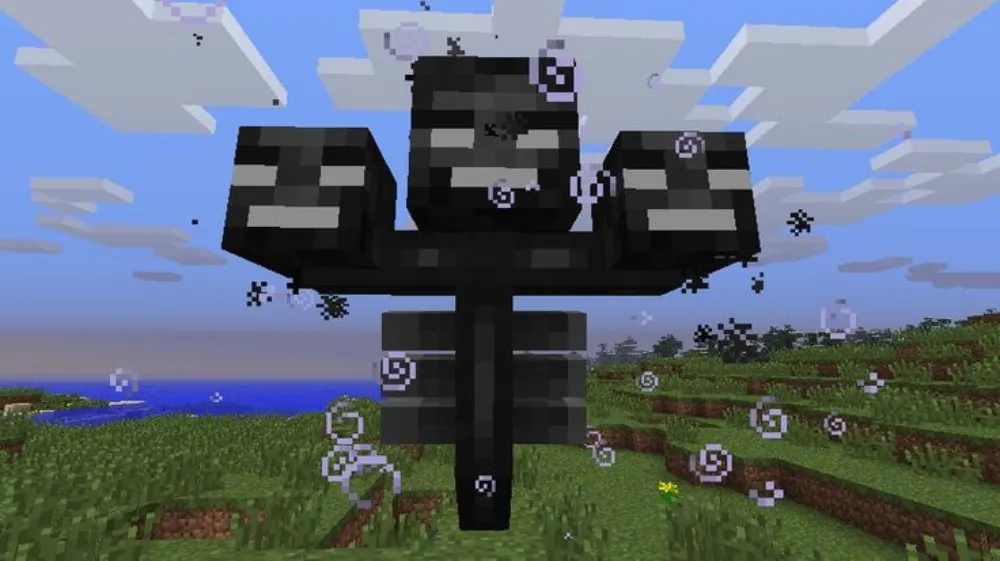
One of the most impressive technical feats of the Wither is its ability to track and attack three different targets at once. Each of the Wither’s three heads acts as a semi-independent sub-entity for the purpose of targeting.
The main (middle) head controls the movement of the entity and fires “Wither Skulls” at the primary target. Meanwhile, the two smaller heads scan for secondary targets within a specific radius. If the game engine identifies multiple entities nearby, the Wither’s code distributes projectile fire across them. This multi-threaded approach to combat AI makes the Wither one of the most resource-intensive entities for a server to process during an encounter.
The Summoning Sequence: Mechanics and Resource Requirements
The Wither does not exist in the world until a player triggers a specific block-update event. This process is a fascinating look at how Minecraft handles non-standard entity creation through structural recognition.
Block-State Detection: How the Game Recognizes the Totem
To summon a Wither, a player must arrange four blocks of Soul Sand or Soul Soil in a “T” shape and place three Wither Skeleton Skulls on top. Technically, the game does not “spawn” the Wither until the final skull is placed, creating a specific 3×3 block-state configuration.
The game engine must verify that the skulls are placed last and that the orientation is correct. If the arrangement is blocked by air-replacing transparent blocks (like grass or snow), the detection logic may fail. This highlights the strict Boolean checks the software performs before converting those specific blocks into a dynamic entity.
The Initial Charging State and Invulnerability Frames
Upon successful summoning, the Wither enters a “charging” state. During this phase, which lasts approximately 10 seconds (200 game ticks), the Wither is invulnerable and its size gradually increases.
Technically, this is a transition state where the entity’s “invul” tag is set to a positive integer that counts down to zero. During this count-down, the Wither’s AI is disabled, but it creates a massive localized explosion upon reaching zero. This explosion is one of the most powerful in the game, requiring the engine to calculate block resistance and “ray-cast” damage to all surrounding coordinates simultaneously.
Combat Dynamics and Environmental Interaction
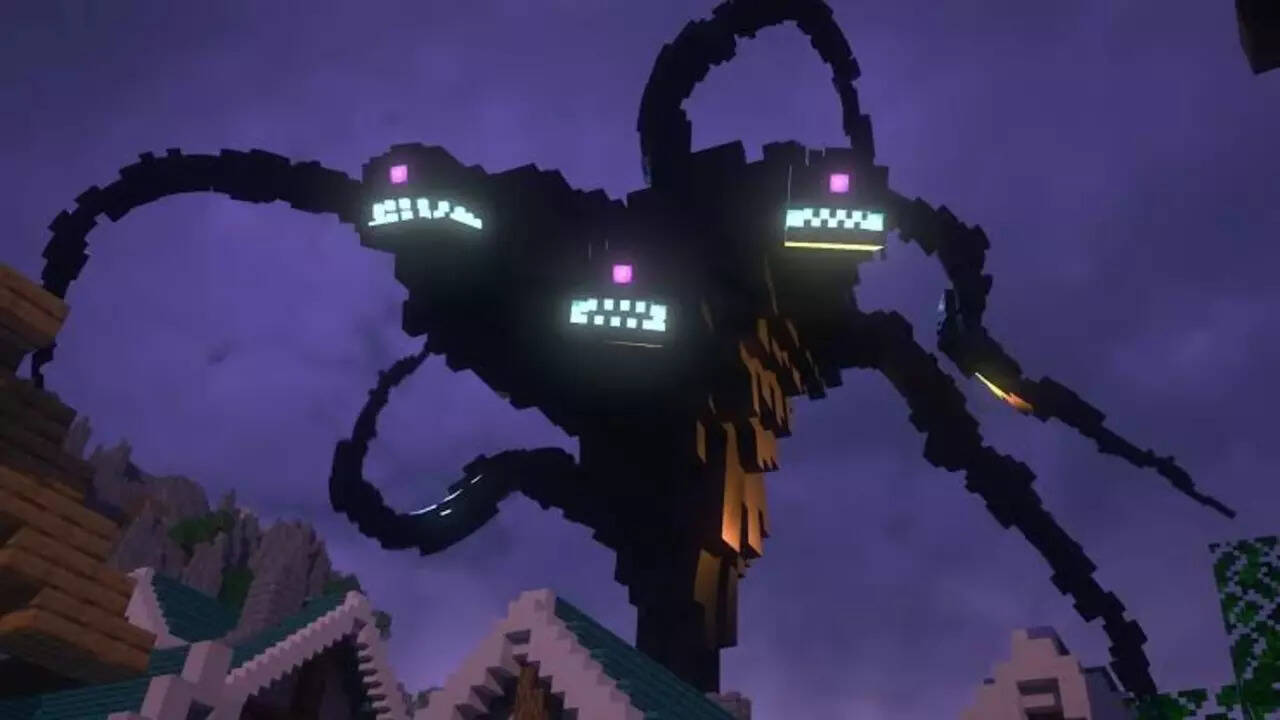
Engagement with a Wither is not just a test of player skill; it is a stress test for the game’s physics and lighting engines. The Wither interacts with the world in ways that standard entities do not, specifically through its unique status effects and block-breaking capabilities.
The “Wither Rose” and Status Effect Logic
When a Wither damages a player or mob, it applies the “Wither” status effect. Unlike the “Poison” effect, which leaves the player with half a heart of health, the Wither effect is a cumulative damage function that can reduce health to zero.
From a coding perspective, this effect turns the player’s health bar black, obscuring the current health value. This is a UI-level manipulation that adds a layer of psychological difficulty. Furthermore, if a non-undead mob is killed by a Wither, the game may replace that mob’s entity data with a “Wither Rose” item—a unique interaction where an entity’s death triggers the placement of a functional block.
Block Destruction Algorithms: The Wither’s Impact on World Data
The Wither possesses a “block-eating” mechanic. Whenever it is damaged or simply moving through tight spaces, it checks for blocks with a low “blast resistance” rating in its immediate bounding box and deletes them.
This creates a significant amount of “item drops” (entities) on the ground, which can lead to frame-rate drops (lag). On technical servers, managing the Wither’s pathing is essential to prevent it from destroying critical infrastructure or causing a “stack overflow” of dropped item entities that could crash the game instance.
Technical Optimization: Strategies for Efficient Boss Management
For players operating on high-performance servers or those engaging in “technical Minecraft” (the practice of using game mechanics for automation), understanding the Wither’s limitations is key to optimizing the gameplay experience.
Exploiting Hitbox Dimensions and Movement Pathing
The Wither’s hitbox is approximately 0.9 blocks wide and 3.5 blocks tall. By understanding these dimensions, technical players can “trap” the Wither in structures made of indestructible blocks, such as Bedrock (found at the top of the Nether or the bottom of the Overworld).
Because the Wither’s AI cannot calculate a path through Bedrock, and its “block-eating” code cannot delete it, the entity becomes immobilized. This allows players to farm the Wither for its drops without risk of environmental destruction. This exploit is a classic example of using knowledge of software constraints to bypass intended difficulty.
Performance Considerations in High-Intensity Boss Fights
When fighting the Wither “legitimately,” the game must calculate:
- The trajectory of three independent projectile streams.
- The explosion radius of every “Blue Wither Skull” (which has a higher explosion power).
- The pathfinding of the Wither itself.
- The health and status of all surrounding mobs.
On lower-end hardware, this can lead to “TPS” (Ticks Per Second) loss. Technical optimization often involves fighting the Wither in “void” areas (like the End dimension) to minimize the number of blocks the game has to calculate for destruction, thereby preserving CPU cycles.
The Nether Star and the Beacon: Hardware-Level Rewards
The primary reason for engaging with the Wither’s complex code is the reward it yields upon death: the Nether Star. This item is an “entity drop” that is immune to explosions, a specific flag in its code that prevents it from being destroyed by the very boss that drops it.
The Nether Star is a crafting ingredient for the Beacon, a block that provides area-of-effect (AoE) buffs to players. The Beacon itself is a marvel of technical implementation, projecting a beam of light that renders to the sky limit. This beam requires the game to check for “transparency” in every block directly above the Beacon. If a solid block is detected, the beam—and the associated status effect logic—is deactivated. This demonstrates how the Wither, as a boss entity, serves as the gatekeeper to one of the most technically advanced utility blocks in the game.
Conclusion
The Wither is more than just a formidable opponent in Minecraft; it is a sophisticated piece of software engineering that pushes the limits of the game’s engine. From its multi-target AI and block-state detection to its complex environmental interactions and status effect logic, the Wither represents the pinnacle of “boss” programming in a sandbox environment. By understanding the technical mechanics behind the Wither, players can better navigate its destructive potential, optimizing both their combat strategies and their hardware performance. Whether trapped in a bedrock ceiling or soaring through the skies of the Overworld, the Wither remains a testament to the intricate, code-driven world of Minecraft.
aViewFromTheCave is a participant in the Amazon Services LLC Associates Program, an affiliate advertising program designed to provide a means for sites to earn advertising fees by advertising and linking to Amazon.com. Amazon, the Amazon logo, AmazonSupply, and the AmazonSupply logo are trademarks of Amazon.com, Inc. or its affiliates. As an Amazon Associate we earn affiliate commissions from qualifying purchases.