
In the vast and ever-expanding digital universe, search engines serve as the indispensable navigators, guiding billions of users daily to the information they seek. From deciphering complex scientific concepts to finding the nearest coffee shop, these sophisticated technological platforms have fundamentally reshaped how we access, process, and interact with data. Their popularity isn’t merely a metric of user count; it’s a testament to their efficiency, accuracy, and the continuous innovation that keeps them at the forefront of the information age. While the landscape might appear dominated by a single titan, a closer look reveals a dynamic ecosystem comprising established challengers, privacy-focused alternatives, and specialized tools, each leveraging unique technological approaches to carve out their niche. Understanding “what are the most popular search engines” goes beyond naming names; it delves into the underlying technologies, user demands, and strategic innovations that define their success and shape our digital experience.
The Undisputed Reign: Google’s Dominance in Digital Search
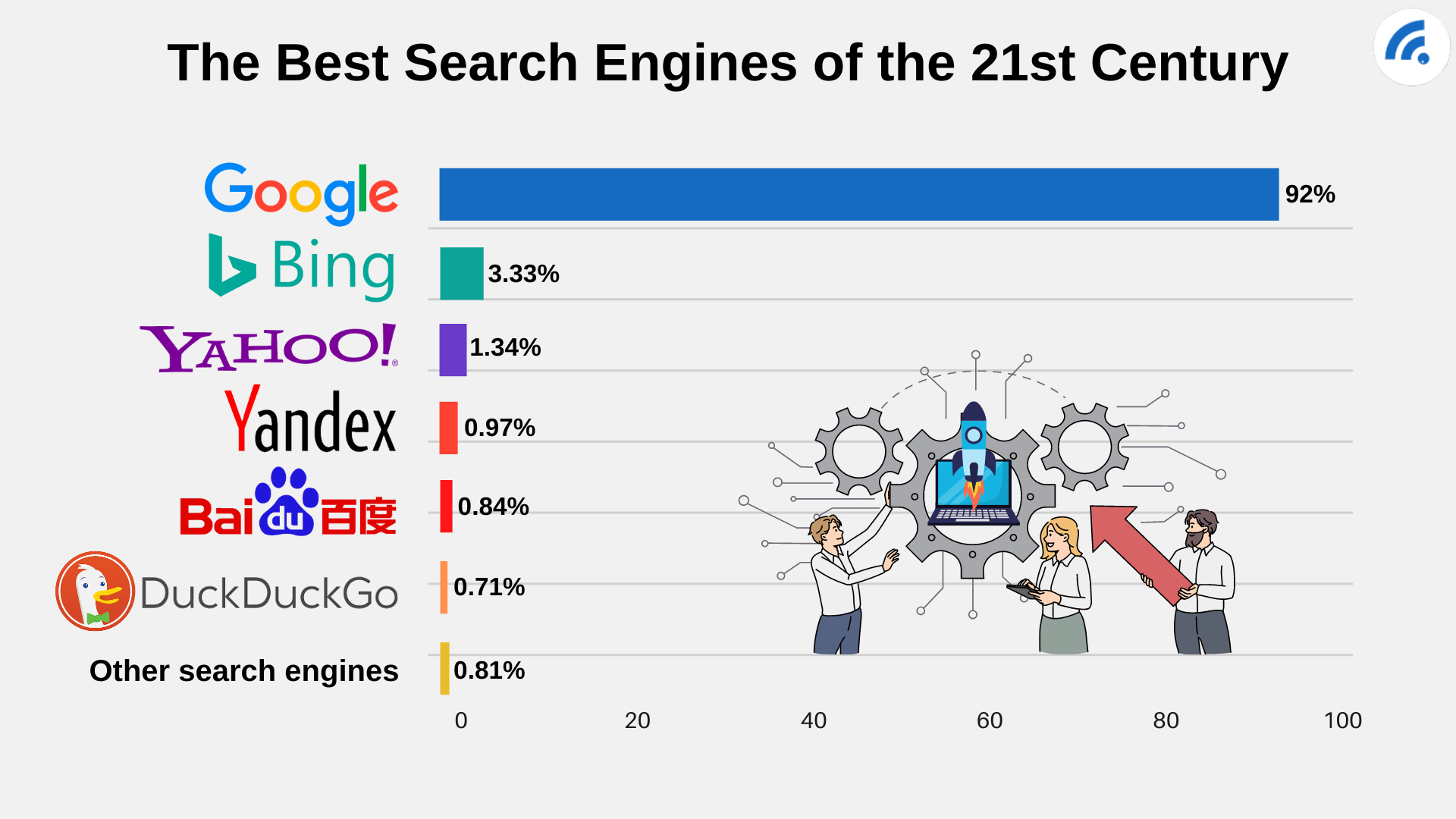
When the question of popular search engines arises, one name invariably eclipses all others: Google. With an overwhelming global market share consistently hovering above 90%, Google Search is not just a popular search engine; it is the de facto gateway to the internet for the vast majority of users worldwide. This unparalleled dominance is not accidental; it’s the result of relentless technological innovation, strategic ecosystem integration, and a commitment to delivering highly relevant and swift search results.
The Algorithmic Backbone: How Google Stays Ahead
At the core of Google’s success lies its sophisticated array of algorithms, constantly evolving to understand, interpret, and rank web content. From the foundational PageRank algorithm that initially revolutionized search by evaluating the quality and quantity of backlinks, to modern machine learning-driven systems like RankBrain, BERT, and MUM, Google continuously refines its ability to comprehend natural language queries and deliver the most pertinent information. These algorithms analyze hundreds of ranking factors, including content relevance, website authority, user experience signals, and freshness of information, ensuring that users typically find what they’re looking for with the first query. The sheer computational power and vast data sets Google processes daily allow for an unprecedented level of refinement and adaptation, making its search results exceptionally difficult for competitors to consistently match in terms of quality and comprehensiveness.
Ecosystem Integration: Beyond the Search Bar
Google’s popularity extends far beyond its search page, deeply embedding itself into the digital lives of billions through a sprawling ecosystem of interconnected services. Android, the world’s most popular mobile operating system, seamlessly integrates Google Search, often making it the default or only accessible search option for a vast user base. Chrome, the leading web browser, likewise prioritizes Google Search, as do other popular Google services such as Google Maps, YouTube (the world’s second-largest search engine), Gmail, and Google Assistant. This pervasive integration creates a self-reinforcing loop: users are exposed to Google Search across multiple touchpoints, reinforcing habits and consolidating its market position. The convenience of a unified account across these services further cements user loyalty, making it challenging for alternative search engines to gain significant traction.
Continuous Innovation: Pushing the Boundaries of Search
Google’s reign is also maintained by its aggressive pursuit of innovation. From introducing “featured snippets” and “People Also Ask” boxes that provide direct answers to queries, to developing powerful image and voice search capabilities, Google consistently pushes the boundaries of what a search engine can do. Its investment in artificial intelligence and machine learning is particularly evident in its ability to understand context, personalize results, and even anticipate user intent. Project Starline, Google Lens, and advancements in multimodal search demonstrate an ongoing commitment to transforming search from a simple query-response mechanism into an intelligent, interactive information discovery platform. This continuous evolution ensures that Google remains relevant and superior in a rapidly changing technological landscape.
The Evolving Landscape: Challengers and Niche Players
While Google dominates, the search engine market is far from a monolithic entity. Several other players offer compelling alternatives, each with unique technological approaches, user experiences, or ideological standpoints that appeal to specific segments of the digital population. These contenders challenge Google not necessarily on market share, but on specific functionalities, privacy principles, or social impact.
Microsoft Bing: A Persistent Alternative
Microsoft Bing stands as Google’s most significant traditional competitor, often holding a respectable, albeit much smaller, market share (typically in the single digits or low teens, depending on the region). Bing leverages Microsoft’s immense technological resources and its deep integration within the Windows operating system and Edge browser to maintain its presence. Bing’s algorithms, while different from Google’s, are sophisticated, offering competitive image and video search, as well as a robust rewards program that incentivizes usage. Its integration with Microsoft 365 services and AI tools like OpenAI’s DALL-E 2 and the generative AI capabilities in Microsoft Copilot (powered by a next-generation OpenAI large language model) signal Microsoft’s intent to innovate and differentiate Bing, particularly in the realm of intelligent and conversational search experiences. For many users, Bing provides a perfectly viable and often aesthetically pleasing alternative, especially within the Microsoft ecosystem.
Privacy-Focused Search: DuckDuckGo and Brave Search
A growing segment of internet users prioritizes privacy above all else, leading to the rise of search engines that explicitly promise not to track user data. DuckDuckGo is the leading example in this category, distinguished by its “privacy, simplified” motto. Technologically, DuckDuckGo achieves its privacy promise by not collecting IP addresses, not logging search queries, and not using cookies to track users across sites. Its results are often a blend from various sources, including its own crawler (DuckDuckBot), Bing, Yahoo, and others, processed to ensure anonymity. This approach appeals significantly to those concerned about data surveillance and targeted advertising. Similarly, Brave Search, integrated into the privacy-centric Brave browser, builds its own independent search index, aiming to reduce reliance on third-party sources and provide truly private and censorship-resistant search results, further strengthening the privacy-focused niche.
Ethical and Niche Search Engines: Ecosia and Others
Beyond privacy, some search engines differentiate themselves through ethical missions or highly specialized functionalities. Ecosia, for instance, uses 100% of its profits from search ads to plant trees around the world. Its technology is built upon Bing’s search index, but its unique value proposition lies in its direct positive environmental impact. For users concerned about sustainability, Ecosia offers a way to contribute to a cause simply by searching the web. Other niche search engines cater to specific information needs, like Wolfram Alpha, which is a computational knowledge engine providing direct answers to factual queries and performing complex calculations rather than merely linking to web pages. These examples highlight the diversity within the search engine landscape, demonstrating that popularity can also be defined by alignment with specific user values or needs, not just sheer market share.
The Core Mechanics: How Search Engines Deliver Information

Regardless of their market position or specific features, all general-purpose search engines share fundamental technological principles to deliver information. Understanding these core mechanics – crawling, indexing, and ranking – provides insight into the complex engineering required to organize the world’s information and make it universally accessible.
Crawling and Indexing: Mapping the Internet
The journey of information from a website to a search result begins with crawling. Search engine “spiders” or “bots” are automated programs that systematically browse the internet, following links from page to page. They download and read the content of web pages, including text, images, videos, and metadata. This massive undertaking involves traversing billions of pages daily. Once crawled, the information is then processed and stored in a vast database known as the index. Indexing involves analyzing the content of each page, extracting keywords, understanding its topic, identifying links, and categorizing it in a structured way that allows for rapid retrieval. This “map” of the internet is continuously updated, ensuring that search engines reflect the most current state of the web. Without efficient crawling and indexing, no search engine could ever hope to provide comprehensive or up-to-date results.
Ranking Algorithms: The Art of Relevance
After a user submits a query, the search engine consults its index to find all potentially relevant pages. This is where ranking algorithms come into play. These are the highly complex, proprietary mathematical formulas that determine the order in which results appear. The goal is to present the most relevant, authoritative, and high-quality information at the top. Factors influencing ranking are numerous and constantly evolving, but generally include:
- Relevance: How well does the content of a page match the keywords and intent behind the user’s query?
- Authority/Credibility: Does the page come from a trusted, authoritative source? (Often measured by backlinks from other reputable sites).
- User Experience: Is the page fast-loading, mobile-friendly, secure (HTTPS), and easy to navigate?
- Freshness: For time-sensitive queries, is the information up-to-date?
- Location: For local searches, is the content relevant to the user’s geographical position?
Machine learning plays an increasingly critical role in ranking, allowing algorithms to learn from user interactions, identify patterns, and continuously improve the accuracy and personalization of search results.
User Interface and Experience: Accessibility and Speed
Beyond the back-end complexities, the front-end user interface (UI) and overall user experience (UX) are crucial for a search engine’s popularity. A clean, intuitive design that makes it easy to input queries and understand results is paramount. Speed is another non-negotiable factor; users expect instant gratification, and even milliseconds of delay can impact satisfaction. Search engines invest heavily in optimizing their infrastructure to deliver results almost instantaneously. Furthermore, features like auto-complete suggestions, direct answer boxes, knowledge panels, and refined search filters enhance usability, helping users navigate information more efficiently. The combination of powerful algorithms with a thoughtful user experience is what makes a search engine truly popular and indispensable.
The Future Trajectory of Search: AI, Personalization, and Privacy
The evolution of search engines is far from over. Driven by advancements in artificial intelligence, increasing demands for personalized experiences, and growing concerns about data privacy, the future of search promises even more sophisticated, intuitive, and potentially transformative capabilities.
Artificial Intelligence and Conversational Search
Artificial intelligence, particularly natural language processing (NLP) and machine learning, is poised to redefine how we interact with search engines. Current developments, as seen with Google’s MUM and BERT, and Microsoft’s integration of OpenAI’s large language models into Bing, are moving beyond keyword matching to a deeper semantic understanding of user intent. The rise of conversational AI means search engines will become more adept at handling complex, multi-turn queries, understanding context, and providing synthesized answers rather than just links. Voice search and virtual assistants will become more intelligent and ubiquitous, allowing users to ask questions in natural language and receive direct, spoken responses, further blurring the lines between search and intelligent assistance. This shift towards conversational search aims to make information retrieval feel less like a search and more like a dialogue.
Hyper-Personalization vs. Privacy Concerns
The ability of AI to personalize search results based on a user’s past queries, location, browsing history, and preferences offers immense convenience and relevance. However, this hyper-personalization raises significant privacy concerns. While users benefit from tailored results, there’s a growing apprehension about how much data is collected and used to create these profiles. The tension between delivering a highly personalized experience and respecting individual privacy will be a central challenge for future search engines. This dichotomy fuels the growth of privacy-focused alternatives, suggesting a future where users may choose their search engine not just for its results, but for its ethical stance on data handling. Innovative solutions might emerge, offering privacy-preserving personalization through federated learning or on-device processing.
The Semantic Web and Knowledge Graphs
The future of search is also deeply intertwined with the development of the Semantic Web and advanced Knowledge Graphs. Instead of just understanding keywords, future search engines will have an even richer understanding of the relationships between entities, concepts, and facts. Knowledge Graphs, like Google’s own, are vast networks of interconnected information that allow search engines to provide direct answers, summarize topics, and infer connections that traditional keyword matching cannot. This will lead to more intelligent search experiences where users receive comprehensive, structured information rather than a list of documents to sift through. The goal is to move towards a web of data, not just a web of documents, making information instantly actionable and contextually rich.
New Paradigms: Visual and Voice Search
While text-based queries remain dominant, visual and voice search are rapidly gaining traction and are set to become integral parts of the search experience. Technologies like Google Lens allow users to search the real world through their camera, identifying objects, translating text, and retrieving information about their surroundings. Voice search, driven by the proliferation of smart speakers and mobile assistants, offers a hands-free, intuitive way to interact with search engines. The integration of augmented reality (AR) could further enhance these paradigms, overlaying search results directly onto the physical world. These new input and output methods require sophisticated AI and robust data processing capabilities, pushing the boundaries of traditional search engine design and opening up entirely new ways for users to discover and interact with information.
In conclusion, the realm of popular search engines is a dynamic and technologically intricate domain. While Google unequivocally leads due to its relentless innovation, algorithmic superiority, and pervasive ecosystem, the market continues to evolve. Challengers like Bing leverage significant resources, while privacy-focused alternatives like DuckDuckGo and ethical engines like Ecosia cater to specific user values. The fundamental mechanics of crawling, indexing, and ranking remain critical, but the future promises a landscape shaped by advanced AI, conversational interfaces, and a complex interplay between personalization and privacy. As technology progresses, search engines will continue to adapt, becoming ever more intelligent, intuitive, and deeply integrated into the fabric of our digital lives.
aViewFromTheCave is a participant in the Amazon Services LLC Associates Program, an affiliate advertising program designed to provide a means for sites to earn advertising fees by advertising and linking to Amazon.com. Amazon, the Amazon logo, AmazonSupply, and the AmazonSupply logo are trademarks of Amazon.com, Inc. or its affiliates. As an Amazon Associate we earn affiliate commissions from qualifying purchases.