
The intricate world of cellular biology reveals two fundamental blueprints for life: the plant cell and the animal cell. While both share core eukaryotic machinery, their evolutionary paths have led to distinct structural and functional adaptations. These differences are not merely academic curiosities; they underpin critical biological processes and have profound implications for fields ranging from agriculture and medicine to the burgeoning sectors of biotechnology and synthetic biology. Understanding these distinctions is essential for anyone seeking to delve into the technological frontiers that leverage cellular functions.
The Architectural Divide: Key Structural Distinctions
The most apparent differences between plant and animal cells lie in their structural components, or more accurately, the presence or absence of certain organelles. These architectural variations dictate their respective roles and capabilities.

The Unyielding Fortress: The Plant Cell Wall
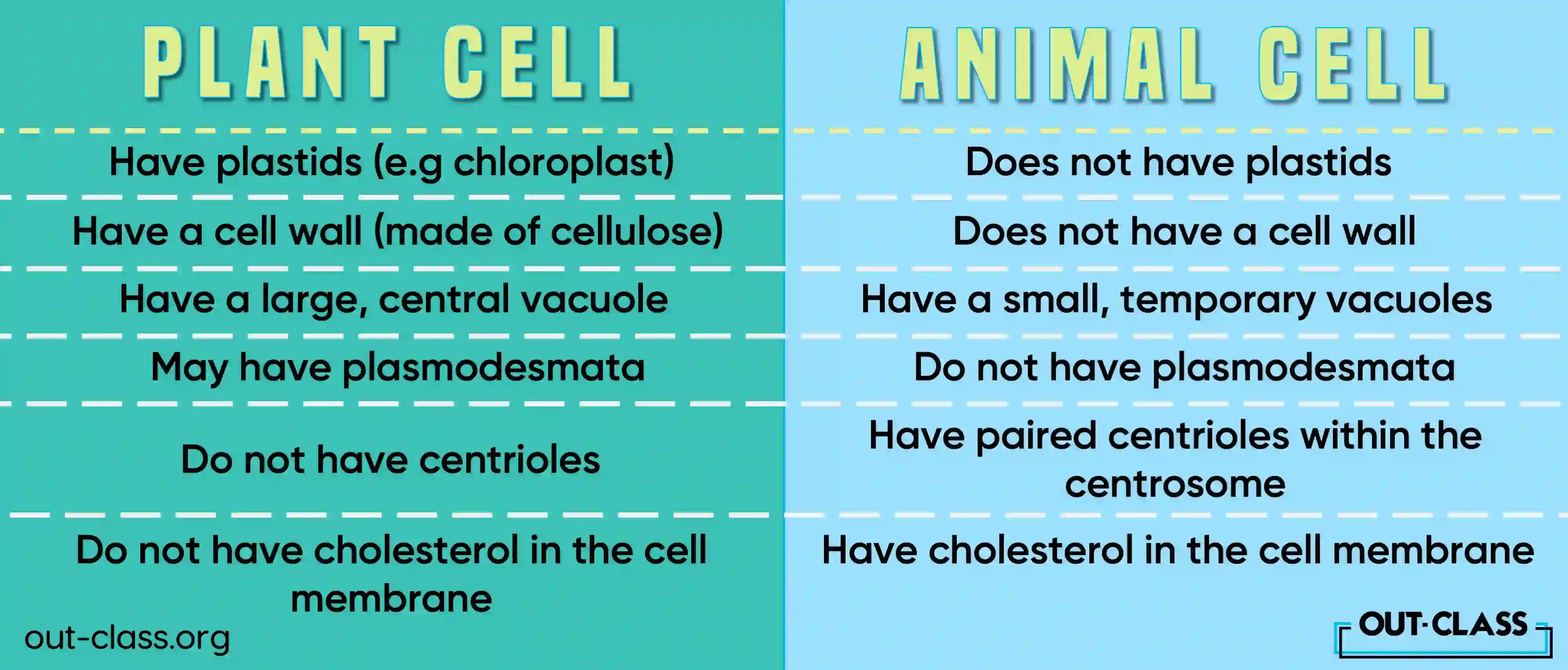
One of the most defining features of plant cells is the presence of a rigid cell wall, a protective outer layer located outside the plasma membrane. This wall is primarily composed of cellulose, a complex carbohydrate that provides structural support and protection against mechanical stress and osmotic lysis. The turgor pressure, the internal pressure exerted by the vacuole on the cell wall, is crucial for maintaining plant rigidity and upright posture. Without this wall, plant cells would burst when placed in hypotonic environments (environments with a lower solute concentration).
The cell wall is not merely a passive barrier; it’s a dynamic structure involved in cell-to-cell communication and defense. Its precise composition can vary, contributing to the diverse textures and strengths of different plant tissues. This structural integrity is a fundamental requirement for sessile organisms like plants, allowing them to withstand environmental pressures and grow upwards towards sunlight.
The Versatile Vacuole: A Multifunctional Organelle in Plants
Plant cells typically possess a large, central vacuole that can occupy up to 90% of the cell volume. This prominent organelle serves a multitude of functions far beyond simple storage. It plays a critical role in maintaining turgor pressure, essential for cell rigidity and plant support. The vacuole also stores water, ions, nutrients, pigments, and waste products. In some cases, it can even store toxic compounds, acting as a defense mechanism against herbivores.
Beyond storage and structural support, the vacuole is involved in the breakdown of cellular waste and macromolecules, akin to the lysosomes found in animal cells. It also contributes to cell growth by expanding, pushing the cytoplasm and nucleus against the cell wall. The sheer size and diverse functionalities of the central vacuole in plant cells set them apart significantly from the smaller, more transient vacuoles that might be found in animal cells.
Chloroplasts: The Powerhouses of Photosynthesis
Perhaps the most biologically significant difference is the presence of chloroplasts in plant cells, the organelles responsible for photosynthesis. These green, disc-shaped structures contain chlorophyll, the pigment that captures light energy from the sun. Through photosynthesis, plants convert light energy, carbon dioxide, and water into glucose (a sugar) and oxygen. This process is the foundation of most food webs on Earth, making plants the primary producers.
The complex internal structure of chloroplasts, with their thylakoid membranes arranged in stacks called grana, is a testament to the sophistication of this energy conversion machinery. Animal cells, being heterotrophic, rely on consuming organic matter for energy and therefore lack chloroplasts. The absence of photosynthesis in animal cells dictates their reliance on external food sources and their generally mobile nature.
Centrioles and Cytoskeletal Organization
Animal cells possess centrioles, which are involved in organizing microtubules during cell division and in the formation of cilia and flagella. While microtubules are present in both plant and animal cells for structural support and intracellular transport, plant cells typically lack centrioles. Instead, they utilize other mechanisms to organize their microtubule networks. This difference in cytoskeletal organization reflects their distinct modes of development and movement.
The Functional Divide: Metabolic Strategies and Cellular Dynamics
Beyond their structural blueprints, plant and animal cells exhibit profound differences in their metabolic strategies and cellular dynamics, driven by their unique roles in ecosystems and their modes of life.
Autotrophy vs. Heterotrophy: Fundamental Energy Acquisition
The most significant functional divergence stems from their mode of nutrition. As mentioned, plants are autotrophs, meaning they can produce their own food through photosynthesis. This allows them to be stationary and form the base of most terrestrial ecosystems. Their metabolic processes are geared towards capturing light energy and converting inorganic compounds into organic matter.
Animal cells, conversely, are heterotrophs. They obtain energy and nutrients by consuming other organisms, either plants or other animals. This necessitates mechanisms for ingestion, digestion, and the efficient breakdown of complex organic molecules for energy. Their metabolic pathways are primarily focused on cellular respiration to extract energy from consumed food. This fundamental difference in energy acquisition dictates their ecological roles and the evolutionary pressures that have shaped them.
Cell Division and Growth Patterns
The presence of a rigid cell wall profoundly influences how plant cells divide and grow. Plant cells undergo cytokinesis (division of the cytoplasm) by forming a cell plate, which eventually develops into a new cell wall between the two daughter cells. This process ensures the structural integrity of the plant. Animal cells, on the other hand, divide by forming a cleavage furrow, where the plasma membrane pinches inward to separate the two daughter cells.
Furthermore, plant growth is often characterized by cell expansion due to the uptake of water into the large central vacuole, leading to an increase in cell volume. Animal growth, while also involving cell division, is more complex and can involve cell migration, differentiation, and the formation of specialized tissues and organs.
Mobility and Environmental Interaction
The inherent rigidity provided by the cell wall renders mature plant cells largely immobile. Their interaction with the environment is largely mediated through passive processes like absorption of water and nutrients, or through active signaling pathways responding to environmental cues like light and gravity.
Animal cells, on the other hand, exhibit a much greater degree of mobility. They can move through their own mechanisms (like muscle cells), or through the movement of the entire organism facilitated by specialized cells and tissues. This mobility is crucial for finding food, escaping predators, and reproducing.
Implications for Technological Advancement
The distinct characteristics of plant and animal cells are not just biological facts; they are the bedrock upon which significant technological advancements are built.
Biotechnology and Genetic Engineering
Understanding the differences in cellular machinery, particularly the presence of chloroplasts and the cell wall in plants, is fundamental to modern biotechnology. Genetic engineering techniques often target these unique features. For instance, researchers can introduce genes into plant cells to confer desirable traits like disease resistance or enhanced nutritional value. Conversely, understanding animal cell signaling pathways is crucial for developing targeted drug therapies and regenerative medicine. The ability to manipulate these cellular components allows for the creation of genetically modified organisms (GMOs) with specific applications in agriculture and industry.
Bio-energy and Sustainable Technologies
The photosynthetic capabilities of plant cells, housed within chloroplasts, are a prime target for research in bio-energy. Efforts are underway to harness this natural process more efficiently, either by engineering more productive crops or by developing artificial photosynthetic systems inspired by cellular mechanisms. Similarly, understanding how plant cells store energy and nutrients can inform the development of sustainable biofuels and bio-based materials. The cell wall’s cellulose component is also a significant focus for its use in biomaterials and as a renewable resource.
Medical Applications and Drug Development
The differences in cellular structures and functions between plant and animal cells have direct implications for medicine. For example, the distinct metabolic pathways in animal cells are targets for drug development, where pharmaceuticals are designed to disrupt specific cellular processes in pathogens or cancerous cells. Understanding the nuances of cell signaling and communication in animal cells is also vital for developing therapies for a wide range of diseases, from cancer to neurodegenerative disorders. The study of plant compounds, often stored in vacuoles, has historically led to the discovery of numerous pharmaceuticals, and ongoing research continues to explore their medicinal potential.

Synthetic Biology and Bio-mimicry
The field of synthetic biology aims to design and construct new biological parts, devices, and systems, or to re-design existing, natural biological systems for useful purposes. This often involves drawing inspiration from and directly manipulating the fundamental building blocks of life, including plant and animal cells. By understanding the elegant solutions evolved in nature, scientists can attempt to engineer novel biological functions, leading to the development of biosensors, biocomputing devices, and novel manufacturing processes that mimic cellular operations. The distinct functional repertoires of plant and animal cells offer a rich palette of components and mechanisms for synthetic biologists to explore and integrate.
aViewFromTheCave is a participant in the Amazon Services LLC Associates Program, an affiliate advertising program designed to provide a means for sites to earn advertising fees by advertising and linking to Amazon.com. Amazon, the Amazon logo, AmazonSupply, and the AmazonSupply logo are trademarks of Amazon.com, Inc. or its affiliates. As an Amazon Associate we earn affiliate commissions from qualifying purchases.