
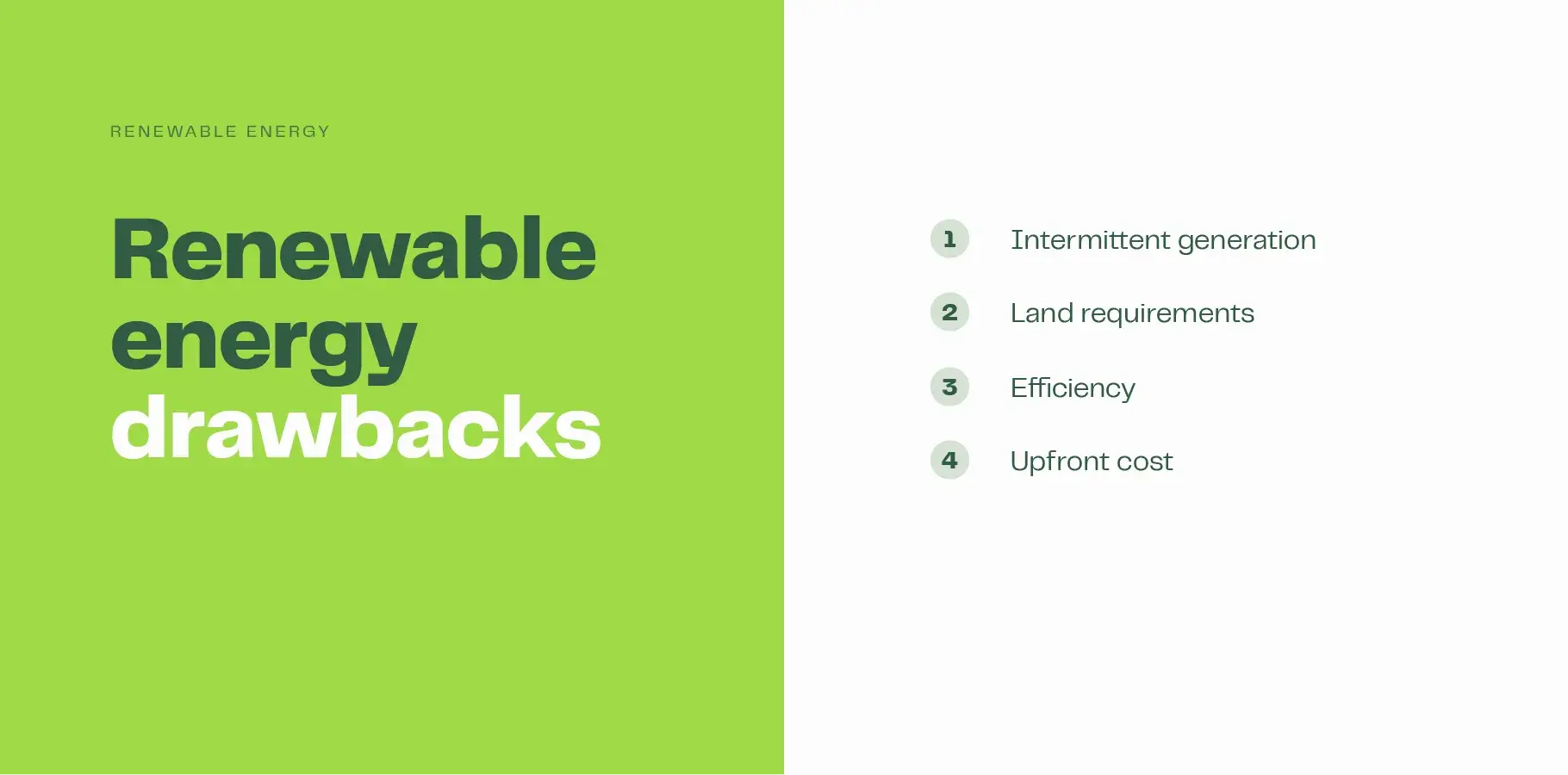
While the world increasingly turns towards renewable energy sources like solar, wind, and hydro to combat climate change and achieve energy independence, it’s crucial to acknowledge that these technologies are not without their drawbacks. A balanced understanding requires exploring the challenges and limitations that accompany their widespread adoption. This article delves into the less-discussed disadvantages of renewable energy, examining them through the lenses of technological feasibility, brand perception and implementation hurdles, and the financial implications.
Technological Hurdles and Intermittency
The most significant and widely discussed disadvantage of renewable energy lies in its inherent intermittency and the technological challenges associated with ensuring a consistent power supply. Unlike fossil fuels, which can be stored and burned on demand, many renewable sources are dependent on natural phenomena that are not always predictable or readily available.

The Challenge of Intermittency
- Solar Power and Weather Dependence: Solar panels generate electricity only when the sun is shining. Cloudy days, nighttime, and even seasonal variations significantly reduce or eliminate solar energy production. This variability necessitates backup systems or massive energy storage solutions to meet demand when sunlight is scarce. Imagine a city powered entirely by solar; on a prolonged cloudy spell, or during a winter night, the grid would face a severe deficit without alternative sources or storage.
- Wind Power’s Unpredictability: Similarly, wind turbines rely on wind to generate electricity. While wind patterns can be forecast to some extent, they are inherently unpredictable. Calm periods can leave wind farms idle, impacting grid stability and reliability. Furthermore, extreme weather events, such as hurricanes, can damage wind turbines, leading to prolonged outages and costly repairs.
- Hydropower’s Environmental and Geographic Constraints: While hydropower offers a more consistent source than solar or wind in some regions, it is not without its limitations. The construction of large-scale hydroelectric dams has significant environmental impacts, including habitat disruption, altered river flows, and displacement of communities. Moreover, the availability of suitable sites for new hydroelectric projects is limited, and many existing ones face challenges due to changing precipitation patterns caused by climate change.
The Energy Storage Dilemma
The intermittency of renewable sources directly leads to the challenge of energy storage. Effectively storing vast amounts of electricity generated during peak production times for use during low production periods is a monumental task, both technologically and financially.
- Battery Technology Limitations: While battery technology has advanced rapidly, current solutions like lithium-ion batteries, while increasingly cost-effective, still face limitations in terms of capacity, lifespan, and the environmental impact of raw material extraction (e.g., cobalt and lithium). Scaling these batteries to grid-level storage for entire cities or regions requires enormous investment and presents significant logistical challenges. Furthermore, the disposal and recycling of these batteries raise new environmental concerns.
- Other Storage Methods: Other energy storage methods, such as pumped hydro storage and compressed air energy storage, also have their own constraints. Pumped hydro requires specific geographic features (elevated reservoirs), and compressed air energy storage needs suitable underground formations. These are not universally applicable solutions. The quest for efficient, affordable, and scalable energy storage remains a critical bottleneck for the full integration of renewables.
Grid Modernization and Integration
Integrating a large and fluctuating supply of renewable energy into existing electricity grids designed for stable, centralized fossil fuel power plants presents a considerable technological and infrastructural challenge.
- Grid Stability and Control: The intermittent nature of renewables can lead to voltage fluctuations and frequency instability in the grid, potentially causing blackouts. Advanced grid management systems, smart grid technologies, and sophisticated forecasting are required to balance supply and demand in real-time. This requires substantial investment in upgrading and modernizing existing grid infrastructure, which is often aging and not equipped for such dynamic power flows.
- Transmission Infrastructure: Renewable energy sources are often located in remote areas, far from population centers where electricity demand is highest. This necessitates the construction of new, long-distance transmission lines, which can be expensive, face regulatory hurdles, and encounter public opposition due to visual impact and land use concerns. The “not in my backyard” (NIMBY) phenomenon can significantly delay or even halt crucial infrastructure projects.
Brand Perception, Implementation Hurdles, and Societal Factors
Beyond the purely technical aspects, the widespread adoption of renewable energy is also influenced by how these technologies are perceived, the complexities of their implementation, and broader societal factors.
Brand Messaging and Public Perception
The “green” image of renewable energy is powerful, but the reality of its implementation can sometimes fall short of idealized expectations, impacting brand perception.
- “Greenwashing” Concerns: As companies and governments increasingly promote their commitment to renewable energy, there’s a risk of “greenwashing” – making exaggerated or misleading claims about their environmental efforts. This can erode public trust and create skepticism about the true impact of renewable initiatives. Consumers and investors are becoming more discerning and can quickly spot inauthentic or superficial commitments.
- “Not in My Backyard” (NIMBY) Syndrome: While people generally support renewable energy, they often object to the placement of wind farms, solar arrays, or transmission lines in their local communities. Concerns about visual pollution, noise from wind turbines, land use, and perceived impacts on property values can lead to significant local opposition, delaying or derailing projects. This highlights a disconnect between global environmental goals and local acceptance.
- Job Displacement and Economic Transition: The shift away from fossil fuels, while necessary, can lead to job losses in traditional energy sectors. Managing this transition and ensuring that displaced workers are retrained and find new employment in the renewable energy sector or other growing industries is a significant challenge. If not handled effectively, this can lead to social unrest and resistance to the transition.

Implementation and Infrastructure Challenges
The practicalities of deploying renewable energy at scale present a unique set of hurdles.
- Land Use Requirements: Large-scale solar farms and wind farms require significant amounts of land. This can compete with other land uses, such as agriculture, housing, and natural habitats. Finding suitable land that minimizes environmental impact and maximizes energy generation potential is a complex planning and permitting process. The visual impact of vast solar arrays or towering wind turbines can also be a point of contention.
- Supply Chain and Material Dependence: The manufacturing of solar panels, wind turbines, and batteries relies on specific raw materials, some of which are sourced from a limited number of countries. This can create geopolitical dependencies and vulnerabilities in the supply chain. Concerns about the ethical sourcing of materials and the environmental impact of their extraction are also growing.
- Regulatory and Permitting Complexities: The development of renewable energy projects is often subject to complex and lengthy regulatory and permitting processes. Navigating these procedures can be time-consuming and costly, adding to the overall expense of renewable energy deployment. Inconsistencies in regulations across different jurisdictions can further complicate matters.
The Energy Mix and System Reliability
The transition to a fully renewable energy system is not a simple switch; it involves managing the energy mix and ensuring overall system reliability.
- Balancing the Grid: Even with advanced storage, a grid dominated by intermittent renewables will require sophisticated management to ensure that electricity supply always matches demand. This involves a dynamic balancing act, often requiring the use of flexible backup power sources, which may still include some fossil fuels in the interim. The “duck curve” phenomenon, where solar power significantly reduces demand during daylight hours, presents challenges for grid operators in managing evening peaks.
- Geopolitical Considerations: While renewable energy offers the promise of energy independence for many nations, the reliance on specific materials for renewable technologies can create new geopolitical dependencies. The control of rare earth minerals, for instance, can become a source of international tension.
Financial Implications and Economic Realities
While the long-term economic benefits of renewable energy are often highlighted, there are significant upfront costs and ongoing financial considerations that present disadvantages.
High Upfront Investment Costs
- Capital Expenditure: The initial capital expenditure for building renewable energy infrastructure, such as solar farms, wind turbines, and hydroelectric dams, can be substantial. While the cost of technologies like solar panels has decreased dramatically, the sheer scale of investment required for a complete transition remains a significant barrier, particularly for developing nations.
- Grid Modernization and Storage: As mentioned earlier, upgrading and modernizing the electricity grid to accommodate renewables, along with investing in large-scale energy storage solutions, represents a massive financial undertaking. These investments are crucial for reliability but add considerably to the overall cost of the transition.
Operational and Maintenance Expenses
- Maintenance and Repair: Renewable energy infrastructure, particularly mechanical components like wind turbines, requires ongoing maintenance and repair. These costs can be significant and are often higher than those associated with the simpler, more centralized infrastructure of traditional power plants.
- Decommissioning Costs: At the end of their operational life, renewable energy installations will require decommissioning and disposal. The costs associated with safely dismantling and recycling these structures, especially large wind turbines and solar panels, are often not fully accounted for in initial project planning and can represent a future financial burden.
Subsidies and Market Distortions
- Reliance on Subsidies: Historically, and often currently, the renewable energy sector has relied heavily on government subsidies and tax incentives to become economically competitive with established fossil fuel industries. While these subsidies are designed to accelerate adoption and drive down costs, they represent a financial burden on taxpayers and can distort market signals.
- Market Volatility: The fluctuating nature of renewable energy production can lead to price volatility in electricity markets. During periods of high renewable generation, electricity prices can drop significantly, potentially impacting the profitability of all energy generators. Conversely, during periods of low generation, prices can spike, leading to increased costs for consumers.
The True Cost of Energy
Calculating the “true cost” of energy is a complex exercise. While the fuel for renewables (sun, wind) is free, the total cost includes not only the capital and operational expenses but also the costs of grid integration, storage, and managing intermittency. Comparing these comprehensive costs with the often-externalized costs of fossil fuels (environmental damage, health impacts) is essential for a fair economic assessment. However, the immediate and visible financial outlays for renewable infrastructure can make them appear more expensive in the short term.
In conclusion, while the imperative to transition to renewable energy is clear, ignoring its disadvantages would be a disservice to effective planning and implementation. Addressing the technological challenges of intermittency and storage, navigating the complexities of brand perception and societal acceptance, and carefully managing the significant financial implications are crucial steps in ensuring a sustainable and equitable energy future. By understanding and proactively mitigating these disadvantages, we can pave the way for a more robust and truly green energy landscape.
aViewFromTheCave is a participant in the Amazon Services LLC Associates Program, an affiliate advertising program designed to provide a means for sites to earn advertising fees by advertising and linking to Amazon.com. Amazon, the Amazon logo, AmazonSupply, and the AmazonSupply logo are trademarks of Amazon.com, Inc. or its affiliates. As an Amazon Associate we earn affiliate commissions from qualifying purchases.