
In the ever-evolving landscape of digital communication, Facebook remains a dominant force, connecting billions worldwide. For businesses, brands, and individuals looking to amplify their message, understanding when to share content is just as crucial as what to share. Simply posting whenever inspiration strikes is a recipe for lost reach and engagement. This article delves into the science and strategy behind optimizing your Facebook posting schedule, drawing upon insights relevant to technology trends, brand building, and even financial considerations.
The Elusive Science of Optimal Facebook Posting Times
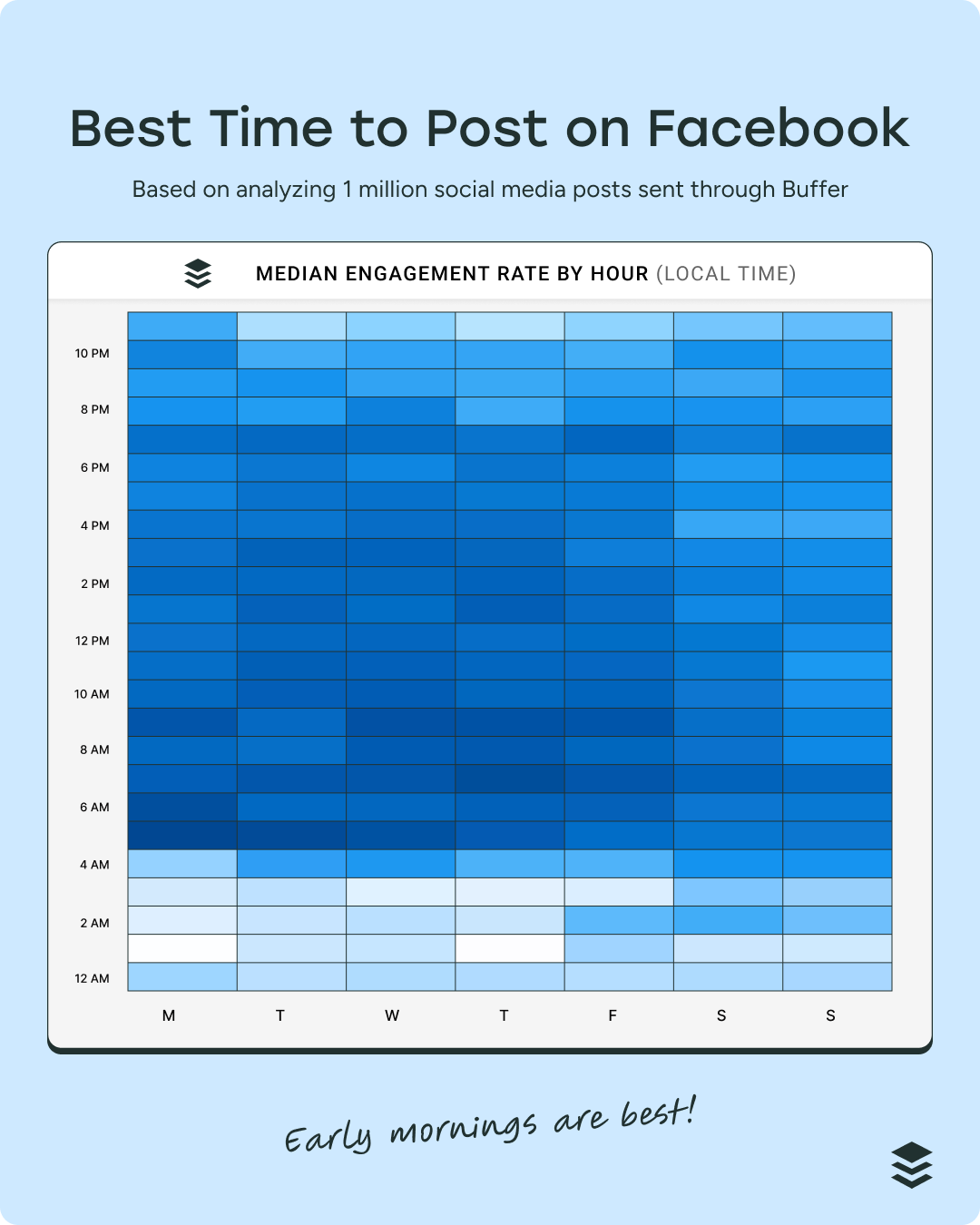
The question of “what are the best times to post on Facebook?” isn’t a one-size-fits-all answer. It’s a dynamic puzzle influenced by a multitude of factors, but the core principle remains the same: posting when your target audience is most active and receptive. This isn’t about guessing; it’s about strategic observation and data-driven decisions.
Understanding Your Audience’s Digital Footprint
Before diving into specific time slots, the most critical step is understanding who you are trying to reach. Facebook’s algorithms are designed to show users content they are most likely to engage with. Therefore, aligning your posting times with your audience’s online habits is paramount.
- Demographics Matter: Are you targeting Gen Z students who are likely online during late evenings and weekends? Or are you reaching busy professionals who might scroll through their feed during their morning commute or lunch breaks? Age, profession, geographical location, and even cultural nuances all play a role in when people are most likely to be on Facebook.
- Behavioral Patterns: Beyond basic demographics, observe your audience’s actual behavior on the platform. Do they tend to engage with posts in the early morning, during work hours, or after dinner? This requires a bit of detective work, which we’ll explore further.
- Time Zone Considerations: If your audience spans multiple time zones, this adds another layer of complexity. You’ll need to consider prime-time hours for each region you wish to target.
Leveraging Facebook Insights for Data-Driven Decisions
Facebook provides a powerful, free tool for page administrators: Facebook Insights. This section of your page offers invaluable data on your audience’s demographics, location, and crucially, their activity patterns.
Unpacking Facebook Insights: Your Secret Weapon
Within Facebook Insights, you’ll find specific tabs dedicated to understanding your audience. The “Posts” tab is particularly useful, offering data on when your followers are online.
- The “When Your Fans Are Online” Graph: This is your golden ticket. It visually represents the days and hours your audience is most active on Facebook. Look for spikes in activity – these are your prime posting windows.
- Interpreting the Data: Don’t just glance at the graph. Analyze it. Are there consistent peaks on certain weekdays? Do weekends show a different pattern? Are there specific hours that consistently outperform others?
- Beyond Peak Activity: While peak activity is important, consider that competition for attention is also highest during these times. Sometimes, posting just before the peak can get your content seen by early adopters and set the stage for wider engagement.
- Experimentation is Key: Insights provide a strong starting point, but they are not the absolute truth for every single post. Continually experiment with slightly different times around your identified peak windows to see what yields the best results for your specific content.
Strategic Timing: Aligning with Content and Goals
Beyond general audience activity, the type of content you’re posting and your overarching marketing goals should also inform your posting schedule.
Optimizing for Engagement and Reach
Different types of content resonate at different times.
- Informative Content and Industry News: If you’re sharing in-depth articles, software reviews, or AI tool tutorials (leveraging your Tech interests), consider posting when people have more time to consume information. Mid-morning or early afternoon on weekdays might be ideal for professionals looking to stay updated.
- Promotional Content and Offers: For sales, product launches, or special offers (tying into Brand and Money topics), you might want to post when impulse buying is more likely. Evenings and weekends can be effective for this, as people are often more relaxed and browsing.
- Behind-the-Scenes and Human-Interest Content: For personal branding or showcasing company culture, more casual content can thrive during off-peak hours or weekends when people are more open to emotional connections.
The Power of Consistent Scheduling
Consistency is a cornerstone of successful social media marketing. Regularly posting at similar times helps train your audience to expect your content and primes Facebook’s algorithms to favor your page.
- Building Habitual Engagement: When your followers know to expect your posts at, say, 9 AM every Tuesday, they’re more likely to check your page specifically for that content.
- Algorithm Favoritism: Facebook’s algorithms tend to reward pages that consistently deliver engaging content. Predictable posting times can contribute to this perception of reliability.
- Automating for Efficiency: Tools like Facebook’s built-in scheduler or third-party apps can help you maintain a consistent schedule even when you’re busy. This is particularly relevant for those leveraging productivity apps and AI tools to manage their online presence.
Beyond General Guidelines: Tailoring Your Strategy
While general best times often emerge from broad data sets, the most effective strategy is one that is deeply tailored to your unique brand and audience.
Weekday vs. Weekend: Decoding the Engagement Landscape
The debate between weekday and weekend posting is perennial. Both have their merits, and the optimal choice depends heavily on your audience.
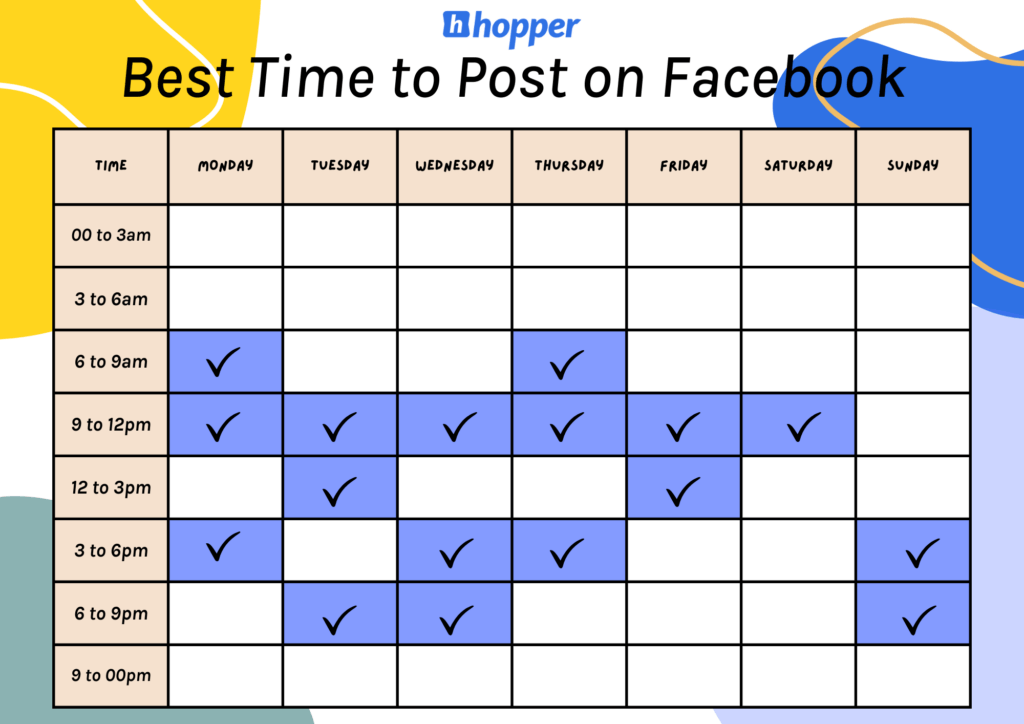
- Weekday Warriors: Many studies suggest that weekdays, particularly mid-morning (9 AM – 1 PM) and early afternoon (1 PM – 3 PM), tend to be peak times for B2B audiences and professionals. During these hours, people are often taking breaks, catching up on news, or looking for solutions to work-related challenges. This is prime time for sharing thought leadership, industry insights, and productivity tips.
- Weekend Wanderers: Weekends can be excellent for consumer-focused brands or when aiming for more casual engagement. Late mornings and afternoons on Saturdays and Sundays often see higher activity as people have more leisure time. This is a good period for lifestyle content, product showcases, and community-building posts. However, be mindful of family activities and other weekend commitments.
- The Weekday Evening Lull: While some might think evenings are ideal, Facebook engagement can sometimes dip during typical dinner hours (6 PM – 8 PM) as people are occupied with family or social activities. However, late evenings (after 8 PM) can see a resurgence in activity, especially among younger demographics.
Mid-Week Advantage: The Sweet Spot for Many
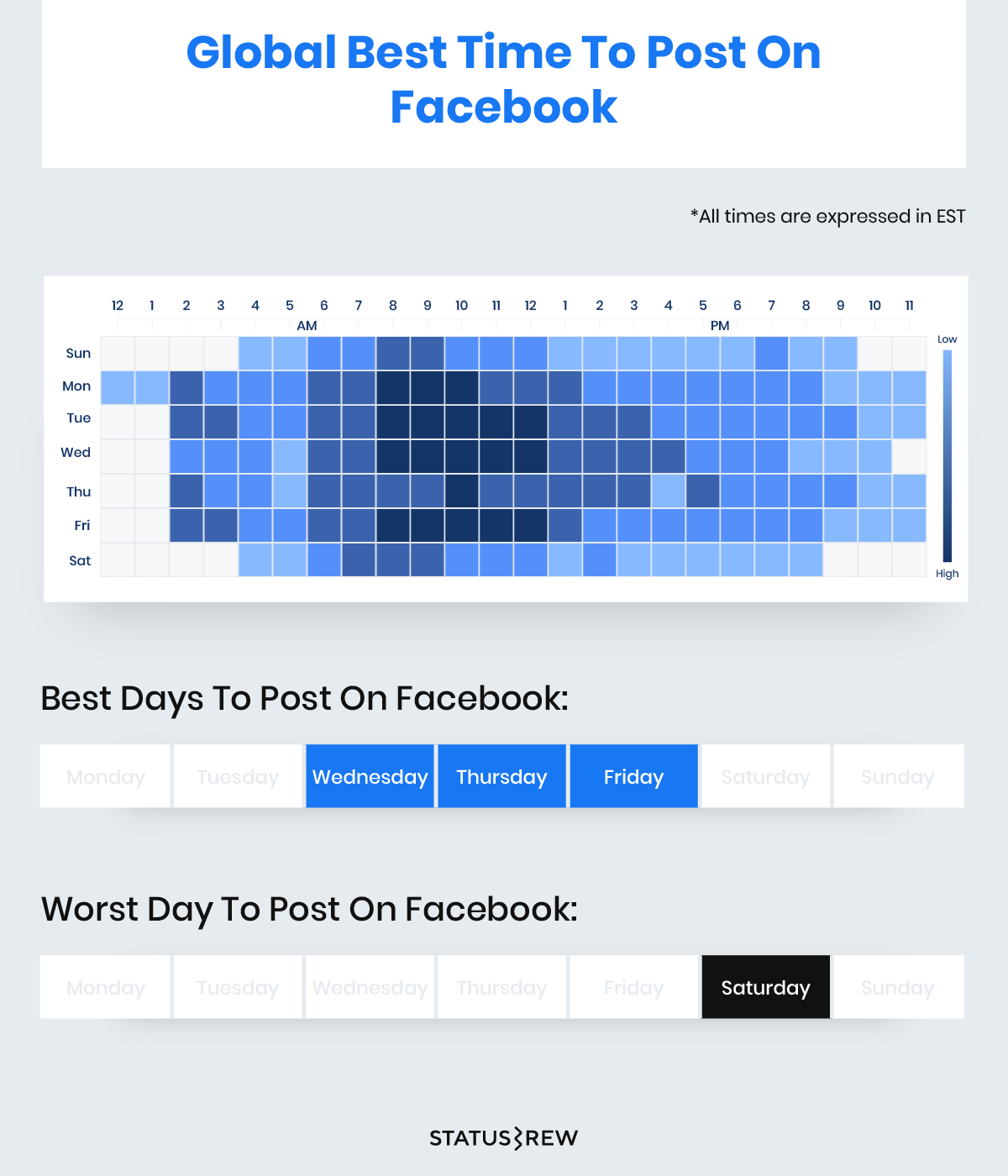
Consistently, data points to mid-week days like Tuesday, Wednesday, and Thursday as strong performers for overall engagement. This is likely because at the beginning of the week, people are settling back into work routines, and by the end of the week, they’re anticipating the weekend. The middle of the week often represents a period of focused work and information consumption.
Understanding Nuances in Time Zones and Day Parts
As mentioned earlier, ignoring time zones is a major pitfall. If your business has an international presence, or your target audience is spread across different regions, you must account for this.
- Global Reach, Localized Timing: For instance, if you’re launching a new app (Tech) to a global audience, you might need to stagger your posts to hit peak hours in North America, Europe, and Asia. This requires careful planning and possibly utilizing scheduling tools that can adapt to different time zones.
- “Day Parts” for Different Content: Even within a single day, different “day parts” cater to different needs.
- Morning (6 AM – 9 AM): The commute and the start of the workday. Good for quick updates, news digests, or motivational content.
- Late Morning/Early Afternoon (9 AM – 3 PM): Peak work hours, often with breaks. Ideal for detailed content, problem-solving, and informative pieces.
- Late Afternoon/Early Evening (3 PM – 6 PM): Winding down the workday. Can be good for lighter content or previews of what’s to come.
- Evening (6 PM – 10 PM): Leisure time. Excellent for entertainment, community engagement, and more personal brand content.
- Late Night (10 PM onwards): Often a time for late-night scrolling, particularly by younger demographics. Can be effective for niche audiences or more targeted, engaging content.
Measuring Success and Adapting Your Strategy
The “best times to post on Facebook” are not static. They are fluid and require continuous evaluation. What works today might not work tomorrow, as audience behavior and Facebook’s algorithms evolve.
Key Metrics to Track for Posting Optimization
To truly understand what’s working, you need to move beyond vanity metrics and focus on engagement.
- Engagement Rate: This is the most crucial metric. It measures the number of interactions (likes, comments, shares, clicks) relative to your reach or impressions. A higher engagement rate indicates that your content is resonating.
- Reach and Impressions: While not the sole indicators, understanding how many people see your content is important. If your engagement rate is low despite high reach, it might mean your timing is off, or your content isn’t compelling enough for that audience at that moment.
- Click-Through Rate (CTR): If your goal is to drive traffic to your website (for product reviews, tutorials, or investment opportunities), CTR is vital. A good CTR indicates that your post is compelling enough to make people want to learn more.
- Conversion Rate: For businesses, the ultimate success metric is often the conversion rate – how many people who saw your post ultimately took a desired action (e.g., made a purchase, signed up for a newsletter).
Analyzing Your Post-Performance Data
Regularly review your Facebook Insights and any third-party analytics tools you use. Look for trends:
- Which posts published at which times generated the highest engagement?
- Were there specific days or hours where your CTR was significantly higher?
- Did a particular campaign perform better when posted during a specific “day part”?
The Importance of A/B Testing and Iteration
The most successful Facebook marketers don’t just set it and forget it. They embrace A/B testing and continuous iteration.
- Test Different Time Slots: If your insights show a peak at 11 AM, try posting at 10:30 AM and 11:30 AM for a week each and compare the results.
- Test Different Content Types at Different Times: Experiment with posting a software review at mid-morning on Tuesday and then again on Saturday afternoon. See which performs better.
- Adapt to Algorithm Changes: Facebook’s algorithms are constantly updated. What was optimal six months ago might be less effective now. Stay informed and be prepared to adjust your strategy.
- Embrace AI for Smarter Scheduling: The advancements in AI are revolutionizing social media management. AI-powered tools can analyze your historical data, competitor activity, and even real-time trends to suggest optimal posting times, automate scheduling, and even help generate content ideas. For those focused on Tech and Productivity, exploring these AI tools can provide a significant competitive edge.
In conclusion, the question “what are the best times to post on Facebook?” is best answered by a commitment to understanding your audience, leveraging data, and continuously adapting your strategy. By combining insights from Facebook Insights, thoughtful analysis of your content’s performance, and a willingness to experiment, you can master your Facebook posting schedule and ensure your message reaches its intended audience at precisely the right moment, maximizing your impact across technology, brand building, and even financial success.
aViewFromTheCave is a participant in the Amazon Services LLC Associates Program, an affiliate advertising program designed to provide a means for sites to earn advertising fees by advertising and linking to Amazon.com. Amazon, the Amazon logo, AmazonSupply, and the AmazonSupply logo are trademarks of Amazon.com, Inc. or its affiliates. As an Amazon Associate we earn affiliate commissions from qualifying purchases.