
The allure of striking it rich with a Mega Millions jackpot is a powerful one, captivating millions of hopeful players across the United States. While the game is fundamentally one of chance, governed by strict probability, it’s natural for many to seek patterns, trends, or even a “secret sauce” to improve their odds. One of the most frequently explored avenues by lottery enthusiasts is the idea of identifying “hot” or “cold” numbers – those that have appeared most and least frequently in past draws. This article delves into the question of the most common Mega Millions numbers, examining the statistical realities and the psychological allure behind this popular lottery strategy.
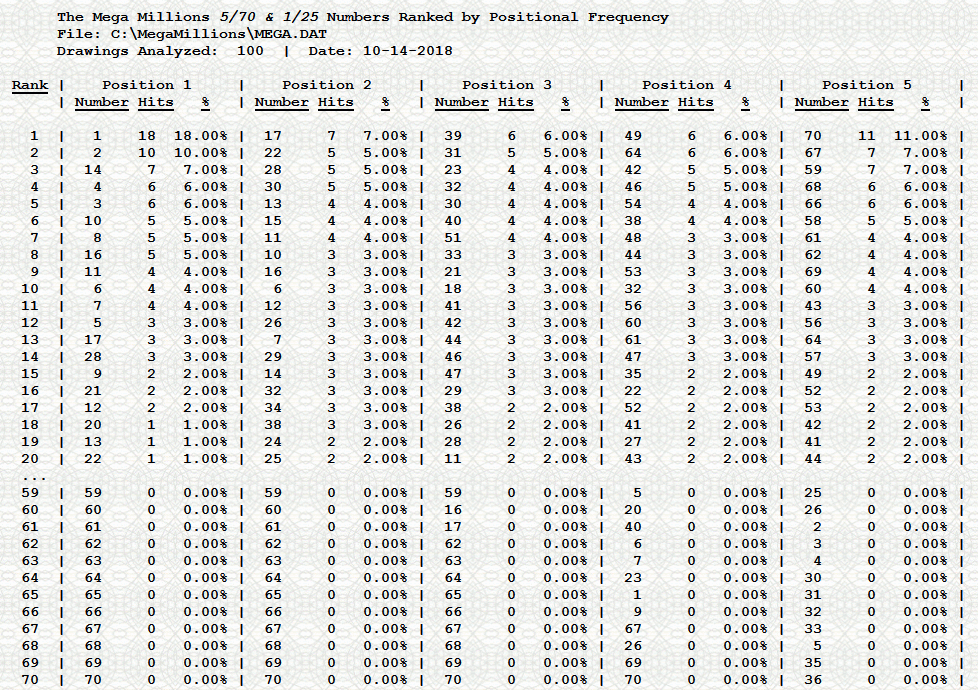
It’s crucial to preface this discussion with a clear understanding of how Mega Millions works. The game involves selecting five numbers from a pool of 1 to 70 and one Mega Ball number from a pool of 1 to 25. Each number has an independent probability of being drawn in any given draw. This means that past draws have no statistical influence on future draws. The lottery machine has no memory; each number is as likely to be drawn today as it was yesterday, or a year ago. However, the human mind is wired to find patterns, and the vastness of lottery data provides fertile ground for such explorations.
Understanding Lottery Statistics: The Illusion of Patterns
The desire to know the “most common” Mega Millions numbers stems from a fundamental human tendency to look for order and predictability in random events. This is often linked to concepts like the gambler’s fallacy – the mistaken belief that if something happens more frequently than normal during a given period, it will happen less frequently in the future (or vice versa). In reality, each draw is an independent event.
The Mathematics of Randomness
The odds of any specific number being drawn in Mega Millions are the same for every number within its respective pool. For the white balls (1-70), the probability of any single number being drawn is 1 in 70. For the Mega Ball (1-25), the probability is 1 in 25. Over an infinite number of draws, each number would theoretically appear an equal number of times.
However, we don’t operate with infinite draws; we operate with a finite history. When we analyze past draws, we are essentially looking at a sample of data. In any sample, some items will naturally appear more or less frequently than others due to random variation. This is not indicative of a bias in the drawing process, but rather a statistical quirk of observation.
Frequency Analysis: What the Data Shows (and Doesn’t Show)
When people ask about the “most common” Mega Millions numbers, they are often referring to the numbers that have been drawn most frequently in the historical record of the game. Websites that track lottery results often provide this data, listing numbers based on their historical appearance.
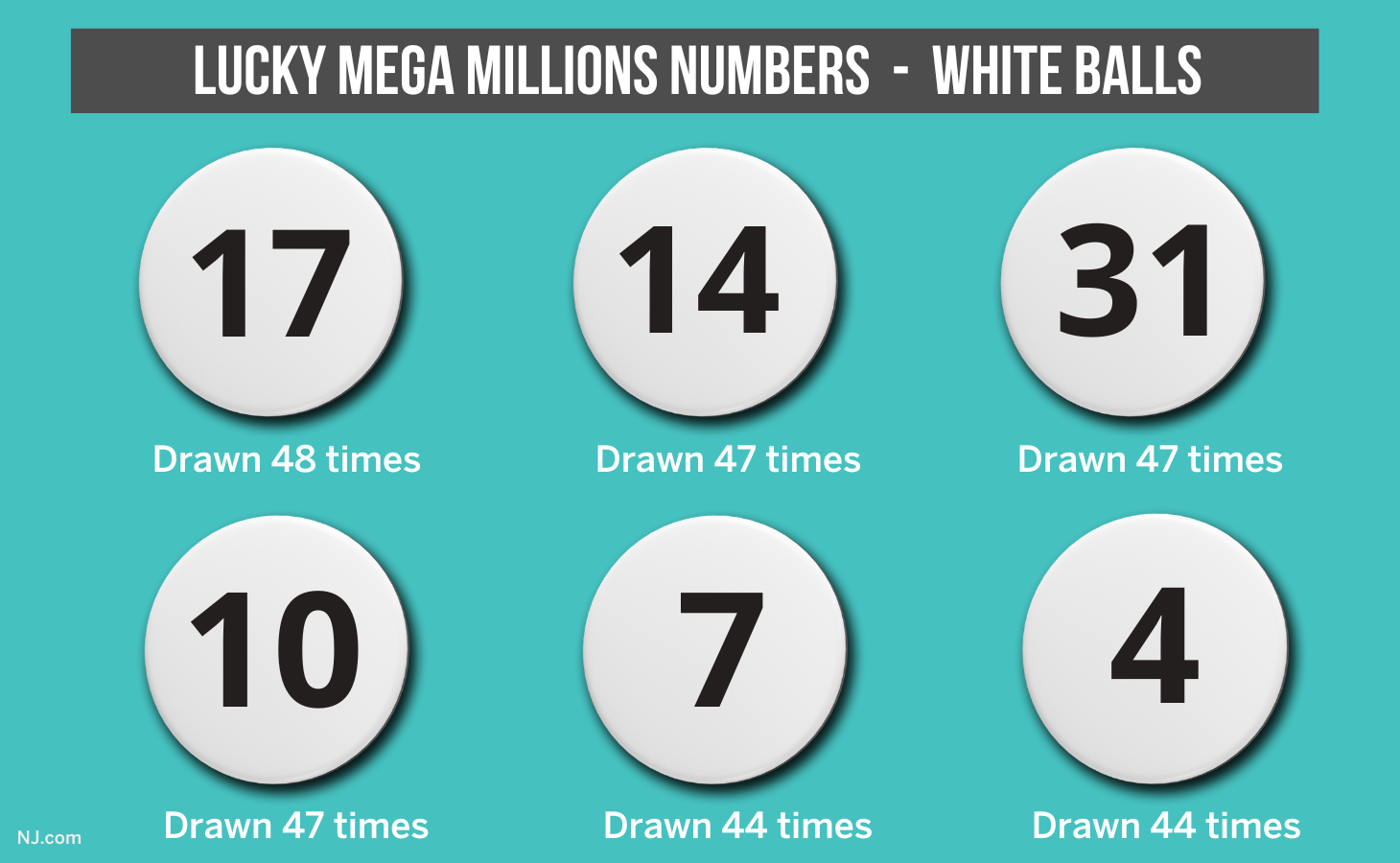
The Top 5 Most Frequently Drawn White Balls (as of a hypothetical recent snapshot):
While specific numbers change with every draw, and it’s impossible to provide a definitive, evergreen list, historical data often shows certain numbers emerging with slightly higher frequencies. For illustrative purposes, based on common observations from lottery tracking sites, here are examples of numbers that have historically appeared more often in the white ball selection:
- Number 31: Often cited as a frequently drawn number. Its consistent appearance has led many to believe it’s a “hot” number.
- Number 17: Another number that frequently appears in discussions of common Mega Millions picks.
- Number 29: This number has also historically shown up more often than some others in the white ball pool.
- Number 46: Often found among the more frequently drawn numbers in past results.
- Number 10: This digit, often a popular choice, has also historically been drawn with notable frequency.
The Top 5 Most Frequently Drawn Mega Balls (as of a hypothetical recent snapshot):
Similarly, the Mega Ball pool also exhibits variations in historical frequency. Here are examples of numbers that have often appeared more frequently:
- Mega Ball 9: This number has, at times, been reported as one of the most frequently drawn Mega Balls.
- Mega Ball 15: Another number that often features in discussions of historically common Mega Balls.
- Mega Ball 6: This number has also shown up with a higher frequency in past draws.
- Mega Ball 11: Often observed among the more frequently drawn Mega Balls.
- Mega Ball 25: The highest number in the Mega Ball pool, it has also historically been drawn with some regularity.
It is absolutely critical to reiterate that these are historical observations and not predictive indicators. The fact that a number has appeared more frequently in the past does not increase its probability of appearing in future draws. The randomness of the lottery ensures that every number has an equal chance in each new draw.
The Psychology of Lottery Numbers: Why “Common” Numbers Appeal
Despite the statistical realities, the concept of “common” or “hot” numbers holds a strong psychological appeal for lottery players. This fascination can be attributed to several cognitive biases and human desires.
The Illusion of Control and Pattern Recognition
Humans are natural pattern-seekers. When faced with randomness, our brains tend to create narratives and identify perceived patterns, even where none truly exist. This desire for control, for finding a system or a predictability, is deeply ingrained. Believing in “hot” numbers offers a false sense of control over an inherently uncontrollable event. Players may feel they are making a more informed choice by picking numbers that have “proven” themselves in the past.
The “Hot Hand” Fallacy in Action
The “hot hand” fallacy, commonly observed in sports, also applies to lottery playing. This is the belief that if a player (or in this case, a number) has been successful recently, they are more likely to continue to be successful. In Mega Millions, if a number has been drawn a few times in a row or frequently within a specific period, some players might interpret this as a sign of its continued propensity to be drawn, ignoring the independence of each draw.
Social Influence and Herd Mentality
Lottery numbers are also influenced by social factors. When certain numbers are discussed as being “common” or “lucky,” this information can spread through social networks and online forums. This can lead to a form of herd mentality, where players are more likely to choose these frequently mentioned numbers, inadvertently increasing the competition for any potential winnings if those numbers are indeed drawn. This social reinforcement can solidify the belief in the significance of these numbers, regardless of their statistical basis.
Strategies and the Reality of Lottery Play
Given that Mega Millions is a game of chance, any strategy based on identifying “common” numbers is ultimately a form of entertainment rather than a statistically sound method for improving odds. However, understanding these approaches can still be insightful into the player mindset.
Analyzing Number Frequencies: A Statistical Nuance
While focusing on the “most common” numbers won’t change your odds of winning the jackpot, analyzing frequency data can offer some interesting insights into the game’s history. For dedicated players, this analysis might be part of a ritual or a way to engage with the game beyond simply picking numbers randomly. It can make the process of ticket selection more engaging and less arbitrary for some.
Some players might also use frequency data to avoid numbers that have appeared too often, in the belief that their probability of appearing again is “due” to decrease. This is another manifestation of the gambler’s fallacy. Conversely, others might pick numbers that have appeared less frequently, hoping they are “due” to be drawn. Both approaches are statistically unfounded.
The Importance of Random Selection
From a purely statistical standpoint, the most effective way to play Mega Millions is through random selection. This can be achieved by using the “Quick Pick” option provided by most lottery retailers or by randomly generating numbers yourself. Random selection ensures that your chosen numbers have the same statistical probability of being drawn as any other combination, and importantly, it avoids the potential of sharing a jackpot with a large number of other players who might have chosen popular “common” or “lucky” numbers.
Beyond the Numbers: Understanding the Odds
Ultimately, the most important aspect of playing Mega Millions is understanding the incredibly long odds of winning the jackpot. The odds of winning the Mega Millions jackpot are approximately 1 in 302.6 million. This is a staggering number, and it’s crucial to approach the game with realistic expectations.
The Implication for Players:
- Play Responsibly: Lottery tickets should be seen as entertainment, not an investment. Only spend what you can afford to lose.
- No Guaranteed Strategies: There is no system or strategy that can guarantee a win or significantly increase your odds beyond the inherent probabilities of the game.
- Focus on the Fun: Enjoy the dream and the excitement that playing the lottery brings, but don’t let it become a financial burden.

Conclusion: The Enduring Appeal of the “Lucky” Numbers
The question of “what are the 5 most common Mega Millions numbers” is a persistent one in the world of lottery players. It taps into our innate desire for patterns, our pursuit of control, and our hope for extraordinary fortune. While statistical analysis reveals that past frequencies have no bearing on future outcomes in a truly random game, the psychological allure of “hot” or “common” numbers remains strong.
The data on frequently drawn numbers provides an interesting historical snapshot, a testament to the sheer volume of draws that have occurred. However, for anyone hoping to improve their chances of winning the Mega Millions jackpot, the most statistically sound approach is random selection, coupled with a healthy understanding of the game’s formidable odds. The dream of hitting it big is a powerful motivator, but it’s a dream best pursued with realistic expectations and a responsible approach to play, where the pursuit of “common” numbers is more about engaging with the game’s lore than a serious attempt at a predictive strategy. The real “lucky” numbers are the ones you pick, and the truly significant aspect is playing for enjoyment and the sheer thrill of possibility.
aViewFromTheCave is a participant in the Amazon Services LLC Associates Program, an affiliate advertising program designed to provide a means for sites to earn advertising fees by advertising and linking to Amazon.com. Amazon, the Amazon logo, AmazonSupply, and the AmazonSupply logo are trademarks of Amazon.com, Inc. or its affiliates. As an Amazon Associate we earn affiliate commissions from qualifying purchases.