
Budgeting is often perceived as a restrictive chore, a necessary evil that limits freedom and enjoyment. However, for those who master it, budgeting transforms into an empowering financial compass, guiding them towards security, freedom, and the achievement of their most ambitious financial aspirations. It’s not about what you can’t spend, but rather about consciously directing your money towards what truly matters to you. A successful budget is more than just a spreadsheet; it’s a strategic framework built upon several key components that, when integrated, create a robust system for financial control and growth. Understanding and implementing these elements is the bedrock upon which lasting financial well-being is built.
Foundational Principles: Setting the Stage for Success
Before diving into numbers and tracking, a successful budget requires a clear understanding of its purpose and the landscape of your personal finances. These foundational principles ensure that your budgeting efforts are purposeful, realistic, and sustainable.
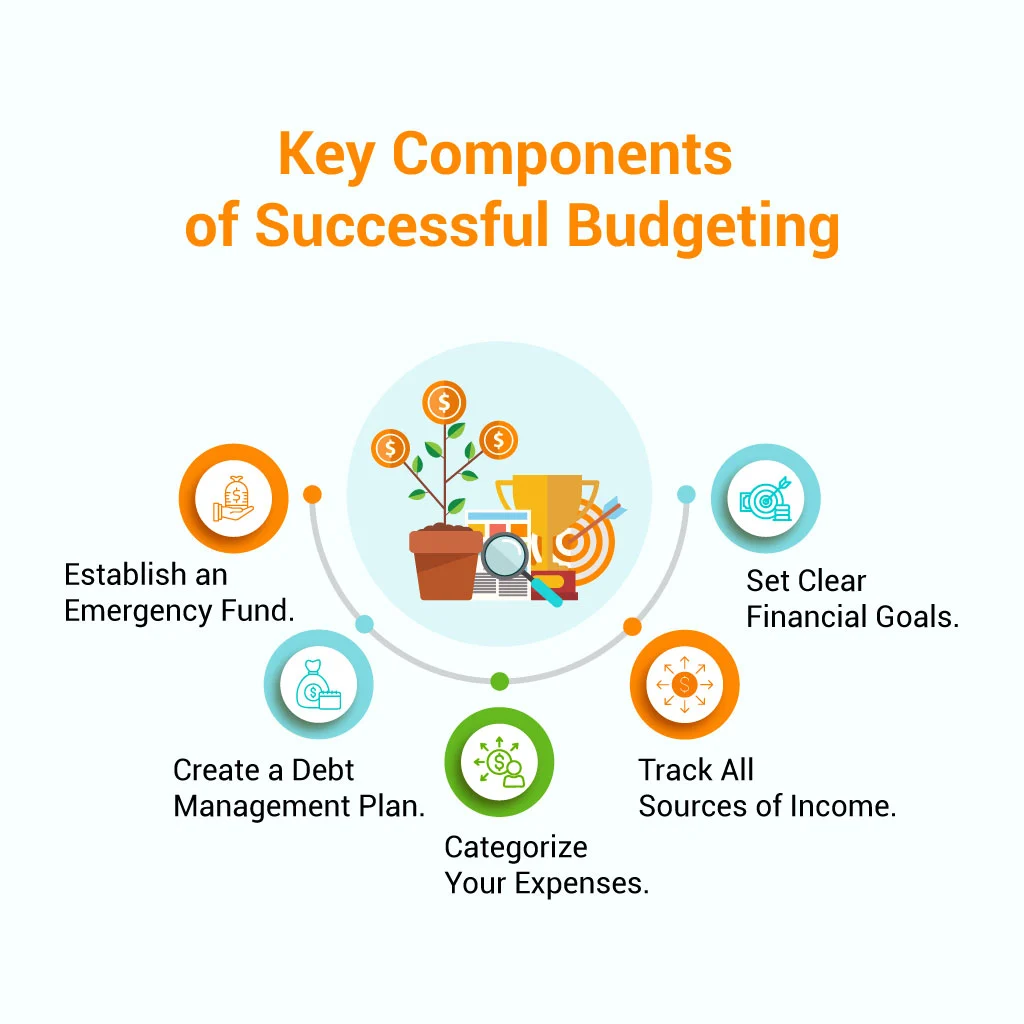
Defining Clear Financial Goals
The cornerstone of any effective budget is a set of well-defined financial goals. Without specific targets, a budget lacks direction and motivation. These goals can span various timeframes and aspirations:
- Short-term Goals: These might include saving for a down payment on a car, building an emergency fund of 3-6 months’ living expenses, paying off a high-interest credit card, or funding a much-anticipated vacation. These typically have a timeline of 1-3 years.
- Mid-term Goals: Examples include saving for a down payment on a home, funding a child’s education, starting a business, or making a significant home renovation. These often fall within a 3-10 year timeframe.
- Long-term Goals: Retirement planning, achieving financial independence, or leaving a legacy are classic long-term goals that can span decades.
For maximum effectiveness, goals should be SMART:
- Specific: Clearly defined, not vague. “Save $10,000 for a down payment on a house” instead of “Save money for a house.”
- Measurable: Quantifiable, so you can track progress.
- Achievable: Realistic given your income and expenses.
- Relevant: Aligned with your values and broader life objectives.
- Time-bound: With a specific deadline to create urgency and accountability.
By linking your budget directly to these goals, every dollar allocated feels purposeful, transforming a tedious task into a direct pathway to your dreams.
Understanding Your Income and Expenses
You cannot manage what you don’t measure. A critical initial step in successful budgeting is gaining a comprehensive understanding of your cash flow. This involves accurately identifying all sources of income and meticulously tracking every expenditure.
- Income Assessment: List all net income sources (after taxes and deductions). This includes salaries, freelance earnings, rental income, benefits, and any other regular inflows. A clear picture of your total monthly income is essential.
- Expense Tracking: This is where many people falter. For a period of at least a month, ideally two or three, track every single dollar spent. This can be done manually with a notebook, through banking apps, or dedicated budgeting software.
- Fixed Expenses: These are costs that generally stay the same each month, such as rent/mortgage, loan payments (car, student), insurance premiums, and subscriptions.
- Variable Expenses: These fluctuate month-to-month and are often easier to control. Examples include groceries, dining out, entertainment, utilities (which can have a fixed component but variable usage), and transportation costs.
Categorizing your expenses not only provides clarity but also reveals spending patterns and areas where adjustments can be made. It’s often an eye-opening exercise, exposing “leakage” where money is spent unconsciously.
Choosing the Right Budgeting Method
There’s no one-size-fits-all approach to budgeting. What works for one person might be cumbersome for another. The key is to find a method that aligns with your personality, financial complexity, and level of commitment.
- The 50/30/20 Rule: A simple and popular guideline that suggests allocating 50% of your after-tax income to Needs (housing, utilities, groceries, transportation), 30% to Wants (dining out, entertainment, hobbies), and 20% to Savings and Debt Repayment (emergency fund, retirement, extra debt payments). This method offers flexibility while maintaining structure.
- Zero-Based Budgeting: Every dollar of income is assigned a “job” (expense, saving, or debt repayment) until your income minus your expenses equals zero. This method demands precision and intentionality, ensuring no money is unaccounted for. It’s particularly effective for those who want tight control over their finances.
- The Envelope System: A classic, tactile method where cash is allocated into physical envelopes for various spending categories (e.g., “Groceries,” “Entertainment”). Once an envelope is empty, spending in that category stops until the next budgeting period. This is excellent for visual learners and those prone to overspending on variable categories.
- Pay Yourself First: This philosophy prioritizes savings and investments by automatically transferring a set amount to savings accounts or investment portfolios immediately after income is received, before any other expenses are paid. This ensures consistent progress towards financial goals, treating savings as a non-negotiable expense.
Experimentation is often necessary to discover the method that feels most natural and effective for your unique situation.
Practical Application: Tools and Techniques for Tracking and Management
Once the foundational principles are in place, the next step involves the practical execution of your budget. This means utilizing appropriate tools and establishing consistent habits for monitoring and adjusting your financial plan.
Leveraging Technology: Financial Apps and Software
In the digital age, technology has revolutionized budgeting, making it more accessible, efficient, and less daunting.
- Dedicated Budgeting Apps: Tools like Mint, YNAB (You Need A Budget), Personal Capital, and PocketGuard automatically link to your bank accounts and credit cards, categorize transactions, track spending, and provide insightful reports. They can help identify trends, flag unusual spending, and often integrate goal-tracking features. YNAB, for instance, is built around the zero-based budgeting philosophy, while Personal Capital excels at investment tracking alongside budgeting.
- Spreadsheets (Google Sheets, Excel): For those who prefer a hands-on approach or have complex financial situations, custom spreadsheets offer unparalleled flexibility. They allow for intricate formulas, personalized categories, and a deep dive into data. Many free templates are available, or you can build one from scratch to perfectly fit your needs.
- Banking & Credit Card Apps: Most financial institutions now offer robust mobile apps that provide real-time transaction tracking, spending categorization, and sometimes even basic budgeting tools. These can be a great starting point for simply understanding your cash flow.
The right tool automates tedious tasks, reduces the chance of errors, and provides a clear, real-time overview of your financial situation, empowering you to make informed decisions.
Regular Review and Adjustment
A budget is a living document, not a static declaration. Life is dynamic, and your financial plan must be flexible enough to adapt to changes in income, expenses, and goals.
- Monthly Check-ins: At a minimum, review your budget monthly. Compare your actual spending against your budgeted amounts. Identify categories where you overspent or underspent. This is crucial for understanding where your money truly went and for making necessary course corrections.
- Quarterly or Annual Revisions: For more significant life changes – a new job, a raise, a new baby, a change in living situation, or shifting financial goals – a more comprehensive review is warranted. This is an opportunity to re-evaluate your goals, adjust allocations, and ensure your budget still aligns with your current reality and future aspirations.
- Identifying Discrepancies: Don’t be discouraged by initial discrepancies. The first few months of budgeting are often a learning curve. Use these reviews to refine your estimates, uncover forgotten expenses, and adjust your expectations. This iterative process is what makes a budget truly successful over the long term.
The Importance of an Emergency Fund

One of the most critical components of successful budgeting, often highlighted within the “Savings” portion, is the establishment and maintenance of an emergency fund. This dedicated savings account acts as a financial safety net.
- Purpose: An emergency fund is specifically for unexpected expenses that could otherwise derail your budget or force you into debt. This includes job loss, medical emergencies, unforeseen home repairs, or major car breakdowns.
- Goal: The widely recommended target is to save 3 to 6 months’ worth of essential living expenses. For those with less stable income or dependents, a larger fund (e.g., 9-12 months) might be more appropriate.
- Protection: By having an emergency fund, you prevent financial shocks from turning into crises. It allows you to adhere to your budget, avoid high-interest debt, and maintain your long-term financial trajectory, even when life throws a curveball. Consistently contributing to this fund should be a non-negotiable line item in your budget until the target is met, and then maintained.
Behavioral Aspects: Cultivating a Budgeting Mindset
Beyond numbers and tools, the human element is paramount. A successful budget requires a certain mindset – one of discipline, resilience, and a willingness to learn and adapt.
Financial Discipline and Consistency
The best budget in the world is useless without the discipline to stick to it. Consistency is the silent force that propels financial progress.
- Sticking to the Plan: This means consciously making spending choices that align with your budget. It requires self-control, especially in the face of impulse buying or social pressures.
- Avoiding Impulse Spending: Recognize your triggers for impulse purchases. Implement strategies like waiting 24 hours before buying non-essential items, making shopping lists and sticking to them, or leaving credit cards at home when running errands for specific budgeted items.
- Delayed Gratification: Understanding that foregoing immediate gratification for long-term financial security is a powerful tool. This doesn’t mean never enjoying life, but rather making intentional choices about where your money goes.
Building financial discipline is like building a muscle; it gets stronger with consistent effort and practice.
Overcoming Budgeting Challenges and Setbacks
No one’s financial journey is perfectly smooth. Unexpected expenses, periods of reduced income, or simply human error can lead to budget overruns or a temporary lapse in tracking.
- Dealing with Unexpected Costs: Life happens. Instead of letting an unforeseen expense derail your entire budget, integrate it into your plan. If you have an emergency fund, use it as intended. If not, adjust other variable categories for the month to cover the cost, or create a mini-plan to get back on track next month.
- Staying Motivated: Budgeting can feel monotonous at times. Celebrate small wins – reaching a savings milestone, paying off a debt, or simply sticking to your plan for a full month. Regularly revisiting your financial goals can also reignite your motivation.
- Forgiving Oneself for Slip-ups: Everyone makes mistakes. If you overspent in a category, don’t throw in the towel. Analyze what went wrong, learn from it, and adjust for the next budgeting period. Self-compassion is key to long-term success; perfection is not required, progress is.
Involving Household Members (if applicable)
For couples or families, budgeting is most effective when it’s a collaborative effort. Open communication and shared goals foster a united front against financial challenges.
- Shared Financial Goals: Discuss and agree upon collective financial goals. When everyone is invested in the same objectives, the motivation to adhere to the budget increases significantly.
- Transparency: Be open about income, expenses, and financial challenges. Hiding spending or accumulating secret debt can be detrimental to both the budget and relationships.
- Teamwork in Managing Finances: Assign roles if it helps, or simply commit to regular joint financial discussions. This ensures everyone is aware of the household’s financial standing and contributes to its success. A unified approach prevents financial friction and builds a stronger foundation for shared prosperity.
Beyond the Basics: Advanced Strategies for Optimization
Once a solid budgeting routine is established, you can begin to integrate more advanced strategies to further optimize your financial situation, moving beyond just managing money to actively growing it.
Debt Management and Reduction
Budgeting is a powerful tool for systematically tackling debt, particularly high-interest consumer debt.
- Strategic Allocation: A successful budget consciously allocates funds specifically towards debt reduction, treating it as a priority expense. This might involve freeing up cash by reducing discretionary spending.
- Debt Snowball or Avalanche: These popular methods dictate the order in which to pay off multiple debts. The debt snowball focuses on paying off the smallest balance first for psychological wins, while the debt avalanche prioritizes debts with the highest interest rates to save money in the long run. Whichever method you choose, your budget provides the consistent payments needed to execute it effectively. By integrating debt reduction into your budget, you’re not just managing debt; you’re actively working towards freedom from it.
Strategic Savings and Investment Integration
A truly successful budget doesn’t just manage present-day expenses; it systematically builds future wealth.
- Allocating for Specific Savings Goals: Beyond an emergency fund, your budget should include dedicated allocations for various savings goals, such as a down payment for a home, a new car, or a child’s education. These should be treated as non-negotiable line items, just like your rent or mortgage.
- Consistent Investment Contributions: For long-term goals like retirement, consistent investing is crucial. Your budget ensures that a portion of your income is regularly directed towards investment accounts (e.g., 401k, IRA, brokerage accounts). By “paying yourself first” and automating these contributions, you leverage the power of compound interest, allowing your money to grow significantly over time without needing constant manual effort.

Automating Your Finances
Automation is perhaps the ultimate hack for successful budgeting, reducing friction and ensuring consistency.
- Automatic Transfers: Set up automatic transfers from your checking account to your savings, emergency fund, and investment accounts immediately after payday. This ensures that you save and invest before you have a chance to spend the money elsewhere.
- Automated Bill Payments: Arrange for regular bills (rent, mortgage, utilities, loan payments) to be paid automatically from your checking account. This prevents missed payments, late fees, and credit score damage.
- Scheduled Reviews: Even the review process can be automated to some extent with calendar reminders or alerts from budgeting apps, ensuring you consistently monitor your progress.
By automating key financial actions, you remove the need for constant willpower and manual effort, turning your budget into a smooth, self-sustaining financial engine that works for you, even when you’re not actively thinking about it.
In conclusion, a successful budget is a dynamic and multifaceted tool built upon a foundation of clear goals, a thorough understanding of your financial landscape, and the adoption of suitable methods. It leverages technology for efficient tracking, demands regular review and adjustment, and critically, requires a disciplined yet forgiving mindset. By integrating advanced strategies for debt management, strategic saving, and investment, and embracing automation, budgeting transcends mere expense tracking to become a powerful mechanism for achieving lasting financial security and ultimate freedom. It empowers you to take control of your money, ensuring it serves your life’s greatest ambitions.
aViewFromTheCave is a participant in the Amazon Services LLC Associates Program, an affiliate advertising program designed to provide a means for sites to earn advertising fees by advertising and linking to Amazon.com. Amazon, the Amazon logo, AmazonSupply, and the AmazonSupply logo are trademarks of Amazon.com, Inc. or its affiliates. As an Amazon Associate we earn affiliate commissions from qualifying purchases.