
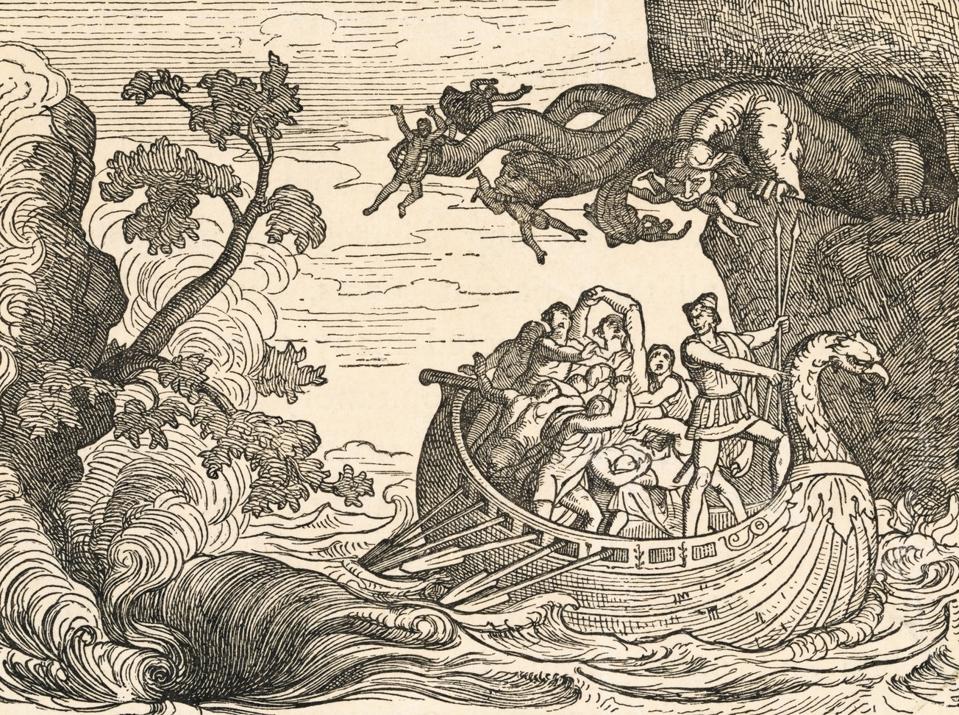
In the ancient epic of the Odyssey, the hero Odysseus is forced to navigate a narrow strait flanked by two equally lethal threats: Scylla, a six-headed monster that plucked sailors from their decks, and Charybdis, a massive whirlpool that threatened to swallow the entire ship. To avoid one was to drift dangerously close to the other. In the 21st century, this mythological dilemma has become the defining metaphor for Chief Technology Officers (CTOs), software architects, and digital transformation leaders.
In the world of technology, Scylla and Charybdis represent the two destructive extremes that modern organizations must navigate: the stagnant, monster-infested waters of Legacy Debt and the chaotic, all-consuming whirlpool of Over-Engineering and Continuous Migration.

As we move deeper into the era of Artificial Intelligence, cloud-native architectures, and rapid-fire software delivery, understanding how to sail the “middle path” is not just a strategic advantage—it is a requirement for survival.
The Modern Technical Dilemma: Defining Our Digital Monsters
Every tech leader faces a fundamental tension. On one side, there is the pressure to maintain stability, protect existing revenue streams, and minimize risk. On the other, there is the relentless drive for innovation, the adoption of cutting-edge tools, and the fear of being “disrupted” by more agile competitors.
What Scylla and Charybdis Mean for Today’s CTO
In a technical context, Scylla represents the “Known Evil.” It is the monolithic application that has been running for fifteen years. It is written in a language that few modern developers understand, and its documentation is more oral tradition than written record. Every time you try to update a feature, the “monster” reaches out and breaks three other unrelated components.
Charybdis, conversely, is the “Unknown Chaos.” It is the siren call of the newest JavaScript framework, the move to a fully serverless architecture before the team is ready, or the premature adoption of generative AI agents for mission-critical tasks. It is the whirlpool of “Resume-Driven Development,” where engineers choose tools based on their novelty rather than their utility, eventually dragging the project into a vortex of complexity and high operational costs.
The Cost of Indecision in the Tech Lifecycle
The danger of these two extremes is that they often lead to “analysis paralysis.” When a leadership team is too afraid of the Scylla of technical debt, they may plunge headfirst into the Charybdis of a total system rewrite—a project that, statistically, is likely to fail, exceed its budget, or be abandoned before completion. Conversely, fearing the whirlpool of change often leads to a “hunker down” mentality that allows technical debt to compound until the organization is no longer able to compete in the market.
Scylla: The Monster of Legacy Debt and System Rigidity
To understand Scylla is to understand the gravity of technical debt. This is not just “old code”; it is code that has become a liability. In many enterprise environments, Scylla takes the form of “The Big Ball of Mud”—a system where components are so tightly coupled that any change requires a Herculean effort.
The Allure of “If It Ain’t Broke”
Many organizations stay near Scylla because it feels safe in the short term. If a legacy system is currently processing transactions and generating revenue, there is a powerful financial incentive to leave it alone. This “stability” is an illusion. Scylla feeds slowly. It manifests as a gradual slowdown in the deployment cycle. What used to take a week to ship now takes a month; eventually, it takes a quarter. The monster is eating your speed to market, one head at a time.
The Long-Term Erosion of Innovation
Beyond just speed, the Scylla of legacy systems creates a talent vacuum. Top-tier software engineers are rarely interested in maintaining twenty-year-old COBOL scripts or debugging brittle, undocumented PHP 5 applications. By staying too close to the monster of legacy debt, organizations lose their most innovative minds, leaving behind a “maintenance crew” that lacks the vision to steer the ship toward newer, more profitable horizons. Furthermore, security vulnerabilities often hide in these ancient architectures, as they were built before the modern era of sophisticated cyber-attacks.

Charybdis: The Whirlpool of Constant Migration and New-Tool Fatigue
On the opposite side of the strait lies Charybdis. This is the danger of being too modern. In the tech industry, there is a pervasive “Shiny Object Syndrome.” We see it in the rapid cycle of frontend frameworks, the rush to move every database to NoSQL (even when relational data makes more sense), and the current frenzy to inject “AI” into every microservice regardless of actual user need.
Shiny Object Syndrome in Software Development
The whirlpool of Charybdis is fueled by the hype cycle. When a new technology emerges—be it Kubernetes, GraphQL, or Web3—it often promises to solve every problem the organization currently faces. However, adopting these tools prematurely creates a massive “cognitive load” on the engineering team. Instead of building features that provide value to customers, the team spends 80% of its time fighting the infrastructure, debugging the new tool’s quirks, and trying to make disparate “cutting-edge” systems talk to each other.
The Resource Drain of Perpetual Refactoring
Charybdis is particularly dangerous because it looks like progress. A team that is constantly refactoring code to use the latest libraries feels busy and productive. However, if this work doesn’t translate into better performance, lower costs, or more features, it is simply a whirlpool sucking away capital. This is often referred to as “The Rebuild Trap.” An organization spends two years and millions of dollars rebuilding a system to be “modern,” only to find that by the time they are done, the technology they used is already becoming the new Scylla.
Balancing the Strait: Strategic Frameworks for Tech Decisions
How does a tech leader navigate between these two threats? The answer lies in “Strategic Pragmatism.” You cannot stay with the monster, and you cannot jump into the whirlpool. You must find the narrow channel of sustainable growth.
Implementing Evolutionary Architecture
One of the most effective ways to navigate the strait is through the concept of “Evolutionary Architecture.” This approach accepts that change is inevitable and builds systems that are designed to be changed. Instead of a “Big Bang” rewrite (jumping into Charybdis) or staying with a rigid monolith (staying with Scylla), developers use incremental patterns like the “Strangler Fig” pattern.
In this model, new functionality is built using modern tools and wrapped around the legacy system. Over time, the new system “strangles” the old one until the legacy components can be safely decommissioned. This allows for modernization without the catastrophic risk of a total system failure.
Data-Driven Risk Assessment in Product Roadmaps
Navigating the strait requires a cold, hard look at the data. Tech leaders must ask:
- Maintenance Cost vs. Opportunity Cost: How much are we spending to keep the “monster” alive, and what are we losing by not being able to innovate?
- Complexity Budget: Do we have the “innovation tokens” to spend on a new technology? Every new tool added to the stack increases the risk of being pulled into the whirlpool. A team should only adopt a “Charybdis-level” change when the provable ROI is significantly higher than the complexity cost.
Future-Proofing: Building Resilient Systems in an Uncertain Age
As we look toward the future, the “strait” is only getting narrower. The emergence of Artificial Intelligence presents a new version of the Scylla/Charybdis dilemma. Companies that ignore AI (Scylla) will find themselves obsolete as competitors automate their workflows. Companies that rush to replace their entire stack with unproven AI models (Charybdis) risk hallucinations, data breaches, and massive financial loss.
The Role of AI in Bridging the Gap
Interestingly, AI might be the very “pilot” needed to navigate the strait. LLM-powered tools are now capable of analyzing legacy codebases (Scylla) and suggesting refactors or documenting hidden logic. This lowers the cost of modernization and reduces the risk of the “monster” breaking things. Simultaneously, AI can help manage the complexity of modern distributed systems (Charybdis) by automating observability and infrastructure management, ensuring the whirlpool doesn’t swallow the team’s productivity.
Conclusion: Steering the Ship Toward Sustainable Growth
To navigate the Scylla and Charybdis of technology, leadership must move away from binary thinking. It is not “Legacy vs. Modern.” It is about Resilience vs. Agility.
The goal of any software organization is to deliver value. Sometimes, that means making peace with a “monster” because the system is stable and the cost of change is too high. At other times, it means resisting the “whirlpool” of a trendy new framework to focus on core business logic. By maintaining a professional, disciplined approach to the tech stack—valuing documentation, modularity, and strategic debt—organizations can sail through the narrowest of straits and reach the open seas of digital success.
aViewFromTheCave is a participant in the Amazon Services LLC Associates Program, an affiliate advertising program designed to provide a means for sites to earn advertising fees by advertising and linking to Amazon.com. Amazon, the Amazon logo, AmazonSupply, and the AmazonSupply logo are trademarks of Amazon.com, Inc. or its affiliates. As an Amazon Associate we earn affiliate commissions from qualifying purchases.