
In the ever-evolving landscape of technology, where advancements constantly reshape how we interact with the world, even seemingly simple instruments like the electric guitar are undergoing continuous innovation. For those venturing into the realm of music production, digital audio, or even just the satisfying strum of an electric guitar, understanding the core components is crucial. Among these, the guitar pickup stands out as a cornerstone, a technological marvel that transforms acoustic vibrations into the electrifying sounds we hear. This article delves into the fascinating world of guitar pickups, exploring their function, types, and how they contribute to the sonic identity of an instrument.
While the topic of guitar pickups might initially seem to fall outside the immediate scope of the Tech, Brand, and Money sections of this website, a closer examination reveals fascinating intersections. From the underlying electromagnetic principles that power them (Tech), to the branding strategies of guitar manufacturers and pickup designers (Brand), and even the economic considerations of high-end vs. affordable options and their impact on musical ventures (Money), pickups are more than just functional parts – they are integral to the artistry and commerce of music.
The Heart of the Electric Guitar: Understanding the Pickup
At its most fundamental level, an electric guitar pickup is a transducer. It’s the device responsible for converting the physical vibrations of the guitar strings into an electrical signal. Without pickups, an electric guitar would be functionally silent; it would merely be a beautifully crafted piece of wood and metal. The magic happens because the strings of an electric guitar are typically made of ferrous metal (containing iron), which is susceptible to magnetic fields.
How Do They Work? The Electromagnetic Principle
The core principle behind most guitar pickups is electromagnetism. Imagine a small, powerful magnet. Now, imagine coils of very fine wire wrapped around this magnet. This combination creates a magnetic field around the pickup. When you pluck a metal string directly above this magnetic field, the string vibrates. This vibration disturbs the magnetic field. As the string moves closer and further away from the magnet, it causes subtle fluctuations in the magnetic field.
These fluctuations, in turn, induce a tiny electrical current within the coils of wire. This induced current mirrors the pattern of the string’s vibration – its frequency, amplitude, and even subtle nuances. This electrical signal, though very weak, is then sent through the guitar’s wiring to the output jack, where it can be amplified by an external amplifier. The amplifier then boosts this signal to a level audible to us, shaping its tone and volume to our preferences.
It’s this elegant application of a fundamental physics principle that allows an electric guitar to produce its characteristic sound. The design and materials used in a pickup directly influence the characteristics of this induced electrical signal, and therefore, the final sound of the guitar.
Components of a Pickup
While the exact construction varies between different types of pickups, most share common components:
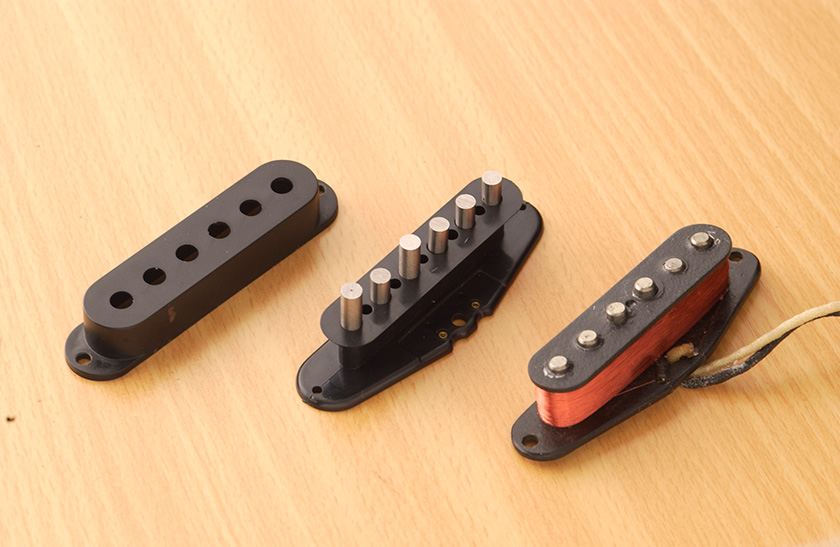
- Magnets: These are the heart of the magnetic field. Common magnets used are Alnico (an alloy of aluminum, nickel, and cobalt) and Ceramic. The type and strength of the magnet significantly impact the pickup’s output and tonal qualities. Alnico magnets are generally favored for their warmer, more complex tones, while ceramic magnets tend to produce a hotter, more aggressive output.
- Pole Pieces: These are the individual magnetic rods or screws that protrude through the top of the pickup and align with the strings. They focus the magnetic field directly beneath each string. The material and spacing of pole pieces can subtly affect string-to-string balance and clarity.
- Coil Winding: This is the fine copper wire wound around the magnets and pole pieces. The number of turns of wire, the thickness of the wire, and the way it’s wound all play a crucial role in the pickup’s resistance (measured in ohms), inductance, and ultimately, its tonal output. More turns generally lead to a higher output and a brighter tone, while fewer turns might result in a warmer, more vintage sound.
- Covers (Optional): Many pickups are enclosed in a plastic or metal cover. These covers can serve both aesthetic purposes and, in some cases, offer a degree of shielding against electrical interference, which can reduce unwanted hum and noise.
Types of Guitar Pickups: A Sonic Spectrum
The vast array of electric guitar sounds is, in large part, a testament to the diversity of pickups available. Manufacturers have developed numerous designs to achieve specific tonal characteristics, catering to virtually every musical genre imaginable. Understanding the main types is key to appreciating the sonic possibilities.
Single-Coil Pickups: Clarity and Brightness
Single-coil pickups are the original design, found on iconic guitars like the Fender Stratocaster and Telecaster. They consist of a single coil of wire wound around magnets.
Characteristics:
- Bright and Articulate: Single-coils are renowned for their clear, crisp, and articulate tone. They excel at producing sparkling highs and a well-defined midrange, making them ideal for genres like blues, country, funk, and indie rock.
- Dynamic Range: They tend to be very responsive to playing dynamics, meaning subtle variations in how you pick or strum can significantly alter the sound.
- Hum and Noise: A significant drawback of single-coil pickups is their susceptibility to electromagnetic interference, commonly known as “hum.” This is an inherent characteristic of their design. This can be a concern in noisy environments or when using significant amounts of gain.
Common Variations:
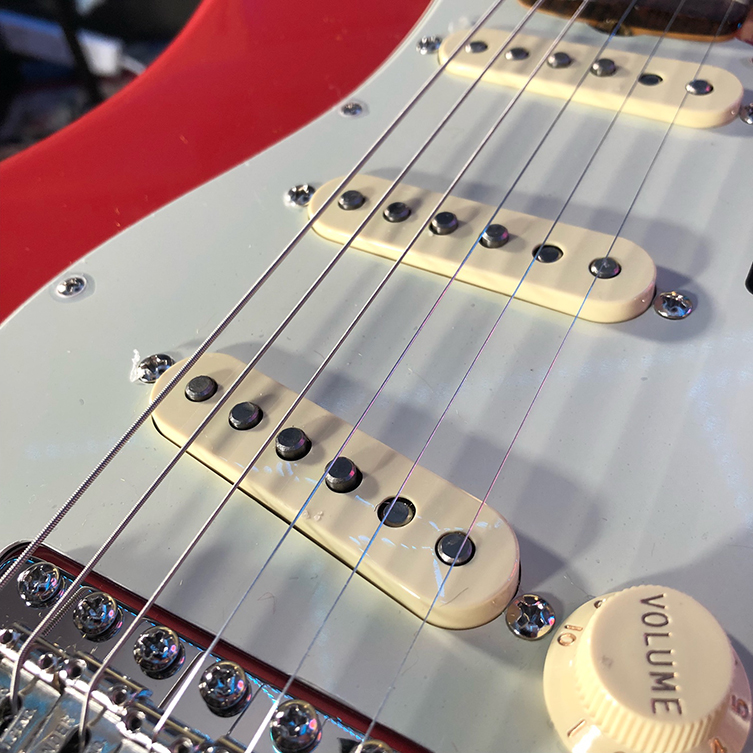
- Stratocaster-style: Typically have three pickups, offering a wide range of tonal combinations through a selector switch. Known for their glassy highs and quacky middle positions.
- Telecaster-style: Usually have two pickups, a bridge pickup that is famously bright and twangy, and a neck pickup that is warmer and rounder.
Humbucker Pickups: Power and Warmth
Humbuckers, also known as humbucking pickups, were developed specifically to combat the hum inherent in single-coils. They achieve this by using two coils wired in a way that cancels out hum frequencies while reinforcing the desired guitar signal.
Characteristics:
- Higher Output and Warmth: Humbuckers generally have a higher output than single-coils, meaning they produce a stronger signal. This translates to a fatter, warmer, and more powerful tone with more sustain.
- Thicker Mids and Smoother Highs: They tend to have a more pronounced midrange and smoother, less piercing high frequencies, making them excellent for rock, hard rock, metal, jazz, and blues.
- Less Susceptible to Hum: Their hum-canceling design makes them much quieter in noisy environments.
Common Variations:
- Standard Humbuckers: The classic design, often found on Gibson Les Pauls and SG guitars.
- P-90s: While technically a single-coil, P-90s have a fatter coil and a more aggressive, raw tone than traditional single-coils, often described as being somewhere between a single-coil and a humbucker.
- Active Humbuckers: These use active electronics, including a preamplifier, to boost the signal and offer greater control over tone. They typically have a very high output and a very clear, defined sound, often favored in high-gain genres.
Other Notable Pickup Types
While single-coils and humbuckers are the most prevalent, a few other types deserve mention:
- Single-Coil Humbuckers (or “Pots” for “Pancake Coils”): These are designed to fit into a standard humbucker route but offer a single-coil-like tone. They achieve this through unique coil winding configurations.
- Stacked Single-Coils: These are essentially two single-coil pickups stacked vertically. This design offers the hum-canceling benefits of a humbucker while aiming to retain the tonal characteristics of a single-coil.
- Blade Pickups: Instead of individual pole pieces, these have a continuous blade that runs under the strings. They are known for their consistent string-to-string output and are often used in guitars with tremolo systems or for players who employ aggressive picking techniques.
The Impact of Pickups on Guitar Tone: A Technological and Artistic Synergy
The choice of pickups is arguably one of the most significant factors influencing an electric guitar’s overall sound. While the wood, construction, and hardware of a guitar all contribute, the pickups are the direct interface with the vibrating strings, translating their motion into the electrical impulses that become music.
From Raw Signal to Sonic Identity
Consider two guitars made from identical wood, with the same hardware and construction, but fitted with different types of pickups. The sonic difference would be profound. A Stratocaster with vintage-style single-coils will possess a chimey, articulate character, perfect for delicate blues leads and funky rhythms. Switch those pickups to a pair of high-output humbuckers, and the same guitar could be transformed into a rock machine, capable of thick, sustaining power chords and aggressive solos.
This is where the synergy between technology and artistry becomes apparent. Guitar manufacturers leverage the technological nuances of different pickup designs to create instruments that cater to specific sonic preferences and musical genres. This is also a key element of Brand strategy. A brand like Fender is inextricably linked to the bright, clear tones of its single-coil pickups, while Gibson is synonymous with the warm, powerful sound of humbuckers.
The Role of Pickups in Different Genres
- Blues: Often favors the dynamic response and vocal-like quality of vintage-style single-coils, especially those with Alnico magnets. The clarity allows for subtle nuances in playing to shine through.
- Rock and Hard Rock: Humbuckers are the dominant choice due to their higher output, sustain, and ability to drive amplifiers into natural overdrive. The warmer tone and reduced hum are beneficial for heavier playing styles.
- Metal: High-output humbuckers, often with ceramic magnets or specialized winding techniques, are essential for achieving the tight, articulate, and aggressive tones required for modern metal music. Active pickups are also popular in this genre for their exceptional clarity and power.
- Jazz: Often utilizes the warm, round tones of neck-position humbuckers or even vintage-style single-coils with a warmer EQ, favoring smoothness and clarity over raw power.
- Country: Telecaster-style pickups, with their distinctive bright and twangy character, are iconic in country music. Certain single-coil configurations can also excel in this genre for their clarity and percussive qualities.
The Business and Technology of Guitar Pickups
The world of guitar pickups isn’t just about sound; it’s also a significant market driven by technological innovation, brand loyalty, and the pursuit of sonic perfection.
Technological Advancements and Innovation
The fundamental principles of electromagnetism haven’t changed, but the application of Tech has led to continuous improvements in pickup design. Manufacturers constantly experiment with:
- Magnet Materials: Beyond Alnico and Ceramic, newer alloys and magnet configurations are explored to fine-tune magnetic fields.
- Winding Techniques: Precision winding machines and sophisticated algorithms allow for highly consistent and repeatable coil windings, leading to more predictable tonal outcomes.
- Shielding and Noise Reduction: Advanced shielding materials and internal circuit designs are employed to minimize unwanted noise and hum, especially crucial for high-gain applications.
- Active Electronics: The integration of active preamplifiers within pickups offers unparalleled control over EQ, output, and tonal shaping, expanding the sonic palette considerably.
Brand Strategies and Market Positioning
Guitar and pickup manufacturers employ sophisticated Brand strategies to differentiate themselves in a competitive market.
- Heritage and Vintage Reissues: Many brands capitalize on the legacy of iconic pickup designs, offering “vintage-voiced” pickups that aim to replicate the sounds of classic guitars. This taps into nostalgia and a desire for authentic tones.
- Signature Series: Collaborations with renowned guitarists often result in “signature” pickups, designed to their specific tonal preferences and playing styles. This creates a strong connection with fans and leverages the artist’s reputation.
- Technological Innovation as a Selling Point: Brands that push the boundaries with new materials, winding techniques, or active electronics often position themselves as innovators, appealing to players seeking cutting-edge sound.
- Targeting Specific Genres: Pickup manufacturers often market their products to specific genres, highlighting how their pickups are ideal for blues, metal, jazz, etc. This helps players easily identify products that align with their musical aspirations.
The Economic Aspect: Investing in Tone
For musicians, the choice of pickups can also have significant implications for Money.
- The Cost of Quality: High-end, hand-wound, or boutique pickups can be considerably more expensive than mass-produced alternatives. These often feature premium materials, meticulous craftsmanship, and unique designs that contribute to their elevated price point.
- The “Upgrade” Factor: Many guitarists view upgrading their pickups as a cost-effective way to significantly improve the sound of an otherwise good guitar, especially if they’ve purchased a more affordable instrument initially. This can be seen as an investment in their musical journey.
- Resale Value: While not as significant as the guitar itself, desirable pickups can add to a guitar’s resale value. Some rare or highly sought-after vintage pickups can command significant prices on the collector’s market.
- DIY and the Side Hustle: For the technically inclined, understanding pickup winding can even open avenues for DIY projects or even a small-scale Side Hustle, building and selling custom pickups.
In conclusion, guitar pickups are far more than just passive components; they are intricate technological marvels that form the sonic soul of an electric guitar. Their development is a testament to ongoing innovation in electronics and materials science. For musicians, understanding the nuances of different pickup types is crucial for achieving their desired tone. For brands, they are a vital part of their identity and marketing. And for the economy of music, they represent a significant market where technology, artistry, and commerce converge to create the sounds that move us.
aViewFromTheCave is a participant in the Amazon Services LLC Associates Program, an affiliate advertising program designed to provide a means for sites to earn advertising fees by advertising and linking to Amazon.com. Amazon, the Amazon logo, AmazonSupply, and the AmazonSupply logo are trademarks of Amazon.com, Inc. or its affiliates. As an Amazon Associate we earn affiliate commissions from qualifying purchases.