
In the ever-evolving landscape of technology, innovation often seems to spring from complex algorithms, cutting-edge hardware, and abstract data structures. Yet, at the heart of nearly every sophisticated system lies a set of fundamental mathematical principles. Among these, inequalities play an often-unsung, but absolutely critical, role. Far from being a mere academic exercise, understanding mathematical inequalities is essential for anyone aspiring to build, optimize, or even simply comprehend the digital tools that shape our world.
This article delves into the core concept of inequalities, moving beyond their basic definition to illustrate their pervasive and indispensable applications across various domains of technology. From dictating the flow of software logic to enabling intelligent decision-making in AI and ensuring the security of our digital assets, inequalities are the silent architects of the tech universe.

The Core Concept: Understanding Mathematical Inequalities
At its most fundamental level, mathematics provides a language for describing relationships between quantities. While equality (=) describes perfect equivalence, inequalities describe scenarios where quantities are not necessarily equal, but rather greater than, less than, or within a certain range. This distinction is not merely semantic; it’s the difference between a precise target and a flexible boundary, a concept far more representative of real-world (and digital-world) conditions.
Beyond Equality: Introducing Relational Operators
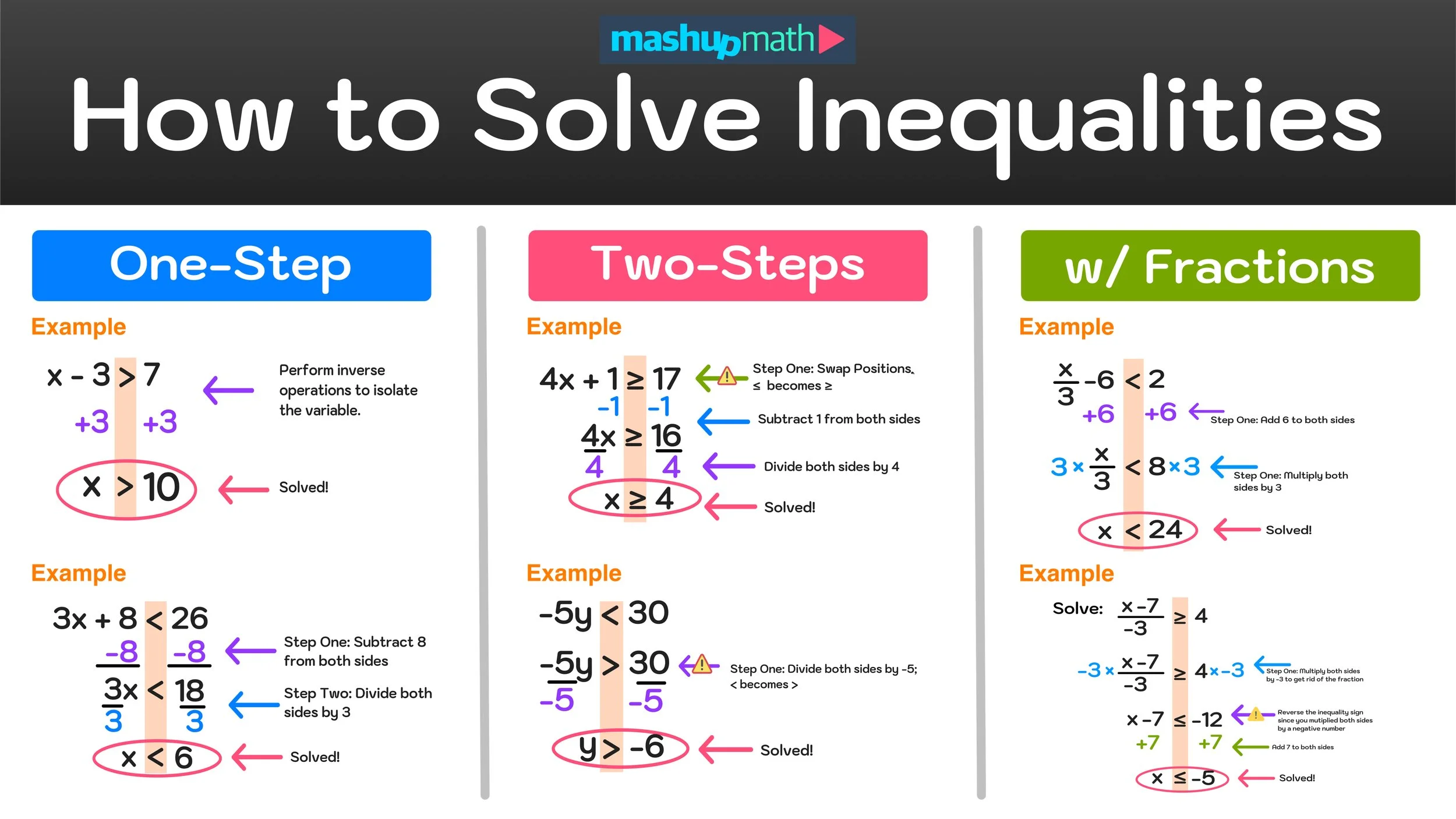
The concept of inequality is introduced through a set of relational operators that expand our mathematical vocabulary beyond simple equivalence. These operators allow us to express comparisons:
- Less than (
<): Indicates that one value is strictly smaller than another (e.g.,x < 5). - Greater than (
>): Indicates that one value is strictly larger than another (e.g.,y > 10). - Less than or equal to (
≤): Indicates that one value is smaller than or potentially equal to another (e.g.,age ≤ 18). - Greater than or equal to (
≥): Indicates that one value is larger than or potentially equal to another (e.g.,score ≥ 90). - Not equal to (
≠): Indicates that two values are simply different (e.g.,username ≠ "admin").
These operators are the building blocks. They allow us to move from rigid point solutions to defining entire sets of possible values, which is profoundly useful in systems where exact values are rare and ranges, thresholds, and conditions are commonplace.
Types of Inequalities: Linear, Polynomial, and Beyond
Just like equations, inequalities come in various forms, each with its own characteristics and methods of analysis.
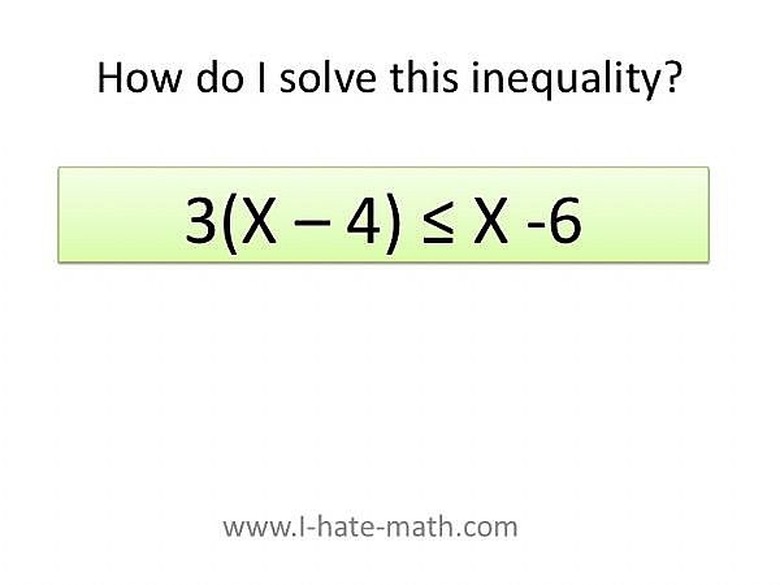
- Linear Inequalities: These are the simplest form, involving variables raised only to the power of one (e.g.,
2x + 3 > 7). They typically define regions on a number line or, in multiple dimensions, half-planes. - Polynomial Inequalities: Involve polynomials of degree greater than one (e.g.,
x^2 - 4 < 0). Their solutions can be more complex, often involving multiple disjoint intervals. - Rational Inequalities: Involve fractions where the numerator and/or denominator contain variables.
- Absolute Value Inequalities: Involve the absolute value of an expression, which inherently leads to two separate linear inequalities.
While the methods for solving these different types vary, their common thread is the establishment of boundaries or conditions rather than exact points. In tech, the specific algebraic complexity often gets abstracted away by programming languages, but the underlying logical structure remains paramount.
Visualizing Inequalities: Number Lines and Coordinate Planes
Visualizing inequalities is crucial for grasping their impact. On a one-dimensional number line, a linear inequality like x > 3 is represented by an open circle at 3 and an arrow extending to the right, signifying all numbers greater than 3. For x ≤ 5, a closed circle at 5 and an arrow extending to the left show all numbers less than or equal to 5.
In two or more dimensions, inequalities define regions on a coordinate plane. For instance, y > x + 2 represents the entire area above the line y = x + 2. These visual representations are not just theoretical; they mirror how boundaries are defined in user interfaces, spatial computing, and even geographical information systems. Understanding these geometric interpretations allows developers to conceptualize constraints, user zones, and data distributions in a tangible way.
Inequalities as the Language of Constraints and Decision-Making in Software
In the realm of software development, inequalities are not abstract mathematical concepts but rather the fundamental grammar for controlling program flow, validating data, and making dynamic decisions. They are embedded in the very logic that makes applications interactive, robust, and functional.
Control Flow and Conditional Logic: The IF/ELSE Foundation
The most ubiquitous application of inequalities in programming is within conditional statements (if, else if, else). These constructs allow programs to execute different blocks of code based on whether certain conditions are met.
Consider a simple login system:
if username == "admin" and password == "secure":
    # Grant admin access
elif login_attempts >= 3:
    # Lock account
else:
    # Show error message
Here, ==, >=, and other implicit relational checks (username is not "admin") are direct applications of equality and inequality. Without these operators, a program would be a linear, inflexible sequence of instructions, incapable of responding to user input, changing data, or dynamic environments. Inequalities enable branching paths, making software truly responsive.
Loop Conditions and Iteration: Managing Repetitive Tasks
Loops (for, while) are another cornerstone of programming, allowing tasks to be repeated multiple times. Inequalities dictate when these loops start, continue, and terminate.
for (let i = 0; i < 10; i++) {
    // Execute code 10 times
}

while (data_loaded < total_data_size) {
    // Continue loading data
}
In these examples, < and < (or implicit !=) are the conditions that govern iteration. They ensure that a process runs exactly the right number of times or continues until a specific goal is achieved or a constraint is violated. Without inequalities, controlled iteration would be impossible, severely limiting the ability of software to process large datasets, render graphics, or perform repetitive calculations efficiently.
Data Validation and Input Sanitization: Ensuring Robust Applications
Robust software must anticipate and handle invalid or malicious input. Inequalities are vital for data validation, ensuring that user-provided data or external inputs adhere to predefined rules and ranges.
if age < 0 or age > 120:(Invalid age range)if password.length < 8:(Password too short)if transaction_amount <= 0:(Transaction must be positive)if file_size > MAX_UPLOAD_SIZE:(Prevent oversized uploads)
These checks, all based on inequalities, prevent errors, protect against security vulnerabilities (like buffer overflows or SQL injection facilitated by malformed input), and improve the overall reliability and user experience of applications. They act as digital gatekeepers, enforcing the rules of engagement for data.
Driving Intelligent Systems: Inequalities in AI and Machine Learning
The field of Artificial Intelligence and Machine Learning is fundamentally built upon mathematical models that make predictions, classify data, and optimize decisions. Inequalities are not just present here; they are often the very mechanics by which these intelligent systems operate, defining the boundaries, thresholds, and conditions that lead to “smart” behavior.
Defining Boundaries: Classification and Decision Surfaces
In supervised machine learning, particularly in classification tasks, models learn to separate different categories of data. Inequalities are inherently used to define these separation boundaries.
- Perceptrons and Support Vector Machines (SVMs): These algorithms aim to find a hyperplane (a line in 2D, a plane in 3D, or a higher-dimensional equivalent) that best separates data points belonging to different classes. The classification rule for a new data point often comes down to an inequality:
if (w ⋅ x + b) > 0, then classify as class A; otherwise, classify as class B. Here,wis a weight vector,xis the input, andbis a bias. The> 0is the inequality that draws the line (or plane) for classification. - Decision Trees: Each node in a decision tree represents a test on a feature, which is typically an inequality. For example, “Is
petal_length > 2.5?” or “Isage <= 30?”. These sequential inequality checks guide data points down a specific path, ultimately leading to a classification or prediction.
Optimization Problems: Maximizing Performance Under Constraints
Many AI and operational research problems involve optimization – finding the best possible solution (e.g., maximizing profit, minimizing cost, improving efficiency) subject to certain limitations or constraints. Inequalities are the formal language for expressing these constraints.
- Linear Programming (LP): A powerful technique used in logistics, resource allocation, and scheduling. LP problems often involve maximizing or minimizing a linear objective function subject to a set of linear inequality constraints (e.g.,
x + y <= 100,2x - y >= 50,x >= 0,y >= 0). These inequalities define a “feasible region” within which the optimal solution must lie. - Constraint Satisfaction Problems (CSPs): Used in planning, scheduling, and configuration. Here, solutions must satisfy a set of hard constraints, many of which are expressed as inequalities. For instance, in a scheduling problem,
start_time_task_A + duration_task_A <= start_time_task_B(task A must finish before task B starts).
Data Filtering and Feature Engineering: Preparing Data for Insights
Before data can be fed into an AI model, it often needs to be cleaned, transformed, and filtered. Inequalities are extensively used in these preprocessing steps:
- Filtering out outliers:
if data_point < lower_bound or data_point > upper_bound: - Selecting relevant data:
if temperature >= 20 and temperature <= 30: - Creating new features: A common technique is to derive new categorical features from numerical ones using inequalities (e.g.,
is_high_income = (income > 100000)).
These operations, driven by inequalities, ensure that AI models receive high-quality, relevant data, leading to more accurate predictions and robust decision-making.
From Algorithms to User Experience: Inequalities in Practice
Beyond the core logic and intelligent systems, inequalities permeate various practical applications of technology, often directly influencing user experience, system performance, and security.
Resource Management and System Performance: Allocating Compute Power
Operating systems, cloud platforms, and application servers constantly monitor resources and make decisions based on their availability and usage. Inequalities are critical here:
- CPU and Memory Usage:
if CPU_usage > 90% then alert_admin()orif available_memory < MIN_THRESHOLD then kill_oldest_process(). - Network Bandwidth:
if current_bandwidth < required_bandwidth then switch_to_lower_quality_stream(). - Load Balancing:
if server_load_A < server_load_B then redirect_new_request_to_A().
These checks ensure that systems remain stable, perform optimally, and prevent resource exhaustion, directly impacting the responsiveness and reliability of digital services.
Game Development and Physics Engines: Collision Detection and Rules
Video games are a dynamic environment where objects interact, move, and collide according to rules. Inequalities are the backbone of these interactions:
- Collision Detection:
if distance(object1, object2) <= collision_radius_sum:indicates a collision. More complex collision detection often involves checking if bounding boxes or spheres overlap using a series of inequalities for each axis. - Game Logic:
if player_health <= 0 then game_over().if score >= high_score_threshold then unlock_achievement(). - Physics Constraints: Ensuring objects don’t pass through walls (
position_x > wall_boundary_x) or adhere to jump heights (current_height <= max_jump_height).
Without inequalities, realistic physical interactions and engaging game mechanics would be impossible, leading to a static and unplayable experience.
Cybersecurity: Detecting Anomalies and Enforcing Policies
In the critical domain of cybersecurity, inequalities are used to define normal behavior, identify deviations, and enforce access controls.
- Intrusion Detection Systems (IDS):
if login_attempts_from_IP > 5 in 10 minutes then flag_as_suspicious().if data_transfer_rate_outbound > normal_average * 2 then investigate(). - Access Control Policies:
if user_role == "admin" and request_time >= 9am and request_time <= 5pm then allow_access_to_sensitive_data(). - Firewall Rules:
if source_IP != trusted_network_range then block_connection().
These inequality-based rules are fundamental to protecting data, identifying threats, and maintaining the integrity and confidentiality of digital systems.
The Future Landscape: Embracing Inequality-Driven Logic
As technology continues to advance, the role of inequalities will only grow, finding new applications in emerging fields and becoming even more sophisticated in their implementation.
Edge Computing and IoT: Localized Decision-Making
In edge computing and the Internet of Things (IoT), countless devices process data locally, often with limited resources and connectivity. Inequalities enable these devices to make rapid, autonomous decisions without constant communication with a central server. For example, a smart thermostat might use if temperature < target_temp - hysteresis_value to turn on the heating, or a security camera might trigger an alert if motion_detected_area > threshold_size. The efficiency and speed of inequality checks are paramount in these distributed environments.
Ethical AI and Fairness: Setting Algorithmic Constraints
As AI becomes more pervasive, ensuring fairness, transparency, and ethical behavior is critical. Inequalities are beginning to play a role in defining and enforcing these ethical boundaries. For instance, developers might impose constraints on AI models to prevent biased outcomes: if classification_rate_for_group_A - classification_rate_for_group_B > tolerance_level then retrain_model_with_fairness_constraints(). Algorithmic audits often involve checking if specific performance metrics (expressed as inequalities) are met across different demographic groups to ensure equitable treatment.
The seemingly simple concept of mathematical inequalities is, in reality, a cornerstone of the digital world. From the fundamental conditional logic that dictates how software runs to the complex decision boundaries that enable artificial intelligence, inequalities provide the essential language for defining conditions, enforcing rules, and navigating the vast possibilities of technology. As we push the boundaries of innovation, understanding and expertly applying inequalities will remain an indispensable skill for anyone involved in shaping the future of tech.
aViewFromTheCave is a participant in the Amazon Services LLC Associates Program, an affiliate advertising program designed to provide a means for sites to earn advertising fees by advertising and linking to Amazon.com. Amazon, the Amazon logo, AmazonSupply, and the AmazonSupply logo are trademarks of Amazon.com, Inc. or its affiliates. As an Amazon Associate we earn affiliate commissions from qualifying purchases.