
Facebook applications, often simply referred to as Facebook apps, are third-party software programs designed to integrate with the Facebook platform, leveraging its vast social graph, user data (with explicit consent), and features to provide enhanced functionalities, entertainment, or utility. From their inception, these applications have represented a crucial layer of the Facebook ecosystem, extending its capabilities far beyond basic social networking and transforming it into a dynamic, interactive platform. They range from simple quizzes and games to complex business tools and data integrations, each built to enrich the user experience or facilitate specific tasks within the Facebook environment.

Understanding what Facebook applications are requires delving into their historical context, their technical underpinnings, and their multifaceted impact on users, developers, and the broader digital landscape. At their core, these applications are a testament to the power of open APIs and platform-based innovation, demonstrating how a core service can be augmented and diversified through the contributions of an external developer community.
The Genesis and Evolution of Facebook Applications
The journey of Facebook applications is intertwined with the platform’s own evolution, reflecting shifts in technology, user behavior, and data privacy paradigms. What began as an experimental feature quickly blossomed into a vibrant ecosystem.
Early Days: The Platform’s Openness
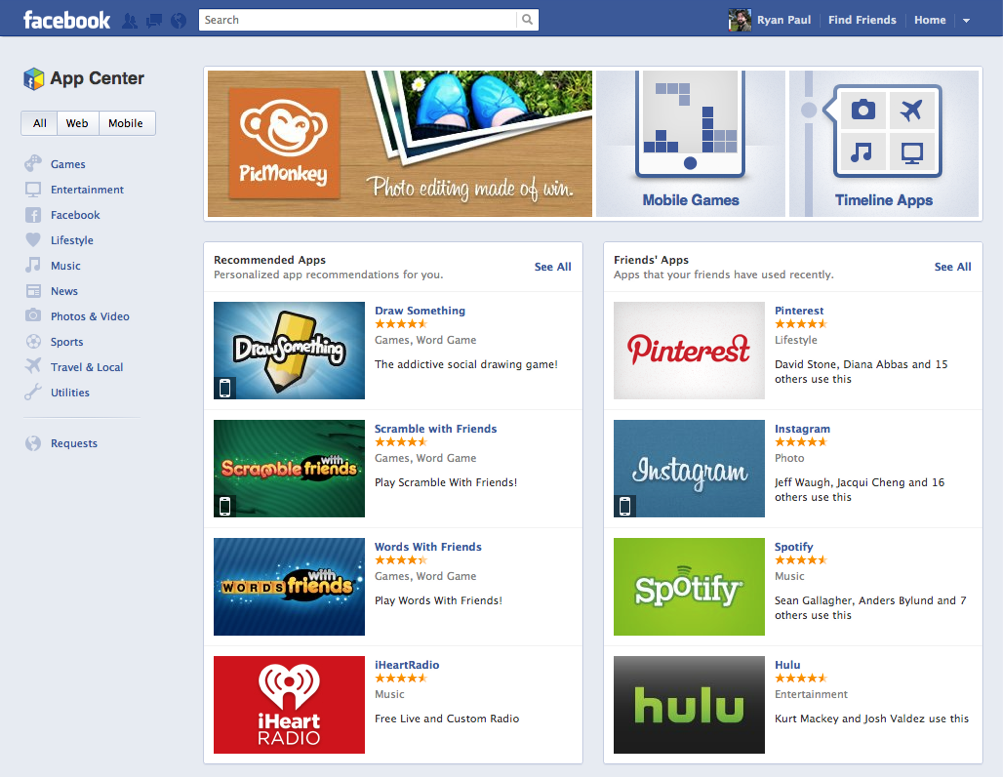
The real turning point for Facebook applications came in May 2007 with the launch of the Facebook Platform. Mark Zuckerberg famously declared, “We want to make it so that if you’re building any kind of application, you can just assume that you’re building it on Facebook.” This initiative was revolutionary, allowing third-party developers to create applications that could integrate directly into user profiles, News Feeds, and other core Facebook features. Early applications were often simple, focusing on social games, quizzes, and novelty tools like “Poking” or “SuperPoke!” While many were perceived as frivolous, they captivated users and demonstrated the immense potential for virality and engagement inherent in the social graph. Developers flocked to the platform, eager to tap into Facebook’s rapidly growing user base.
Growth and Developer Ecosystem
The years following 2007 saw an explosion in Facebook application development. The platform provided developers with unparalleled access to a social network’s data, enabling them to build highly personalized and interactive experiences. This era was characterized by the meteoric rise of social gaming, with titles like FarmVille, Mafia Wars, and CityVille becoming cultural phenomena. These games not only entertained millions but also pioneered concepts like microtransactions and viral sharing within a social context. Beyond gaming, applications emerged for sharing photos, organizing events, collaborating on projects, and even dating. The developer ecosystem thrived, fueled by the promise of direct user engagement and monetization opportunities. Facebook’s open graph protocol, introduced in 2010, further deepened integration, allowing any website to become a “social object” and interact with Facebook users.
Shifting Paradigms: Mobile and Privacy Concerns
The landscape of Facebook applications underwent significant transformations with the advent of mobile technology and growing concerns over data privacy. As users shifted from desktop to smartphones, the focus of application development naturally moved towards mobile-first experiences. While Facebook continued to support web-based canvas apps, the emphasis increasingly fell on mobile apps that could connect to Facebook for login, sharing, and friend integration.
Concurrently, incidents like the Cambridge Analytica scandal in 2018 brought data privacy to the forefront. This event, which involved a third-party application improperly accessing and utilizing user data, led to a massive overhaul of Facebook’s developer policies. Access to user data was drastically restricted, permissions became more granular and transparent, and the review process for new applications became much more stringent. This shift aimed to protect user privacy but also significantly altered the capabilities and scope of third-party applications, pushing developers towards more responsible data handling and focusing on applications that genuinely enhance the user experience rather than merely harvesting data.
Categorizing Facebook Applications: A Spectrum of Utility
Facebook applications, throughout their history, have encompassed a wide array of functionalities, catering to diverse user needs and interests. While the emphasis has shifted over time, their core categories of utility remain relevant.
Social Gaming and Entertainment
This category was arguably the most dominant in Facebook’s early and middle periods. Social games like FarmVille, Candy Crush Saga (via Facebook Connect), and numerous quiz applications leveraged the social graph to drive engagement through friend invitations, leaderboards, and shared achievements. These apps turned solitary gaming into a communal experience, facilitating interaction and competition among friends. Beyond games, entertainment apps included personalized news feeds, meme generators, horoscope readers, and various tools for self-expression, all designed to make the Facebook experience more dynamic and enjoyable. While the boom of dedicated canvas games has subsided with the rise of standalone mobile gaming, Facebook still serves as a crucial platform for discovering games and enabling social logins for many popular titles.
Productivity and Utility Tools
Facebook applications also extended into practical realms, offering tools to enhance productivity and streamline various daily tasks. These included event planning applications, photo and video editing suites, document sharing and collaboration tools, and specialized communication platforms. For instance, early apps allowed users to create polls, manage RSVPs for parties, or even organize shared photo albums more effectively than Facebook’s native features initially permitted. While Facebook has integrated many of these utilities natively over time, third-party developers continue to innovate, offering niche solutions or more powerful versions of these tools that leverage Facebook’s social connections for broader reach and functionality.
Business and Marketing Integrations
For businesses, Facebook applications have become indispensable tools for marketing, customer engagement, and e-commerce. These applications often integrate business websites, CRM systems, and e-commerce platforms directly with Facebook Pages and profiles. Examples include apps for running contests and promotions, managing customer service inquiries, displaying product catalogs, and facilitating direct sales within the Facebook environment. Marketing automation tools leverage Facebook’s advertising platform API to manage campaigns, target specific demographics, and track performance. These integrations allow businesses to maintain a strong presence where their customers spend a significant amount of time, streamlining operations and enhancing their ability to convert social engagement into tangible business results.
Information and News Aggregators
Another significant category of Facebook applications focuses on delivering information and news to users in personalized and engaging formats. These apps range from simple RSS feed readers integrated into Facebook to more sophisticated news aggregators that curate content based on a user’s interests, friends’ recommendations, or popular trends. Publishers and media outlets often develop their own Facebook applications to share articles, videos, and live broadcasts, encouraging social sharing and discussion around their content. These applications play a role in how users discover news and stay informed, transforming Facebook from merely a social network into a significant content consumption platform.
The Technical Architecture Behind Facebook Applications
At the heart of every Facebook application lies a sophisticated technical framework that enables seamless interaction between the third-party software and the Facebook platform. This architecture is built upon a set of APIs, authentication protocols, and data exchange mechanisms.
Leveraging the Facebook API (Graph API)
The cornerstone of Facebook application development is the Facebook Graph API. This API (Application Programming Interface) serves as the primary way for apps to read and write data to and from the Facebook platform. It provides a consistent, programmatic interface to Facebook’s social graph, which represents the connections between people, photos, events, pages, and other objects. Developers use the Graph API to access public profile information, post to News Feeds, manage Pages, retrieve friend lists (with user permission), upload media, and much more. The API is RESTful, meaning it uses standard HTTP requests to perform operations, making it accessible to a wide range of programming languages and frameworks. Its continuous evolution includes versioning to ensure backward compatibility while introducing new features and stricter security measures.
Authentication and Permissions (OAuth)
Security and user control are paramount in the Facebook application ecosystem. This is managed through an authentication protocol primarily based on OAuth (Open Authorization). When a user tries to access a Facebook application for the first time, they are redirected to a Facebook login page where they explicitly grant or deny the application specific permissions. These permissions can range from basic profile access to the ability to post on their behalf, manage their photos, or access their friend list. OAuth ensures that the application never sees the user’s Facebook password; instead, it receives an access token that represents the granted permissions. This token is then used for subsequent API calls, limiting the application’s access to only what the user has explicitly allowed, thereby safeguarding user data and privacy.
Data Flow and Integration Points
The data flow for Facebook applications involves a series of interactions between the user’s device, the Facebook servers, and the third-party application’s servers. When a user interacts with an app, the app might send requests to the Graph API using the user’s access token. Facebook’s servers process these requests, retrieving or storing data as required, and return a response to the application. The application then processes this data and presents it to the user. Integration points include embedding the app within a Facebook canvas (for web apps), using Facebook Login for authentication in mobile or web apps, sharing content to Facebook from an external app, or embedding Facebook Page plugins on external websites. Webhooks are also used, allowing Facebook to notify applications in real-time about certain events, like new comments on a post or changes to a Page.
Development Frameworks and Languages
Developers building Facebook applications are not restricted to a single language or framework. Given that the Graph API is largely language-agnostic, applications can be built using virtually any server-side language (e.g., Python, Node.js, PHP, Ruby, Java, C#) or client-side technologies (e.g., JavaScript, React, Angular, Vue.js). Facebook provides official SDKs (Software Development Kits) for popular languages and platforms like iOS, Android, and JavaScript, which simplify API interactions, authentication flows, and UI components. These SDKs abstract away much of the complexity, allowing developers to focus on building features rather than handling low-level API calls, thereby accelerating the development process and ensuring compliance with platform policies.
Impact and Implications of Facebook Applications
The existence and evolution of Facebook applications have had a profound and multifaceted impact on technology, user behavior, and the digital economy.
Enhancing User Experience and Engagement
For users, Facebook applications have dramatically expanded the utility and entertainment value of the platform. They transformed Facebook from a simple social network into a versatile hub where one could play games, read news, plan events, shop, and connect with various online services—all within or through a familiar social context. This enhanced functionality led to deeper engagement, keeping users on the platform longer and increasing their interaction with both friends and external services. The convenience of a single login (Facebook Login) across many applications also streamlined the user experience across the web and mobile, reducing friction and encouraging broader adoption of new services.
Driving Innovation and Developer Opportunities
The Facebook Platform sparked an enormous wave of innovation in application development. It democratized access to a massive user base, allowing small startups and individual developers to create and distribute applications with viral potential. This fostered new business models (e.g., social gaming with in-app purchases) and pushed the boundaries of what social software could achieve. The platform provided a fertile ground for experimentation, leading to the development of novel features and user interfaces that eventually influenced the broader app development landscape. For developers, it represented a significant opportunity to build products with instant reach and to monetize their creations by leveraging Facebook’s advertising network or through direct user payments.
Navigating Data Privacy and Security Challenges
While Facebook applications brought immense value, they also introduced significant challenges related to data privacy and security. The early, more permissive access to user data, while facilitating powerful integrations, eventually led to misuse and privacy breaches (e.g., Cambridge Analytica). This highlighted the critical need for robust data governance, clear user consent mechanisms, and transparent data handling practices. Facebook’s subsequent tightening of API access and stricter developer policies, while necessary, also created friction and limitations for developers, emphasizing a shift towards a more privacy-centric application ecosystem. The ongoing challenge is to balance innovation with stringent security and privacy protocols.
The Platform’s Influence on App Development
Facebook’s approach to opening its platform to third-party developers became a blueprint for other tech giants. Many platforms, from Google and Apple with their respective app stores to Twitter and LinkedIn with their APIs, have adopted similar models, recognizing the power of an external developer ecosystem. The lessons learned from Facebook—both successes and failures—have profoundly influenced how platforms approach API design, developer relations, authentication, and, most importantly, data privacy and security. The platform’s scale and reach demonstrated the immense potential and inherent risks of integrating third-party software into core digital experiences.
The Future Landscape of Social Applications
The world of Facebook applications is continuously evolving, shaped by emerging technologies, shifting user expectations, and the ongoing dialogue around data privacy and control. The future promises further integration with cutting-edge tech and a renewed focus on user trust.
Towards a Decentralized Ecosystem?
While Facebook (now Meta) continues to evolve its own platform, the broader conversation in tech is leaning towards decentralization. Concepts like Web3, blockchain technology, and decentralized autonomous organizations (DAOs) could potentially influence how social applications are built and managed. In a decentralized future, applications might not rely on a single platform’s API for data and authentication but instead interact directly with user-owned data stored on distributed ledgers. This could offer users greater control over their information and potentially reduce the power of centralized platforms, fostering a new era of open-source, community-governed social applications. However, the scalability and user-friendliness of such systems are still significant hurdles.
AI, AR/VR, and the Metaverse Integration
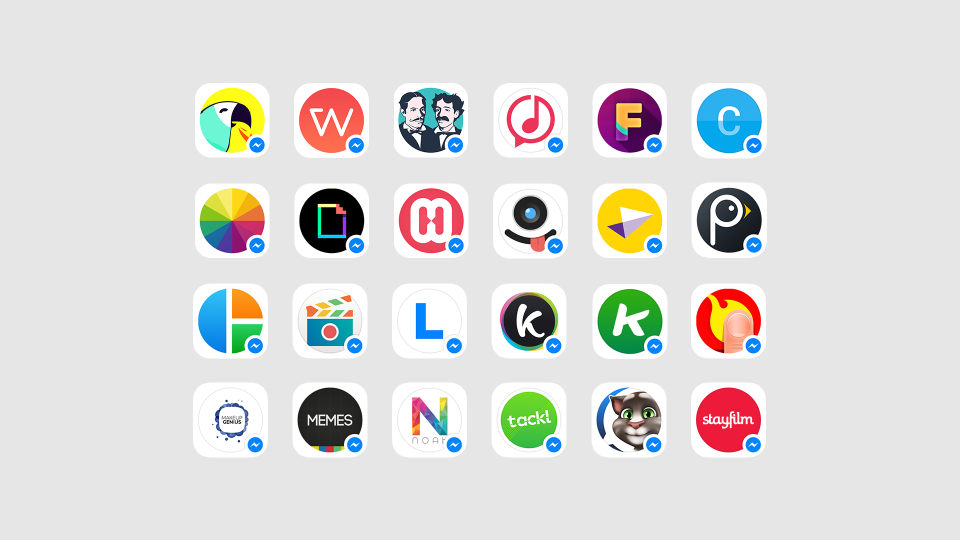
Meta Platforms’ significant investment in the metaverse represents the next frontier for applications. Future Facebook applications, particularly those within the Quest VR ecosystem, will increasingly leverage augmented reality (AR) and virtual reality (VR) technologies. This will enable immersive social experiences, virtual workspaces, and highly interactive games that transcend traditional 2D interfaces. Artificial intelligence (AI) will play a crucial role, powering more intelligent chatbots, personalized content recommendations, and dynamic virtual environments. Apps in this future will be less about external integration and more about foundational experiences within Meta’s own ambitious virtual worlds, blurring the lines between digital and physical interaction.
Sustaining Innovation While Ensuring User Trust
The core challenge for Facebook applications moving forward will be to balance rapid innovation with an unwavering commitment to user trust and data privacy. As technology advances, the potential for sophisticated data usage grows, making transparent policies and robust security measures more critical than ever. Future applications will need to be designed with privacy-by-design principles, offering users granular control over their data and clear understanding of how their information is used. The emphasis will be on building valuable, engaging experiences that respect user autonomy, ensuring that the next generation of social applications enriches lives without compromising fundamental rights or eroding trust in the digital ecosystem.
aViewFromTheCave is a participant in the Amazon Services LLC Associates Program, an affiliate advertising program designed to provide a means for sites to earn advertising fees by advertising and linking to Amazon.com. Amazon, the Amazon logo, AmazonSupply, and the AmazonSupply logo are trademarks of Amazon.com, Inc. or its affiliates. As an Amazon Associate we earn affiliate commissions from qualifying purchases.