
Epoxides, at their core, are cyclic ethers characterized by a three-atom ring, consisting of one oxygen atom and two carbon atoms. This distinctive triangular structure, often referred to as an oxirane ring, imbues these compounds with unique reactivity that makes them incredibly valuable in organic synthesis and, more importantly for our discussion, in the formulation of high-performance materials. While their name might sound purely scientific, the technological world as we know it would be fundamentally different without them. From the printed circuit boards that power our digital lives to the lightweight components in advanced aircraft, epoxides are the unsung heroes, silently enabling innovation across countless technological sectors. Understanding “what are epoxides” is therefore not just about grasping a chemical definition, but appreciating a cornerstone of modern material science and engineering.
The Core Chemistry and Versatile Nature of Epoxides
To truly appreciate the technological applications of epoxides, it’s essential to first grasp their fundamental chemical identity. Their unique structure is what dictates their remarkable versatility and their ability to be transformed into robust, durable, and highly functional materials.
Defining the Epoxy Ring: Structure and Reactivity
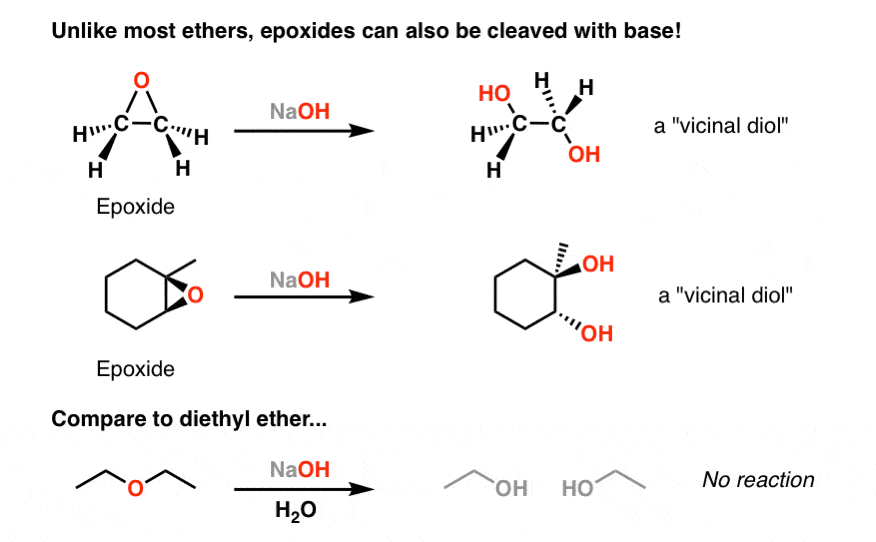
An epoxide is fundamentally a cyclic ether, meaning it contains an oxygen atom within a closed ring structure. What sets epoxides apart is the size of this ring: it’s a three-membered ring, a triangular arrangement of two carbon atoms and one oxygen atom. This highly strained configuration is key to their chemical reactivity. The bond angles in a typical carbon-oxygen-carbon ether are around 110 degrees, but in an epoxide, these angles are forced down to approximately 60 degrees. This severe angular strain makes the ring inherently unstable and highly susceptible to opening when exposed to a variety of nucleophiles (electron-rich species).
This reactivity is precisely what makes epoxides so useful. When the ring opens, it typically does so in a way that allows the molecule to react and form new bonds, leading to larger, more complex structures. This property is crucial for polymerization reactions, where many individual epoxide molecules (monomers) link together to form long chains or cross-linked networks, which are the basis of epoxy resins. The ability to precisely control this ring-opening polymerization allows chemists and engineers to tailor the properties of the resulting polymer to suit specific technological requirements, from flexibility and adhesion to rigidity and chemical resistance.
From Simple Molecules to Polymer Powerhouses
The journey from a simple epoxide molecule to a high-performance material is a testament to clever chemical engineering. While individual epoxide molecules are useful as chemical intermediates, their true power in technology lies in their ability to polymerize, forming what are widely known as epoxy resins. These resins typically consist of oligomers (short polymer chains) containing multiple epoxide groups. When mixed with a “hardener” or “curing agent”—often polyamines, anhydrides, or other compounds with active hydrogen atoms—a cross-linking reaction occurs. This reaction systematically opens the epoxy rings and forms a dense, three-dimensional network of covalent bonds.
This process, known as curing, transforms a liquid or viscous pre-polymer into a solid, thermoset plastic. Unlike thermoplastics, which can be melted and reshaped multiple times, thermosets like cured epoxies are permanently rigid and stable once formed. The intricate cross-linked structure gives epoxy resins their characteristic strength, stiffness, heat resistance, and chemical inertness. Furthermore, the type of epoxy oligomer and the specific hardener chosen profoundly influence the final properties of the cured material. This chemical tunability is why epoxy resins can be found in such a vast array of technological applications, adapting to needs ranging from impact resistance in sports equipment to high dielectric strength in electrical insulators. This transformation from reactive chemical building blocks to robust material systems highlights their role as polymer powerhouses in the tech world.
Epoxides: The Unsung Heroes of Modern Technology
The properties derived from the cross-linked nature of cured epoxides—high strength-to-weight ratio, excellent adhesion, chemical and corrosion resistance, and good electrical insulating properties—make them indispensable across numerous high-tech industries. They are the unseen enablers of countless devices and structures we rely upon daily.
Fueling the Electronics Revolution: PCBs and Encapsulation
Perhaps one of the most critical roles of epoxides in modern technology is their contribution to the electronics industry. Printed Circuit Boards (PCBs), the fundamental platforms for electronic components, rely heavily on epoxy resins. The substrate material for most PCBs is FR-4 (Flame Retardant 4), which is typically a woven fiberglass cloth impregnated with an epoxy resin. This epoxy composite provides the necessary mechanical strength, thermal stability, and, crucially, excellent electrical insulation required for reliable circuit operation. Without epoxy-based FR-4, the intricate, multi-layered PCBs essential for computers, smartphones, and every other electronic device would be far less feasible or performant. The epoxy binder ensures that the copper traces remain isolated and the board maintains its structural integrity through manufacturing and operational stresses.
Beyond the board itself, epoxides are vital for electronic encapsulation. Delicate microchips, sensors, and other sensitive components are often encased in epoxy compounds to protect them from moisture, dust, chemical exposure, and mechanical shock. This encapsulation material not only safeguards the sensitive electronics but also helps to dissipate heat and prevent short circuits. The precision with which epoxy formulations can be developed allows for tailored properties, ensuring that the encapsulant adheres perfectly, cures without stressing the components, and provides long-term reliability in demanding environments, from automotive control units to medical implants.
Lightweight Strength: Epoxies in Aerospace and Automotive Tech
The drive for greater fuel efficiency and enhanced performance in both aerospace and automotive industries necessitates lightweight yet incredibly strong materials. Here, epoxides shine as the matrix material in advanced composite structures. Carbon fiber reinforced polymers (CFRPs) and glass fiber reinforced polymers (GFRPs) frequently use epoxy resins as the binding matrix for the high-strength fibers.
In aerospace, epoxy composites are prevalent in aircraft fuselages, wings, tail sections, and interior components. Boeing’s 787 Dreamliner, for example, is composed of over 50% composite materials by weight, with epoxy playing a critical role in bonding these advanced fibers. This leads to lighter aircraft, which translate directly into reduced fuel consumption and lower operating costs, while maintaining or even exceeding traditional metallic material strengths. Similarly, in high-performance automotive applications, motorsports, and now increasingly in electric vehicles, epoxy-based composites are used for chassis components, body panels, and structural elements. Their exceptional strength-to-weight ratio allows for significant weight reduction, improving acceleration, handling, and energy efficiency. The ability of epoxies to be tailored for specific mechanical properties, heat resistance, and fatigue life makes them ideal for these high-stress, performance-critical applications.
Protective Barriers: Coatings and Adhesives in High-Performance Applications
The adhesive and barrier properties of epoxides are another cornerstone of their technological utility. Epoxy-based coatings are renowned for their outstanding durability, chemical resistance, and adhesion to a variety of substrates, including metals, concrete, and plastics. This makes them ideal for protective coatings in demanding industrial environments, such as marine vessels, pipelines, industrial flooring, and heavy machinery, where resistance to corrosion, abrasion, and aggressive chemicals is paramount. They provide long-lasting protection, extending the lifespan of infrastructure and equipment, thereby reducing maintenance costs and downtime.
As adhesives, epoxy resins are unparalleled in their ability to create strong, durable bonds between dissimilar materials. From everyday household repairs to critical structural bonds in aerospace and medical devices, epoxy adhesives offer exceptional shear strength, peel strength, and resistance to environmental factors. They are often preferred over mechanical fasteners (like screws or rivets) in applications where weight reduction, aesthetic finish, or the need to join sensitive materials without stress concentrations is crucial. For instance, in wind turbine blades, large structural components are often bonded using specialized epoxy adhesives, which must withstand immense dynamic forces over decades. The precision and reliability offered by epoxy adhesives enable new design possibilities and enhanced product performance across a multitude of industries.

Advanced Applications and Emerging Tech Frontiers
The versatility of epoxides means their utility is continuously expanding, finding new niches in cutting-edge technologies and contributing to the next generation of materials and products. As technological demands evolve, so too do the sophisticated applications of these remarkable compounds.
Smart Materials and Composites for Tomorrow’s Innovations
The future of technology often lies in materials that can do more than just provide structural integrity. Epoxides are increasingly being integrated into the development of “smart materials” and advanced composites that possess additional functionalities. Researchers are exploring ways to incorporate self-healing properties into epoxy matrices, where microcapsules containing healing agents rupture upon damage, releasing the agent to repair cracks and extend material lifespan. This could revolutionize the durability of critical components in aerospace or infrastructure.
Furthermore, epoxides are being modified to create materials with enhanced electrical conductivity or sensory capabilities by incorporating conductive fillers like carbon nanotubes or graphene. These smart epoxy composites could lead to structural components that can also monitor their own health, detect environmental changes, or even transmit data, paving the way for truly intelligent structures in diverse applications from automotive to civil engineering. The inherent compatibility of epoxies with various fillers and modifiers makes them an ideal platform for these multifunctional materials.
Biotechnological Interfaces and Medical Device Advancements
The unique properties of epoxides, particularly their chemical inertness once cured and their ability to form strong bonds, have found increasingly important applications in the biomedical field. Biocompatible epoxy formulations are used in various medical devices, including prosthetics, dental restorative materials, and components for diagnostic equipment. Their mechanical strength and resistance to bodily fluids make them suitable for long-term implants or devices that require high durability and sterilization.
Moreover, epoxies are crucial in creating precise microfluidic devices and lab-on-a-chip technologies, where their ability to be cast into intricate channels and their chemical resistance are highly valued. They also serve as effective encapsulants for biosensors and implantable electronics, protecting sensitive components from the body’s environment while ensuring biocompatibility. The ongoing research into surface modification of epoxies to improve cell adhesion or prevent biofouling further underscores their potential to bridge the gap between material science and biological applications, driving innovation in healthcare technology.
3D Printing and Additive Manufacturing: Precision with Epoxies
Additive manufacturing, commonly known as 3D printing, is transforming how products are designed and manufactured, allowing for unprecedented geometric complexity and customization. Epoxides are playing a growing role in this revolution, particularly in processes like stereolithography (SLA) and digital light processing (DLP), which use light to cure liquid resins layer by layer. Photocurable epoxy resins are specifically formulated to polymerize rapidly and precisely when exposed to UV or visible light.
These epoxy-based resins enable the creation of high-resolution, strong, and dimensionally stable parts with intricate details. They are used to print prototypes, functional components for engineering applications, and even molds for various manufacturing processes. The ability to control the mechanical properties of the cured epoxy by adjusting resin formulations allows for printing parts with a wide range of characteristics, from rigid and tough to flexible and impact-resistant. As 3D printing technology continues to advance, the development of specialized epoxy resins with enhanced properties—such as improved heat resistance, electrical conductivity, or bioactivity—will further expand the capabilities of additive manufacturing, driving innovation across product development, rapid prototyping, and customized manufacturing in various tech sectors.
Challenges, Sustainability, and the Future of Epoxy-Driven Tech
While epoxides offer immense technological advantages, their production and use are not without considerations. The future of epoxy-driven technology hinges on addressing environmental impacts, enhancing material performance, and developing sustainable alternatives without compromising the critical functions they provide.
Addressing Environmental Impact and Biorenewable Epoxies
Traditionally, the primary raw materials for most epoxy resins are derived from petrochemicals, particularly epichlorohydrin and bisphenol A (BPA). While highly effective, the environmental footprint associated with their production and the potential health concerns related to BPA have driven significant research into more sustainable alternatives. The industry is actively pursuing the development of “bio-epoxies” derived from renewable resources, such as plant oils (e.g., soybean oil, linseed oil) or lignin. These bio-based epoxides aim to reduce reliance on fossil fuels, lower greenhouse gas emissions, and offer potentially safer profiles, while striving to match or exceed the performance of their petroleum-derived counterparts.
Furthermore, efforts are underway to improve the recyclability and end-of-life management of epoxy-based composites, which, as thermosets, are inherently challenging to recycle through conventional methods. Innovative approaches like chemical recycling (depolymerization) or energy recovery are being explored to mitigate the waste stream from these durable materials. The drive towards a circular economy will undoubtedly shape the future of epoxy technology, pushing for greener synthesis routes and more sustainable material lifecycle solutions.
Enhancing Performance: Towards Next-Generation Epoxy Materials
Even with their current impressive properties, the quest for superior materials in technology is ceaseless. Researchers and material scientists are continually pushing the boundaries of epoxy performance. This includes developing epoxies with ultra-high temperature resistance for extreme environments, enhanced toughness to resist impact and crack propagation, and improved fatigue life for applications under long-term cyclic loading.
Advancements in nanotechnology are playing a crucial role, with the incorporation of nanoparticles (e.g., silica, carbon nanotubes, graphene) into epoxy matrices to create nanocomposites with dramatically improved mechanical, thermal, and electrical properties. These next-generation epoxy materials will enable even lighter, stronger, more durable, and more functional components, essential for the continuing miniaturization of electronics, the evolution of aerospace engineering, and the development of high-performance defense technologies. The future promises epoxies that are not just strong and durable but also intelligent, responsive, and tailored to unprecedented levels of precision.

The Enduring Role of Epoxides in a Connected World
In conclusion, epoxides are far more than just a chemical class; they are fundamental enablers of modern technology. From the foundational layers of our digital infrastructure to the leading edge of aerospace and medical innovation, their unique chemical properties translate directly into materials that are strong, lightweight, durable, and electrically insulating. As technology continues its relentless march forward, demanding increasingly sophisticated materials that are also sustainable, the role of epoxides will continue to evolve and remain critical. The ongoing research into bio-based alternatives, enhanced performance characteristics, and novel applications underscores that epoxides will endure as key players in shaping the technological landscape of our connected and advanced world, continuing their silent but profound impact on countless industries and daily lives.
aViewFromTheCave is a participant in the Amazon Services LLC Associates Program, an affiliate advertising program designed to provide a means for sites to earn advertising fees by advertising and linking to Amazon.com. Amazon, the Amazon logo, AmazonSupply, and the AmazonSupply logo are trademarks of Amazon.com, Inc. or its affiliates. As an Amazon Associate we earn affiliate commissions from qualifying purchases.