
In the fast-paced world of global finance, investors and analysts are constantly searching for “crystal ball” indicators that can provide a glimpse into the future of the stock market. Among the most watched and influential of these indicators are Dow futures. If you have ever tuned into a financial news network early in the morning, before the opening bell of the New York Stock Exchange, you have likely heard anchors discussing whether “the futures are up or down.”
Dow futures are sophisticated financial instruments that allow traders to speculate on the future value of the Dow Jones Industrial Average (DJIA). While they were once the exclusive domain of institutional investors and hedge fund managers, the rise of digital trading platforms has made them accessible to individual investors. Understanding how Dow futures work is essential for anyone looking to navigate the complexities of the modern financial landscape, manage risk, or capitalize on market volatility.
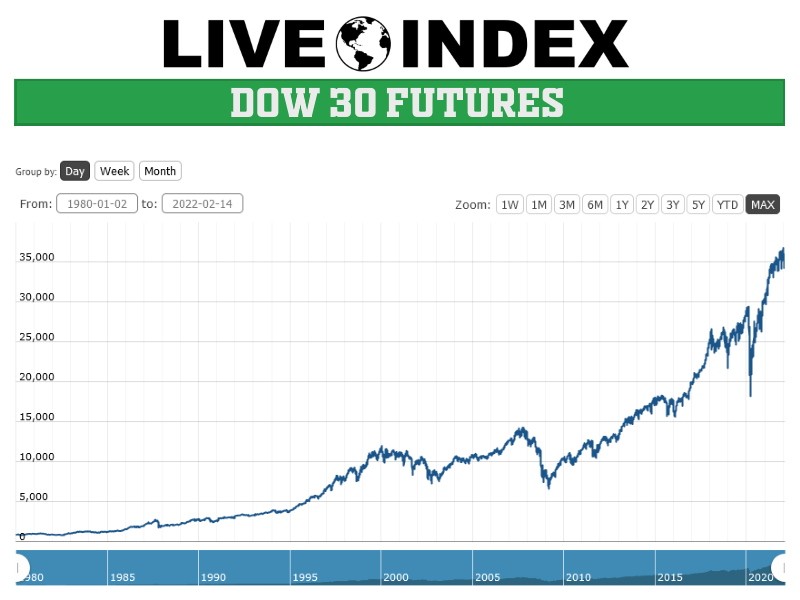
Understanding the Mechanics of Dow Futures
To understand Dow futures, one must first understand the concept of a futures contract. A futures contract is a legal agreement to buy or sell a particular asset—in this case, a representation of the Dow Jones Industrial Average—at a predetermined price at a specified time in the future. Because Dow futures are based on an index rather than a physical commodity like gold or oil, they are “cash-settled,” meaning no physical shares of the 30 component companies change hands.
Defining the Derivative and the Underlying Index
Dow futures are derivatives, meaning their value is derived from the performance of an underlying asset: the Dow Jones Industrial Average. The DJIA is a price-weighted index of 30 prominent “blue-chip” companies listed on stock exchanges in the United States, such as Apple, Microsoft, Goldman Sachs, and Coca-Cola. When you trade a Dow futures contract, you are essentially placing a bet on whether that collective index will be higher or lower at the contract’s expiration date compared to the current price.
Contract Specifications and Multipliers
One of the most critical aspects of Dow futures is the “multiplier.” Because you cannot buy a “share” of an index, the Chicago Mercantile Exchange (CME) creates contracts that represent a dollar value multiplied by the index’s level. For the standard E-mini Dow futures (the most popular version for retail and institutional traders alike), the multiplier is $5. This means that if the Dow is trading at 38,000, one E-mini contract has a notional value of $190,000 ($5 x 38,000). For traders with less capital, the Micro E-mini Dow futures offer a $0.50 multiplier, making it significantly more accessible.
The Role of Leverage and Margin
Dow futures are traded on margin, which is a double-edged sword for investors. Leverage allows a trader to control a large contract value with a relatively small amount of capital (the “initial margin”). For example, a trader might only need $8,000 in their account to control a contract worth $190,000. While this can exponentially increase profits if the market moves in the trader’s favor, it also magnifies losses. If the market moves against a position, the trader may be subject to a “margin call,” requiring them to deposit more funds immediately or face the liquidation of their position.
Why Investors Trade Dow Futures
The utility of Dow futures extends far beyond simple gambling on market direction. They serve several strategic purposes in a diversified investment portfolio, ranging from risk management to active income generation.
Hedging Against Market Volatility
For long-term investors who hold a diverse portfolio of blue-chip stocks, Dow futures serve as an excellent insurance policy. If an investor believes the market is headed for a short-term downturn due to an upcoming economic report or geopolitical tension, they can “short” (sell) Dow futures. If the market drops, the profit made on the short futures position can offset the losses sustained in their actual stock holdings. This allows investors to protect their capital without having to sell their long-term positions and trigger capital gains taxes.
Speculative Opportunities for Active Traders
Because the futures market is open nearly 24 hours a day, five days a week, it provides a playground for speculators. These traders look to capitalize on small price movements caused by breaking news, earnings reports, or overnight developments in Asian or European markets. The high liquidity of Dow futures—meaning there are always many buyers and sellers—ensures that traders can enter and exit positions quickly with minimal “slippage” (the difference between the expected price and the actual execution price).
Price Discovery and the “Pre-Market” Indicator
Perhaps the most common use of Dow futures for the general public is as a “pre-market” indicator. Since the regular U.S. stock market is only open from 9:30 AM to 4:00 PM Eastern Time, Dow futures fill the gap. They trade almost continuously, providing a real-time sentiment gauge. If Dow futures are up 300 points at 7:00 AM, it suggests that the stock market will likely open significantly higher. This “price discovery” helps investors prepare their strategies before the opening bell rings.
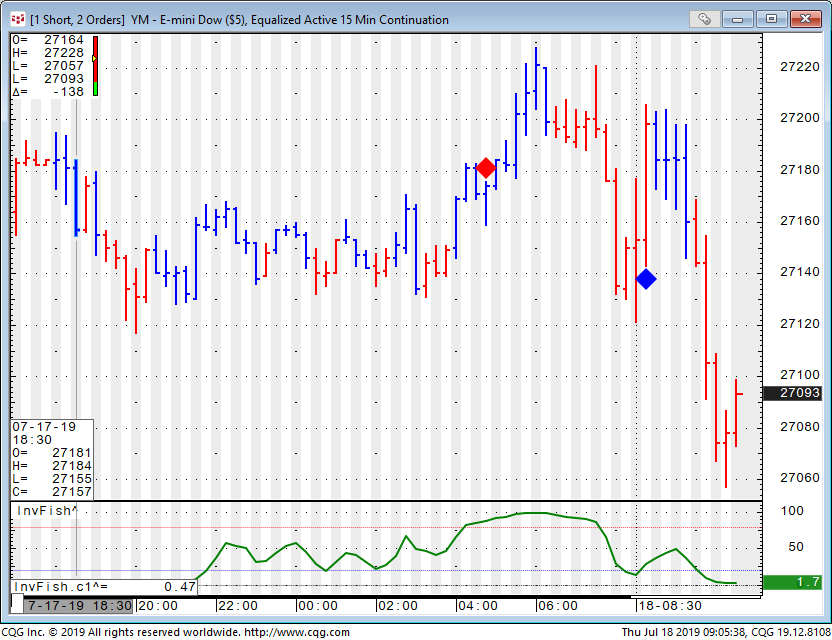
Key Factors Influencing Dow Futures Prices
Dow futures do not move in a vacuum. Their price fluctuations are the result of a complex interplay of economic data, corporate health, and global psychology. Because the Dow consists of only 30 companies, it is more sensitive to specific corporate news than broader indices like the S&P 500.
Macroeconomic Indicators and Fed Policy
The most significant driver of Dow futures is the macroeconomic environment, specifically the actions of the Federal Reserve. Interest rate decisions, inflation data (CPI), and employment reports (Non-Farm Payrolls) are high-impact events. If the Fed signals that it will raise interest rates to combat inflation, Dow futures often sell off, as higher rates increase borrowing costs for corporations and can slow economic growth. Conversely, “dovish” signals often send futures soaring.
Corporate Earnings of the “Blue Chip” 30
Because the DJIA is price-weighted, a major move in a high-priced stock like UnitedHealth Group or Goldman Sachs can have a disproportionate impact on the index. During earnings season, when these 30 giants report their quarterly profits and future guidance, Dow futures can experience extreme volatility. If a heavyweight company misses earnings expectations or lowers its outlook, it can drag the entire futures index down, even if the other 29 companies are performing well.
Geopolitical Events and Global Sentiment
In an interconnected global economy, events on the other side of the world can impact U.S. markets instantly. Political instability in Europe, trade negotiations with China, or conflicts in the Middle East are all reflected in Dow futures prices almost immediately. Because futures trade overnight, they are often the first place where the market “prices in” the impact of global breaking news, serving as the front line of financial reaction.
Risks and Strategic Considerations for Investors
While the potential for high returns and the utility of hedging make Dow futures attractive, they are not without significant risks. Success in futures trading requires a disciplined approach to risk management and a deep understanding of market mechanics.
Managing the Risks of High Leverage
The greatest risk in trading Dow futures is the very thing that makes them attractive: leverage. Because a small price movement in the index can represent a large change in the value of the contract, it is possible to lose more than your initial investment. Professional traders mitigate this risk by using “stop-loss” orders, which automatically close a position if it reaches a certain loss threshold. Without strict risk management, a few minutes of extreme market volatility can wipe out a trading account.
Trading Hours and Liquidity
Dow futures trade on the CME Globex platform from Sunday evening through Friday afternoon, with only a brief daily break. While this 24/5 access is a benefit, it also means that significant market moves can happen while an investor in a different time zone is asleep. Furthermore, liquidity can thin out during the “overnight” sessions (late night in the U.S.), leading to wider spreads and more erratic price swings. Traders must be aware of when liquidity is highest—typically during the overlap of the U.S. and European market sessions.
Technical vs. Fundamental Analysis in Futures Trading
Short-term futures traders often rely heavily on technical analysis, using charts, moving averages, and momentum oscillators to predict price direction. Because futures markets are highly efficient and react quickly to data, technical patterns can provide entries and exits for day traders. However, long-term trends in Dow futures are almost always driven by fundamentals—corporate profits, GDP growth, and monetary policy. Successful investors often use a combination of both: fundamentals to determine the direction and technicals to time the execution.

Conclusion
Dow futures are more than just numbers on a screen; they are a vital component of the global financial ecosystem. They provide a mechanism for risk management, a venue for speculation, and a barometer for market sentiment. By understanding the mechanics of these contracts—from multipliers and margin to the influence of the Federal Reserve—investors can gain a clearer perspective on the direction of the U.S. economy.
However, the power of Dow futures comes with the responsibility of careful management. The leverage that allows for significant gains also introduces the potential for rapid losses. Whether you are using them to hedge a retirement account or to trade the morning volatility, Dow futures require a professional approach, a sound strategy, and a constant eye on the ever-changing global economic landscape. In the world of money and investing, Dow futures remain one of the most potent tools for those who know how to read the signals they send.
aViewFromTheCave is a participant in the Amazon Services LLC Associates Program, an affiliate advertising program designed to provide a means for sites to earn advertising fees by advertising and linking to Amazon.com. Amazon, the Amazon logo, AmazonSupply, and the AmazonSupply logo are trademarks of Amazon.com, Inc. or its affiliates. As an Amazon Associate we earn affiliate commissions from qualifying purchases.