
At the very heart of almost every gasoline or diesel-powered vehicle, the humble cylinder plays an indispensable role. It is the core component where the magic of converting fuel into motion truly happens. Far from being a simple tube, the cylinder is a precisely engineered chamber within the engine block, designed to house a piston and facilitate the controlled combustion that drives your car forward. Understanding what cylinders are, how they work, and their impact on a vehicle’s performance, efficiency, and even brand identity is fundamental for anyone interested in automotive technology, smart car ownership, or the evolving landscape of transportation.

This article will delve deep into the world of engine cylinders, exploring their fundamental function, the intricate components they contain, the diverse ways they are configured across different vehicles, and the technological advancements continually pushing the boundaries of their performance and efficiency. We’ll also touch upon the financial implications of various cylinder setups and how engine design shapes a brand’s reputation in the competitive automotive market.
The Heart of Internal Combustion: Understanding Cylinder Function
To grasp the significance of a cylinder, one must first understand its primary mission: to contain and direct the explosive forces generated by the combustion of fuel. This process, known as the internal combustion engine cycle, is a marvel of mechanical engineering, transforming chemical energy into kinetic energy with incredible speed and precision.
The Four-Stroke Cycle Explained
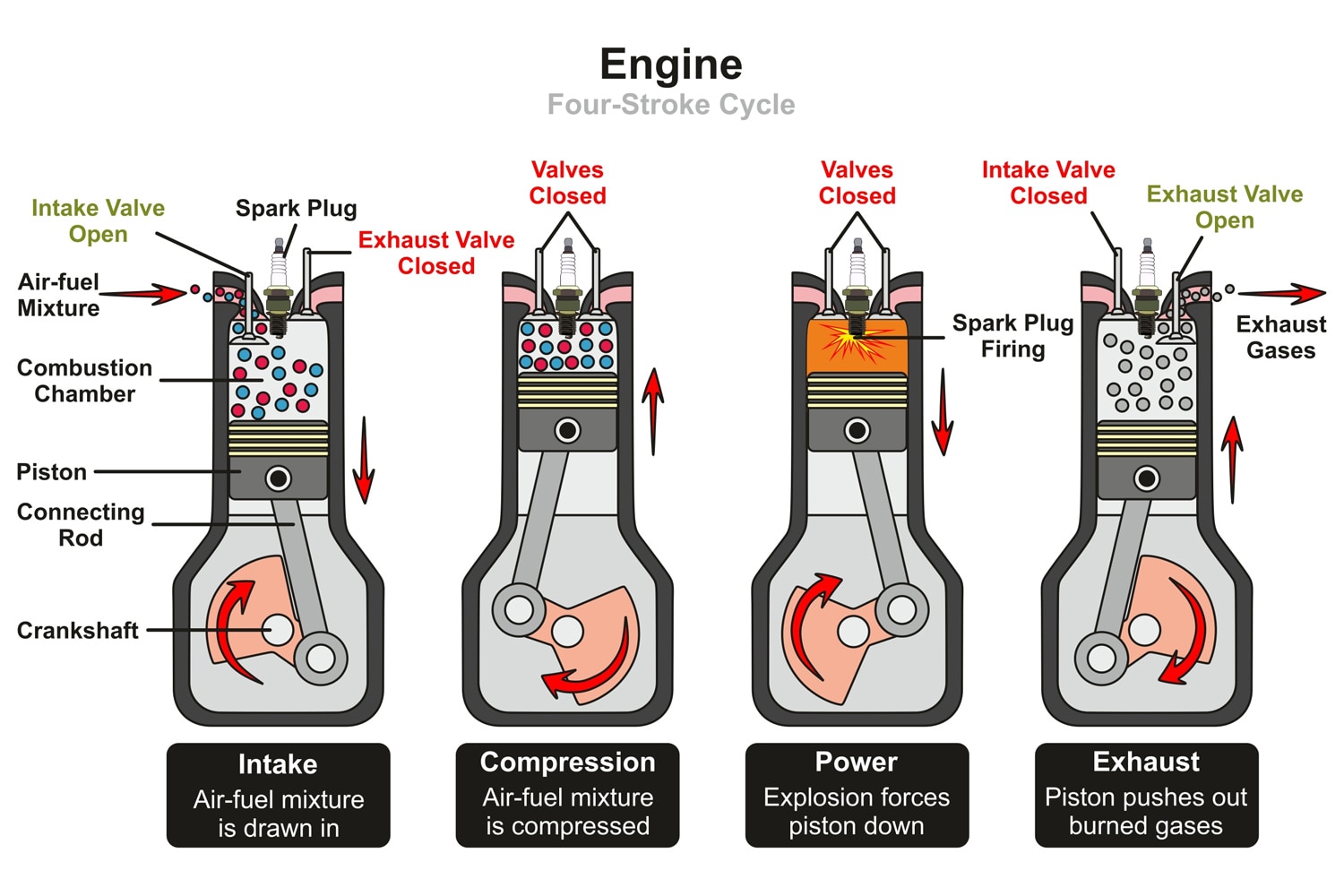
Most modern cars utilize a four-stroke cycle, a continuous sequence of events that occurs within each cylinder. Each “stroke” refers to a movement of the piston from one end of the cylinder to the other.
- Intake Stroke: The piston moves downwards, creating a vacuum. Simultaneously, an intake valve opens, allowing a precisely measured mixture of air and fuel (or just air in direct injection systems) to be drawn into the cylinder from the intake manifold.
- Compression Stroke: The intake valve closes, and the piston moves upwards, compressing the air-fuel mixture into a much smaller volume. This compression significantly increases the pressure and temperature of the mixture, making it more volatile and ready for combustion.
- Power (Combustion) Stroke: As the piston reaches the top of its compression stroke, the spark plug ignites the highly compressed air-fuel mixture. The resulting explosion drives the piston powerfully downwards. This is the only stroke that generates actual power, translating the chemical energy of the fuel into mechanical force.
- Exhaust Stroke: As the piston moves upwards again, an exhaust valve opens, allowing the burnt gases (exhaust fumes) to be expelled from the cylinder into the exhaust manifold and, eventually, out through the tailpipe.
This cycle repeats hundreds, even thousands, of times per minute in each cylinder, creating the continuous power needed to propel a vehicle. The seamless coordination of these strokes, along with the precise timing of valve openings and spark ignition, is managed by the engine’s sophisticated Electronic Control Unit (ECU), a prime example of the “Tech” aspects integrated into modern automotive design.
Key Components Within the Cylinder
While the cylinder itself is the chamber, it’s the components inside it that perform the actual work:
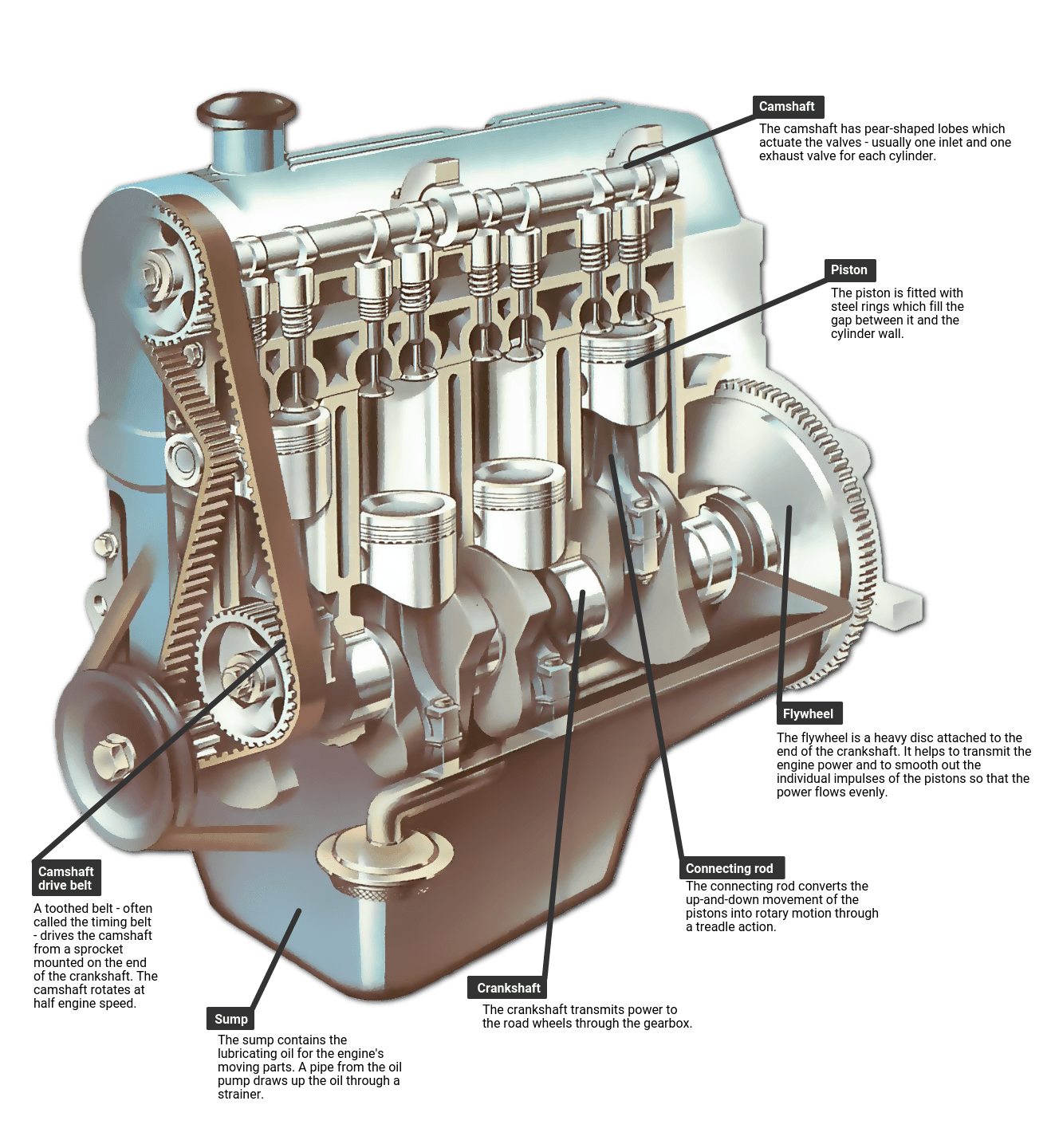
- Piston: A cylindrical component that moves up and down within the cylinder, sealing the combustion chamber. It transmits the force of combustion to the connecting rod. Pistons are often made from aluminum alloys, carefully balanced and optimized for weight and strength – a testament to material science in “Tech.”
- Connecting Rod: Attaches the piston to the crankshaft, translating the piston’s linear (up-and-down) motion into the rotational motion of the crankshaft.
- Crankshaft: The engine’s backbone. It is a long shaft with offset journals that convert the reciprocating motion of the pistons (via the connecting rods) into rotational motion, which is then transmitted through the drivetrain to the wheels. Modern crankshafts are incredibly precise, balanced components, vital for engine smoothness and longevity.
- Valves (Intake and Exhaust): These precisely timed mechanisms control the flow of air-fuel mixture into and exhaust gases out of the cylinder. They are opened and closed by the camshaft, which is synchronized with the crankshaft. Variable Valve Timing (VVT) systems, a key “Tech” advancement, can adjust valve lift and duration for improved performance and fuel economy.
- Spark Plug (Gasoline Engines): Located at the top of the cylinder, the spark plug ignites the air-fuel mixture during the power stroke. Their design and material (e.g., platinum, iridium) are crucial for consistent ignition and longevity, another small but significant piece of “Tech.”
- Combustion Chamber: The space within the cylinder above the piston when it’s at the top of its stroke, where combustion actually occurs. Its shape is critical for efficient burning of fuel and minimizing emissions.
The harmonious interplay of these components, constantly subjected to extreme temperatures, pressures, and friction, highlights the incredible engineering required in automotive “Tech.” Failures in any of these parts can lead to costly repairs, directly impacting the “Money” aspect of car ownership.
Diverse Configurations: How Cylinders Shape Engine Identity and Performance
The number of cylinders and their arrangement significantly define an engine’s characteristics, influencing everything from power output and smoothness to fuel efficiency and, critically, a car brand’s reputation and marketing strategy.
Common Cylinder Layouts
Cylinders aren’t just placed randomly; their arrangement within the engine block is a deliberate design choice with specific advantages and disadvantages:
- Inline (I-type): Cylinders are arranged in a straight line, one after another. Common in 3-, 4-, 5-, and 6-cylinder engines (e.g., I4, I6).
- Advantages: Simpler design, easier to manufacture, excellent inherent balance for I6 engines, narrower profile (good for transverse mounting in front-wheel-drive cars).
- Disadvantages: Can be long, making packaging challenging in some vehicles.
- Brand/Money: Often found in more economical or compact vehicles, providing good fuel efficiency and lower manufacturing costs. An inline-6, however, can be a hallmark of smoothness and refinement, often associated with premium brands like BMW.
- V-type: Cylinders are arranged in two banks, forming a “V” shape. Common in 6-, 8-, 10-, and 12-cylinder engines (e.g., V6, V8, V10, V12).
- Advantages: Shorter and more compact than inline engines of the same cylinder count, allowing for easier packaging, especially in powerful cars that need a large engine. Can produce higher horsepower and torque.
- Disadvantages: More complex, heavier, and generally more expensive to produce and maintain due to having two cylinder heads, two exhaust manifolds, etc.
- Brand/Money: V-engines, especially V8s and V12s, are often synonymous with performance, luxury, and prestige. They offer a characteristic exhaust note that contributes to a brand’s sonic identity (“Brand”). Their higher manufacturing and running costs translate to higher sticker prices and often greater fuel consumption (“Money”).
- Flat (Boxer): Cylinders are horizontally opposed, with pistons moving towards and away from each other like boxers’ fists. Common in 4- and 6-cylinder engines.
- Advantages: Very low center of gravity, which improves handling; inherently well-balanced, leading to smooth operation.
- Disadvantages: Wide engine, which can be challenging to package; more complex cylinder head design than inline engines.
- Brand/Money: Strongly associated with Subaru and Porsche, offering a unique driving dynamic and a distinctive engine sound. This layout is a core part of their “Brand” identity, differentiating them in the market.
- Rotary (Wankel): While not containing traditional cylinders and pistons, rotary engines offer an alternative combustion method. They use a triangular rotor spinning in an epitrochoidal housing.
- Advantages: Compact, lightweight, very smooth, high power output for their size.
- Disadvantages: Lower fuel efficiency, higher oil consumption, complex apex seal wear issues.
- Brand: Famously associated with Mazda, particularly the RX-7 and RX-8, offering a unique performance experience but also requiring specific ownership considerations.
The Impact of Cylinder Count
The number of cylinders directly correlates with several key engine characteristics:
- Power and Torque: Generally, more cylinders mean more combustion events per revolution, leading to higher power output and torque. A V12 engine in a luxury car delivers immense power and refinement compared to a 4-cylinder engine.
- Smoothness and Refinement: More cylinders tend to produce smoother engines because the power strokes overlap more, creating a more continuous delivery of power. This is why multi-cylinder engines (V6, I6, V8, V12) are often chosen for luxury vehicles, enhancing the “Brand” experience of refinement.
- Fuel Economy: Fewer cylinders typically mean smaller displacement and better fuel efficiency, making 3- and 4-cylinder engines popular in compact cars where “Money” savings on fuel are a primary concern. However, modern “Tech” can make larger engines surprisingly efficient (e.g., cylinder deactivation).
- Cost (Manufacturing and Ownership): Engines with more cylinders are inherently more complex and costly to manufacture (more parts, more precision). They also generally cost more to maintain (more spark plugs, larger oil capacity, more complex diagnostics) and consume more fuel, directly impacting the “Money” aspect for the consumer. This also factors into insurance premiums.
The choice of engine configuration and cylinder count is a strategic decision for car manufacturers, balancing performance goals, target market, cost considerations (“Money”), and desired brand image (“Brand”).
Technological Evolution: Enhancing Cylinder Performance and Efficiency
The core principle of the cylinder has remained unchanged for over a century, but the technologies surrounding it have advanced dramatically. Modern engineering and computer science have transformed how cylinders operate, boosting performance, improving fuel efficiency, and reducing emissions – a continuous push in automotive “Tech.”
Modern Innovations
- Cylinder Deactivation (or Variable Displacement): A groundbreaking “Tech” innovation where the ECU can temporarily shut down a specific number of cylinders (e.g., in a V8, half of them) under light load conditions (like cruising on the highway). This reduces fuel consumption and emissions by operating the remaining cylinders more efficiently. When more power is needed, the deactivated cylinders seamlessly re-engage. This is a prime example of software and mechanical integration optimizing for “Money” savings on fuel and environmental “Brand” reputation.
- Direct Injection (DI): Instead of mixing fuel and air in the intake manifold, DI systems spray fuel directly into the combustion chamber. This allows for more precise fuel delivery, higher compression ratios, better fuel atomization, and improved efficiency and power output. It’s a significant leap in fuel management “Tech.”
- Variable Valve Timing (VVT) and Variable Valve Lift (VVL): These systems, controlled by the ECU, dynamically adjust the timing and/or duration of valve openings and closings. This optimizes engine breathing for different RPMs and load conditions, enhancing both power and fuel economy. Examples include Honda’s VTEC and BMW’s VANOS.
- Turbocharging and Supercharging: While not directly part of the cylinder, these forced induction systems significantly enhance cylinder performance by compressing more air into the cylinders, allowing for more fuel to be burned and thus more power generated from smaller displacement engines. This allows automakers to use smaller, more fuel-efficient engines without sacrificing performance, addressing both “Money” (fuel efficiency) and “Brand” (performance) concerns.
Materials Science and Durability
Advancements in materials “Tech” have been crucial for the evolution of cylinders. Engine blocks are now often made from lightweight aluminum alloys instead of heavier cast iron, reducing overall vehicle weight and improving fuel economy. Cylinder linings (sleeves) are engineered for extreme durability and reduced friction. Piston rings, valves, and connecting rods are designed with exotic alloys and surface treatments to withstand immense heat and pressure for hundreds of thousands of miles, improving longevity and reducing maintenance costs over the vehicle’s lifespan, appealing to the “Money” conscious consumer.
The Role of Engine Control Units (ECUs) and AI
The modern ECU is the brain of the engine, constantly monitoring dozens of sensors (engine speed, temperature, oxygen levels, throttle position, etc.) and making instantaneous adjustments to fuel injection, ignition timing, and valve operation. This level of precise control, powered by sophisticated software and algorithms, is a cornerstone of modern engine “Tech.”
Looking ahead, Artificial Intelligence (AI) and machine learning could revolutionize engine design and optimization even further. AI could analyze real-world driving data to predict optimal engine performance maps, suggest new cylinder designs for improved thermal efficiency, or even manage predictive maintenance schedules by identifying subtle signs of wear before a critical failure occurs. This advanced “Tech” integration promises even greater efficiency, reliability, and cost savings (“Money”) for future vehicles.
Cylinders, Cost, and Car Ownership: A Financial Perspective
The type of engine in your car, largely determined by its cylinder configuration, has significant financial implications throughout its ownership lifecycle. From initial purchase to ongoing running costs and eventual resale, cylinders play a direct role in the “Money” aspect of your vehicle.
Fuel Efficiency and Running Costs
One of the most immediate financial impacts of cylinder count is fuel economy. Generally, engines with fewer cylinders (e.g., 3-cylinder, 4-cylinder) have smaller displacement and are inherently more fuel-efficient. They are designed for economy, making them popular choices for everyday commuting and for buyers focused on saving “Money” at the pump. Conversely, engines with a higher cylinder count (V8, V10, V12) typically consume more fuel due to their larger displacement and greater power output, making them more expensive to run.
However, modern “Tech” has blurred these lines. A small, turbocharged 4-cylinder engine can outperform a naturally aspirated 6-cylinder while maintaining better fuel economy. Cylinder deactivation in V6 and V8 engines also allows for surprising efficiency under light loads, mitigating some of the traditional fuel cost penalties of larger engines. Tools and apps for tracking fuel consumption and comparing vehicle specs are invaluable for savvy consumers making financially informed decisions.
Maintenance, Longevity, and Resale Value
The complexity of an engine directly influences maintenance costs. More cylinders often mean more parts: more spark plugs, more ignition coils, more injectors, potentially more complex exhaust systems, and larger oil capacities. While routine maintenance costs for a 4-cylinder engine might be relatively low, servicing a V12 engine can be significantly more expensive due to parts costs and increased labor hours. This directly impacts the “Money” you’ll spend over the car’s lifetime.
Engine design also plays a role in longevity. While modern engines are built to last, some configurations might be more susceptible to specific issues. For example, some early direct-injection engines faced carbon buildup issues. Knowing about common engine issues for a particular cylinder type and brand can inform purchase decisions and impact potential resale value. A well-maintained engine is a key factor in a car’s resale value; a complex, high-performance engine might appeal to a niche market but also potentially deter buyers worried about future maintenance costs.
Brand Perception and Market Value
Engine configuration is a powerful component of a car brand’s identity and market positioning. A brand known for its powerful V8s appeals to a different segment than one celebrated for its economical 3-cylinder engines. The distinctive rumble of a V8 or the smooth hum of an inline-6 can be a critical part of a vehicle’s “Brand” appeal, influencing customer perception and willingness to pay.
For example, a luxury brand might invest in a V12 engine not just for power, but for the unparalleled smoothness and prestige it confers. This premium engine contributes to the brand’s image of exclusivity and engineering excellence, justifying a higher price point (“Money”). Conversely, a mass-market brand might prioritize a compact 4-cylinder engine, marketing its reliability, fuel efficiency, and affordability, which aligns with its value-oriented “Brand” promise. Understanding these connections helps consumers make choices that align with their financial goals and personal preferences.
Conclusion
From its foundational role in the internal combustion engine to its influence on a car’s performance, efficiency, and brand identity, the cylinder is far more than a simple metallic tube. It is a testament to precision engineering, a focal point for technological innovation, and a significant factor in the economic considerations of car ownership.
As the automotive industry continues its rapid evolution towards electrification, the traditional role of the cylinder may eventually diminish. However, for decades to come, millions of vehicles worldwide will continue to rely on the ingenious four-stroke cycle within their cylinders to provide reliable and powerful transportation. The advancements in cylinder deactivation, direct injection, and materials science demonstrate the ongoing commitment to making internal combustion engines cleaner and more efficient. Whether you’re a tech enthusiast, a brand strategist, or a savvy consumer managing your money, understanding “what are cylinders on a car” offers valuable insight into the complex, fascinating world of automotive technology.
aViewFromTheCave is a participant in the Amazon Services LLC Associates Program, an affiliate advertising program designed to provide a means for sites to earn advertising fees by advertising and linking to Amazon.com. Amazon, the Amazon logo, AmazonSupply, and the AmazonSupply logo are trademarks of Amazon.com, Inc. or its affiliates. As an Amazon Associate we earn affiliate commissions from qualifying purchases.