
In the realm of finance, numbers are the primary language, but percentages are the grammar that gives those numbers context. Whether you are analyzing the performance of a stock portfolio, determining the health of a business’s profit margins, or simply trying to stick to a personal budget, understanding how to work out the percentage of two numbers is a non-negotiable skill.
Percentage calculations allow us to standardize data, making it possible to compare a small startup’s growth to a Fortune 500 company’s trajectory, or to understand how much of your monthly income is being consumed by fixed costs. This guide dives deep into the mathematical foundations and practical applications of percentage calculations within the “Money” niche, providing you with the tools to make more informed financial decisions.
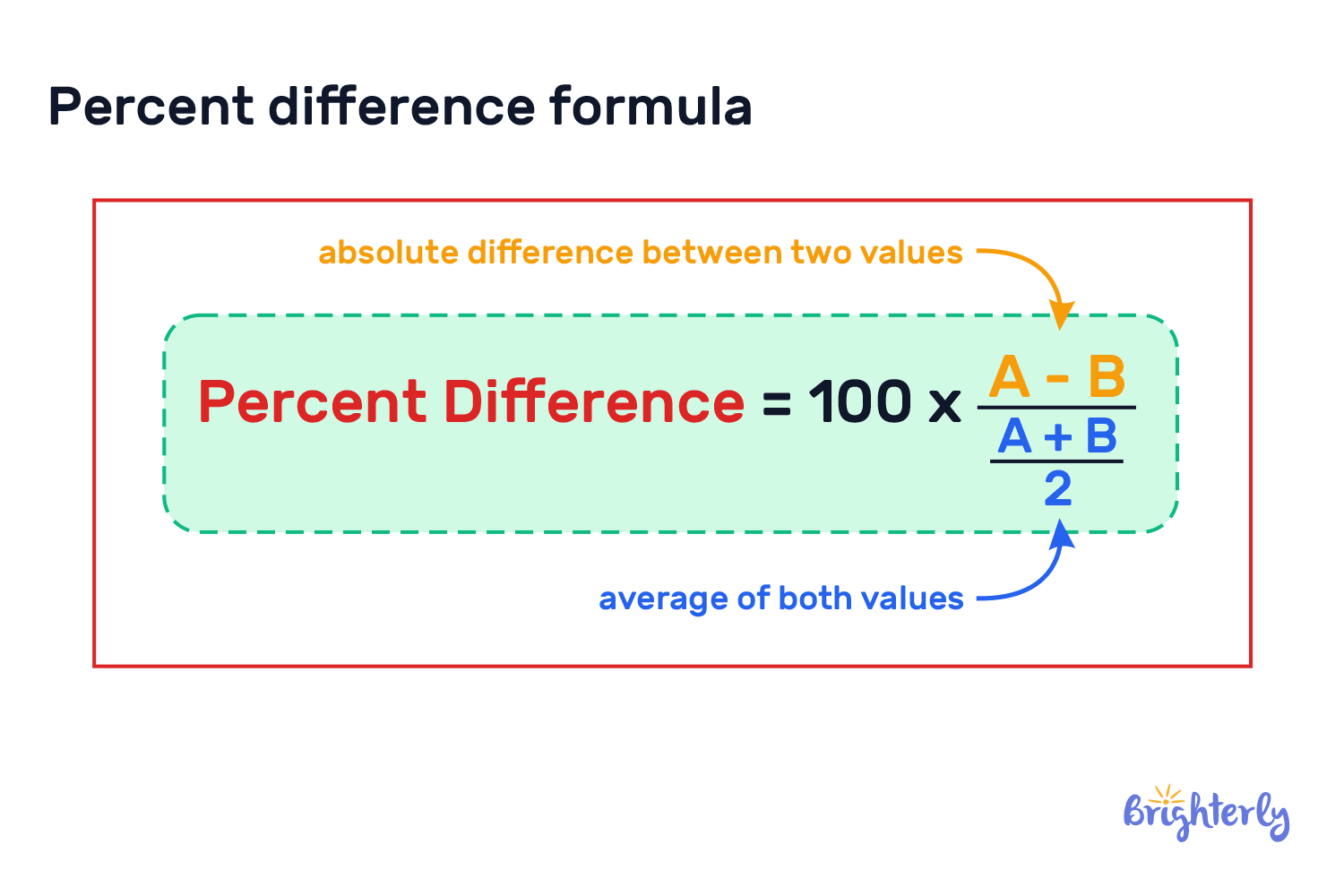
The Fundamental Formula: Why Percentage Calculation is the Bedrock of Financial Intelligence
At its core, a percentage is a way to express a number as a fraction of 100. In finance, this “whole” could be your total annual income, the total market value of an index, or the initial capital invested in a venture. Mastery of the basic formula is the first step toward sophisticated financial analysis.
Understanding the “Part-over-Whole” Concept
The most basic way to work out the percentage of two numbers is to divide the “part” (the specific value you are interested in) by the “whole” (the total amount) and then multiply the result by 100.
Formula: (Part / Whole) × 100 = Percentage
For example, if you have a total monthly budget of $5,000 and you spend $1,500 on rent, you calculate the percentage of your income spent on housing by dividing 1,500 by 5,000. The result is 0.3. Multiplying by 100 gives you 30%. In financial planning, this percentage tells you much more than the raw number of $1,500; it tells you that nearly one-third of your resources are committed to a single expense, which is a critical metric for assessing financial flexibility.
Decimal Conversions and Financial Precision
In professional finance and accounting, percentages are often handled as decimals. Understanding that 5% is 0.05 or that 125% is 1.25 is vital when using financial modeling software or manual spreadsheets. When you are calculating interest or tax, you will almost always convert the percentage back to a decimal first.
Precision matters because in large-scale investing, a fraction of a percentage point—often referred to as a “basis point” (one-hundredth of one percent)—can represent millions of dollars. Knowing how to move the decimal point two places to the left or right is the simplest yet most effective way to ensure your financial projections remain accurate.
Applying Percentages to Personal Budgeting and Savings Growth
Personal finance is essentially an exercise in percentage management. While many people focus on the absolute dollar amounts in their bank accounts, the most successful wealth builders focus on the ratios.
The 50/30/20 Rule: Allocating Income Efficiently
One of the most popular financial frameworks is the 50/30/20 rule. This rule suggests that 50% of your after-tax income should go to needs, 30% to wants, and 20% to savings and debt repayment. To implement this, you must work out the percentage of your total income relative to these categories.
If your take-home pay is $4,200, calculating 20% for savings involves multiplying $4,200 by 0.20, which equals $840. Conversely, if you find you are spending $1,100 on “wants,” you can work out the percentage ($1,100 / $4,200) to find that you are at 26%, meaning you are within your target. This percentage-based approach allows your budget to scale automatically as your income increases.
Compound Interest: Visualizing Percentage Growth Over Time
The power of compound interest is often called the “eighth wonder of the world,” and it is entirely based on percentage-on-percentage growth. When you earn a 7% annual return on an investment, you aren’t just earning 7% on your initial principal; in the second year, you are earning 7% on the new total.
To calculate the percentage growth over multiple periods, we use the compound interest formula, but the logic remains rooted in the “percentage of two numbers” concept. Seeing your wealth grow by a consistent percentage rather than a flat dollar amount is the key to understanding how long-term wealth is built.
Calculating Debt-to-Income (DTI) Ratios
Lenders use the Debt-to-Income (DTI) ratio to determine your creditworthiness. This is a classic “two-number” percentage problem. To find your DTI, you divide your total monthly debt payments by your gross monthly income.
For instance, if you have $500 in car payments, $200 in student loans, and a $1,300 mortgage (total $2,000), and your gross income is $6,000, your DTI is 33.3% ($2,000 / $6,000). Most lenders prefer a DTI below 36%. Knowing how to calculate this percentage yourself allows you to “pre-qualify” your own financial health before applying for a loan.
Investment Metrics: Working Out Percentages in the Stock Market
In the world of investing, raw numbers are often misleading. A stock price increasing by $10 sounds great, but if the stock was originally $1,000, that is only a 1% gain. If the stock was $20, that’s a 50% gain. This is why investors live and die by percentage changes.

Calculating Return on Investment (ROI)
ROI is the ultimate metric for any investor. It allows you to compare the efficiency of different investments, regardless of the asset class.
Formula: [(Current Value - Original Value) / Original Value] × 100 = ROI%
If you bought shares for $2,500 and sold them for $3,000, your profit is $500. To find the percentage return, you divide the $500 profit by the $2,500 original investment. The result is 0.20, or a 20% ROI. This percentage allows you to compare this stock investment to, say, a real estate flip or a high-yield savings account to see which use of your capital was most effective.
Portfolio Diversification and Asset Allocation
Professional investors use percentages to manage risk through asset allocation. An investor might decide to hold 60% of their portfolio in stocks and 40% in bonds.
To maintain this balance, you must periodically work out the percentage of the two numbers: the value of your stocks versus the total value of your portfolio. If a market rally increases your stock value so that it now represents 75% of your total portfolio, you know you need to “rebalance” by selling stocks and buying bonds to return to your 60/40 target.
Understanding Yields and Dividend Percentages
For income-focused investors, the “Dividend Yield” is a vital percentage. It is calculated by dividing the annual dividend paid by the company by the current share price. If a company pays $2.00 in annual dividends and the stock is trading at $50, the yield is 4% ($2 / $50). This percentage is what investors use to compare the “cash flow” potential of different stocks.
Corporate Finance: Calculating Margins and Growth Rates
For business owners and corporate executives, percentages are the primary indicators of operational health. A business can have millions in revenue but still be failing if its percentage margins are too thin.
Gross vs. Net Profit Margins
The difference between a successful business and a bankrupt one often comes down to the margin.
- Gross Profit Margin: This is calculated by taking (Revenue – Cost of Goods Sold) and dividing it by Revenue. It shows the percentage of money left after direct production costs.
- Net Profit Margin: This is the “bottom line” percentage. It is calculated by dividing Net Income (after all expenses and taxes) by Total Revenue.
If a company generates $1,000,000 in sales and has a Net Income of $100,000, its net profit margin is 10%. By monitoring this percentage over time, a business can see if it is becoming more or less efficient, regardless of how much total revenue it brings in.
Year-over-Year (YoY) Growth Percentage
In business finance, we frequently compare the current period to a previous one to measure growth. This is the “percentage increase” formula: [(New Value - Old Value) / Old Value] × 100.
If your business earned $500,000 in 2022 and $650,000 in 2023, the growth is $150,000. Dividing $150,000 by the original $500,000 gives you a 30% YoY growth rate. This percentage is the standard way to report progress to stakeholders and investors.
Discounting and Markup Strategies for Profitability
Retailers must master the math of markups and discounts. A 20% markup is calculated by taking the cost and adding 20% of that cost to the price. However, a common mistake is thinking that a 20% markup results in a 20% profit margin.
If an item costs $80 and you mark it up by 25% ($20), the selling price is $100. The profit margin, however, is the profit ($20) divided by the selling price ($100), which is 20%. Understanding the relationship between these two different percentage calculations is essential for maintaining business profitability.
Financial Tools for Real-Time Percentage Analysis
While doing mental math is a great skill, modern finance relies on digital tools to handle complex percentage calculations across massive datasets.
Leveraging Excel and Google Sheets for Automation
Spreadsheets are the most powerful tool for any financially savvy individual. To work out the percentage of two numbers in Excel, you simply enter a formula like =A1/B1 and then click the “Percent Style” button in the toolbar.
For more complex financial modeling, you might use the PERCENTRANK function or calculate the “Percentage of Total” across a whole column of data. Automating these calculations ensures that your budget or business dashboard updates in real-time as you enter new figures.

Financial Calculators and Fintech Apps
From mortgage calculators to investment tracking apps like Personal Capital or Mint, fintech tools do the heavy lifting of percentage calculation for you. However, the value of these tools is only as good as your ability to interpret the percentages they output. When an app tells you that your “Expense Ratio” on a mutual fund is 0.75%, your foundational knowledge allows you to understand that this percentage—though seemingly small—could cost you tens of thousands of dollars in lost gains over a thirty-year investment horizon.
By mastering how to work out the percentage of two numbers, you move beyond seeing money as a series of disconnected figures and begin to see the underlying patterns of wealth creation, risk management, and business efficiency.
aViewFromTheCave is a participant in the Amazon Services LLC Associates Program, an affiliate advertising program designed to provide a means for sites to earn advertising fees by advertising and linking to Amazon.com. Amazon, the Amazon logo, AmazonSupply, and the AmazonSupply logo are trademarks of Amazon.com, Inc. or its affiliates. As an Amazon Associate we earn affiliate commissions from qualifying purchases.