
The landscape of home entertainment has undergone a seismic shift over the last decade. As high-speed fiber optics and 5G networks become the standard, the traditional copper-wire infrastructure of cable television is increasingly viewed as an expensive relic of the past. However, for many consumers, the primary tether to cable remains the need for “live” content—specifically, local news, weather updates, and regional emergency broadcasts.
The “Great Decoupling” of content from hardware has finally reached local affiliates. Today, watching local news without a cable subscription is not just possible; it is often a superior experience characterized by higher resolution, better user interfaces, and greater device flexibility. This transition requires an understanding of the intersection between terrestrial broadcast technology, internet-based streaming protocols, and specialized hardware.

The Resurrection of Terrestrial Tech: High-Definition Antennas and ATSC 3.0
The most efficient way to access local news remains the most traditional: over-the-air (OTA) broadcasts. However, the technology behind modern digital antennas has evolved significantly from the “rabbit ears” of the analog era.
Understanding Digital Signal Processing
Modern OTA antennas utilize advanced digital signal processing to capture uncompressed high-definition signals. Unlike cable or satellite, which often compress signals to save bandwidth, OTA broadcasts deliver a raw “bitstream” that frequently results in a sharper picture than what you would receive through a paid provider. For the tech-conscious consumer, choosing between an omnidirectional or a directional antenna is the first step. Directional antennas are engineered to focus on distant towers, using high-gain components to pull in signals from up to 70 miles away, while omnidirectional variants are better suited for urban environments where signals bounce off buildings.
The Rise of NextGen TV (ATSC 3.0)
The most significant tech trend in local broadcasting is the rollout of ATSC 3.0, branded as “NextGen TV.” This is the first major upgrade to the broadcast standard since the digital transition in 2009. ATSC 3.0 is an IP-based standard, meaning it marries broadcast airwaves with the internet. This technology allows for 4K HDR resolution, immersive Dolby Atmos audio, and interactive features directly within the local news broadcast. From a hardware perspective, users now need to look for “NextGen TV” tuners in their new smart TVs or as standalone external converters to take advantage of this high-bandwidth future.
Signal Amplification and Interference Mitigation
In a tech-heavy household, “signal noise” is a constant enemy. Modern antennas often come equipped with LTE/5G filters. These are specialized circuits designed to block interference from cellular towers, which operate on frequencies close to those used by television stations. For those living in “fringe” areas (far from broadcast towers), low-noise amplifiers (LNAs) are essential. These gadgets boost the signal at the source—the antenna—before it travels down the coaxial cable, ensuring the digital tuner can decode the data packets without “pixilation” or “macroblocking.”
The Software Layer: Local News Aggregators and FAST Channels
If hardware installation is not an option, the software ecosystem offers robust alternatives. The rise of Free Ad-Supported Streaming Television (FAST) has democratized access to local journalism through specialized applications and platforms.
Dedicated Local News Aggregators
Apps like NewsON, Haystack News, and Local Now are the primary software solutions for cord-cutters. These platforms act as digital hubs, partnering with hundreds of local stations across the United States. Technically, these apps function by pulling live HLS (HTTP Live Streaming) feeds from station servers. NewsON, for instance, focuses on live broadcasts and on-demand clips, providing a UI that mirrors a traditional TV guide. Haystack News uses machine learning algorithms to curate a “personal news channel,” stitching together clips from various local and national sources based on your geographical location and interests.
The Integration of FAST Channels
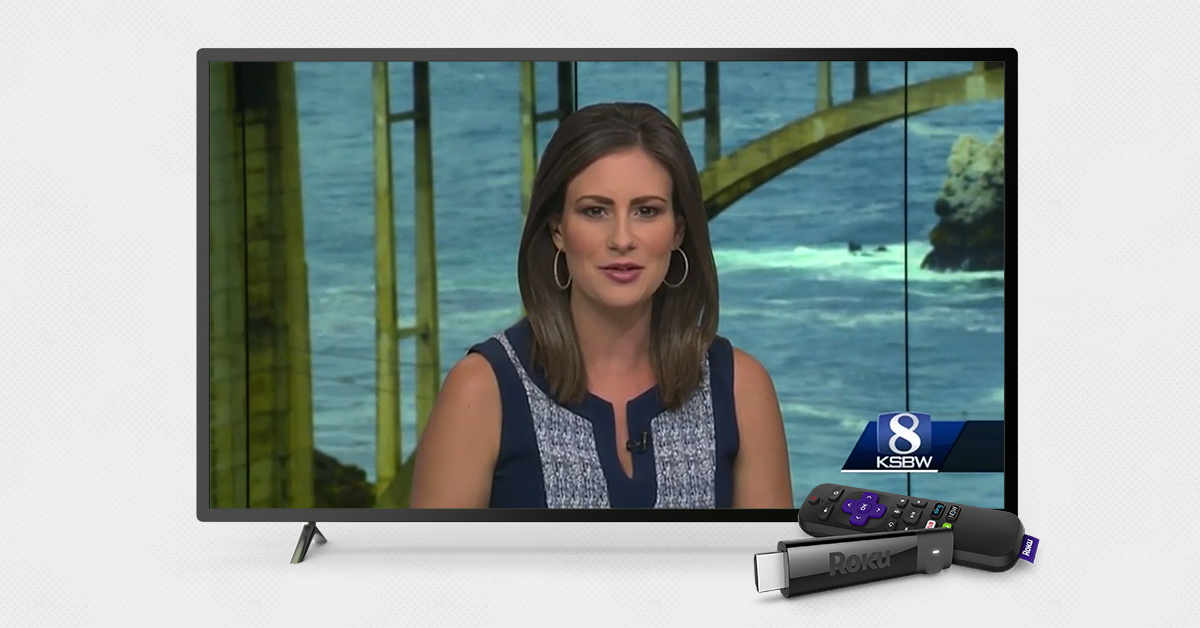
Major streaming platforms such as Roku, Samsung TV Plus, and Vizio WatchFree+ have integrated local news into their “FAST” lineups. These services utilize cloud-based playout technology to stream linear channels over the internet. For the user, this means local news appears as a numbered channel in a familiar electronic program guide (EPG), blending the “lean-back” experience of traditional TV with the tech-stack of a modern streaming app. This is achieved through server-side ad insertion (SSAI), allowing the stream to remain free while providing localized content.
Network-Specific Apps and Authentication
The “Big Four” networks—ABC, NBC, CBS, and FOX—have all moved toward direct-to-consumer models. Apps like Paramount+ (CBS) and Peacock (NBC) offer live streams of local affiliates in their premium tiers. Technically, these apps utilize geolocation data (GPS on mobile or IP-based geolocation on smart TVs) to verify your “Designated Market Area” (DMA). Once verified, the app triggers the appropriate local stream. This ensures that a user in Seattle sees KING 5 news rather than a New York feed, maintaining the integrity of local advertising and reporting.
Virtual MVPDs: The Cloud-Based Cable Replacement
For users who want the full “cable experience” without the contracts or specialized hardware, Virtual Multichannel Video Programming Distributors (vMVPDs) represent the pinnacle of current streaming tech.
IP-Based Linear Distribution
Services like YouTube TV, Hulu + Live TV, and FuboTV are essentially cable companies that operate entirely over the public internet. Unlike traditional cable, which uses Quadrature Amplitude Modulation (QAM) to send signals over physical wires, vMVPDs use adaptive bitrate streaming. This technology monitors the user’s internet bandwidth in real-time, adjusting the video quality (bitrate) to prevent buffering. For local news viewers, this means a seamless experience even if the home network is under heavy load.
Cloud DVR Capabilities and Latency
One of the most impressive technical feats of vMVPDs is the Cloud DVR. Instead of recording a show to a local hard drive in your living room, the “recording” is simply a pointer in a database on the provider’s server. When you “record” the local news, the service flags that specific stream for your account. This allows for unlimited simultaneous recordings and the ability to watch your local news from any device, anywhere in the world. However, the trade-off is “latency”—the delay between the live event and the image on your screen—which these companies are constantly working to reduce through optimized content delivery networks (CDNs).
User Experience (UX) and Content Discovery
The tech behind these platforms also includes sophisticated recommendation engines. By analyzing viewing habits, these services can surface local news specials or weather alerts directly on the home screen. The integration of “voice search” via Alexa, Google Assistant, or Siri further enhances the UX, allowing users to jump into a local broadcast with a simple command, bypassing the need for manual channel surfing.
Network Tuners and Home Media Servers: The Power User’s Setup
For the true technophile, the ultimate solution for watching local news involves building a private broadcast network within the home. This involves bridging the gap between OTA signals and the local area network (LAN).
SiliconDust and the HDHomeRun Ecosystem
A network-attached tuner, such as the SiliconDust HDHomeRun, is a device that connects to your antenna and your router. It converts the incoming ATSC broadcast signal into IP data packets. Once on your network, the local news can be “discovered” by any device with a screen—smartphones, tablets, gaming consoles, and smart TVs. This eliminates the need to run coaxial cables to every room in the house, effectively turning your local news into a private streaming service.
Integration with Plex and Channels DVR
To elevate this setup, many users integrate their network tuners with media server software like Plex or the specialized “Channels DVR.” This software provides a high-end interface for your OTA content, complete with metadata, poster art, and a robust program guide. Technically, these servers perform “transcoding”—the process of converting the broadcast MPEG-2 video format into the more efficient H.264 or H.265 (HEVC) formats, which are more compatible with mobile devices and web browsers.
Remote Access and Bitrate Control
By hosting a local media server, a user can “tunnel” into their home network from a remote location. This allows a traveler to watch their hometown local news from a hotel room across the country. The server handles the heavy lifting of “uplinking” the video, often utilizing hardware acceleration (GPU transcoding) to ensure the stream remains fluid despite the limited upload speeds of many home internet connections. This represents the high-water mark of cord-cutting technology: the ability to own your hardware, control your data, and access your content without a monthly subscription fee.

The Convergence of Broadcast and Broadband
The transition away from cable is not merely a change in billing; it is a fundamental shift in how we interact with information. The technology supporting local news has moved from a “one-to-many” broadcast model to a highly personalized, IP-based ecosystem. Whether through the deployment of NextGen TV antennas, the use of AI-driven news aggregators, or the implementation of sophisticated home media servers, the modern viewer has more control than ever.
As we look toward the future, the integration of 5G and ATSC 3.0 promises even more innovation, potentially bringing local news to the dashboards of autonomous vehicles and into augmented reality interfaces. For now, the combination of high-gain hardware and cloud-based software ensures that staying informed about your local community is faster, sharper, and more accessible than it ever was in the era of cable.
aViewFromTheCave is a participant in the Amazon Services LLC Associates Program, an affiliate advertising program designed to provide a means for sites to earn advertising fees by advertising and linking to Amazon.com. Amazon, the Amazon logo, AmazonSupply, and the AmazonSupply logo are trademarks of Amazon.com, Inc. or its affiliates. As an Amazon Associate we earn affiliate commissions from qualifying purchases.