
Navigating the world of finance can often feel like deciphering a complex secret code, with the stock market standing as one of its most enigmatic chapters. For many, it conjures images of frenzied trading floors, ticker tapes scrolling incomprehensible numbers, and a select few reaping immense wealth. However, at its core, the stock market is a powerful and accessible mechanism for wealth creation and capital allocation, serving as a vital engine for economic growth. Understanding its fundamental principles is not just for aspiring day traders or financial professionals; it’s an essential skill for anyone looking to secure their financial future, grow their savings beyond traditional accounts, and participate in the prosperity generated by the world’s leading companies. This article aims to demystify the stock market, breaking down its complexities into understandable components and equipping you with the foundational knowledge to embark on your investing journey with confidence and clarity.
The Fundamentals: What is the Stock Market?
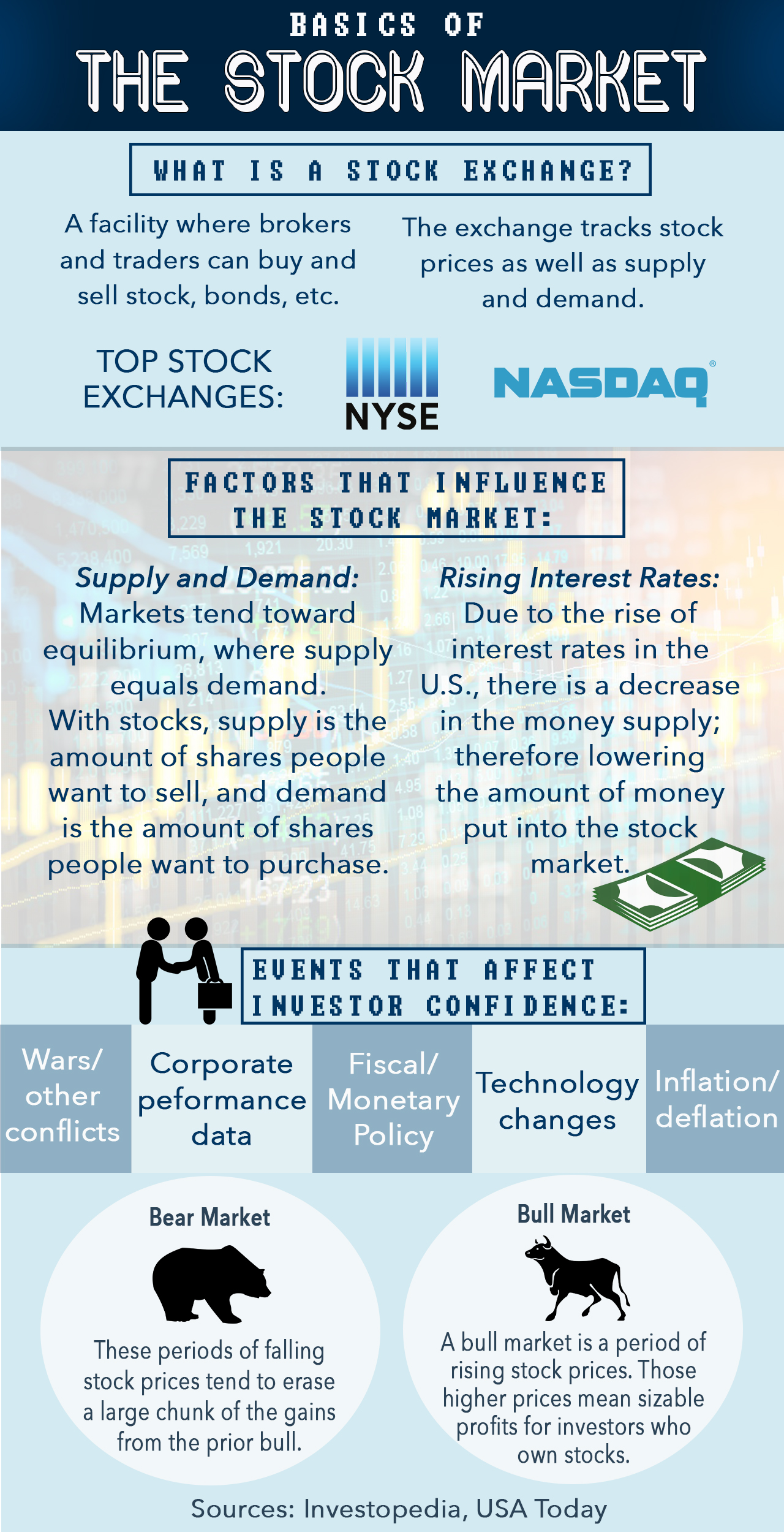
Before diving into strategies and jargon, it’s crucial to grasp the basic architecture and purpose of the stock market. Far from being a single entity, it’s a network of exchanges and markets where buyers and sellers trade shares of publicly-traded companies. This dynamic interplay of supply and demand determines the value of businesses and, consequently, the wealth of investors.
Defining Stocks and Shares
At the heart of the stock market are “stocks” or “shares.” When you buy a share of a company’s stock, you are essentially purchasing a tiny fraction of ownership in that company. This ownership comes with certain rights, most notably the potential to receive a portion of the company’s profits (dividends) and a say in corporate governance (voting rights, depending on the share class). Companies issue stocks primarily to raise capital for expansion, research, or operational needs, offering investors a stake in their future success. The price of these shares fluctuates based on a myriad of factors, including company performance, industry trends, economic outlook, and investor sentiment.
Primary vs. Secondary Markets
The stock market operates in two main segments: the primary market and the secondary market. The primary market is where companies first issue new stocks to the public, typically through an Initial Public Offering (IPO). This is how a private company becomes public, selling shares to institutional investors and the general public to raise initial capital. Once these shares have been sold in the primary market, they can then be bought and sold among investors on the secondary market. This is what most people typically refer to as “the stock market”—major exchanges like the New York Stock Exchange (NYSE) and NASDAQ are prime examples of secondary markets. It’s here that the daily trading activity occurs, dictating share prices based on supply and demand without direct involvement from the issuing company.
Key Players and Their Roles
Understanding the stock market also involves recognizing the various participants. Investors are individuals or institutions (like pension funds, mutual funds, or hedge funds) who buy and sell stocks with the aim of generating returns. Brokers act as intermediaries, executing buy and sell orders on behalf of investors for a commission or fee. They provide access to the exchanges where trades occur. Stock exchanges (e.g., NYSE, NASDAQ, London Stock Exchange) are regulated marketplaces that facilitate the trading of securities. They provide infrastructure, ensure fair trading practices, and disseminate market data. Finally, regulators (like the Securities and Exchange Commission in the U.S.) oversee the market to protect investors, maintain fair and orderly markets, and facilitate capital formation.
Decoding Stock Market Metrics and Jargon
The stock market has its own language, and familiarizing yourself with key terms and metrics is crucial for informed decision-making. These indicators provide insights into market health, individual stock performance, and broader economic trends.
Key Indices: Dow Jones, S&P 500, NASDAQ
Market indices serve as benchmarks, providing a snapshot of the overall performance of a specific segment of the market or the market as a whole.
- The Dow Jones Industrial Average (DJIA) is one of the oldest and most recognized indices, tracking 30 large, publicly-owned companies based in the United States. While representative of large-cap industrial companies, its limited scope means it doesn’t fully capture the breadth of the U.S. economy.
- The S&P 500 is widely regarded as the best gauge of large-cap U.S. equities and the U.S. stock market in general. It comprises 500 of the largest U.S. companies across various sectors, offering a more diversified and representative view than the Dow.
- The NASDAQ Composite primarily represents technology and growth companies, many of which are innovative, smaller, and high-growth businesses. Understanding what each index represents helps investors assess market trends and diversify their portfolios appropriately.
Common Terminology: Bull vs. Bear Markets, Volatility, Dividends
Beyond indices, several terms are essential to grasp:
- A bull market signifies a period of rising stock prices, typically driven by investor optimism, strong economic growth, and corporate profits. Conversely, a bear market is characterized by falling prices, usually a 20% decline from recent highs, reflecting pessimism and economic slowdown.
- Volatility refers to the degree of variation of a trading price series over time. High volatility means prices fluctuate widely, implying higher risk but also potentially higher returns. Low volatility suggests a more stable price movement.
- Dividends are a portion of a company’s earnings paid out to its shareholders, usually quarterly. Not all companies pay dividends, but they can be a significant component of an investor’s total return, especially for income-focused strategies.
- Market capitalization (market cap) is the total value of a company’s outstanding shares, calculated by multiplying the current share price by the number of shares outstanding. It’s an indicator of a company’s size.
Reading Financial Statements
To truly understand a stock, you need to look beyond its price chart and delve into the company’s financial health. Key financial statements include the income statement (showing revenues, expenses, and profit over a period), the balance sheet (a snapshot of assets, liabilities, and equity at a specific point), and the cash flow statement (detailing cash inflows and outflows). Metrics derived from these statements, like the Price-to-Earnings (P/E) ratio (current share price divided by annual earnings per share) and Earnings Per Share (EPS), are crucial for fundamental analysis, helping investors assess a company’s valuation and profitability. While intimidating at first, learning to interpret these statements provides invaluable insights into a company’s intrinsic value and future potential.
Investment Strategies and Approaches
Once you understand the mechanics, the next step is to explore different ways to engage with the market. There’s no single “best” strategy; the most suitable approach depends on your financial goals, risk tolerance, and time horizon.
Growth vs. Value Investing

Two primary philosophies guide stock selection:
- Growth investing focuses on companies that are expected to grow at an above-average rate compared to other companies or the market. These are often newer companies in rapidly expanding industries, characterized by high P/E ratios and a focus on reinvesting earnings rather than paying dividends. Investors hope to profit from significant capital appreciation.
- Value investing, championed by legendary investors like Warren Buffett, seeks out companies whose stock prices appear to be trading below their intrinsic worth. These are often established companies with solid fundamentals but temporarily out of favor, leading to lower P/E ratios and sometimes offering dividends. Value investors aim to buy undervalued assets and wait for the market to recognize their true worth.
Passive Investing (ETFs, Mutual Funds, Index Funds)
For many, especially beginners, passive investing offers a simpler and often more effective path than trying to pick individual stocks. This approach involves investing in diversified portfolios that track market indices rather than attempting to outperform them.
- Exchange Traded Funds (ETFs) are funds that hold a basket of assets (stocks, bonds, commodities) and trade on stock exchanges like individual stocks. They offer diversification, low expense ratios, and flexibility.
- Mutual Funds are professionally managed funds that pool money from many investors to purchase a diversified portfolio of securities. They are managed by fund managers who make investment decisions.
- Index Funds are a type of mutual fund or ETF designed to match the performance of a specific market index (e.g., S&P 500). They have extremely low fees because they don’t require active management, simply mirroring the index’s composition. Passive investing through these vehicles is a powerful way to achieve broad market exposure and long-term growth with minimal effort.
Active Trading vs. Long-Term Investing
The distinction between active trading and long-term investing is critical.
- Active trading involves frequent buying and selling of securities in an attempt to profit from short-term price fluctuations. This approach requires significant time, research, and emotional resilience, and carries higher risk, with many active traders failing to beat the market after costs.
- Long-term investing, in contrast, involves holding investments for several years, often decades, allowing compound interest and market growth to work their magic. This strategy is less susceptible to market volatility and generally recommended for most individuals building wealth for retirement or other significant life goals. The power of compounding over time is a cornerstone of successful long-term investing.
Diversification: The Golden Rule
Perhaps the most critical principle in investing is diversification. It means spreading your investments across various asset classes, industries, geographies, and company sizes to reduce risk. The adage “don’t put all your eggs in one basket” is nowhere more relevant than in the stock market. If one investment performs poorly, others may perform well, cushioning the impact on your overall portfolio. Diversification helps mitigate both systematic risk (market-wide risk) and unsystematic risk (company-specific risk).
Risk Tolerance and Investment Horizons
Before making any investment, it’s essential to assess your risk tolerance—your ability and willingness to take on financial risk. Are you comfortable with significant fluctuations for potentially higher returns, or do you prefer more stable but potentially lower growth? Closely related is your investment horizon, the length of time you plan to hold your investments. Younger investors with longer horizons can generally afford to take on more risk, as they have time to recover from downturns. Those closer to retirement may opt for more conservative portfolios. Matching your strategy to your personal risk tolerance and time horizon is paramount for a comfortable and successful investing journey.
Practical Steps for Getting Started
The journey to understanding the stock market culminates in taking action. Fortunately, getting started is more accessible than ever, but it requires thoughtful planning and disciplined execution.
Setting Financial Goals
Before you buy your first share, define what you want your money to achieve. Are you saving for retirement, a down payment on a house, your child’s education, or simply long-term wealth accumulation? Clear, specific, measurable, achievable, relevant, and time-bound (SMART) financial goals will guide your investment decisions, dictating the level of risk you can take and the timeframe you need to consider. Understanding your ‘why’ will provide motivation and discipline during market ups and downs.
Choosing a Brokerage Account
To invest in the stock market, you’ll need a brokerage account. These accounts can be opened with traditional full-service brokers offering extensive advice and research, or increasingly popular online discount brokers that provide lower fees and a more self-directed experience. When choosing a broker, consider factors such as fees (commissions, account maintenance fees), investment options available (stocks, ETFs, mutual funds), research tools, customer service, and ease of use. Many platforms offer commission-free trading for stocks and ETFs, significantly lowering the barrier to entry for new investors. You’ll typically need to provide personal information, including your Social Security number, and link a bank account for funding.
Starting Small and Learning Continuously
You don’t need a large sum of money to begin investing. Many platforms allow you to start with modest amounts, even through fractional shares (buying a portion of a single share). Beginning small allows you to gain practical experience without exposing too much capital to risk. Treat your initial investments as a learning experience. The stock market is dynamic, constantly evolving with new technologies, regulations, and economic shifts. Commit to continuous learning by reading financial news, reputable books, and analysis from trusted sources. Stay informed, but avoid getting caught up in every daily fluctuation.
Emotional Discipline and Avoiding Common Pitfalls
Perhaps the greatest challenge for investors isn’t understanding complex algorithms but managing their own emotions. Fear and greed are powerful drivers that can lead to impulsive and detrimental decisions. Panicking during market downturns and selling at a loss, or chasing “hot” stocks during speculative bubbles, are common pitfalls. Develop emotional discipline by sticking to your long-term plan, rebalancing your portfolio periodically, and avoiding the urge to constantly check your portfolio’s performance. Remember that market volatility is normal, and corrections are healthy parts of a long-term growth cycle. Patience and a rational approach are your most valuable assets. Don’t invest money you might need in the short term, and always prioritize building an emergency fund before venturing into the stock market.
Conclusion: Empowering Your Financial Journey
Understanding the stock market is a journey, not a destination. It involves grasping fundamental concepts, deciphering its language, choosing appropriate strategies, and, most importantly, exercising patience and discipline. While the initial steps may seem daunting, the knowledge gained and the potential for long-term wealth creation are immensely rewarding. By educating yourself, setting clear goals, starting small, and maintaining a rational perspective, you can transform the stock market from an intimidating mystery into a powerful tool for achieving your financial aspirations. Embrace the learning process, focus on your long-term vision, and unlock the potential that the stock market offers for your financial future.
aViewFromTheCave is a participant in the Amazon Services LLC Associates Program, an affiliate advertising program designed to provide a means for sites to earn advertising fees by advertising and linking to Amazon.com. Amazon, the Amazon logo, AmazonSupply, and the AmazonSupply logo are trademarks of Amazon.com, Inc. or its affiliates. As an Amazon Associate we earn affiliate commissions from qualifying purchases.