
In the era of hyper-connectivity, the ability to observe the movements of aircraft across the globe is no longer a luxury reserved for air traffic controllers. The democratization of aviation data has transformed flight tracking into a sophisticated technological pursuit, fueled by a synergy of satellite networks, radio frequency engineering, and high-performance software. For tech enthusiasts, travelers, and developers alike, understanding how to track flights involves peeling back the layers of a complex digital ecosystem that monitors thousands of objects moving at hundreds of miles per hour across the stratosphere.
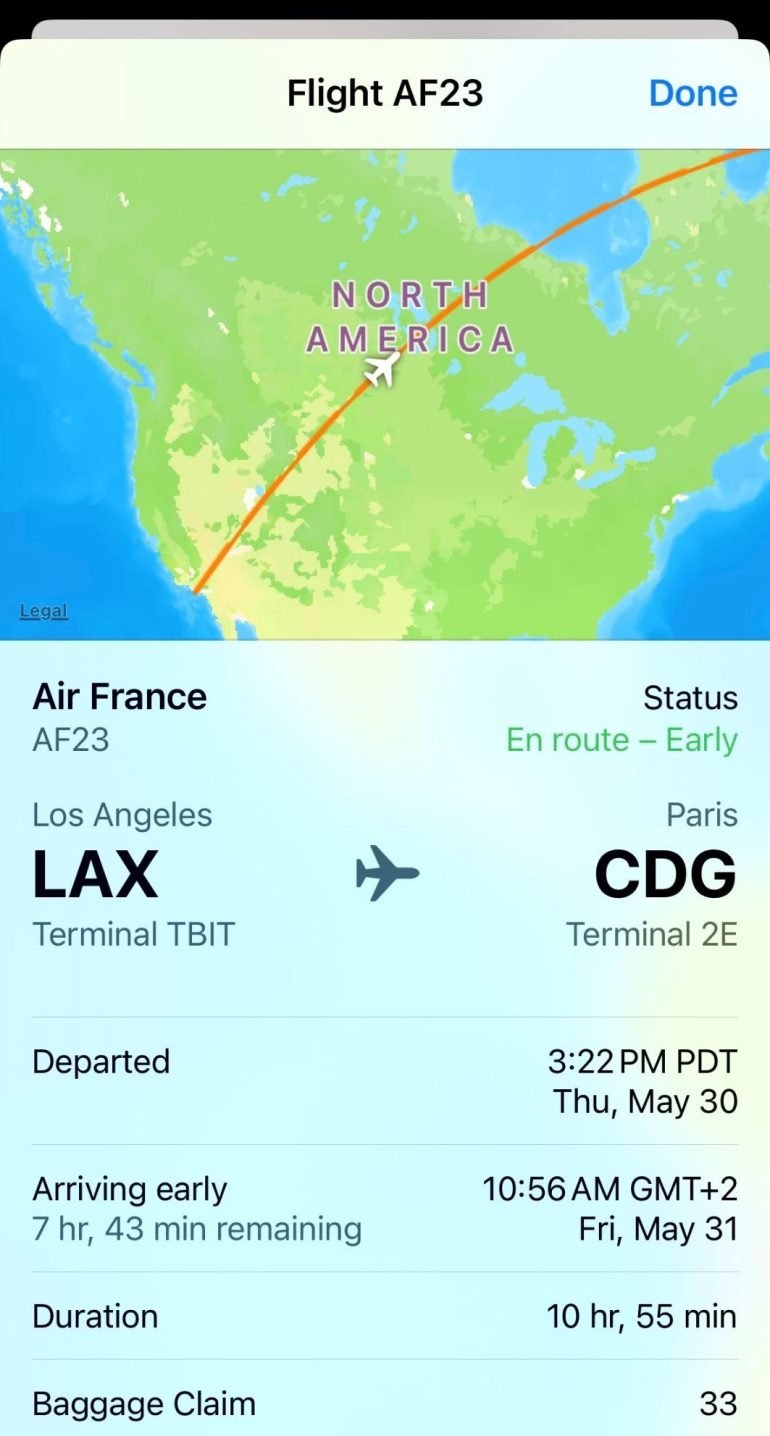
This guide explores the technical infrastructure that makes real-time flight tracking possible, the software platforms that lead the industry, and the ways in which individuals can contribute to this global data network.
The Engineering Marvel of ADS-B: How Data Becomes a Visualization
At the heart of modern flight tracking is a technology known as Automatic Dependent Surveillance-Broadcast (ADS-B). Unlike traditional radar, which relies on bouncing radio waves off an aircraft’s fuselage, ADS-B is a cooperative surveillance technique. It represents a paradigm shift from “interrogating” an aircraft to the aircraft “announcing” its presence.
Understanding Transponder Technology
Every modern commercial aircraft is equipped with a transponder that calculates its position using GPS (Global Positioning System). In an ADS-B Out configuration, the aircraft’s transponder periodically broadcasts this position along with other telemetry—including altitude, airspeed, and a unique identification code—on a frequency of 1090 MHz. Because this signal is unencrypted and broadcast into open air, it can be intercepted by any receiver within a line-of-sight range, typically up to 250 miles depending on atmospheric conditions and antenna quality.
The Network of Ground Receivers and MLAT
While ADS-B is the gold standard, not all aircraft are equipped with the latest transponders. This is where Multilateration (MLAT) comes into play. MLAT is a sophisticated mathematical process used by tracking networks to calculate the position of older aircraft (using Mode S or Mode A/C transponders). By measuring the Time Difference of Arrival (TDOA) of a signal at four or more separate ground stations, the system can triangulate the aircraft’s exact coordinates. This requires incredibly precise clock synchronization between receivers, often handled by specialized hardware and cloud-based processing algorithms.
The Digital Ecosystem: Evaluating Top-Tier Tracking Software
Once the raw radio data is captured by ground stations, it must be aggregated, parsed, and visualized. This is handled by sophisticated software platforms that manage massive throughput—processing millions of data points per second to provide a seamless user experience.
Flightradar24 and the Power of Real-Time Feeds
Flightradar24 is perhaps the most recognizable name in the consumer flight tracking space, boasting the world’s largest network of over 30,000 ADS-B receivers. The tech stack behind Flightradar24 is built for low-latency visualization. Their interface uses a combination of WebGL for smooth map rendering and WebSocket protocols to push real-time updates to the browser or app. One of its standout technical features is the “3D View,” which utilizes high-resolution satellite imagery and aircraft models to simulate the pilot’s perspective, leveraging the aircraft’s actual telemetry data to pitch and roll the virtual camera.
FlightAware and Enterprise-Grade Predictive Analytics
While many apps focus on the visual “wow” factor, FlightAware focuses on data depth and predictive intelligence. Using proprietary machine learning models, FlightAware’s “Foresight” engine predicts arrival times and taxi durations with startling accuracy. It integrates data not just from ADS-B, but also from airline schedules, weather sensors, and government air traffic control feeds (such as the FAA’s SWIM program). For the professional user, FlightAware offers an API (AeroAPI) that allows developers to integrate flight status, historical data, and flight alerts into their own software applications, making it a cornerstone of aviation logistics technology.
The DIY Frontier: Building Your Own Flight Tracking Node

One of the most rewarding aspects of flight tracking technology is the “prosumer” movement. You do not need to be a multi-billion dollar corporation to participate in the network; in fact, the most accurate tracking data often comes from a global community of hobbyists who build and maintain their own localized tracking nodes.
Leveraging Raspberry Pi and SDR Hardware
The barrier to entry for building a tracking station is remarkably low. Using a Raspberry Pi—a credit-card-sized computer—and a low-cost RTL-SDR (Software Defined Radio) USB dongle, any enthusiast can create a receiver. The “Software Defined” aspect is key: instead of needing a dedicated hardware radio for 1090 MHz, the software on the Raspberry Pi (such as Dump1090) performs the digital signal processing necessary to decode the radio waves into readable data packets.
To optimize performance, users often experiment with tuned collinear antennas and Low Noise Amplifiers (LNAs) to filter out interference from cellular towers. This hardware setup allows the user to see “raw” traffic in their immediate vicinity before it even hits the major websites.
Joining the Distributed Data Community
By feeding your locally captured data to networks like Flightradar24, ADSBexchange, or FlightAware, you become a part of a distributed computing project. In exchange for the data, these platforms often provide users with premium “Enterprise” accounts for free. This symbiotic relationship between the central platform and the decentralized node operators is what allows for near-total global coverage, even in remote areas where commercial radar stations do not exist.
Privacy, Security, and the Ethics of Open-Source Intelligence (OSINT)
As flight tracking technology becomes more accessible, it has sparked significant debate regarding the intersection of public data and individual privacy. This is a critical area for anyone interested in the technicalities of data security and Open-Source Intelligence (OSINT).
The Conflict Between Transparency and Security
Because ADS-B signals are unencrypted, anyone with a $30 radio can track a plane. This has led to the rise of high-profile tracking accounts that monitor the movement of government officials, celebrities, and corporate jets. From a technical standpoint, this highlights a vulnerability in civil aviation protocols: the system was designed for safety and collision avoidance, not for privacy. While some programs, like the FAA’s LADD (Limiting Aircraft Data Displayed), allow owners to request that their tail numbers be redacted from public websites, the raw radio signals remain detectable by independent, unfiltered networks like ADSBexchange.
Encryption and Data Filtering in Civil Aviation
The tech community is currently debating the implementation of “ADS-B Privacy” measures. Some aircraft now use temporary, randomized ICAO addresses (essentially a digital “ghost” tail number) to prevent long-term tracking. However, implementing full encryption on aviation frequencies is a massive technical hurdle, as it would require every receiver—from the smallest ground station to every other aircraft in the sky—to have a standardized key-management system, which is currently unfeasible for global civil aviation.
Future Horizons: AI, Satellite-Based ADS-B, and Global Connectivity
The future of tracking flights lies in filling the “black holes” of the map—specifically the vast expanses of the oceans where ground-based receivers cannot reach.
Space-Based Tracking for Transoceanic Flights
Companies like Aireon have revolutionized tracking by installing ADS-B receivers on Iridium NEXT satellites. This “Space-Based ADS-B” allows for 100% global coverage, including the poles and the middle of the Atlantic. From a tech perspective, this involves complex orbital mechanics and high-speed data backhauls to move signals from a satellite in Low Earth Orbit (LEO) to a ground station in milliseconds. This technology was instrumental in investigating recent aviation mysteries and is now being used to reduce the required separation between aircraft on long-haul routes, increasing airspace capacity.

Machine Learning in Traffic Flow Management
As the volume of flight data grows, Artificial Intelligence is being deployed to manage the chaos. Modern tracking platforms are moving beyond simply showing where a plane is, toward predicting where it will be in the face of complex weather patterns. Neural networks are being trained on decades of historical flight data to optimize routing, reduce fuel consumption, and predict mechanical delays before they happen. For the end-user, this means “how to track flights” will soon evolve into “how to predict the entire aviation ecosystem.”
By understanding the hardware, software, and data protocols involved, tracking flights becomes more than just watching icons move on a map. It is an engagement with a massive, real-time distributed system that represents the pinnacle of modern telecommunications and data science. Whether you are a casual observer or a developer building the next great aviation tool, the technology of the skies is more accessible—and more fascinating—than ever before.
aViewFromTheCave is a participant in the Amazon Services LLC Associates Program, an affiliate advertising program designed to provide a means for sites to earn advertising fees by advertising and linking to Amazon.com. Amazon, the Amazon logo, AmazonSupply, and the AmazonSupply logo are trademarks of Amazon.com, Inc. or its affiliates. As an Amazon Associate we earn affiliate commissions from qualifying purchases.