
The share market, often perceived as an exclusive club for financial gurus, is in reality an accessible arena for anyone willing to dedicate time and effort to understanding its intricacies. It is a powerful engine for wealth creation, a mechanism for companies to raise capital, and a reflection of global economic sentiment. However, navigating its volatile currents without a strong foundational understanding is akin to sailing without a compass. This comprehensive guide will illuminate the path to effectively studying the share market, transforming complex concepts into actionable knowledge for both aspiring and seasoned investors.
1. Laying the Foundation: Understanding the Basics
Before diving into the complex strategies and analyses, it’s crucial to establish a robust understanding of the share market’s fundamental components and terminology. This initial phase is about building the vocabulary and conceptual framework necessary to interpret market movements and company performance.
What is the Share Market?
At its core, the share market, also known as the stock market or equity market, is a public marketplace where buyers and sellers trade shares of publicly listed companies. These shares represent fractional ownership in a company. When you buy a share, you become a part-owner, entitled to a slice of the company’s future earnings and assets.
- Stocks/Shares: Units of ownership in a company.
- Stock Exchanges: Organized markets (like the NYSE, NASDAQ, NSE, BSE) where stocks are bought and sold. They provide the platform, regulate trading, and ensure transparency.
- Indices: Benchmarks (like S&P 500, Dow Jones, Nifty 50, Sensex) that represent the performance of a basket of stocks, often reflecting the overall health of a specific market or economy. Understanding how these indices are constructed and what they represent is key to gauging broader market sentiment.
Key Concepts and Terminology
The share market has its own language. Familiarizing yourself with key terms will demystify financial news and reports, allowing for a clearer understanding of market dynamics.
- Bulls and Bears: Metaphors for market sentiment. A “bull market” signifies rising prices and investor optimism, while a “bear market” indicates falling prices and pessimism.
- IPO (Initial Public Offering): The first time a company offers its shares to the public for subscription, typically to raise capital for expansion.
- Dividends: A portion of a company’s profits distributed to its shareholders, usually quarterly or annually.
- P/E Ratio (Price-to-Earnings Ratio): A valuation metric that compares a company’s share price to its earnings per share. It helps investors determine if a stock is overvalued or undervalued relative to its earnings.
- Market Capitalization: The total value of a company’s outstanding shares, calculated by multiplying the current share price by the number of shares outstanding. It gives an idea of the company’s size.
- Volatility: The degree of variation of a trading price series over time. High volatility means prices can change dramatically and quickly.
- Liquidity: The ease with which an asset can be converted into cash without affecting its market price. Highly liquid stocks can be bought and sold quickly.
Why Invest in Shares?
Understanding the motivation behind share market participation can reinforce your commitment to studying it. The primary reasons include:
- Wealth Creation: Over the long term, equities have historically outperformed other asset classes, offering significant potential for capital appreciation.
- Beating Inflation: Investing in shares can help your money grow faster than the rate of inflation, preserving and enhancing your purchasing power.
- Compounding: The magic of earning returns on your initial investment and on the accumulated returns over time, leading to exponential growth.
- Diversification: Shares can be a critical component of a diversified investment portfolio, balancing risks and returns alongside other asset classes like bonds and real estate.
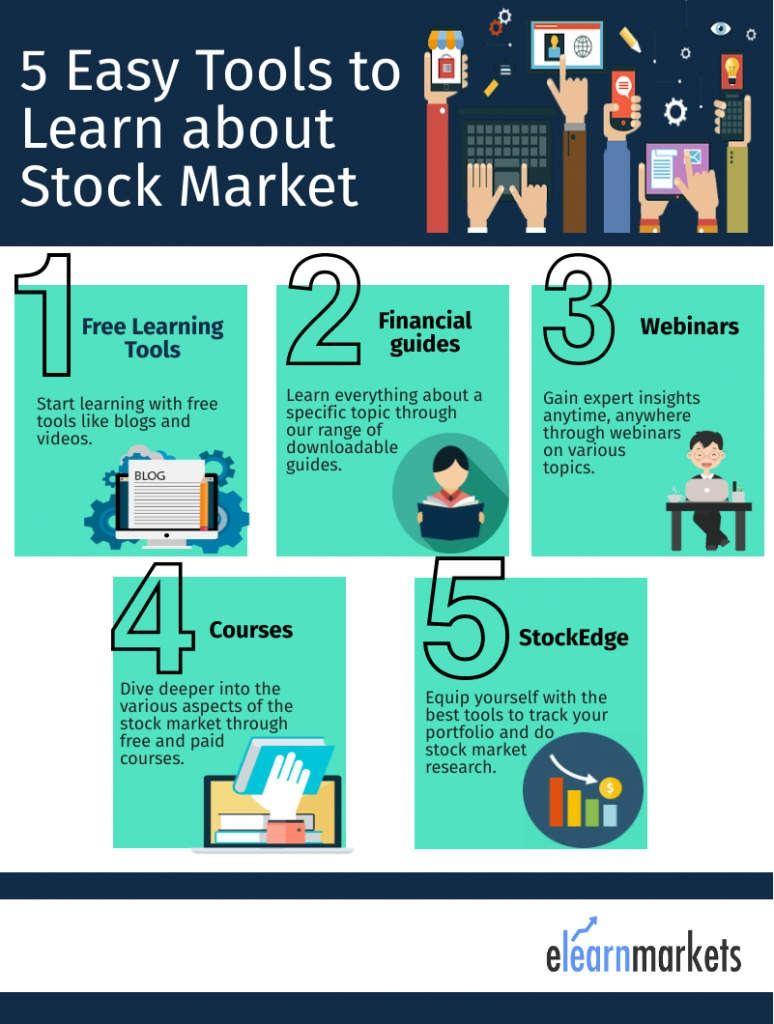
2. Essential Resources for Share Market Study
The journey of learning about the share market is greatly aided by the right resources. From structured learning platforms to real-time market news, a blend of different sources will provide a holistic educational experience.
Books and Online Courses
For structured and in-depth knowledge, books and online courses are invaluable. They offer curated content, often presented by experts, covering everything from foundational principles to advanced strategies.
- Recommended Reads:
- The Intelligent Investor by Benjamin Graham: A timeless classic on value investing.
- Common Stocks and Uncommon Profits by Philip A. Fisher: Focuses on growth stock investing.
- One Up On Wall Street by Peter Lynch: Practical advice for individual investors.
- A Random Walk Down Wall Street by Burton G. Malkiel: Discusses efficient market hypothesis and passive investing.
- Rich Dad Poor Dad by Robert Kiyosaki: Inspires financial literacy and investment thinking.
- Reputable Online Platforms: Coursera, Udemy, edX, and various financial institutions offer courses on investing, fundamental analysis, technical analysis, and personal finance. Look for courses taught by certified financial professionals or reputable universities. Many brokerage firms also provide free educational content.
Financial News and Media
Staying updated with current events, economic indicators, and company-specific news is critical. The market reacts to a myriad of factors, and understanding these influences is key.
- Reputable Sources: The Wall Street Journal, Financial Times, Bloomberg, Reuters, The Economist, Business Standard, Economic Times. These provide unbiased reporting and expert analysis.
- Economic Indicators: Pay attention to GDP growth, inflation rates, interest rates, employment figures, and consumer confidence. These macro-economic data points significantly impact market sentiment and corporate earnings.
- Company-Specific News: Earnings reports, management changes, product launches, regulatory approvals, and mergers/acquisitions can cause significant stock price movements.
Online Simulators and Paper Trading
One of the best ways to learn without financial risk is through practical application using virtual trading platforms.
- Practice Without Risk: Many brokerage firms offer “paper trading” accounts or simulators where you can trade with virtual money. This allows you to test strategies, understand order types, and get a feel for market dynamics without risking your capital.
- Backtesting: Some advanced tools allow you to test your trading strategies against historical market data to see how they would have performed. This can help refine your approach before real-money deployment.

Engaging with the Investor Community
Learning from others’ experiences, insights, and mistakes can accelerate your own understanding.
- Forums and Social Media: Platforms like Reddit (e.g., r/investing, r/stocks), Twitter, and dedicated financial forums offer spaces for discussion, idea exchange, and learning from diverse perspectives. Be cautious and verify information, as not all advice is sound.
- Mentors and Investment Clubs: If possible, connect with experienced investors who can offer guidance. Joining an investment club can provide a collaborative learning environment where members research stocks and make collective decisions.
3. Developing a Strategic Approach to Learning
Studying the share market isn’t just about accumulating facts; it’s about developing analytical skills and strategic thinking. Two primary schools of thought dominate stock analysis: fundamental and technical analysis. Understanding both, alongside market psychology and risk management, provides a comprehensive toolkit.
Fundamental Analysis: Deciphering Company Health
Fundamental analysis focuses on evaluating a company’s intrinsic value by examining its financial statements, management quality, industry position, and economic outlook. The goal is to identify undervalued companies with strong growth potential.
- Financial Statements: Learn to read and interpret a company’s:
- Balance Sheet: A snapshot of a company’s assets, liabilities, and equity at a specific point in time.
- Income Statement: Shows a company’s revenues, expenses, and profit (or loss) over a period.
- Cash Flow Statement: Details how cash is generated and used by a company over a period.
- Key Ratios: Beyond P/E, understand metrics like Debt-to-Equity Ratio, Return on Equity (ROE), Price-to-Book Ratio (P/B), and Dividend Yield.
- Management Quality: Assess the competence, integrity, and strategic vision of a company’s leadership team.
- Industry and Economic Outlook: Understand the competitive landscape, growth drivers, regulatory environment, and how broader economic trends impact the company’s sector.
Technical Analysis: Interpreting Market Sentiment
Technical analysis involves evaluating investments by analyzing statistical trends gathered from trading activity, such as price movement and volume. Technicians believe that past price action and volume can predict future price movements.
- Charts: Learn to read various chart types (candlestick, bar, line) and identify patterns (head and shoulders, double top/bottom, triangles).
- Indicators: Familiarize yourself with common technical indicators like Moving Averages, Relative Strength Index (RSI), MACD (Moving Average Convergence Divergence), and Bollinger Bands. These tools help identify momentum, overbought/oversold conditions, and potential trend reversals.
- Support and Resistance Levels: Understand these price levels where a stock historically tends to stop falling (support) or stop rising (resistance). They are crucial for entry and exit points.
- Volume Analysis: High trading volume accompanying a price move can indicate strong conviction behind that move.
Understanding Market Psychology and Behavioral Finance
Investing is not purely rational; human emotions play a significant role. Behavioral finance studies the influence of psychological factors on investor behavior and market outcomes.
- Fear and Greed: These two powerful emotions often drive irrational decision-making, leading investors to buy at peaks (greed) and sell at troughs (fear).
- Herd Mentality: The tendency of investors to follow the actions of a larger group, often ignoring their own research or better judgment.
- Cognitive Biases: Be aware of biases like confirmation bias (seeking information that confirms existing beliefs), anchoring (over-relying on the first piece of information), and loss aversion (the tendency to prefer avoiding losses over acquiring equivalent gains). Recognizing these biases can help in making more objective decisions.
Risk Management Principles
No matter how thoroughly you study, the share market involves risk. Learning to manage this risk is as important as learning to analyze stocks.
- Diversification: Don’t put all your eggs in one basket. Spread your investments across different stocks, industries, and asset classes to mitigate company-specific or sector-specific risks.
- Stop-Loss Orders: A stop-loss order automatically sells your stock if it falls to a predetermined price, limiting potential losses.
- Position Sizing: Determine the appropriate amount of capital to allocate to a single investment based on your risk tolerance and portfolio size.
- Capital Preservation: Prioritize protecting your principal investment. No investment is guaranteed, and understanding when to cut losses is crucial.
4. Practical Application and Continuous Learning
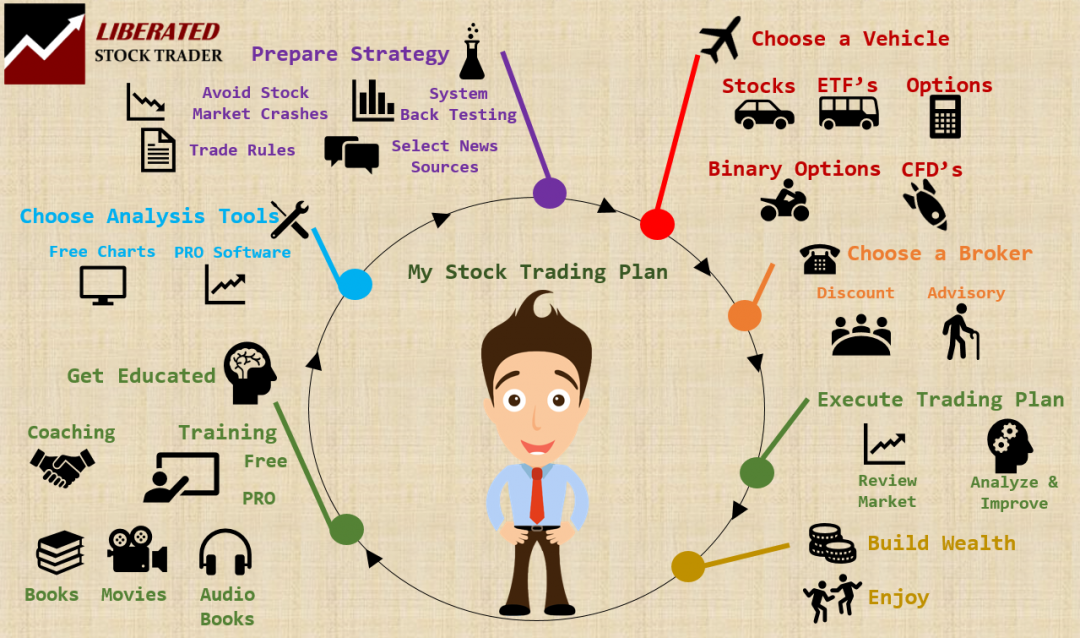
Theoretical knowledge is only half the battle. True mastery comes from applying what you’ve learned, observing market reactions, and continuously refining your approach. The share market is dynamic, and so too must be your learning process.
Starting Small: The Power of Initial Investment
Once you’ve gained a good theoretical grounding and practiced with paper trading, consider making a small, real-money investment. This step is invaluable for experiencing the psychological aspects of real capital at risk and for truly understanding transaction costs, market orders, and portfolio management in a live environment. Start with an amount you can afford to lose, as initial losses are part of the learning curve.
Building a Watchlist and Portfolio Tracking
Develop a watchlist of companies you are interested in and track their performance, news, and financial updates. This allows you to apply your analytical skills without immediately committing capital. Once you invest, meticulously track your portfolio’s performance, understand the drivers of gains and losses, and regularly review your investment thesis for each holding. Utilize financial tracking tools or spreadsheets to maintain an organized record.
Adapting to Market Cycles and Economic Shifts
The share market operates in cycles influenced by economic conditions, interest rates, inflation, and global events. Understanding these cycles (expansion, peak, contraction, trough) helps in anticipating broader market movements and adapting your investment strategy accordingly. Economic indicators, central bank policies, and geopolitical developments are critical factors to monitor. A flexible mindset that adapts to changing market realities is crucial for long-term success.
The Importance of Lifelong Learning and Review
The share market is an ever-evolving entity. New financial instruments emerge, regulations change, and technology reshapes industries. Therefore, studying the share market is not a one-time event but a lifelong commitment. Regularly revisit fundamental concepts, read new books, follow reputable financial analysts, and engage in continuous learning. Critically review your past investment decisions – both successes and failures – to learn valuable lessons and refine your investment philosophy.
By approaching the study of the share market with diligence, patience, and a commitment to continuous learning, you can demystify its complexities and unlock its vast potential for financial growth. It’s a journey of self-education that empowers you to take control of your financial future.
aViewFromTheCave is a participant in the Amazon Services LLC Associates Program, an affiliate advertising program designed to provide a means for sites to earn advertising fees by advertising and linking to Amazon.com. Amazon, the Amazon logo, AmazonSupply, and the AmazonSupply logo are trademarks of Amazon.com, Inc. or its affiliates. As an Amazon Associate we earn affiliate commissions from qualifying purchases.