
In the modern economic landscape, the concept of a single source of income is increasingly viewed as a financial vulnerability. Whether driven by the desire for early retirement, the need to hedge against inflation, or the ambition to fund a specific lifestyle goal, the pursuit of “extra money” has evolved into a sophisticated discipline of income diversification.
Generating additional revenue is no longer just about trading hours for dollars in a secondary job; it is about leveraging assets, skills, and market inefficiencies to build sustainable financial momentum. This guide explores the most effective frameworks for increasing your cash flow, categorized by scalability, effort, and long-term financial impact.
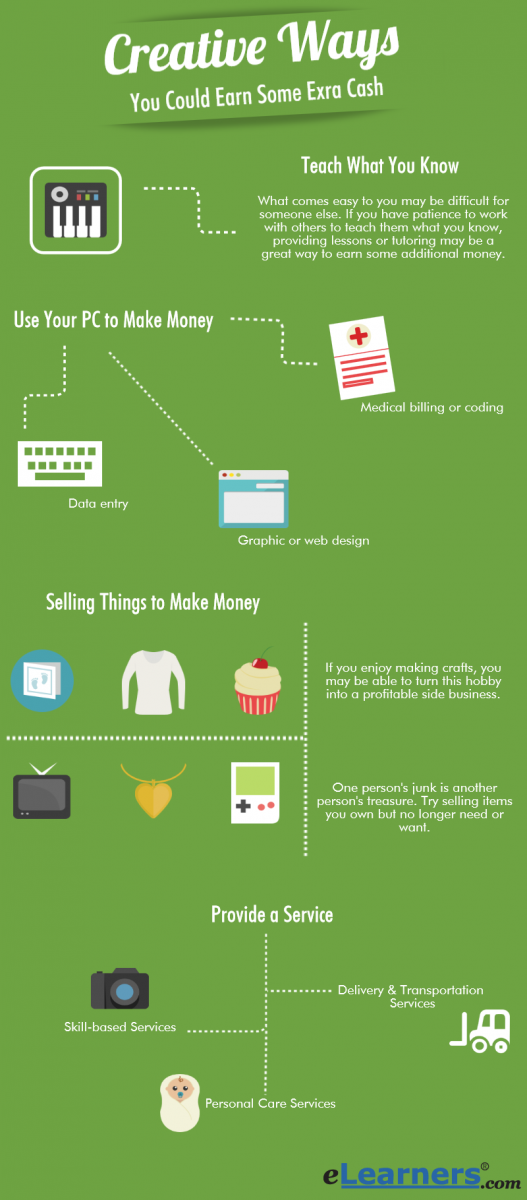
1. High-Value Service Arbitrage and Freelancing
The most immediate way to generate extra money is to monetize professional skills through the global freelance marketplace. Unlike entry-level gig work, high-value service arbitrage focuses on specialized skills that command premium rates.
The Rise of the Fractional Expert
Companies are increasingly moving away from full-time hires for specialized roles, opting instead for “fractional” experts. If you have experience in project management, digital marketing strategy, or financial analysis, you can offer your services on a contract basis. Platforms like Upwork, Toptal, or specialized industry job boards allow you to secure contracts that pay significantly more than standard hourly labor. The key to success here is positioning: moving from a “generalist” to a “specialist” who solves high-stakes problems.
Specialized Tutoring and Corporate Training
The education sector has undergone a massive digital transformation. Beyond traditional K-12 tutoring, there is a lucrative market for professional-to-professional coaching. If you have mastered a specific software suite, a coding language, or a corporate methodology (like Six Sigma or Agile), you can command high hourly rates for one-on-one training or small-group workshops. This “knowledge work” has low overhead and high margins, making it one of the most efficient ways to boost monthly income.
The Modern Gig Economy: Beyond the Basics
While ridesharing and delivery are the most visible forms of the gig economy, they often offer the lowest ROI due to vehicle wear and tear. Strategic earners look toward specialized gig platforms. This includes task-based services for high-end home maintenance, drone photography for real estate, or professional organizing. By identifying a niche with high demand and low provider density, you can maximize your earnings per hour.
2. Leveraging Digital Assets for Scalable Passive Income
While service-based income is limited by your time, digital assets allow you to decouple your earnings from your hours worked. This is the cornerstone of “passive” income—creating a product once and selling it repeatedly.
Content Monetization and Niche Authority
Building an audience around a specific niche—whether through a professional blog, a specialized newsletter (like Substack), or a YouTube channel—remains one of the most potent ways to generate long-term wealth. Monetization occurs through three primary channels: advertising revenue, sponsored content, and affiliate marketing. While this requires significant upfront time investment, the compounding effect of high-quality content can eventually produce a self-sustaining revenue stream that operates 24/7.
Digital Products and Intellectual Property
The “creator economy” has democratized the sale of intellectual property. Professionals are now packaging their expertise into downloadable assets such as:
- E-books and Whitepapers: Deep dives into industry-specific problems.
- Templates and Toolkits: Excel models, Notion templates, or design kits that save others time.
- Online Courses: Structured learning paths hosted on platforms like Teachable or Udemy.
The beauty of digital products is the zero marginal cost of production; every sale after the first is almost entirely profit.
Affiliate Marketing Strategies
Affiliate marketing involves earning a commission by promoting other people’s or companies’ products. This is most effective when integrated into a professional context. For example, a financial consultant might recommend specific accounting software, or a photographer might link to their preferred gear. Success in this field relies on trust and transparency; recommending high-quality products that provide genuine value to your audience ensures long-term sustainability.
3. Strategic Investing and Capital Allocation

For those who already have a baseline of savings, the most effective way to make “extra money” is to put that capital to work. This moves the focus from “earned income” to “portfolio income.”
Dividend Growth Investing
Investing in dividend-paying stocks allows you to receive a portion of a company’s earnings regularly. By focusing on “Dividend Aristocrats”—companies that have consistently increased their dividends for 25 years or more—investors can create a predictable and growing stream of cash. This strategy requires patience, but when dividends are reinvested, the power of compounding can turn a modest portfolio into a significant income generator over time.
Real Estate Investment Trusts (REITs)
Direct real estate investment (owning rental properties) can be labor-intensive and capital-heavy. REITs offer a way to earn “extra money” from real estate without the need to manage properties. These are companies that own, operate, or finance income-producing real estate. By law, REITs must distribute at least 90% of their taxable income to shareholders as dividends, making them an excellent vehicle for passive monthly or quarterly income.
High-Yield Cash Management
In a fluctuating interest rate environment, simply moving your “emergency fund” or idle cash from a standard checking account to a High-Yield Savings Account (HYSA) or a Certificate of Deposit (CD) ladder can generate hundreds or even thousands of dollars in extra interest annually. While not a “hustle” in the traditional sense, optimizing where your money sits is the simplest form of financial gain with zero risk.
4. E-commerce and Inventory-Light Business Models
The barrier to entry for starting a retail business has never been lower. However, the modern approach to e-commerce focuses on minimizing overhead and maximizing profit margins through smart logistics.
Niche Reselling and “Flipping”
Reselling involves identifying undervalued items in one marketplace and selling them in another for a profit. This could range from vintage furniture and high-end electronics to limited-edition collectibles. Success in reselling requires deep market knowledge—knowing exactly what an item is worth and where the buyers are. Platforms like eBay, Poshmark, and Chrono24 provide the infrastructure; your job is the curation and valuation.
Print-on-Demand and Dropshipping
These models eliminate the need to hold inventory. With Print-on-Demand (POD), you design products (like apparel or stationery), and they are only manufactured when a customer makes a purchase. Dropshipping involves selling products directly from a manufacturer to the consumer. Both models allow you to test market demand with minimal financial risk. The profit comes from the “spread” between the wholesale cost and your retail price.
Amazon FBA (Fulfillment by Amazon)
For those willing to invest some capital, Amazon FBA allows individuals to sell products on the world’s largest marketplace while Amazon handles storage, packaging, and shipping. By identifying high-demand, low-competition products—often through private labeling—entrepreneurs can build a scalable business that leverages Amazon’s massive logistics network.
5. Maximizing Net Gains: The Importance of Financial Management
Making extra money is only half of the equation; the other half is keeping it. Professional financial management ensures that your side income contributes to your long-term net worth rather than being eroded by taxes and lifestyle creep.
Understanding Tax Implications
Side income is generally taxable income. Whether you are an independent contractor (receiving 1099 forms) or selling goods, it is vital to understand your tax obligations. This includes setting aside a percentage of every dollar earned for quarterly estimated tax payments and identifying deductible business expenses—such as home office equipment, software subscriptions, or marketing costs—that can lower your overall tax burden.
Avoiding “Lifestyle Creep”
A common pitfall of earning extra money is “lifestyle creep,” where expenses rise at the same rate as income. To build true wealth, the extra money should be earmarked for specific financial goals: paying off high-interest debt, maxing out retirement accounts, or building a “bridge fund” for future investments. By maintaining your current standard of living while your income increases, you accelerate your path to financial independence.

Reinvesting for Compounding Growth
The most successful earners don’t spend their extra income; they reinvest it. Using the profits from a freelance project to buy dividend stocks, or using the revenue from an e-commerce store to fund an automated marketing campaign, creates a “flywheel effect.” Over time, the income generated by your investments can surpass the income generated by your labor, leading to a state where work becomes optional rather than a necessity.
In conclusion, making extra money is a multi-faceted endeavor that requires a blend of tactical execution and strategic planning. Whether you choose to sell your skills, build digital assets, or invest your capital, the objective remains the same: to create a diversified, resilient financial profile that provides security and freedom in an ever-changing world.
aViewFromTheCave is a participant in the Amazon Services LLC Associates Program, an affiliate advertising program designed to provide a means for sites to earn advertising fees by advertising and linking to Amazon.com. Amazon, the Amazon logo, AmazonSupply, and the AmazonSupply logo are trademarks of Amazon.com, Inc. or its affiliates. As an Amazon Associate we earn affiliate commissions from qualifying purchases.