
Generating passive income is the “holy grail” of personal finance. It represents the transition from trading time for money to making your money work for you. While $10,000 may not be enough to retire on tomorrow, it serves as a powerful “seed capital” that, when deployed strategically, can establish a foundation for long-term financial independence.
The key to successfully investing $10k for passive income lies in balancing risk, liquidity, and yield. In a shifting economic landscape, the strategies that worked a decade ago may need adjustment. This guide explores the most effective vehicles for turning a five-figure sum into a recurring revenue stream.

1. Traditional Market-Based Income Streams
The stock market remains the most accessible and historically proven method for generating passive income. For an investor with $10,000, the goal is to find assets that provide regular distributions without requiring constant management.
Dividend-Paying Stocks
Dividend stocks are shares in companies that distribute a portion of their earnings to shareholders. For a $10,000 investment, focusing on “Dividend Aristocrats”—companies that have increased their dividends for at least 25 consecutive years—offers a blend of stability and income. While the average yield might range from 2% to 5%, the real power lies in the growth of the dividend over time. By holding these assets, you receive cash payments (usually quarterly) regardless of the stock’s price fluctuations.
Dividend Exchange-Traded Funds (ETFs)
If picking individual stocks feels too risky, Dividend ETFs provide instant diversification. Funds like Vanguard’s VIG or Schwab’s SCHD pool hundreds of dividend-paying companies into a single ticker symbol. This reduces “single-stock risk.” With $10,000, you can capture the broad growth of the market while receiving a consolidated dividend check. This is perhaps the “purest” form of passive income, requiring almost zero maintenance after the initial purchase.
Real Estate Investment Trusts (REITs)
REITs are companies that own, operate, or finance income-producing real estate. By law, REITs must distribute at least 90% of their taxable income to shareholders as dividends. This allows you to benefit from the real estate market—collecting what is essentially “rent”—without the headaches of property management or the need for a massive down payment. With $10,000, you can invest in diversified REITs that cover commercial office space, residential apartments, or even data centers and cell towers.
2. Fixed-Income and Low-Risk Vehicles
In a high-interest-rate environment, low-risk “cash” investments have become competitive again. For many investors, preserving the $10,000 principal is just as important as the income it generates.
High-Yield Savings Accounts (HYSA) and Money Market Funds
While not traditional “investments” in the sense of capital appreciation, HYSAs and Money Market Funds currently offer yields that significantly outperform standard checking accounts. If you require liquidity—the ability to access your money quickly—placing your $10,000 here can generate several hundred dollars a year in interest with virtually zero risk. This is an ideal starting point for those who are risk-averse or who may need the capital for an emergency.
Certificates of Deposit (CDs) and CD Ladders
If you can afford to lock your $10,000 away for six months to five years, CDs often offer higher rates than savings accounts. To maximize passive income and maintain some liquidity, many investors use a “CD Ladder” strategy. You might split your $10,000 into four blocks of $2,500, investing them in 3-month, 6-month, 9-month, and 12-month CDs. As each one matures, you reinvest it into a new 12-month CD. This ensures a steady stream of interest and regular access to a portion of your principal.
Treasury Securities
Investing in U.S. Treasuries (such as T-Bills or I-Bonds) is widely considered the safest investment in the world. I-Bonds, specifically designed to protect against inflation, can be an excellent way to ensure your $10,000 doesn’t lose purchasing power. The interest is added to the bond’s value and can be deferred for tax purposes, making it a highly efficient way to build a “hands-off” income cushion.
3. Alternative Income and Digital Assets
For those willing to move slightly further out on the risk spectrum, alternative investments can offer higher yields than traditional stocks or bonds.
Peer-to-Peer (P2P) Lending
P2P lending platforms allow you to act as the bank. You lend your $10,000 (ideally split into small increments of $25 to $50) to individuals or small businesses. In return, you receive the interest on the loans. While there is a risk of default, diversifying your $10,000 across hundreds of different loans can mitigate this risk. In a healthy economy, P2P lending can provide annual returns ranging from 6% to 10%, significantly higher than most fixed-income products.
Fractional Real Estate Investing
While $10,000 isn’t enough to buy a physical rental property in most markets, it is more than enough for fractional real estate platforms. These services allow you to buy shares of specific private commercial or residential projects. Unlike REITs, which are traded on the stock exchange, these are often private equity deals. They typically offer a combination of quarterly dividends and a share of the property’s appreciation upon sale, though they often require longer holding periods (3–5 years).
Content Sites and Digital Real Estate
A more “entrepreneurial” form of passive income involves purchasing an existing, cash-flowing content website or blog. While building a site from scratch requires immense work, platforms exist where you can buy a site that is already generating $200–$300 a month through affiliate marketing or display ads. Investing $10,000 into a pre-established digital asset can provide an immediate return on investment. However, this requires a level of “active-passive” management to ensure the content stays relevant and the traffic remains steady.
4. Strategic Allocation and Risk Management
Investing $10,000 is not just about choosing an asset; it is about building a system. To ensure your passive income is sustainable, you must apply professional portfolio management principles.
The Importance of Diversification
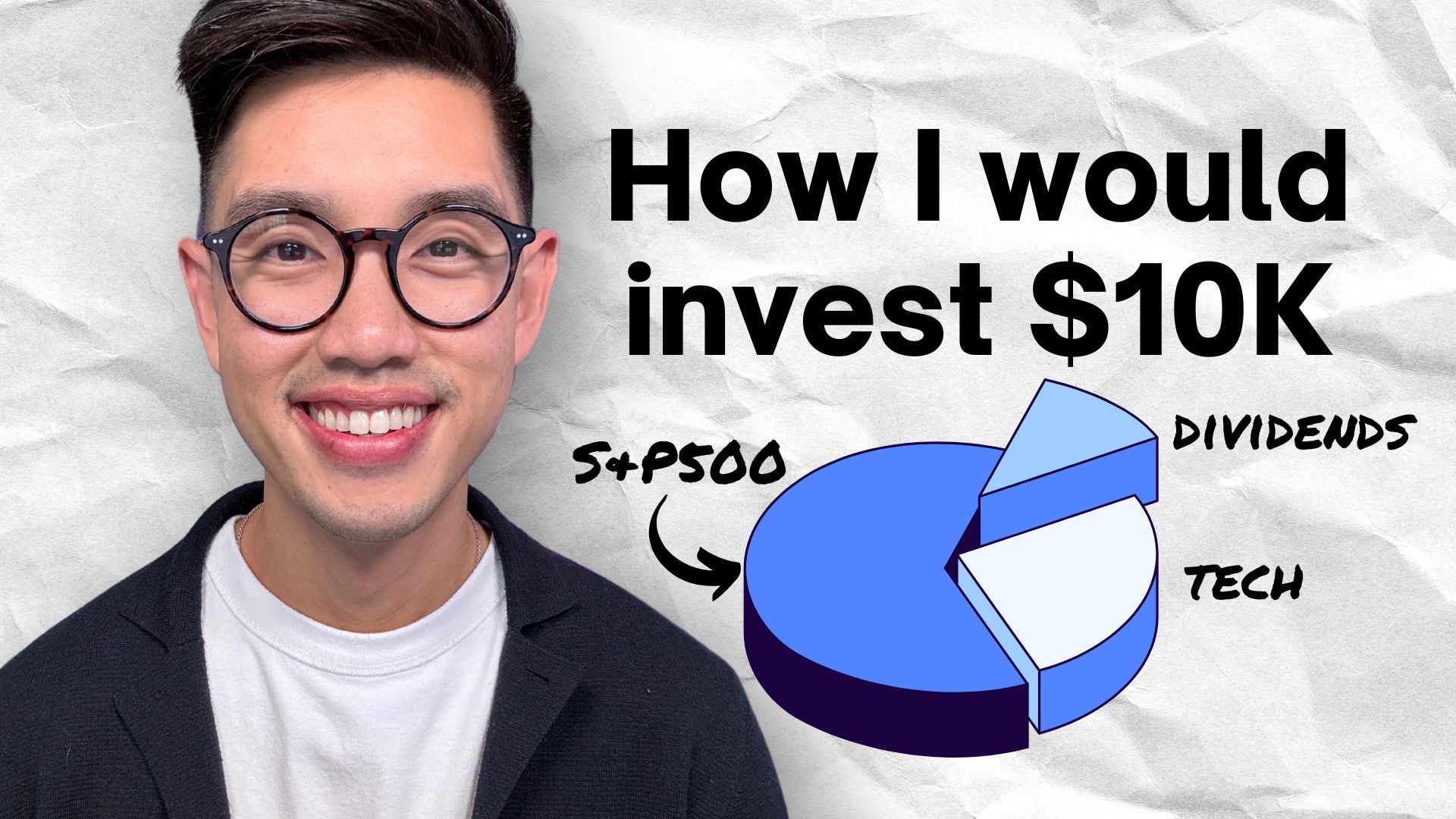
Putting all $10,000 into a single dividend stock or a single P2P loan is gambling, not investing. A smart passive income portfolio might look like this:
- $5,000 in a Dividend ETF (Stability and Growth)
- $3,000 in a REIT (Real Estate Exposure)
- $2,000 in a High-Yield Savings Account (Liquidity and Safety)
This “core and satellite” approach ensures that if one sector of the economy hits a slump, your entire income stream doesn’t dry up.
The Power of the Dividend Reinvestment Plan (DRIP)
If you don’t need the passive income to pay your bills immediately, the most effective strategy is to use a DRIP. This automatically uses your dividends to buy more shares of the asset. This creates a compounding effect: your dividends buy more shares, which then produce even more dividends. Over a decade, a $10,000 investment with a DRIP can grow exponentially faster than one where the cash is withdrawn.
Understanding Tax Implications
Passive income is not always taxed at the same rate as your salary. “Qualified dividends” and long-term capital gains often enjoy lower tax rates. Conversely, interest from CDs or P2P lending is usually taxed as ordinary income. When investing your $10,000, consider the “tax wrapper.” Using a Roth IRA (if you don’t need the money until retirement) can allow your passive income to grow and be withdrawn entirely tax-free. If you need the income now, a standard brokerage account is necessary, but you should be prepared to set aside a portion of your earnings for the IRS.

Conclusion: The Path to $10k and Beyond
Investing $10,000 for passive income is a milestone. It marks the transition from being a consumer to being a capital allocator. Whether you choose the safety of a CD ladder, the growth potential of dividend stocks, or the high yields of P2P lending, the goal remains the same: consistency.
Passive income is rarely “set it and forget it” in the absolute sense. It requires an initial setup, periodic rebalancing, and a clear-eyed understanding of risk. However, by starting with a disciplined $10,000 allocation, you are not just buying an income stream; you are buying back your time. As your portfolio grows and your “money-machine” begins to hum, the dividends, interest, and rents generated today will become the financial freedom of tomorrow.
aViewFromTheCave is a participant in the Amazon Services LLC Associates Program, an affiliate advertising program designed to provide a means for sites to earn advertising fees by advertising and linking to Amazon.com. Amazon, the Amazon logo, AmazonSupply, and the AmazonSupply logo are trademarks of Amazon.com, Inc. or its affiliates. As an Amazon Associate we earn affiliate commissions from qualifying purchases.