
In the ever-evolving landscape of personal computing, the ability to install an operating system is a fundamental skill that empowers users, enhances productivity, and ensures digital security. While optical drives have largely faded from modern laptops and desktops, the humble USB flash drive has emerged as the indispensable tool for installing Windows, offering unparalleled speed, portability, and convenience. Whether you’re building a new PC, upgrading an existing one, troubleshooting system issues, or simply seeking a fresh start, understanding how to install Windows using a flash drive is a critical competency for any tech-savvy individual.
This comprehensive guide will walk you through every step of the process, transforming a complex technical task into an achievable project. We’ll cover everything from preparing your system and creating the bootable drive to navigating the installation wizard and performing essential post-installation configurations. By the end, you’ll not only have a freshly installed Windows operating system but also a deeper understanding of your computer’s core functionality, contributing to greater overall productivity and system longevity.
Why Use a Flash Drive & Essential Preparations
Using a flash drive for Windows installation isn’t just a modern convenience; it’s a strategic choice driven by efficiency, compatibility, and the need for a clean, optimized system. Before diving into the technical steps, laying the groundwork with proper preparation is crucial for a smooth and successful installation.
Why Choose a Flash Drive for Windows Installation?
Gone are the days when clunky DVDs were the standard for operating system installations. Flash drives have ushered in a new era of efficiency:
- Speed and Efficiency: USB 3.0 and newer flash drives offer significantly faster data transfer rates compared to optical discs, drastically reducing the time it takes to copy installation files and complete the setup process. This speed translates directly into improved productivity, getting you back to work or play quicker.
- Universal Compatibility: Most modern computers, especially ultrabooks and compact desktops, no longer include optical drives. Flash drives ensure compatibility across virtually all hardware platforms, making them the universal solution for system builders and everyday users alike.
- Portability and Reusability: A bootable USB drive is compact and easy to carry, making it ideal for IT professionals, tech enthusiasts, or anyone who frequently works on multiple systems. Once the installation is complete, the drive can be reformatted and reused for data storage or another bootable project, offering excellent value.
- Clean Slate for Optimal Performance: Installing Windows from scratch using a flash drive is often the best way to resolve persistent software issues, eliminate bloatware, and ensure your system runs at peak performance. It’s an essential step for serious troubleshooting or achieving the “like new” feeling, boosting your digital security by removing potential vulnerabilities from old installations.
Essential Preparations Before You Begin
A successful installation hinges on thorough preparation. Skipping these crucial steps can lead to frustrating delays or, worse, data loss.
- Gathering Your Arsenal: You’ll need a few key items. First, a USB flash drive with at least 8GB of storage space (16GB or more is recommended for Windows 10/11) – ensure it’s empty or that you’ve backed up its contents, as it will be formatted. Second, a stable internet connection is required to download the Windows ISO file or the Media Creation Tool. Finally, ensure you have your Windows product key handy. While you can usually skip this during installation and activate later, having it ready streamlines the process.
- Crucial Data Backup: This cannot be stressed enough: BACK UP ALL IMPORTANT DATA from the computer where you intend to install Windows. A clean installation will erase everything on the primary drive. Use an external hard drive, cloud storage (like OneDrive, Google Drive, or Dropbox), or another computer to secure your documents, photos, videos, and any other files you wish to keep. This step is paramount for your digital security and peace of mind.
- System Requirements Check: Verify that your computer meets the minimum system requirements for the version of Windows you plan to install (e.g., Windows 10 or Windows 11). Check processor, RAM, storage, and graphics card specifications. Installing Windows 11, for example, has stricter requirements like TPM 2.0 and Secure Boot, which are important considerations for newer systems.
- Power and Stability: Ensure your computer is plugged into a reliable power source, especially if it’s a laptop. An unexpected power outage during installation can corrupt your hard drive or the installation media, leading to significant headaches. A stable and uninterrupted power supply is key for a smooth process.
Creating Your Bootable Windows USB Drive
With your preparations complete, the next critical step is to transform your ordinary flash drive into a powerful bootable Windows installer. There are primarily two methods to achieve this, each with its own advantages.
Method 1: Utilizing the Microsoft Media Creation Tool (Recommended for Most Users)
For the vast majority of users, Microsoft’s official Media Creation Tool is the simplest and most reliable way to create a bootable Windows USB drive. It handles the download of the correct Windows version and the bootable drive creation all in one go.
- Download the Tool: Navigate to Microsoft’s official website (search for “Windows 10 Media Creation Tool” or “Windows 11 Media Creation Tool”). Download the tool to a working computer.
- Run the Tool: Double-click the downloaded executable file (e.g.,
MediaCreationToolxxxx.exe). Accept the license terms. - Choose Your Action: When prompted, select “Create installation media (USB flash drive, DVD, or ISO file) for another PC” and click “Next.”
- Select Language, Architecture, and Edition: The tool will usually suggest recommended options based on the PC you’re currently using. You can uncheck “Use recommended options for this PC” if you need to create media for a different system (e.g., 64-bit Windows when your current PC is 32-bit, or a specific language edition). Click “Next.”
- Choose Media Type: Select “USB flash drive” and click “Next.”
- Select the USB Drive: From the list of available drives, choose the flash drive you wish to use. Double-check that you select the correct drive, as its contents will be erased. Click “Next.”
- Download and Create: The tool will now download the Windows installation files and create the bootable USB drive. This process can take a significant amount of time depending on your internet speed and the speed of your flash drive. Do not remove the USB drive until the process is complete.
- Finish: Once completed, you’ll see a confirmation message. Click “Finish,” and your bootable Windows USB drive is ready.
Method 2: Advanced Bootable USB Creation with Rufus (For Customization & Specific Scenarios)
Rufus is a popular third-party utility that offers more advanced options for creating bootable USB drives. It’s particularly useful when you have an ISO file already downloaded, need to create a drive for older legacy systems, or require specific partitioning schemes (e.g., MBR for BIOS, GPT for UEFI).
- Download Rufus: Go to the official Rufus website (
rufus.ie) and download the latest portable version. - Download Windows ISO: You will need to separately download the Windows ISO file from Microsoft’s website or other trusted sources if you haven’t already.
- Run Rufus: Insert your USB flash drive. Launch Rufus.
- Configure Rufus Settings:
- Device: Select your USB flash drive from the dropdown menu. Again, ensure you choose the correct drive.
- Boot selection: Click “SELECT” and browse to locate your downloaded Windows ISO file.
- Image Option: Leave as “Standard Windows installation.”
- Partition scheme: This is crucial. For most modern systems (post-2010), select “GPT” (for UEFI). For older systems (pre-2010) or specific compatibility needs, choose “MBR” (for BIOS or UEFI-CSM). If unsure, try GPT first, or check your motherboard manual.
- Target system: This will automatically adjust based on the partition scheme (e.g., UEFI (non CSM) for GPT, BIOS or UEFI-CSM for MBR).
- File system: Usually FAT32 or NTFS, Rufus will suggest the appropriate one.
- Volume label: You can give your drive a recognizable name.
- Start Creation: Click “START.” Rufus will warn you that all data on the USB drive will be destroyed. Confirm by clicking “OK.”
- Wait for Completion: Rufus will now create the bootable drive. This may take several minutes. Once the “Status” bar shows “READY,” you can close Rufus and safely remove your USB drive.
The Windows Installation Journey: From Boot to Desktop
With your bootable USB drive ready, the next phase involves telling your computer to start from this drive and then guiding it through the Windows setup wizard. This journey will take you from the initial power-on to a fully functional desktop.
Navigating the BIOS/UEFI for Boot Priority
Before Windows can install, your computer needs to know to boot from the USB drive instead of its internal hard drive. This is done through the system’s firmware: the BIOS (Basic Input/Output System) or its modern successor, UEFI (Unified Extensible Firmware Interface).
- Accessing Your System’s Firmware: Turn on or restart your computer. Immediately and repeatedly press the designated key to enter BIOS/UEFI setup or a “Boot Menu.” Common keys include
Del,F2,F10,F12,Esc, or sometimesF1. This key varies by motherboard manufacturer (e.g., Dell, HP, Lenovo often use F2 or F12; ASUS often uses Del or F2). Look for a message on the screen during startup, such as “Press F2 to enter Setup” or “Press F12 for Boot Menu.” - Setting the Boot Order:
- Using a Boot Menu (Recommended): If your system has a “Boot Menu” (often accessed by
F12orF8), select your USB drive directly from this menu. This is the easiest method as it’s a one-time boot override without changing permanent settings. - Changing Boot Priority in BIOS/UEFI: If no boot menu is available, you’ll need to enter the full BIOS/UEFI setup. Navigate to the “Boot,” “Boot Options,” or “Startup” tab. Locate “Boot Order” or “Boot Priority” and move your USB drive (it might be listed by brand, model, or as “USB HDD”) to the top of the list.
- Using a Boot Menu (Recommended): If your system has a “Boot Menu” (often accessed by
- UEFI vs. Legacy BIOS Considerations:
- UEFI: Most modern systems use UEFI, which supports GPT partition schemes and offers features like Secure Boot. If your system uses UEFI and your USB was created with GPT, ensure “Secure Boot” is either disabled or configured to allow third-party OS installations if you encounter issues.
- Legacy BIOS: Older systems use BIOS, which typically requires MBR partition schemes. If you created your USB drive with MBR, ensure your BIOS is set to “Legacy Boot” or “CSM (Compatibility Support Module)” mode. Mismatched boot modes and partition schemes are a common cause of installation failures.
- Save and Exit: After making changes, ensure you “Save and Exit” from the BIOS/UEFI settings. The computer will restart and should now boot from your USB drive, initiating the Windows setup.
The Step-by-Step Windows Installation Process
Once your computer boots from the USB drive, the familiar Windows setup wizard will appear. This guided process is relatively straightforward but requires careful attention to critical choices.
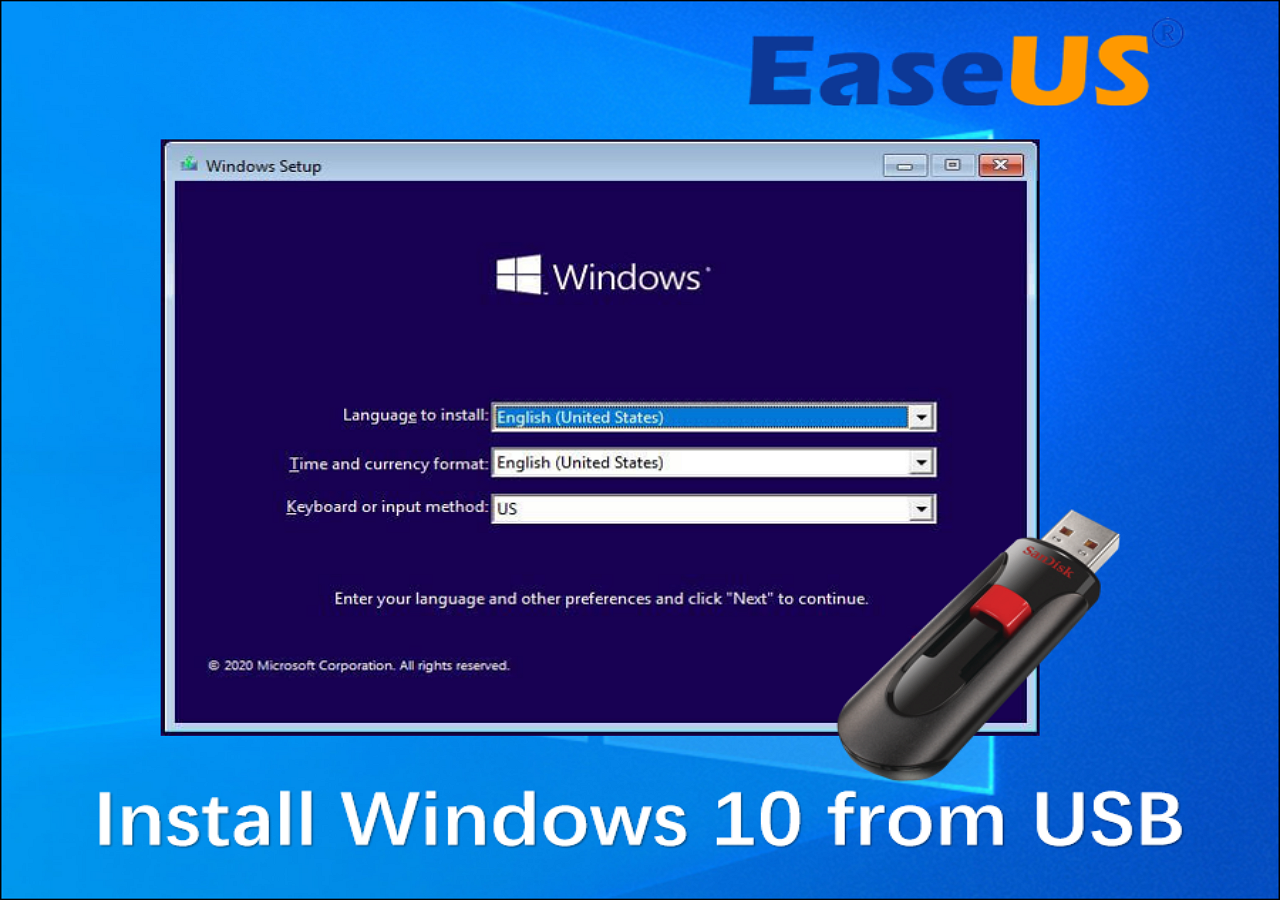
- Initial Setup & Language Selection: The first screen will ask you to select your language, time and currency format, and keyboard input method. Make your selections and click “Next,” then “Install now.”
- Entering Your Product Key: You’ll be prompted to enter your Windows product key. If you have it, enter it now. If not, you can usually click “I don’t have a product key” to continue. Windows will install and run for a period, after which you’ll need to activate it to continue receiving updates and full functionality. Activation is essential for digital security and system updates.
- Accept License Terms & Choose Installation Type: Read and accept the Microsoft Software License Terms. Next, you’ll face a crucial choice:
- Upgrade: Install Windows and keep files, settings, and applications (Upgrade): This option is typically used when upgrading an existing Windows installation from an older version (e.g., Windows 7/8 to Windows 10) without performing a clean install. It’s usually not recommended when booting from a USB for a fresh install.
- Custom: Install Windows only (advanced): This is the option you want for a clean installation. It allows you to partition and format your hard drive.
- Drive Partitioning and Selection (Critical Step for Clean Install): This is perhaps the most important part of a clean installation. You’ll see a list of drives and partitions.
- For a completely clean install: Select each existing partition on your main hard drive (often Drive 0) and click “Delete” until the entire drive is listed as “Unallocated Space.” Be absolutely sure this is the drive you want to erase, as this action is irreversible.
- Creating a new partition: With the “Unallocated Space” selected, click “New” to create a new partition. You can accept the default maximum size to use the entire drive for Windows, or specify a smaller size if you want to create multiple partitions (e.g., one for Windows, one for data). Windows will typically create several small system partitions automatically (e.g., Recovery, EFI System, MSR).
- Select the main partition: Select the largest partition (usually named “Primary”) where Windows will be installed and click “Next.”
- Copying Files & Initial Restarts: Windows will now begin copying installation files and performing the initial setup. Your computer will restart several times during this phase. Do not remove the USB drive until Windows indicates it’s safe to do so or until the final setup screens appear and you’ve booted into the desktop.
- Basic Personalization & Account Setup: After the restarts, Windows will guide you through initial setup steps:
- Select your region and keyboard layout.
- Connect to a Wi-Fi network (if applicable).
- Choose between “Set up for personal use” or “Set up for work or school.”
- Sign in with a Microsoft account (recommended for full features and synchronization) or create an offline account (local account).
- Create a PIN for faster sign-in.
- Review and adjust privacy settings (e.g., location, diagnostic data). It’s advisable to be mindful of these for your digital security.
- Choose device usage (e.g., Gaming, Creativity) for tailored experiences.
- Decline or accept OneDrive setup, Microsoft 365 trial, etc.
- Let the system finish applying settings.
Finally, you’ll be presented with the Windows desktop. Congratulations, you’ve successfully installed Windows!
Post-Installation & Troubleshooting for a Seamless Experience
Installing Windows is just the first step. To ensure your system runs optimally, securely, and efficiently, a few crucial post-installation steps are necessary. Additionally, knowing how to troubleshoot common issues can save you significant time and frustration.
Post-Installation Essentials for Optimal Performance
Immediately after reaching the desktop, focus on these critical tasks to secure and optimize your new Windows installation:
- Driver Installation and Updates: This is paramount. While Windows often includes generic drivers, installing the latest, manufacturer-specific drivers for your motherboard chipset, graphics card (NVIDIA, AMD, Intel), network adapter (Ethernet and Wi-Fi), and other peripherals is essential for stability, performance, and feature functionality. Visit your motherboard manufacturer’s website and your graphics card manufacturer’s website to download the latest drivers.
- Running Windows Updates: Connect to the internet and immediately run Windows Update (Settings > Update & Security > Windows Update). Install all available updates, including cumulative updates, feature updates, and optional driver updates. These updates are crucial for patching security vulnerabilities, enhancing stability, and introducing new features, directly contributing to your digital security and productivity.
- Installing Essential Software: Begin installing your must-have applications. This typically includes a web browser (Chrome, Firefox, Edge, Brave), an office suite (Microsoft Office, LibreOffice), a reliable antivirus program (even if you stick with Windows Defender, which is robust, consider a third-party option for enhanced features), and any other productivity tools you regularly use.
- Setting Up Backup Solutions: Don’t wait until disaster strikes. Configure a regular backup strategy using Windows’ built-in File History, cloud services, or a third-party backup solution. Regularly backing up your data is the cornerstone of digital security and ensures your precious files are protected against hardware failure or accidental deletion.
- System Optimization & Personalization: Tweak Windows settings to your preference. Adjust privacy settings further, customize your desktop, power options, and notification preferences. Remove any pre-installed bloatware that you don’t need to free up resources and enhance performance.

Troubleshooting Common Installation Issues
Even with careful preparation, issues can sometimes arise. Here are solutions for common problems:
- USB Drive Not Booting:
- Check BIOS/UEFI settings: Reconfirm that your USB drive is the primary boot device or that you’ve selected it from the boot menu. Ensure UEFI/Legacy settings match how your USB was created (GPT/MBR).
- Re-create the bootable drive: If unsure, try creating the bootable USB again, perhaps using the alternative method (Media Creation Tool if you used Rufus, or vice-versa).
- Try a different USB port: Some USB ports (especially older USB 2.0 ports or front-panel ports) might have compatibility issues during boot. Try a different port, preferably a rear USB 3.0 port directly on the motherboard.
- Try a different USB drive: The drive itself might be faulty.
- Driver Errors During Installation (e.g., “A media driver your computer needs is missing”): This often occurs on newer hardware (especially Intel 11th Gen+ with VMD controllers) where Windows setup doesn’t have the necessary storage drivers built-in.
- Solution: Download the specific storage controller drivers (e.g., Intel Rapid Storage Technology drivers) for your motherboard from the manufacturer’s website onto another USB drive. During the drive selection screen in Windows setup, click “Load driver,” browse to the drivers on your second USB drive, and install them.
- Disk Partitioning Problems (e.g., “Windows cannot be installed to this disk”):
- Partition Style Mismatch: This error frequently indicates a mismatch between your selected boot mode (UEFI/Legacy) and the disk’s partition style (GPT/MBR). If booting in UEFI mode, the target drive must be GPT. If booting in Legacy BIOS mode, it must be MBR.
- Solution: During the drive selection screen, delete all partitions on the target drive to get “Unallocated Space.” Then, open a command prompt (Shift+F10), type
diskpart, thenlist disk, select your target disk (select disk X), and thenclean(this irrevocably erases the disk), followed byconvert gpt(for UEFI) orconvert mbr(for Legacy BIOS). Exit diskpart, refresh the drive list, and proceed.
- Activation Issues:
- Internet Connection: Ensure your computer has a stable internet connection for online activation.
- Product Key: Double-check that you’ve entered the product key correctly. If it’s a digital license tied to your Microsoft account, simply signing in should activate Windows automatically after installation.
- Version Mismatch: Ensure the product key matches the installed Windows edition (e.g., Pro key for Pro edition, Home key for Home edition).
Successfully installing Windows with a flash drive is a foundational skill in the tech world. It offers a reliable and efficient method to manage your operating system, whether for new builds, upgrades, or system recovery. By following this detailed guide, you’ve not only gained a clean and optimized Windows environment but also enhanced your understanding of critical system processes. Embrace this skill, and you’ll always be prepared to provide your computer with a fresh start, ensuring peak performance, robust digital security, and uninterrupted productivity.
aViewFromTheCave is a participant in the Amazon Services LLC Associates Program, an affiliate advertising program designed to provide a means for sites to earn advertising fees by advertising and linking to Amazon.com. Amazon, the Amazon logo, AmazonSupply, and the AmazonSupply logo are trademarks of Amazon.com, Inc. or its affiliates. As an Amazon Associate we earn affiliate commissions from qualifying purchases.