
In today’s fast-paced digital landscape, clarity and efficiency are paramount. Whether you’re a project manager mapping out complex workflows, an IT professional designing network topologies, or a business analyst visualizing data flows, the ability to communicate intricate ideas visually is an invaluable asset. This is where Microsoft Visio steps in, offering a powerful suite of tools to transform abstract concepts into clear, actionable diagrams. A cornerstone of the Microsoft 365 ecosystem, Visio is not just another application; it’s a strategic tool for enhancing productivity, streamlining operations, and ultimately, contributing to the financial health and brand strength of any organization.
This comprehensive guide will walk you through the entire process of installing the Microsoft Visio desktop app, ensuring a smooth and successful setup. We’ll delve into understanding Visio’s value, preparing your system, navigating the installation steps, and troubleshooting any potential roadblocks. By the end, you’ll not only have Visio successfully installed but also a deeper appreciation for how this powerful software can elevate your professional capabilities and contribute to your broader tech, brand, and money goals.
Understanding Microsoft Visio: More Than Just Diagrams
Before diving into the installation specifics, it’s crucial to grasp what Microsoft Visio truly represents and why it has become an indispensable tool for countless professionals. It’s more than just a drawing program; it’s a dynamic visualization platform.
What is Visio and Why is it Indispensable?
At its core, Microsoft Visio is a diagramming and vector graphics application that helps users create a wide array of visual representations. From simple flowcharts and organizational charts to intricate network diagrams, architectural blueprints, process maps, and even complex business process models, Visio provides the intuitive interface and extensive stencil libraries needed to bring ideas to life.
For professionals focused on Tech, Visio is essential for documenting system architectures, network configurations, database models, and software development processes. It facilitates clearer communication among development teams, operations staff, and stakeholders, reducing errors and accelerating project timelines. In the realm of Productivity, Visio excels by allowing users to quickly visualize complex information, thereby improving comprehension, decision-making, and collaboration. Imagine trying to explain a multi-stage manufacturing process without a visual aid – Visio transforms potential confusion into crystal-clear understanding.
From a Brand perspective, consistent and professional diagrams contribute significantly to corporate identity and reputation. Well-crafted Visio diagrams in reports, presentations, and training materials reinforce an image of professionalism and attention to detail. This isn’t just about aesthetics; it’s about conveying competence and reliability, which are critical elements of strong branding. Moreover, by clearly illustrating value chains or customer journeys, businesses can better communicate their unique selling propositions.
The Money aspect of Visio’s indispensability comes from its ability to drive efficiency and reduce costs. By optimizing business processes through precise visual mapping, organizations can identify bottlenecks, eliminate redundant steps, and streamline operations. This directly translates into time savings, resource optimization, and improved return on investment (ROI). Financial models, budget allocation flowcharts, or even investment strategy diagrams can be made more digestible and persuasive using Visio, enabling better financial planning and decision-making.
Choosing the Right Visio Version: Standard, Professional, or Online?
Microsoft offers Visio in several editions, each tailored to different user needs and budgets. Making the right choice upfront is a critical financial and functional decision.
- Visio Standard: This version provides a robust set of diagramming tools for general-purpose use. It includes templates for common diagrams like flowcharts, organizational charts, timelines, and basic network diagrams. It’s suitable for individuals or small businesses with fundamental visualization needs.
- Visio Professional: Building upon the Standard edition, Visio Professional offers an expanded library of stencils and templates, catering to more specialized fields. This includes advanced process diagrams (BPMN 2.0, SharePoint workflows), electrical diagrams, floor plans, database model diagrams, and more comprehensive network topologies. It also integrates better with data sources, allowing for data-linked diagrams. For businesses where intricate planning and detailed technical documentation are crucial, the Professional version often represents a superior Money investment due to its enhanced capabilities and potential for greater efficiency gains.
- Visio Online (Plan 1 & Plan 2): Microsoft also offers Visio as a web-based application, available through subscription plans. Visio Online Plan 1 provides basic diagramming capabilities directly in a web browser, ideal for collaborative environments and light diagramming on the go. Visio Online Plan 2 includes all the features of Visio Professional, plus additional cloud-centric functionalities like cloud storage, co-authoring, and the ability to install the desktop application on multiple PCs. This subscription model is often more appealing from a Money perspective for organizations seeking OpEx over CapEx, and it aligns with modern Tech Trends towards cloud-based solutions and flexible licensing.
When deciding, consider your specific needs: Do you require advanced technical diagrams or just basic flowcharts? How critical is data linking? Do you prefer a one-time purchase or a subscription model that includes updates and cloud features? Your answers will guide you towards the most cost-effective and functionally appropriate version, aligning with your business finance and tech strategy.
Essential Preparations Before Installation
A smooth installation process is often the result of thorough preparation. Skipping these crucial preliminary steps can lead to frustrating errors, wasted time, and potential system conflicts.
Verifying Your Visio License and Account
Before you even think about downloading, ensure you have a legitimate and active Visio license. This is fundamental to digital security and proper software functionality.
- Microsoft 365 Subscription: If Visio is included in your Microsoft 365 subscription (e.g., Visio Online Plan 2), ensure your subscription is active and you are logged into the correct Microsoft account. Your license entitlements are tied to this account.
- Retail Purchase/Volume License: If you purchased a standalone version of Visio, locate your product key (a 25-character alphanumeric code). This key is typically found on a physical card inside the packaging, in a confirmation email, or accessible through your Microsoft account if it was a digital purchase. For volume licensing, your IT administrator will provide the necessary license information and installation media or instructions.
- Compatibility: Ensure your license is for the correct version (e.g., Visio 2019, Visio 2021) that you intend to install. Mixing and matching different version keys can lead to activation failures.
Meeting System Requirements for Optimal Performance
Even the best software can underperform if your hardware isn’t up to snuff. Checking your system against Visio’s minimum requirements is a vital Tech check.
- Operating System: Visio typically runs on recent versions of Windows (e.g., Windows 10, Windows 11). Verify that your OS is supported.
- Processor: A 1.6 GHz or faster, 2-core processor is usually sufficient, but a 2 GHz or faster for better performance.
- Memory (RAM): 4 GB RAM is generally the minimum recommended for optimal performance, especially if you plan to work with large, complex diagrams. 8 GB or more is ideal.
- Hard Disk Space: Visio installation requires a few gigabytes of free space (e.g., 4 GB). Ensure you have ample space available. For Tech professionals dealing with numerous projects and large files, proactively managing disk space prevents future slowdowns.
- Display: A resolution of 1280 x 768 or higher is recommended for a comfortable viewing experience.
- Graphics Card: DirectX 9 or later with WDDM 2.0 or higher is required.
- Internet Connection: Required for download, activation, and accessing cloud features or updates.
Pre-Installation Best Practices: Clearing the Path
A few simple steps can prevent common installation headaches.
- Uninstall Previous Versions: If you have an older version of Visio (or even other standalone Microsoft Office components) installed, it’s generally best to uninstall them first to avoid potential conflicts, especially if you’re installing a different bit version (32-bit vs. 64-bit) or a different Office generation. Use the “Add or remove programs” feature in Windows.
- Close All Office Applications: Ensure all other Microsoft Office applications (Word, Excel, Outlook, etc.) are closed before starting the Visio installation.
- Administrator Privileges: You will need administrator rights on your computer to install software. If you don’t have them, contact your IT department or system administrator.
- Disable Antivirus (Temporarily): While not always necessary, some antivirus or firewall software can interfere with the installation process by flagging legitimate setup files. You might temporarily disable them during the download and installation, but remember to re-enable them immediately afterward to maintain Digital Security.
- Stable Internet Connection: Ensure you have a stable and reasonably fast internet connection for downloading the installation files, which can be several gigabytes in size.
Step-by-Step Guide: Installing Visio on Your Desktop
With your preparations complete, you’re ready to proceed with the actual installation. The process is straightforward, especially if you’re familiar with installing other Microsoft Office applications.
Accessing Your Microsoft Account and Downloads
The primary method for downloading Visio (for retail, subscription, or linked volume licenses) is through your Microsoft account portal.
- Go to Your Microsoft Account: Open your web browser and navigate to account.microsoft.com (or portal.office.com if it’s an organization’s Microsoft 365 account).
- Sign In: Sign in with the Microsoft account associated with your Visio license. This is crucial for verifying your purchase.
- Navigate to Services & Subscriptions: Once logged in, look for a section titled “Services & subscriptions” or “Apps & devices.” This is where your purchased Microsoft products and their associated installation links are listed.
- Locate Visio: Find your Visio product among your listed services. It might be explicitly named “Visio Professional,” “Visio Standard,” or “Visio Online Plan 2” (which includes the desktop app).
- Click “Install”: You’ll typically see an “Install” button or link next to your Visio product. Clicking this will initiate the download of the Visio setup file. Depending on your version and account, you might have an option to choose between 32-bit and 64-bit versions. For modern systems, the 64-bit version is generally recommended unless you have specific compatibility reasons to use 32-bit (e.g., old add-ins).
Initiating the Download and Setup Process

Once you click “Install,” your browser will download a small setup file (often named Setup.exe or VisioSetup.exe).
- Run the Setup File: Locate the downloaded file (usually in your “Downloads” folder) and double-click it to run.
- User Account Control (UAC): If prompted by User Account Control, click “Yes” to allow the app to make changes to your device. This is where administrator privileges are required.
- Installation Begins: A window will appear, indicating that the installation is starting. You might see a “Getting things ready…” message.
Navigating the Installation Wizard
The Microsoft Office installation wizard is generally hands-off, designed for simplicity.
- Welcome Screen (Optional): Some versions might have a welcome screen. If so, click “Next.”
- Accept License Terms: Read through the Microsoft Software License Terms. To proceed, you must accept them. Check the “I accept the terms of this agreement” box and click “Continue” or “Accept.”
- Choose Installation Type (Optional):
- Install Now: This is the default and recommended option for most users. It installs Visio with standard settings and typically to the default location on your system drive.
- Customize: This option allows you to select specific components to install or change the installation path. For most users, “Install Now” is perfectly fine. Unless you have specific Tech reasons (e.g., limited disk space on C: drive, needing only specific language packs), stick to the default.
- Monitor Progress: The installation process will begin, showing a progress bar. This can take several minutes to half an hour or more, depending on your internet speed and system performance. You might see messages like “We’re getting your Office ready” or “Please stay online while we install Office.”
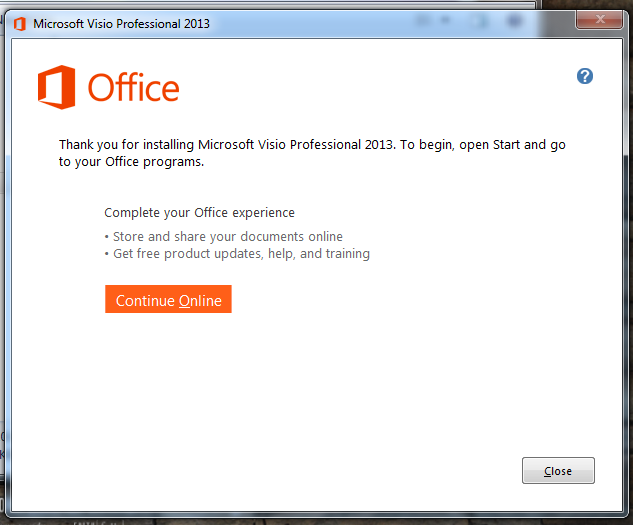
- Installation Complete: Once finished, a message will appear stating, “You’re all set! Visio is installed now.” Click “Close.”
Activating Your Visio Application
After installation, Visio needs to be activated to unlock its full functionality.
- Launch Visio: Open Visio for the first time. You can find it in your Start Menu or by searching for “Visio.”
- Sign In or Enter Product Key:
- Microsoft Account Activation: If your Visio license is tied to a Microsoft account (especially for Microsoft 365 subscriptions or modern retail purchases), Visio will likely prompt you to sign in with that account. Enter your credentials, and Visio will activate automatically.
- Product Key Activation: If you have a traditional product key, Visio will ask you to enter it. Type the 25-character key carefully into the provided fields.
- Follow Prompts: Follow any on-screen prompts to complete the activation. Once successfully activated, Visio will be fully functional.
Troubleshooting Common Installation Issues
Even with careful preparation, issues can sometimes arise. Here are solutions to common problems that can hinder your Visio installation. Addressing these promptly contributes to maintaining Productivity and avoiding costly downtime.
Addressing Download and Setup Errors
- “Can’t install 32-bit Office because you have 64-bit Office products already installed” (or vice-versa): This is a very common conflict. Microsoft requires all Office products (including Visio) to be either all 32-bit or all 64-bit on a single system. You’ll need to uninstall the conflicting version and reinstall the correct bit-version for all your Office products. This aligns with good Tech practice for software compatibility.
- Corrupted Download: If the setup file seems corrupted or the installation fails repeatedly early on, delete the downloaded file and try downloading it again, ideally on a stable network connection.
- Insufficient Disk Space: The installer will typically warn you, but if it fails mid-installation, check your hard drive space. Free up space by deleting unnecessary files or uninstalling unused programs.
- Network Issues/Firewall: Ensure your internet connection is stable. Temporarily disable your firewall or antivirus to see if they are blocking the download or installation. Remember to re-enable them afterward for Digital Security.
- “Something went wrong” / General Installation Failure:
- Restart your computer and try again.
- Run the setup file as an administrator (right-click the setup file and choose “Run as administrator”).
- Use the Microsoft Support and Recovery Assistant. This free tool from Microsoft can diagnose and fix many Office and Visio installation issues. Search for it on the Microsoft website.
Resolving Activation Problems
- “Product Key Not Valid”: Double-check the product key for typos. Ensure you’re using the correct key for the Visio version you installed. Sometimes, a key for Visio 2019 won’t work for Visio 2021, for example.
- “This product has already been activated the maximum number of times”: If you’ve previously installed and activated Visio on another computer and your license has a limited number of activations, you might need to deactivate it from the old machine (if possible via your Microsoft account) or contact Microsoft Support for assistance. This is a common Money aspect of software licensing.
- Internet Connection for Activation: Ensure your computer has an active internet connection during the activation process.
- Sign-in Issues: If activating via a Microsoft account, ensure you’re signing in with the correct account linked to your Visio license.
- Proxy Settings: If you are behind a corporate proxy, it might interfere with activation. Consult your IT department.
Post-Installation Checks and Updates
After successful installation and activation, it’s good practice to perform a few final checks.
- Check for Updates: Open Visio, go to
File > Account > Update Options > Update Now. Regularly updating Visio ensures you have the latest features, security patches, and bug fixes, which are crucial for long-term Tech stability and Digital Security. - Pin to Taskbar/Start Menu: For quick access and improved Productivity, pin the Visio icon to your taskbar or Start Menu.
- Run a Quick Test: Create a simple diagram to ensure all basic functionalities are working correctly.
Maximizing Your Visio Experience: Beyond Installation
Installing Visio is just the first step. To truly leverage its power, integrate it into your workflow and explore its full capabilities. This directly impacts your Productivity, enhances your Brand, and can lead to significant Money savings through efficiency.
Integrating Visio with Other Microsoft 365 Apps
Visio truly shines when integrated with the broader Microsoft 365 ecosystem.
- PowerPoint and Word: Embed Visio diagrams directly into your presentations and documents. This is invaluable for Brand consistency and professional communication. Instead of static images, you can often embed editable Visio objects, maintaining clarity and professionalism across your materials.
- Excel: Data-link your Visio diagrams to Excel spreadsheets. This means your flowcharts, organizational charts, or dashboards can automatically update as the underlying data changes in Excel. This is a massive Productivity booster for data-driven processes and ensures real-time accuracy. Imagine a sales pipeline flowchart that updates as your CRM data changes.
- Teams and SharePoint: Share and collaborate on Visio diagrams directly within Microsoft Teams or store them in SharePoint. This fosters real-time collaboration, essential for modern project management and team efficiency, tying into current Tech Trends in collaborative software.
- Power Automate: Use Visio to design your automated workflows, then implement them directly in Power Automate (formerly Microsoft Flow). This is a powerful synergy for process optimization, directly leading to Money savings through automation.
Leveraging Visio for Brand Storytelling and Efficiency
Visio’s visual nature makes it an excellent tool for communicating complex stories simply and effectively, bolstering your Brand image.
- Process Optimization: Use detailed process maps to identify inefficiencies, streamline operations, and implement lean methodologies. This directly impacts your bottom line by reducing waste and improving output.
- Organizational Clarity: Create clear organizational charts that define roles, responsibilities, and reporting structures. This internal clarity improves employee efficiency and understanding.
- Marketing and Sales Funnels: Visually map out your customer journeys, sales funnels, or marketing campaigns. This helps identify touchpoints, pain points, and opportunities for optimization, enhancing your Brand experience and driving revenue.
- Infrastructure Design: For IT professionals, Visio is indispensable for designing and documenting network infrastructure, data centers, and cloud architectures, ensuring robust and secure Tech operations.
Continuous Learning and Resource Utilization
The more you explore Visio, the more value you’ll derive.
- Explore Templates and Stencils: Visio comes with a vast library of pre-built templates and stencils. Don’t reinvent the wheel; utilize these to quickly create professional-looking diagrams.
- Microsoft Learn and Documentation: Microsoft offers extensive online documentation, tutorials, and courses through Microsoft Learn. Invest time in these resources to unlock advanced features.
- Community Forums: Engage with the Visio user community. These forums are a great place to ask questions, share tips, and discover new ways to use the application, fostering continuous Personal Branding and skill development.
- Custom Stencils: For highly specialized needs or to ensure consistent Corporate Identity, learn to create custom stencils and shapes.
Conclusion
Successfully installing the Microsoft Visio desktop app is the first step toward unlocking a world of visual communication and enhanced productivity. By understanding Visio’s diverse applications, preparing your system diligently, following the installation guide, and proactively troubleshooting, you can ensure a seamless setup.
More importantly, integrating Visio into your daily operations, leveraging its powerful features in conjunction with other Microsoft 365 applications, and committing to continuous learning will allow you to maximize your investment. Visio is not just a tool for drawing; it’s a strategic asset that can clarify complex Tech concepts, strengthen your Brand through professional communication, and ultimately contribute to better Money management and business efficiency. Embrace the power of visual thinking, and let Visio transform the way you work.
aViewFromTheCave is a participant in the Amazon Services LLC Associates Program, an affiliate advertising program designed to provide a means for sites to earn advertising fees by advertising and linking to Amazon.com. Amazon, the Amazon logo, AmazonSupply, and the AmazonSupply logo are trademarks of Amazon.com, Inc. or its affiliates. As an Amazon Associate we earn affiliate commissions from qualifying purchases.