
The landscape of Grand Theft Auto V (GTA V) modding has traditionally been dominated by automated tools, with OpenIV serving as the cornerstone for most installations. However, as the modding community evolves, many power users and enthusiasts are seeking ways to streamline their setups, reduce software bloat, and maintain granular control over their game files. Installing QounTV—a popular modification that enhances in-game media and UI realism—without the use of the OpenIV Package Installer (.oiv) is not only possible but often preferred for those who want to understand the architecture of their digital environment.
This guide delves into the technical nuances of manual script installation, focusing on the “Tech” niche of software management, file directory manipulation, and dependency resolution. By bypassing automated installers, you ensure a cleaner game directory and a more stable modding experience.
Understanding the Architecture of Manual Modding
To install QounTV without OpenIV, one must first understand how GTA V processes external scripts. Unlike RPF (Rage Package File) edits, which require OpenIV to inject data into the game’s core archives, QounTV is primarily a script-based modification. These mods interact with the game through a hook, which intercepts game engine calls and executes custom code.
Why Bypass OpenIV?
The decision to avoid OpenIV for script installations often stems from a desire for transparency. Automated .oiv installers act as “black boxes”; they move files and modify archives without showing the user exactly what is being changed. For users focused on digital security and software integrity, manual installation provides a clear audit trail. If the game crashes, a user who installed the mod manually knows exactly which files were added and where they are located, making the troubleshooting process significantly faster.
The Role of Script Hook V and Community Script Hook V .NET
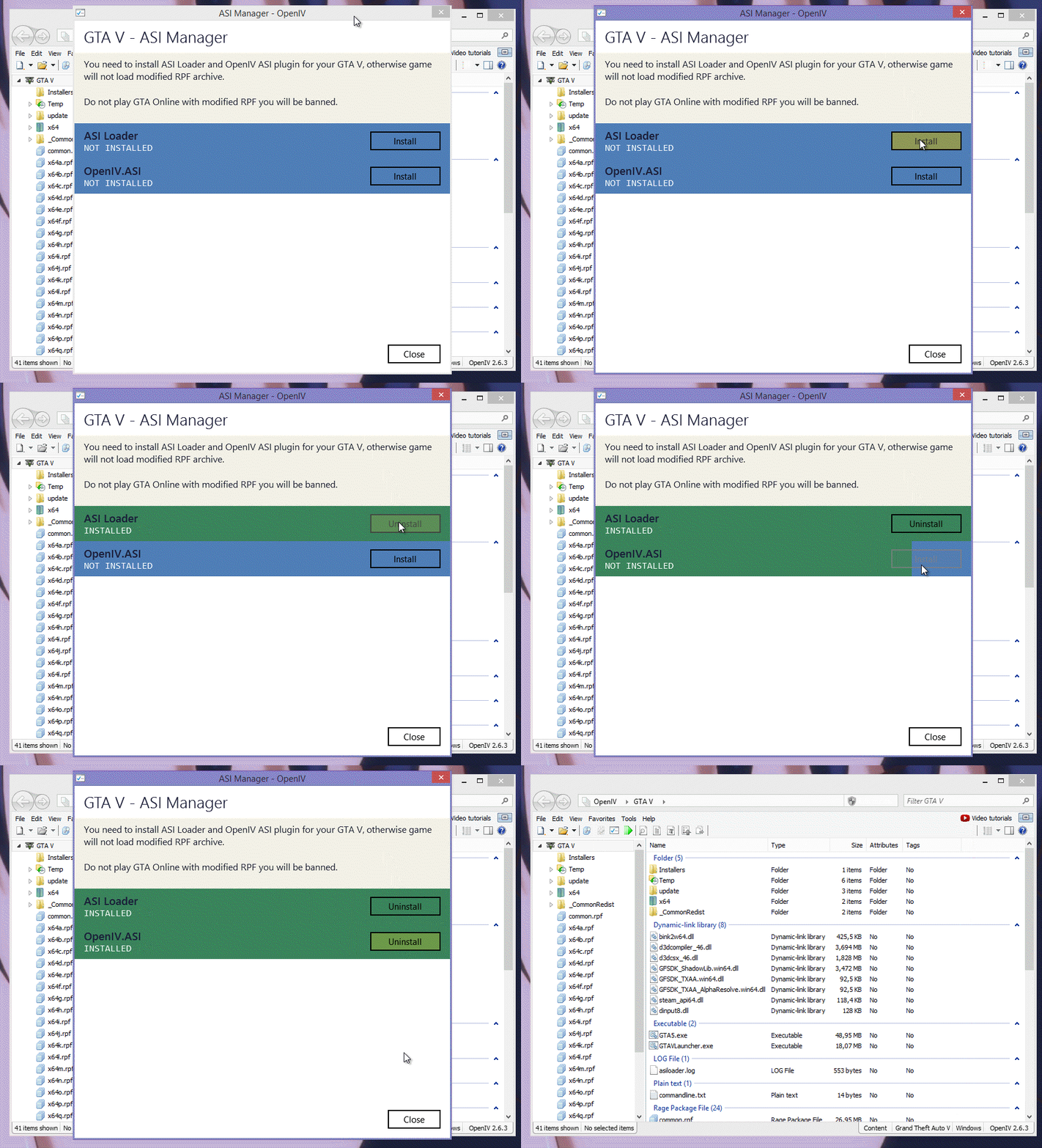
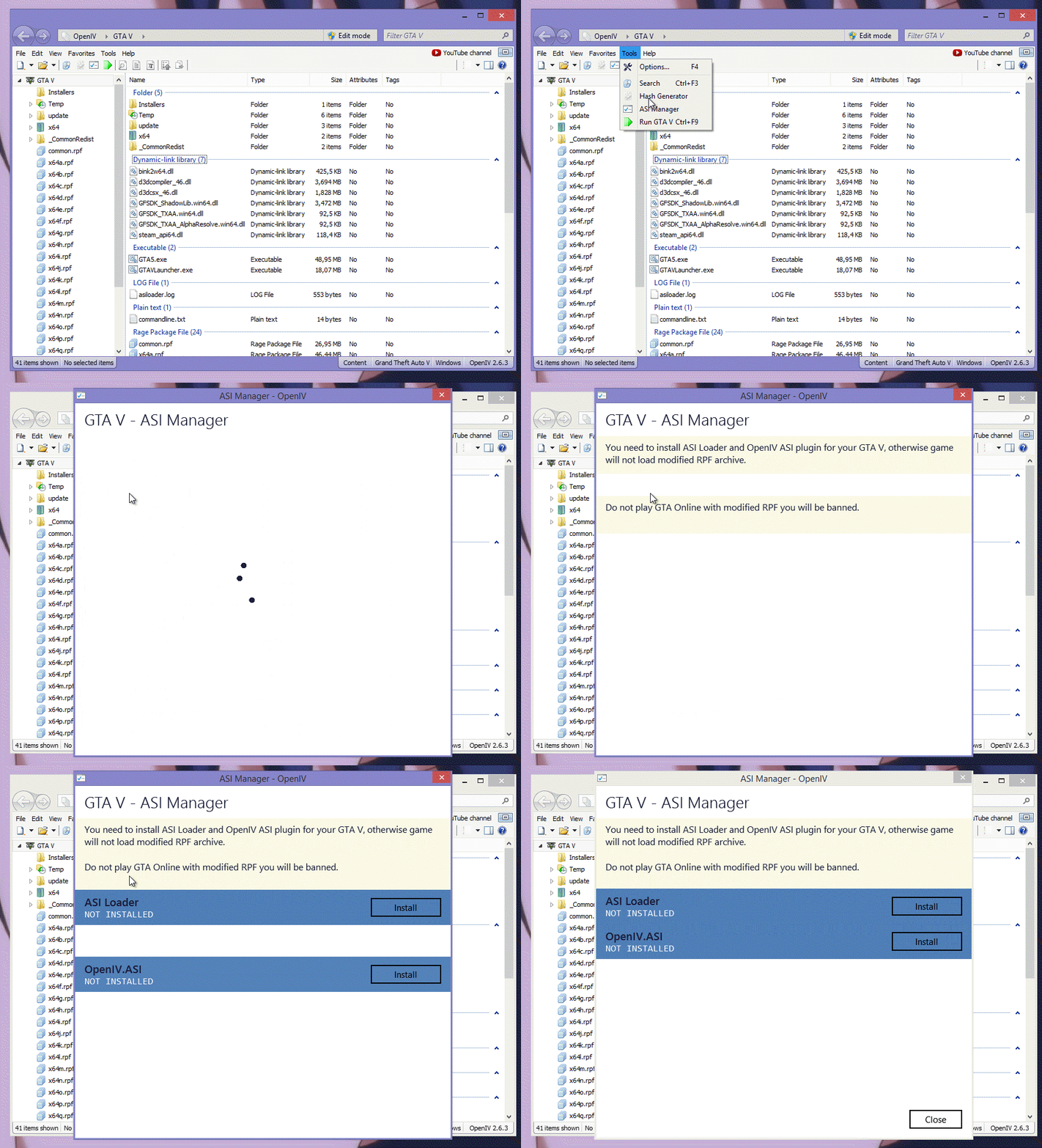
Before attempting to install QounTV, you must establish a technical foundation. Since you are not using OpenIV’s “ASI Loader,” you must manually ensure that your game directory is prepared to read external scripts. The two essential components are Script Hook V (by Alexander Blade) and the Community Script Hook V .NET.
Script Hook V allows the game to execute custom .asi plugins, while the .NET version acts as a bridge for scripts written in C# or VB.NET—which QounTV relies on. Without these, your manual file placement will be ignored by the game engine.
Preparing Your Game Directory for QounTV
Manual installation requires a disciplined approach to file management. Before moving any QounTV files, you must configure the root directory of your GTA V installation (usually found in SteamLibrarysteamappscommonGrand Theft Auto V or the Epic Games equivalent).
Creating and Organizing the ‘Scripts’ Folder
Most modern GTA V mods, including QounTV, do not belong in the root folder alongside the game’s .exe. Instead, they belong in a dedicated scripts folder. If this folder does not exist, you must create it manually. This folder acts as a sandbox for the .NET scripts, keeping your root directory clean and preventing the accidental deletion of vital game assets.
When you download the QounTV package, you will notice it contains several file types, typically including .dll files (the compiled code) and .ini files (the configuration settings). Organizing these within the scripts folder is the most critical step of the manual process.
Managing Dependency Libraries
A common technical hurdle in manual installations is the lack of prerequisite libraries. QounTV often utilizes specific UI frameworks, such as LemonUI or NativeUI, to render its menus and overlays. When using OpenIV, these are sometimes bundled and installed automatically. In a manual setup, you must verify that these .dll dependencies are present in your scripts folder. This level of manual oversight ensures that you are using the most up-to-date versions of these libraries, rather than the potentially outdated versions bundled in an old mod package.
Step-by-Step Manual Installation of QounTV
With the environment prepared, you can proceed to the actual file migration. This process involves moving the data from the compressed archive (usually a .zip or .rar) directly into your game’s file structure.
Extracting and Placing the Core Files
- Locate the Downloaded Archive: Open the QounTV folder you downloaded. You will likely see a folder named
scriptsor a collection of files includingQounTV.dlland aQounTVfolder containing assets. - The Drag-and-Drop Method: Copy the
QounTV.dlland the accompanying configuration files. Navigate to your GTA V root directory and enter thescriptsfolder you created earlier. - Path Verification: Ensure the path looks like this:
Grand Theft Auto VscriptsQounTV.dll. If there is an associated folder for textures or media, it must remain in the same directory as the.dllto ensure the script can find its assets using relative file paths.
Fine-Tuning Settings via .ini Files
One of the advantages of manual installation is the immediate access to configuration. Before launching the game, locate the QounTV.ini file. This is a text-based configuration file that dictates everything from keybinds to UI positions. By opening this file in a text editor (like Notepad++ or VS Code), you can manually set your preferences. This avoids the common “mod conflict” issue where two different mods try to use the same activation key (e.g., F5 or Insert).
Validating File Permissions
In some Windows environments, manually moved files may be “blocked” by the operating system for security reasons. To ensure QounTV runs correctly, right-click the QounTV.dll, select “Properties,” and check if there is an “Unblock” button at the bottom of the General tab. This technical step is often overlooked but is a frequent cause of mods failing to load in a manual setup.
Troubleshooting and Performance Optimization
Once the files are in place, the technical challenge shifts to stability and performance. Without OpenIV to manage the load order or check for version mismatches, the user must act as the system administrator for their game.
Resolving Common Script Crashes
If the game launches but QounTV does not appear, the first place to look is the ScriptHookVDotNet.log file located in your root directory. This log is a diagnostic goldmine. It will tell you specifically if a file is missing, if there is a version mismatch with your .NET Framework, or if QounTV failed to initialize due to a conflicting mod. Understanding how to read these logs is a vital skill in the “Tech” side of modding, moving the user from a passive consumer to an active troubleshooter.
Ensuring Mod Compatibility and Resource Management
Manual modding requires an awareness of system resources. Every script added to the scripts folder consumes a small amount of CPU cycle time and memory. Because QounTV handles media overlays, it can be more resource-intensive than simple gameplay tweaks. Ensure that your “Heap Adjuster” and “Packfile Limit Adjuster” are installed and configured manually. These are .asi plugins that expand the game’s memory limits, preventing crashes when the game attempts to load the high-quality textures associated with QounTV’s interface.
The Future of External Script Management in Gaming
The shift toward manual installation methods like the one described for QounTV reflects a broader trend in the tech world: the move toward modularity and transparency. While tools like OpenIV provide convenience, the technical knowledge gained from manual file management is invaluable.
As game engines become more complex, the ability to manually inject and manage code will remain a key skill for digital hobbyists. By mastering the installation of QounTV without the crutch of an automated installer, you aren’t just adding a feature to a game; you are developing a deeper understanding of how modern software interacts with legacy file structures. This technical proficiency ensures that no matter how the modding tools change in the future, your ability to customize and optimize your digital experience remains intact.
In conclusion, the manual installation of QounTV is a straightforward process of directory management and dependency verification. By focusing on the scripts folder, managing .dll libraries, and utilizing log files for troubleshooting, you can achieve a stable, high-performance modded environment that is entirely under your control. This approach represents the pinnacle of the “Tech” mindset—prioritizing understanding and precision over ease of use.