
In the dynamic world of technology, particularly within the vast and versatile landscape of Linux, understanding how to manage software packages is a fundamental skill. One of the most prevalent package formats you’ll encounter on many Linux distributions, especially those derived from Red Hat like Fedora, CentOS, and Rocky Linux, is the RPM (Red Hat Package Manager). While package managers like dnf or yum often handle installations seamlessly, there are numerous scenarios where direct RPM installation becomes necessary, whether you’re dealing with custom software, older packages, or specific troubleshooting situations. This comprehensive guide will walk you through the essential steps, considerations, and best practices for installing RPM files in Linux, catering to both novice users and seasoned IT professionals.
Our exploration will delve into the core concepts of RPM, the command-line tools you’ll employ, potential challenges, and how this knowledge fits within the broader spectrum of tech skills, personal branding, and even financial implications in the tech industry.
Understanding RPM: The Foundation of Software Management
Before we dive into the practicalities of installation, it’s crucial to grasp what an RPM file is and why it’s used. RPM is not just a file extension; it’s a robust package management system that simplifies the process of installing, updating, querying, and removing software on Linux systems.
What is an RPM File?
An RPM file is essentially an archive containing all the necessary components of a software application: the executable binaries, libraries, configuration files, documentation, and metadata. This metadata is vital; it includes information like the package name, version, architecture, dependencies (other software packages required for this one to function), and post-installation scripts.
The Advantages of RPM
The RPM system offers several key advantages:
- Dependency Management: RPM is designed to handle dependencies automatically. When you install an RPM, the system checks if all required dependencies are met. If not, it will typically prompt you to install them or, in more advanced scenarios, can attempt to resolve them from configured repositories.
- Atomic Upgrades and Rollbacks: RPM supports atomic operations, meaning an installation or upgrade is either fully successful or entirely fails, preventing your system from being left in an unstable state. This also facilitates rollbacks to previous versions if an update causes issues.
- Consistency and Standardization: By using a standardized format, RPM ensures a consistent way of packaging and distributing software across various Red Hat-based distributions.
- Ease of Administration: Package managers built around RPM, like
yumanddnf, provide user-friendly interfaces for managing software, making system administration more efficient.
When Direct RPM Installation is Necessary
While using a package manager like dnf is the preferred method for installing software from official repositories, there are common scenarios where you’ll need to install an RPM file directly:
- Third-Party Software: Many software vendors provide their applications as downloadable RPM files, especially for niche or enterprise solutions not yet included in standard distribution repositories.
- Custom Builds: If you’ve compiled software from source code or created a custom package for internal use, you’ll likely generate an RPM file.
- Specific Versions: Sometimes, you might need an older or a bleeding-edge version of software that isn’t readily available in your distribution’s repositories.
- Troubleshooting: In rare cases, manual RPM installation might be part of a troubleshooting process for broken packages or missing components.
Installing RPM Files: The Command-Line Essentials
The primary tool for interacting with RPM files is the rpm command itself. While graphical package managers exist, mastering the command line offers greater flexibility, control, and is indispensable for server environments or when automation is required.
The rpm Command: Your Primary Tool
The rpm command is a powerful utility with numerous options. We’ll focus on the most common ones for installation.
Installing an RPM Package
The most straightforward way to install an RPM file is using the -i (install) option. However, it’s highly recommended to use the -U (upgrade) or -F (freshen) options, as they are more versatile and can handle cases where the package might already be installed.
-
rpm -ivh <package_name.rpm>-i: Installs the package.-v: Verbose output, showing you what the command is doing.-h: Prints a hash mark (#) for each 100 blocks of files transferred, giving you a visual progress indicator.
Example:
sudo rpm -ivh my_application-1.2.3-1.x86_64.rpm -
rpm -Uvh <package_name.rpm>-U: Upgrades an existing package to the new version. If the package is not installed, it will install it. This is generally the preferred method over-ibecause it handles both installation and upgrades gracefully.
Example:
sudo rpm -Uvh my_application-1.2.3-1.x86_64.rpm -
rpm -Fvh <package_name.rpm>-F: Freshens the package. This option is similar to-Ubut will only install the package if an older version of it is already installed. If the package is not installed at all, it will do nothing.
Example:
sudo rpm -Fvh my_application-1.2.3-1.x86_64.rpm
Important Considerations for Installation:
- Root Privileges: Installing system-wide packages requires root privileges. Therefore, you’ll typically need to preface the
rpmcommand withsudo. - File Path: Ensure you are in the directory where the RPM file is located, or provide the full path to the file.
- Dependencies: The basic
rpmcommand does not automatically resolve dependencies. If the RPM you’re trying to install requires other packages that are not present on your system, the installation will fail, and you’ll see an error message listing the missing dependencies.
Handling Dependencies
Dependency management is where higher-level package managers like dnf and yum truly shine. When you install an RPM directly with rpm, you are responsible for ensuring all its dependencies are met.
Resolving Dependencies Manually
If rpm -ivh or rpm -Uvh fails due to missing dependencies, you’ll receive an error message like:
error: Failed dependencies:
    libexample.so.1 is needed by my_application-1.2.3-1.x86_64
    another_package >= 2.0 is needed by my_application-1.2.3-1.x86_64
To resolve this, you have a few options:
- Use a Package Manager with RPM Support (Recommended): The most efficient way to handle dependencies is to leverage a tool that can fetch and install them from configured repositories.
dnf install <package_name.rpm>(for Fedora, CentOS Stream, RHEL 8+)yum localinstall <package_name.rpm>(for CentOS 7, RHEL 7)
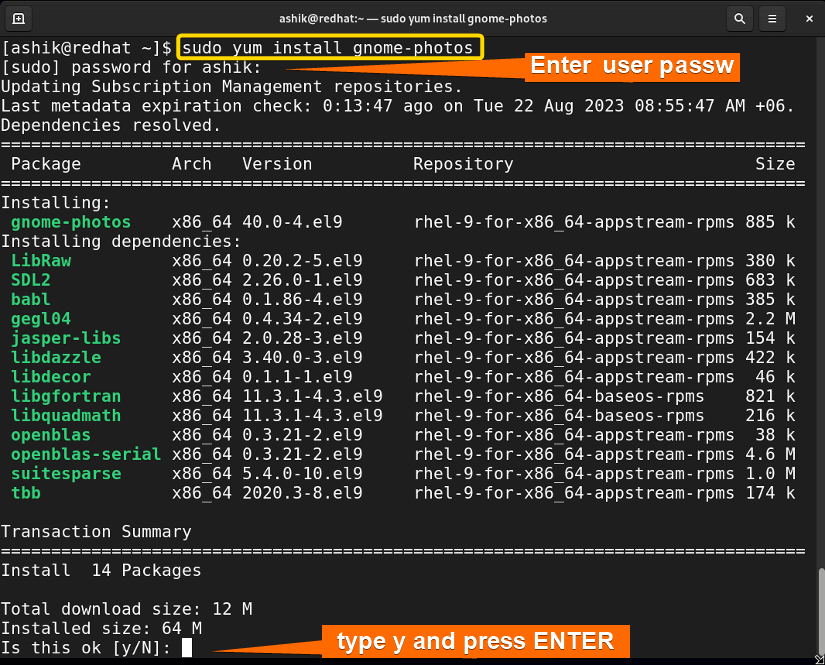
These commands instruct the package manager to install the specified RPM file *and* automatically resolve and install any missing dependencies from the enabled repositories.

**Example:**
```bash
sudo dnf install my_application-1.2.3-1.x86_64.rpm
# or
sudo yum localinstall my_application-1.2.3-1.x86_64.rpm
```
- Manual Dependency Installation: If you cannot use
dnforyum(e.g., in a restricted environment), you would need to:- Identify each missing dependency (e.g.,
libexample.so.1,another_package). - Find the corresponding RPM files for those dependencies (usually from the same distribution or a compatible one).
- Install the dependency RPMs first, using
rpm -ivh <dependency_package.rpm>. - Repeat until all dependencies are satisfied before installing your target RPM. This can be a tedious and error-prone process.
- Identify each missing dependency (e.g.,
Verifying and Querying Installed RPM Packages
Once an RPM is installed, you can use rpm to query its status, list installed files, and check for integrity.
-
rpm -q <package_name>: Queries the installed version of a package.
Example:rpm -q my_applicationOutput:
my_application-1.2.3-1.x86_64 -
rpm -qi <package_name>: Displays detailed information about an installed package (version, description, installation date, etc.).
Example:rpm -qi my_application -
rpm -ql <package_name>: Lists all the files installed by a package.
Example:rpm -ql my_application -
rpm -qf /path/to/file: Determines which package owns a specific file.
Example:
bash

rpm -qf /usr/bin/my_command
Uninstalling RPM Packages
Removing software installed via RPM is also straightforward using the rpm command.
-
rpm -e <package_name>: Erases (uninstalls) a package.
Example:sudo rpm -e my_applicationSimilar to installation, uninstallation might fail if other installed packages depend on the one you’re trying to remove.
Advanced RPM Operations and Troubleshooting
While basic installation is common, you might encounter more complex scenarios or issues.
Verifying RPM Package Integrity
Before installation, or if you suspect a downloaded RPM is corrupted, you can verify its integrity.
-
rpm -K <package_name.rpm>orrpm --checksig <package_name.rpm>: This command checks the digital signature and checksums of the RPM file. A valid signature ensures that the package hasn’t been tampered with and comes from a trusted source.Example:
rpm -K my_application-1.2.3-1.x86_64.rpmSuccessful output will indicate
(RSA dsa sha1) md5 OKor similar. If the signature is invalid, it will showBAD.
Reinstalling a Package
If a package is corrupted or you suspect its files are damaged, you can reinstall it.
rpm -Uvh --force <package_name.rpm>: The--forceoption can be used with-Uto overwrite existing files. Use this with extreme caution, as it can lead to system instability if not used correctly. It’s generally better to remove and then reinstall.
Common Installation Errors and Solutions
- “package is already installed”: Use
rpm -Uvhinstead ofrpm -ivh. If you specifically want to reinstall, userpm -Uvh --force(with caution). - Dependency errors: As discussed, use
dnf install <package.rpm>oryum localinstall <package.rpm>for automatic dependency resolution. If that fails, manually identify and install dependencies. - “cannot open package”: Ensure the file path is correct and you have read permissions for the file.
- Signature errors (
BAD): The RPM file may be corrupted or not from a trusted source. Re-download the file from a reputable location or check its checksum against the one provided by the vendor.
RPM in the Broader Context: Tech, Brand, and Money
Understanding RPM installation is more than just a technical task; it has implications that ripple across your professional life, branding, and even financial considerations in the tech industry.
Tech: Enhancing Your Skillset
Proficiency in package management, including direct RPM handling, is a cornerstone of effective Linux system administration.
- Deeper System Understanding: Mastering
rpmand its higher-level counterparts (dnf,yum) provides a more profound understanding of how software is structured and deployed on Linux systems. This knowledge is invaluable for troubleshooting, performance tuning, and security hardening. - Automation and Scripting: For IT professionals, the ability to automate software deployments using scripts that leverage
rpmcommands ordnf/yumis crucial. This is especially relevant in DevOps environments where infrastructure as code is paramount. - Software Development Pipeline: Developers who package their applications as RPMs need to understand the installation process to ensure their packages are well-formed and meet user expectations regarding dependencies and installation procedures.
- Exploring Diverse Software: Beyond official repositories, the Linux ecosystem is rich with specialized software available as RPMs. Being comfortable with their installation allows you to explore a wider array of tools for development, data analysis, and more.
Brand: Demonstrating Expertise and Reliability
In the competitive tech landscape, your technical skills are a significant part of your personal and corporate brand.
- Building a Reputation: For IT professionals and consultants, confidently handling software installations, including troubleshooting RPM-related issues, builds a reputation for reliability and expertise. Clients and employers value individuals who can solve complex technical problems efficiently.
- Technical Content Creation: Sharing your knowledge through tutorials, blog posts, or documentation about RPM installation can position you as an authority. This content acts as a powerful marketing tool for your personal brand, attracting opportunities and recognition.
- Corporate Identity and Trust: For software companies distributing their products as RPMs, providing well-packaged, easy-to-install applications is crucial for customer satisfaction and builds trust in their brand. A smooth installation experience reflects positively on the company’s attention to detail and product quality.
- Open Source Contributions: Contributing to open-source projects often involves packaging software. Understanding RPMs is essential for those looking to contribute to distributions like Fedora or RHEL and solidify their presence in the open-source community.
Money: Efficiency, Cost Savings, and Income Streams
The financial aspects of RPM management, while indirect, are tangible.
- Cost Savings through Efficiency: For businesses, efficient software deployment and management through tools like RPM and
dnf/yumtranslates directly into reduced IT operational costs. Less time spent troubleshooting installation issues means more time for productive tasks. - Side Hustles and Freelancing: Technical skills in Linux administration, including advanced package management, are in high demand for freelance and contract work. Offering services related to server setup, software deployment, and troubleshooting for RPM-based systems can be a lucrative side hustle.
- Specialized Software and Business Value: Many enterprise-grade or specialized software solutions are distributed as RPMs. Implementing and managing these can be critical for businesses to gain a competitive edge, increasing their revenue potential. The ability to integrate and maintain such software is a valuable business asset.
- Career Advancement: Demonstrating a mastery of essential system administration tasks, including package management, can lead to promotions and higher-paying roles in system administration, cloud engineering, and DevOps.
Conclusion
The ability to install an RPM in Linux is a fundamental skill that extends far beyond simply executing a command. It’s about understanding the underlying technology, efficiently managing software, and leveraging this knowledge to enhance your technical expertise, build a strong professional brand, and even contribute to your financial success. Whether you are deploying custom applications, managing servers in a production environment, or simply expanding your Linux toolkit, mastering RPM installation with tools like rpm, dnf, and yum will empower you to navigate the Linux landscape with confidence and efficiency. As you continue your journey in the ever-evolving world of technology, remember that a solid grasp of these core principles forms the bedrock for tackling more complex challenges and unlocking new opportunities.