
In an era of economic volatility and shifting job markets, the pursuit of financial security has evolved from a simple desire for a higher salary into a multifaceted strategy for wealth creation. Increasing your income is no longer just about working more hours; it is about working smarter, diversifying your revenue streams, and leveraging the modern financial landscape to ensure long-term stability. Whether you are looking to climb the corporate ladder, launch a profitable side venture, or build a portfolio of passive income, the path to financial growth requires a disciplined and strategic approach.
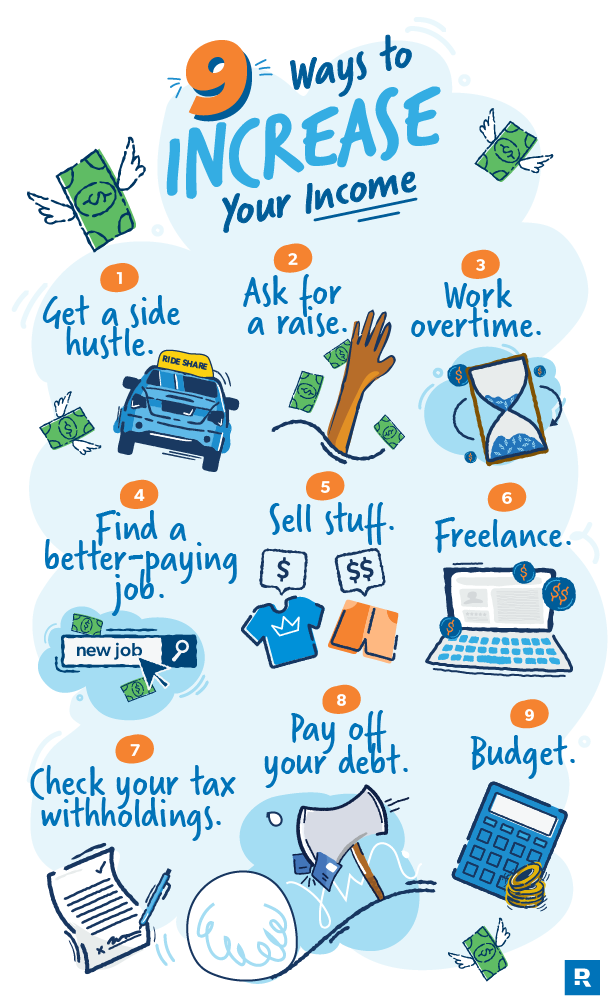
This guide explores the most effective methodologies for increasing your income, categorized into primary career growth, secondary revenue streams, and the power of investment.
1. Maximizing Your Primary Income Stream
For most individuals, their full-time career remains their largest financial asset. Before looking elsewhere, it is crucial to ensure that your primary source of income is performing at its peak potential. Increasing your “earned income” provides the necessary capital to fund other ventures.
Strategic Salary Negotiation
Many professionals leave thousands of dollars on the table simply because they do not ask for more. Salary negotiation is not just about a yearly performance review; it is about demonstrating realized value. To increase your income within your current role, you must document your contributions, quantify your impact on the company’s bottom line, and research market rates for your specific skillset. Approaching a negotiation with data-driven evidence makes it difficult for an employer to deny a raise.
Upskilling and Specialization
The job market rewards those with specialized knowledge. In a world where general skills are increasingly automated, “high-value skills”—such as data analysis, project management, or specialized technical certifications—can command a significant premium. By investing in your own human capital through continuing education and professional development, you position yourself for promotions or “job-hopping,” which is statistically one of the fastest ways to secure a 10% to 20% increase in annual salary.
Transitioning to High-Margin Industries
Not all industries are created equal when it comes to compensation. A project manager in a non-profit sector will likely earn significantly less than a project manager in finance or software development. If your goal is purely income growth, consider pivoting your existing skill set into a sector with higher profit margins and more aggressive compensation structures, such as technology, pharmaceuticals, or financial services.
2. Building Scalable Side Hustles in the Gig Economy
The rise of the digital economy has lowered the barrier to entry for secondary income streams. A side hustle is no longer just a way to pay the bills; it is a laboratory for entrepreneurship that can eventually outpace your primary salary.
Identifying High-Demand Freelance Opportunities
Freelancing allows you to trade your expertise for a higher hourly rate than your employer likely pays you. By identifying niches where demand exceeds supply—such as specialized copywriting, financial consulting, or legal research—you can build a client base that provides a consistent monthly influx of cash. The key to successful freelancing is moving away from “low-value” platforms and instead building a direct network of high-paying professional clients.
Productizing Your Knowledge
The most significant limitation of a traditional job or freelance work is that it relies on “trading time for money.” To truly increase your income, you must break this link. Productization involves taking your expertise and turning it into a digital asset, such as an online course, an e-book, or a subscription-based newsletter. Once these products are created, the cost of selling to the 100th customer is virtually zero, allowing for exponential income growth without a corresponding increase in labor.
Leveraging the Micro-Business Model
The “solopreneur” movement focuses on building lean, highly profitable businesses with minimal overhead. This could involve dropshipping, print-on-demand services, or specialized e-commerce stores. By focusing on a narrow niche and utilizing automated marketing tools, an individual can manage a business that generates significant monthly revenue while maintaining a full-time job.
3. Generating Passive Income Through Smart Investing
True wealth is built when your money begins to work for you. Passive income is the ultimate goal of any income-increase strategy, as it provides financial freedom and a safety net against job loss.

Dividend Growth Investing
Investing in the stock market is a classic method for wealth accumulation, but dividend growth investing focuses specifically on cash flow. By purchasing shares in established companies that pay out a portion of their earnings to shareholders, you create a recurring stream of income. Reinvesting these dividends creates a compounding effect, where your income grows exponentially over time without any active effort on your part.
Real Estate and REITs
Real estate remains one of the most reliable vehicles for increasing income. Traditional rental properties provide monthly cash flow and tax advantages, though they require significant capital and management. For those seeking a more hands-off approach, Real Estate Investment Trusts (REITs) allow you to invest in large-scale commercial or residential portfolios, receiving a share of the rental income as dividends.
High-Yield Savings and Fixed-Income Assets
In a higher-interest-rate environment, traditional “safe” assets have become viable income generators again. High-yield savings accounts (HYSA), Certificates of Deposit (CDs), and Treasury bonds offer a way to earn a respectable return on your emergency fund or short-term savings. While the returns may be lower than the stock market, the security and liquidity they provide are essential components of a balanced income strategy.
4. The Power of Modern Business Models
The internet has democratized access to global markets, allowing individuals to tap into revenue streams that were previously reserved for large corporations.
Affiliate Marketing and Content Monetization
If you have the ability to build an audience or a community around a specific interest, you can monetize that attention through affiliate marketing. By recommending products or services and earning a commission on sales, you create a performance-based income stream. This is particularly effective when integrated into a blog, a YouTube channel, or a podcast, where content can continue to generate income years after it was originally published.
Membership and Subscription Services
Predictable income is the holy grail of personal finance. Moving from “one-off” sales to a subscription model ensures a steady flow of cash every month. Whether it is a paid community, a “Software as a Service” (SaaS) tool, or a premium content tier, the subscription model allows for better financial planning and higher valuation for your business ventures.
Strategic Asset Flipping
Flipping isn’t just for real estate. In the digital age, people flip domain names, established websites, and even luxury goods. By identifying undervalued assets, improving them, and selling them for a profit, you can generate large “lumps” of income that can be reinvested into more passive streams.
5. The Financial Discipline of Income Retention
Increasing your income is only half of the equation; the other half is keeping it. Without proper financial management, “lifestyle creep” often consumes any gains in earnings, leaving you in the same financial position despite a higher salary.
Tax Optimization Strategies
As your income increases, so does your tax liability. To maximize your “take-home” pay, you must be proactive about tax planning. This includes contributing to tax-advantaged accounts (like 401ks, IRAs, or HSAs), understanding deductible business expenses for your side hustles, and utilizing capital gains strategies to minimize the tax bite on your investments.
The Philosophy of Reinvestment
The most successful wealth builders view their income as “seed corn.” Instead of spending a raise on a new car or a larger home, they reinvest a significant portion of that new income back into their businesses or investment portfolios. This creates a feedback loop where your increased income generates more assets, which in turn generate even more income.
Building a “Margin of Safety”
As you diversify your income, it is essential to maintain an emergency fund that covers 6–12 months of expenses. This “margin of safety” allows you to take calculated risks—such as leaving a stable job to start a business or investing in a new asset class—without the fear of financial ruin.
Conclusion
Increasing your income is a marathon, not a sprint. It requires a combination of aggressive career growth, the courage to start new ventures, and the discipline to invest the proceeds wisely. By moving away from a single-source income mindset and embracing a diversified, strategic approach, you can build a financial foundation that is not only robust but also capable of exponential growth. The tools and opportunities for wealth creation are more accessible today than ever before; the only requirement is a commitment to continuous learning and consistent execution.
aViewFromTheCave is a participant in the Amazon Services LLC Associates Program, an affiliate advertising program designed to provide a means for sites to earn advertising fees by advertising and linking to Amazon.com. Amazon, the Amazon logo, AmazonSupply, and the AmazonSupply logo are trademarks of Amazon.com, Inc. or its affiliates. As an Amazon Associate we earn affiliate commissions from qualifying purchases.