
Car insurance is often viewed as a static, unavoidable monthly expense—a “fixed cost” in the family budget that offers little room for negotiation. However, from a personal finance perspective, insurance premiums are one of the most flexible high-ticket items in your portfolio. Understanding how to lower your car insurance is not just about finding a cheaper rate; it is about risk management, capital allocation, and ensuring that you are not overpaying for protection that doesn’t align with your current financial reality.
In the current economic climate, where inflationary pressures affect everything from repair costs to medical bills, insurance providers are adjusting their actuarial models. To counter these rising costs, consumers must take a proactive approach to managing their policies. By treating car insurance as a financial product rather than a passive utility, you can unlock significant annual savings that can be redirected toward investments, debt repayment, or high-yield savings accounts.

1. Auditing Your Policy for Optimal Risk Allocation
The first step in reducing your insurance burden is a comprehensive audit of your current coverage. Many drivers carry “legacy” coverage—policies established years ago that no longer reflect the actual value of the vehicle or the driver’s financial status.
Adjusting Deductibles to Balance Liquidity and Premiums
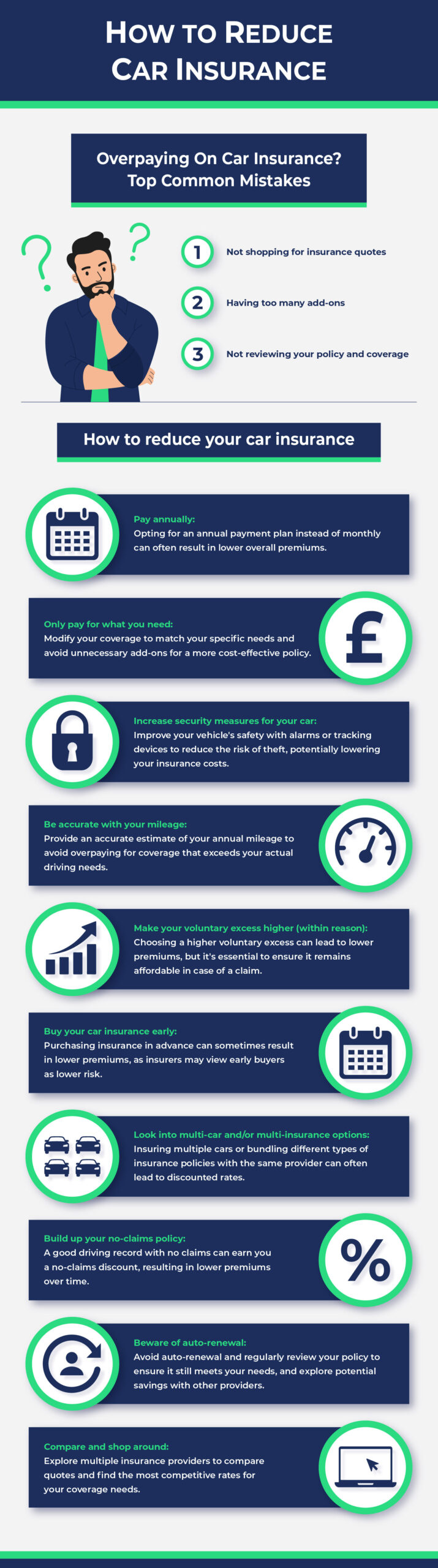
One of the most immediate ways to lower a premium is to increase the deductible. In the world of personal finance, a deductible represents your “self-insured” portion of a loss. If you have a robust emergency fund, carrying a low $250 or $500 deductible is often an inefficient use of capital.
By raising your deductible to $1,000 or $2,000, you can decrease your comprehensive and collision premiums by as much as 15% to 30%. The logic is simple: if you have the liquidity to cover a $1,000 expense out of pocket, paying an extra $400 a year in premiums just to keep your deductible low is a poor return on investment. You are essentially betting against yourself.
Evaluating the Necessity of Collision and Comprehensive Coverage
For those driving older vehicles, there comes a point of diminishing returns where the cost of insurance outweighs the potential payout. Financial experts often suggest the “10% rule”: if the annual cost of collision and comprehensive coverage exceeds 10% of the vehicle’s total book value, it may be time to drop those components.
Insurance companies will only pay out up to the Actual Cash Value (ACV) of the car minus the deductible. If your vehicle is worth $4,000 and your annual premium for physical damage is $600 with a $1,000 deductible, your maximum potential recovery in a total loss is only $3,000. In this scenario, you are paying a high premium for a relatively small net benefit. Redirecting that $600 into a dedicated car-replacement fund is often the smarter financial move.
2. Leveraging Financial Profiles and Credit-Based Insurance Scores
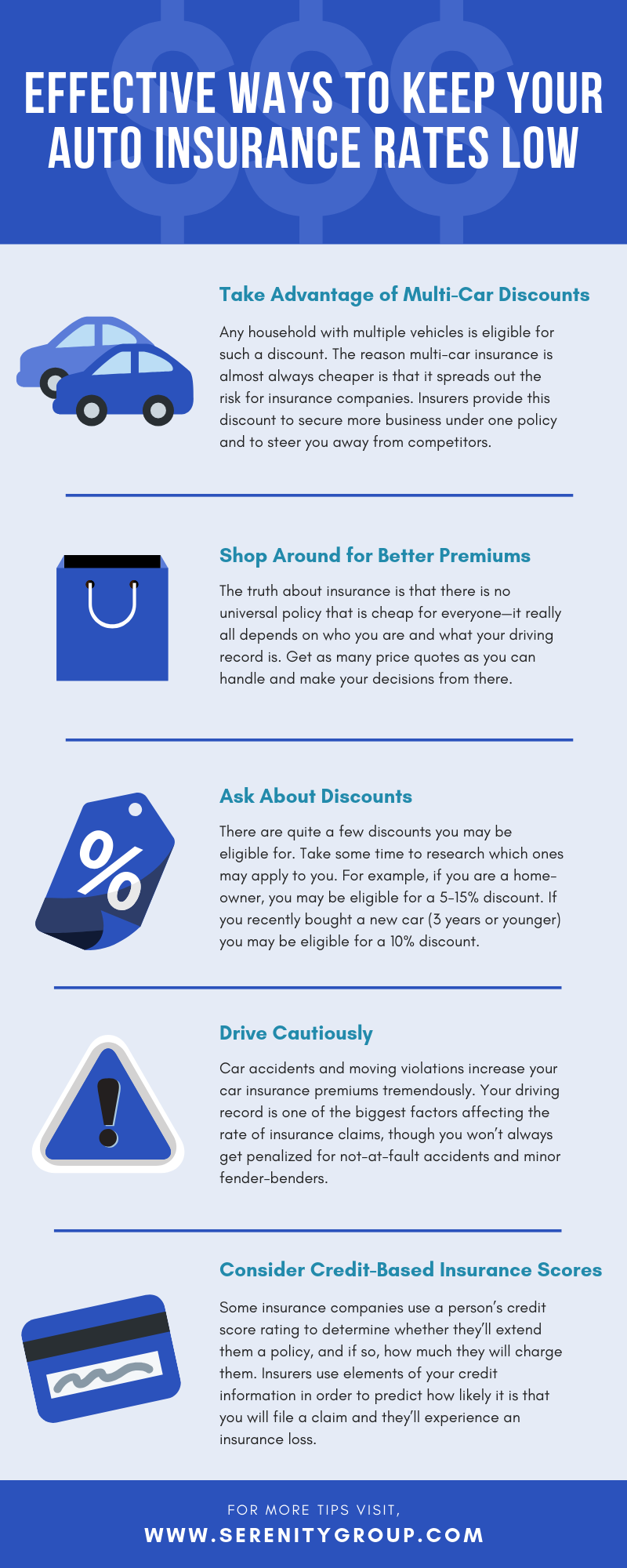
A common misconception is that car insurance rates are determined solely by your driving record. In reality, your broader financial profile—specifically your credit-based insurance score—plays a massive role in determining your premium in most states.
The Correlation Between Credit Health and Risk
Actuarial data consistently shows a correlation between credit management and insurance risk. Insurers have found that individuals who manage their finances responsibly are statistically less likely to file claims. Therefore, improving your credit score is one of the most effective long-term strategies for lowering insurance costs.
To optimize this, ensure that your credit utilization ratio remains below 30% and that you have a clean history of on-time payments. If you have recently made significant improvements to your credit score, do not wait for your policy renewal. Contact your agent and request a mid-term re-rate. A jump from a “fair” to an “excellent” credit tier can result in hundreds of dollars in annual savings.
Utilizing Telematics and Usage-Based Insurance (UBI)
From a wealth-management perspective, you should only pay for what you use. Traditional insurance models use broad demographic averages to set rates. Usage-Based Insurance (UBI) shifts this toward a more personalized, “pay-per-mile” or “pay-how-you-drive” model.
If you are a low-mileage driver—perhaps due to remote work or living in an urban center—transitioning to a UBI policy can slash premiums. Programs that track braking, acceleration, and time of day allow the insurer to price risk more accurately. For a safe, infrequent driver, this moves car insurance from a high fixed cost to a lower variable cost, directly benefiting your monthly cash flow.
3. Maximizing Institutional and Behavioral Discounts
Insurance companies offer a plethora of discounts that often go unclaimed because the policyholder fails to notify the company of changes in their life or professional status.
Strategic Bundling and Multi-Line Discounts
The “bundling” of home, auto, and umbrella insurance is a foundational principle of personal finance optimization. Consolidating your policies with a single carrier typically triggers a multi-line discount of 10% to 25% across all policies.
Beyond the immediate discount, bundling simplifies your financial life by centralizing your risk management. However, it is important to perform a “blind” comparison every two years. Sometimes, even with a bundle discount, the total cost of two separate policies from different specialized providers may be lower than a single bundled price. Always run the math on the total aggregate cost rather than the individual discount percentages.
Professional, Academic, and Affinity Group Incentives
Many insurers have partnerships with professional organizations, alumni associations, and large employers. These “affinity discounts” are often substantial because the insurer views members of certain professions (such as engineers, educators, or CPAs) as lower-risk profiles.
Furthermore, if you have a student on your policy, ensuring they maintain a “B” average or higher can trigger “Good Student” discounts. In the context of a family budget, these behavioral incentives turn academic success into a tangible financial asset, reducing the high cost of insuring teenage drivers.
4. Market Navigation and the Importance of Comparison Shopping
The insurance market is not static. Rates fluctuate based on a company’s recent claims experience, their current appetite for risk, and their marketing goals. Loyalty to an insurance brand can actually be a financial liability—a phenomenon known as “price optimization.”
Overcoming the “Loyalty Tax”
Price optimization is a practice where some insurers use data analytics to determine which customers are least likely to shop around. If the data suggests you are loyal and unlikely to switch, the company may incrementally raise your rates even if your risk profile hasn’t changed.
To combat this, the “Three-Year Rule” is recommended: every three years, or after major life events (buying a home, getting married, or a significant credit score change), you should obtain at least three quotes from competing carriers. Using an independent insurance agent can be particularly effective here, as they can scan multiple “A-rated” carriers simultaneously to find the best price-to-coverage ratio.
Timing and Strategic Switching
When switching carriers to save money, timing is key. Most insurers offer a “continuous insurance” discount or an “early signing” discount if you secure a new policy 7 to 14 days before your current one expires. Waiting until the last minute can signal desperation or disorganization to an insurer’s algorithm, potentially leading to higher quoted rates.
Additionally, always pay your premium in full (annually or semi-annually) if your liquidity allows. Most carriers charge a convenience fee for monthly installments, and many offer a 5% to 10% discount for “Paid in Full” status. This is essentially a guaranteed 10% return on your money—far better than what you would earn keeping that premium amount in a standard checking account.
Conclusion: Insurance as a Variable in the Wealth Equation
Lowering your car insurance is a multifaceted financial endeavor that requires more than just a cursory search for “cheap rates.” It involves a deep understanding of your own risk tolerance, a commitment to maintaining a strong financial profile, and the discipline to shop the market regularly.
By strategically adjusting deductibles, leveraging your credit health, maximizing professional discounts, and avoiding the “loyalty tax,” you transform car insurance from a burdensome expense into an optimized component of your financial plan. Every dollar saved on premiums is a dollar that can be put to work in your investment portfolio, proving that in the world of personal finance, even the most “fixed” costs are subject to the power of informed decision-making. In the long run, the cumulative effect of these savings can amount to tens of thousands of dollars over a driving lifetime, significantly impacting your path to financial independence.
aViewFromTheCave is a participant in the Amazon Services LLC Associates Program, an affiliate advertising program designed to provide a means for sites to earn advertising fees by advertising and linking to Amazon.com. Amazon, the Amazon logo, AmazonSupply, and the AmazonSupply logo are trademarks of Amazon.com, Inc. or its affiliates. As an Amazon Associate we earn affiliate commissions from qualifying purchases.