
In the realm of finance, percentages are more than just mathematical expressions; they are the fundamental language of value, growth, and risk. Whether you are a retail investor tracking the performance of your portfolio, a small business owner calculating profit margins, or a consumer trying to understand the impact of interest rates on a mortgage, knowing “how to get a percentage” is a non-negotiable skill for financial literacy.
Understanding percentages allows you to strip away the noise of raw numbers and see the underlying health of an investment or business. A $500 gain might sound impressive, but its significance changes entirely depending on whether it was generated from a $1,000 investment (50%) or a $100,000 investment (0.5%). This article explores the critical applications of percentage calculations within the “Money” niche, providing you with the tools to navigate personal finance, investing, and business operations with precision.

1. The Core Formulas of Financial Performance
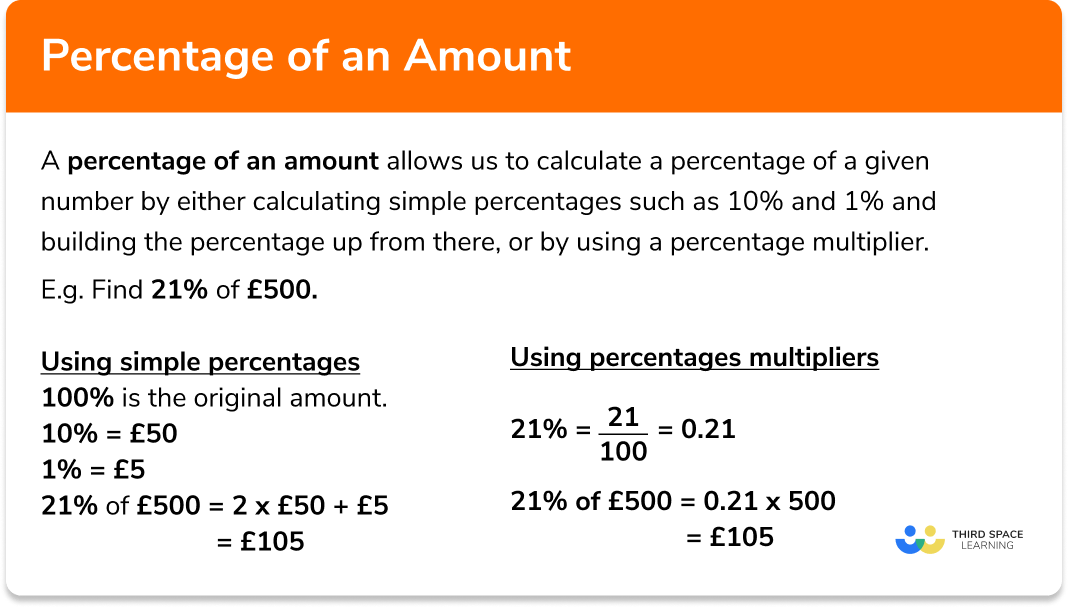
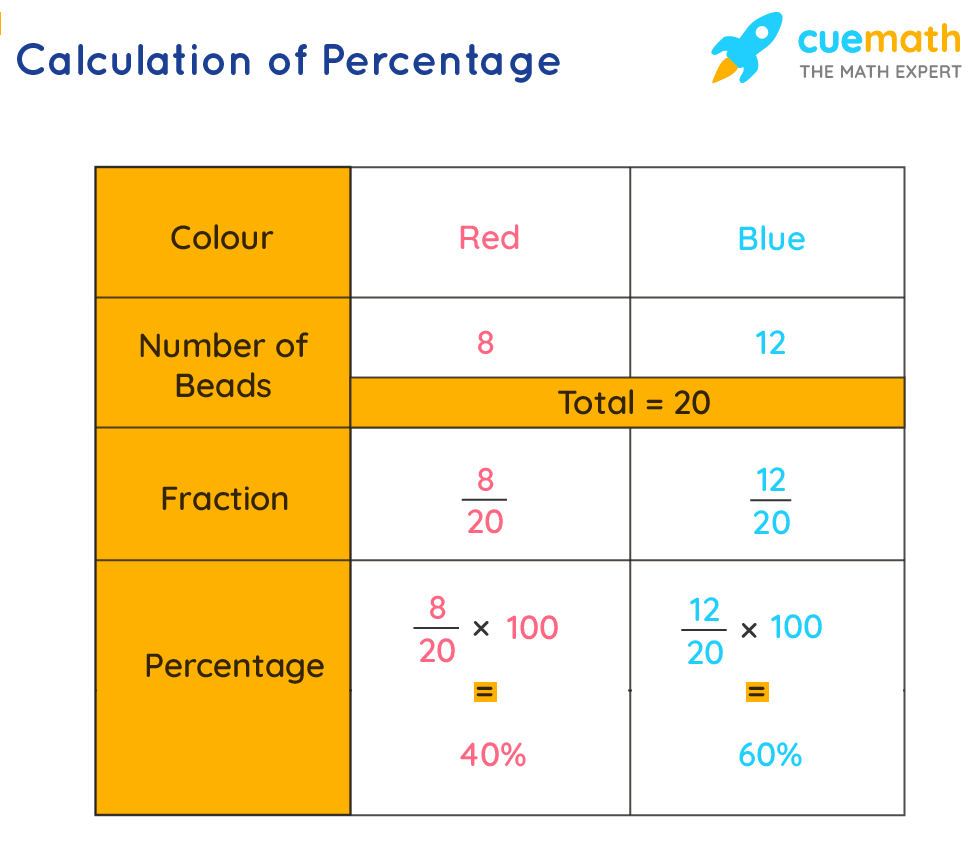
At its simplest level, a percentage represents a fraction of 100. In finance, we use this to measure efficiency and growth. Before moving into complex strategies, one must master the basic formulas that drive financial decision-making.
Calculating Basic Return on Investment (ROI)
The most common question in finance is: “How much did I make relative to what I spent?” To find this percentage, you use the ROI formula. Subtract the initial cost of the investment from its current value to find the net profit. Divide that profit by the original cost and multiply by 100.
For example, if you purchased a stock for $1,200 and sold it for $1,500, your profit is $300. To get the percentage: ($300 / $1,200) x 100 = 25%. This 25% represents your return, allowing you to compare this investment’s performance against other assets, such as real estate or savings accounts.
Understanding Profit Margins: Gross vs. Net
For business owners and corporate investors, profit margins are the ultimate indicator of operational health.
- Gross Profit Margin: This is calculated by taking your Total Revenue, subtracting the Cost of Goods Sold (COGS), and dividing that result by the Total Revenue. It shows how efficiently a company produces its products.
- Net Profit Margin: This is the “bottom line” percentage. It takes all expenses into account—taxes, interest, and operating costs. A high net profit margin suggests a company has excellent control over its overhead.
The Percent Change Formula for Market Analysis
Market volatility is often measured in percentage points. To calculate the percentage increase or decrease of an asset over time, use the formula: [(New Value – Old Value) / Old Value] x 100. This is essential for tracking inflation, stock market dips, or the appreciation of property values over a decade.
2. Percentages in Debt Management and Credit
While percentages can represent growth in assets, they also represent the cost of borrowing. In the world of personal finance, failing to understand how a percentage is applied to debt can lead to long-term financial instability.
Decoding the APR (Annual Percentage Rate)
The APR is perhaps the most important percentage a consumer will ever encounter. Unlike a simple interest rate, the APR includes the interest rate plus any fees or additional costs associated with a loan. When you “get the percentage” of an APR, you are seeing the true cost of capital.
For instance, a credit card with a 22% APR compounds differently than a mortgage with a 7% APR. Because credit cards often compound interest daily, the “effective” annual rate can actually be higher than the stated nominal rate. Understanding this distinction is the difference between paying off debt quickly and falling into a debt spiral.
Credit Utilization Ratios
Your credit score—the gatekeeper of your financial life—is heavily influenced by a specific percentage: the credit utilization ratio. This is calculated by taking your total outstanding credit card balances and dividing them by your total credit limits.
Financial experts generally recommend keeping this percentage below 30%. If you have a $10,000 limit and carry a $3,000 balance, you are at exactly 30%. Learning how to manipulate this percentage by either paying down debt or requesting limit increases is a core strategy for improving your financial standing and securing lower interest rates in the future.
Debt-to-Income (DTI) Requirements
When applying for a mortgage, lenders look at your DTI ratio. To find this percentage, divide your total monthly debt payments by your gross monthly income. Most lenders look for a DTI of 43% or lower. If you know how to calculate this percentage yourself, you can determine how much house you can actually afford before ever stepping foot in a bank.
3. The Power of Compound Interest and Yield
In the context of wealth building, percentages work exponentially rather than linearly. This is the phenomenon of compound interest, which Albert Einstein famously called the “eighth wonder of the world.”
The Rule of 72: A Shortcut to Percentage Growth
A quick way to understand the impact of a percentage return on your money is the “Rule of 72.” By dividing 72 by your annual percentage rate of return, you can estimate how many years it will take for your initial investment to double.
- At a 6% return, your money doubles in 12 years (72 / 6).
- At a 10% return, your money doubles in 7.2 years (72 / 10).
This simple calculation highlights why even a 1% or 2% difference in investment fees or returns can result in hundreds of thousands of dollars in difference over a 30-year career.
Dividend Yield and Passive Income
For income-focused investors, the “Dividend Yield” is the percentage that matters most. It is calculated by dividing the annual dividends paid per share by the stock’s price per share. If a stock costs $100 and pays $5 in dividends annually, the yield is 5%. Comparing yields across different stocks or Real Estate Investment Trusts (REITs) allows investors to build a predictable stream of passive income.
Yield to Maturity (YTM) in Bonds
Bonds are often viewed as safer alternatives to stocks, but their percentage returns are more complex. The Yield to Maturity calculates the total return anticipated on a bond if it is held until it matures. This percentage accounts for the coupon interest payments as well as any profit or loss realized if the bond was purchased at a discount or premium to its par value.
4. Business Finance: Negotiating Equity and Commissions
Beyond personal savings and investments, percentages are the lifeblood of business negotiations. Whether you are a startup founder or a sales professional, your income is often tied to a “cut” or a “piece of the pie.”
Calculating Equity Dilution
When a startup raises capital, the founders must give up a percentage of ownership in exchange for funding. This is known as dilution. If a founder owns 100% of a company and sells 20% to an angel investor, they now own 80%. However, if the company later raises a “Series A” round and sells another 25%, the founder’s 80% is reduced further. Understanding how to calculate your “post-money” ownership percentage is vital for protecting your long-term wealth in a corporate environment.
Commission Structures and Incentives
In sales-driven industries, “getting a percentage” refers to the commission. This can be structured as a percentage of the gross sale or a percentage of the net profit.
- Revenue-based: 5% of a $100,000 sale equals $5,000.
- Profit-based: If that $100,000 sale had $80,000 in costs, a 20% commission on the $20,000 profit also equals $4,000.
Professionals must be able to calculate these variations to ensure their compensation agreements are fair and lucrative.
Tax Brackets and Effective Tax Rates
Finally, every earner must deal with the percentage taken by the government. The United States and many other countries use a progressive tax system. This means you don’t pay one flat percentage on all your income. Instead, different portions of your income are taxed at different percentage rates (brackets).
Your “Effective Tax Rate” is the actual percentage of your total income that goes to taxes after all deductions and credits are applied. By dividing your total tax bill by your total taxable income, you get the percentage that truly reflects your tax burden. Lowering this percentage through strategic financial planning (like contributing to a 401(k) or IRA) is one of the most effective ways to increase your net worth.
Conclusion: The Strategic Value of the Percentage
Mastering “how to get a percentage” is the first step toward moving from a passive participant in your financial life to an active strategist. Percentages provide a standardized way to measure success, compare opportunities, and identify risks. From the 1% saved on a mortgage interest rate to the 15% return on a diversified portfolio, these small numbers compound into the difference between financial struggle and generational wealth.
By applying these formulas—ROI, APR, DTI, and Yield—you gain the clarity needed to make informed decisions. In the world of money, those who understand the percentages are the ones who eventually own them.
aViewFromTheCave is a participant in the Amazon Services LLC Associates Program, an affiliate advertising program designed to provide a means for sites to earn advertising fees by advertising and linking to Amazon.com. Amazon, the Amazon logo, AmazonSupply, and the AmazonSupply logo are trademarks of Amazon.com, Inc. or its affiliates. As an Amazon Associate we earn affiliate commissions from qualifying purchases.