
For the modern traveler, airfare is often the largest single expenditure in a personal or business budget. However, viewing a flight ticket not merely as a purchase, but as a financial asset subject to market volatility, can change the way you approach your personal finances. To get a flight cheaper, one must stop thinking like a tourist and start thinking like a financial analyst. This involves understanding market arbitrage, leveraging financial instruments such as credit card rewards, and applying rigorous cost-benefit analyses to every booking.
The following guide explores the “Money” niche of travel, focusing on the financial strategies and tools necessary to minimize costs and maximize the return on your travel investment.
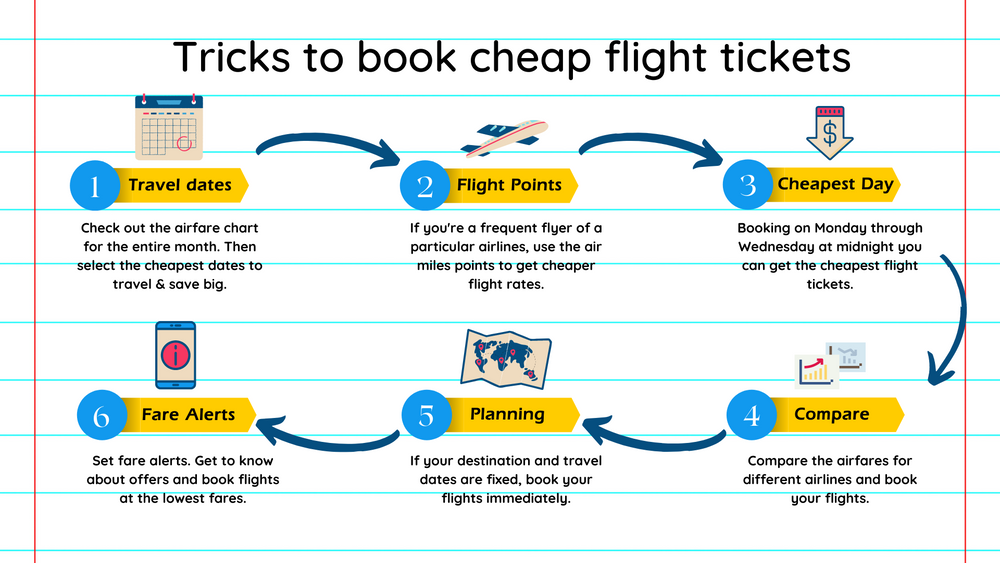
1. Leveraging Financial Instruments: Credit Cards and Reward Arbitrage
In the realm of personal finance, travel hacking is essentially a form of currency arbitrage. By converting everyday spending into high-value loyalty points, you are effectively creating a secondary currency that is often more valuable than the cash used to earn it.
The Power of Sign-up Bonuses and Points Transfers
The fastest way to reduce the cost of a flight to near-zero is through the strategic acquisition of credit card sign-up bonuses. From a financial perspective, these bonuses offer a massive Return on Investment (ROI) on your regular spending. For example, spending $4,000 over three months to earn 60,000–80,000 points can result in a flight value of $1,000 or more, representing a 25% “rebate” on your expenses.
The key to advanced financial optimization is “transferable points.” Programs like Chase Ultimate Rewards, American Express Membership Rewards, and Capital One Venture Miles allow you to move points to various airline partners. This allows you to find the “sweet spots” in award charts—instances where the point-to-dollar ratio is exceptionally high, such as booking a $5,000 business class seat for 60,000 points.
Strategic Spending and Cash-Back Optimization
Beyond the initial bonus, a disciplined approach to category spend can consistently lower your travel costs. Using a card that offers 3x to 5x points on dining, groceries, or travel creates a self-sustaining travel fund. If you treat these points as a dedicated “sinking fund” within your budget, you ensure that your travel costs are subsidized by your necessary living expenses. For the financially savvy, this is a way to hedge against inflation in the travel industry; while ticket prices may rise in dollar terms, the point requirements often remain more stable.
2. Timing as a Financial Asset: Market Volatility and Booking Windows
In any financial market, timing is everything. The airline industry uses sophisticated dynamic pricing algorithms that adjust fares based on supply, demand, and historical data. To beat the system, you must understand the “Goldilocks Window” of booking.
The Goldilocks Window: Statistical Probability vs. Real-Time Pricing
Data analysis from financial tools and travel aggregators suggests that for domestic flights, the “sweet spot” for booking is typically 1 to 3 months in advance, while international travel requires a 2- to 8-month lead time. Booking too early (before the schedule is fully optimized) or too late (when business travelers with inelastic demand are buying) results in a price premium.
Understanding this is an exercise in risk management. If you see a price that aligns with your budgeted “target price,” it is often better to lock it in rather than gambling on a future price drop. This is known as “satisficing”—a decision-making strategy that aims for a satisfactory result rather than the optimal one, which may never materialize.
Flexible Date Strategies: Managing the Opportunity Cost of Time
From a personal finance standpoint, time is often as valuable as money. However, if your schedule allows for flexibility, the financial rewards are significant. Utilizing “calendar view” tools to compare prices across different days of the week can reveal that flying on a Tuesday or Wednesday is frequently 20-40% cheaper than flying on a Friday or Sunday.
By shifting your travel dates by just 24 to 48 hours, you are essentially “earning” a high hourly rate for your flexibility. If a one-day shift saves you $300, and it takes you ten minutes to reorganize your schedule, you have effectively worked at a rate of $1,800 per hour.
3. Tactical Cost Reduction: Hidden-City Ticketing and Error Fares

For those willing to engage in more aggressive financial strategies, there are ways to exploit the inefficiencies in airline hub-and-spoke pricing models.
The Risks and Rewards of Skiplagging
“Hidden-city ticketing” (or skiplagging) occurs when a traveler books a flight with a layover in their actual intended destination and simply exits the airport during the connection. Economically, airlines often price indirect flights cheaper than direct ones to compete with other carriers’ hubs.
While this can save hundreds of dollars, it requires a sophisticated understanding of the risks involved. It is a form of “grey market” financial activity; it isn’t illegal, but it violates the airline’s contract of carriage. From a financial planning perspective, you must account for the potential downsides, such as the inability to check luggage or the risk of frequent flyer account suspension.
Capitalizing on Airline Pricing Glitches
Occasionally, a human error or a technical glitch in an airline’s Global Distribution System (GDS) leads to “error fares.” These are tickets sold for a fraction of their intended price—such as a $200 round-trip ticket from New York to Tokyo.
Engaging with error fares requires high liquidity and a “buy first, ask questions later” mentality. These deals often last only minutes. For the financially prepared, keeping a “slush fund” specifically for these unexpected opportunities allows you to capitalize on market inefficiencies that the average consumer misses.
4. Low-Cost Carrier Analysis: Decoding the True Cost of Budget Travel
The rise of Low-Cost Carriers (LCCs) like Spirit, Ryanair, and Southwest has democratized air travel, but they require a different financial mindset. The “sticker price” is rarely the final cost.
Unbundling Services: A Financial Breakdown of Fees
LCCs operate on an “unbundled” pricing model. The base fare gets you a seat, but everything else—carry-on bags, seat selection, water—is an additional fee. To determine if a budget flight is actually “cheaper,” you must perform a total cost of ownership (TCO) analysis.
If a legacy carrier costs $200 and includes a bag, while an LCC costs $120 plus a $60 bag fee and a $30 seat fee, the legacy carrier is actually the better financial choice. A disciplined traveler can win this game by “self-insuring” against discomfort: bringing their own snacks, using a personal item only, and refusing paid seat assignments.
Regional Hubs vs. Mainstream Airports
Another financial consideration is the “last-mile” cost. Budget airlines often fly into secondary airports (e.g., London Stansted instead of Heathrow). While the flight may be $50 cheaper, the cost of a train or Uber to the city center might be $70. A comprehensive financial plan for travel must include these ancillary transportation costs to ensure the “cheap” flight doesn’t lead to a net loss.
5. Advanced Budgeting Tools and Price Protection Strategies
Finally, getting a flight cheaper requires the use of financial tools that automate the monitoring and protection of your investment.
Automated Price Tracking and Refund Policies
Services like Google Flights, Hopper, and Kayak allow you to set price alerts. This is akin to setting a “limit order” in stock trading. You define the asset (the flight) and the price you are willing to pay, and the system notifies you when the market hits that strike price.
Furthermore, many airlines (and some credit cards) offer price protection. In the United States, the Department of Transportation requires airlines to allow a 24-hour cancellation window for most flights. This allows you to lock in a price while you continue to scan the market for a better deal, providing a risk-free “put option” on your travel purchase.

Incorporating Travel Savings into Your Long-Term Financial Plan
Ultimately, the best way to get a flight cheaper is to integrate travel into your broader financial life. By using dedicated high-yield savings accounts for travel funds and utilizing “round-up” apps that invest spare change into travel accounts, you create a pool of capital that is ready to be deployed when the market is favorable.
By treating airfare as a variable expense that can be optimized through technology, timing, and financial literacy, you move from being a passive consumer to an active market participant. Getting a flight cheaper isn’t just about finding a “deal”—it’s about the disciplined application of personal finance principles to the global travel market. Through points arbitrage, market timing, and rigorous fee analysis, the savvy traveler can see the world for a fraction of the retail cost, ensuring that their money works as hard as they do.
aViewFromTheCave is a participant in the Amazon Services LLC Associates Program, an affiliate advertising program designed to provide a means for sites to earn advertising fees by advertising and linking to Amazon.com. Amazon, the Amazon logo, AmazonSupply, and the AmazonSupply logo are trademarks of Amazon.com, Inc. or its affiliates. As an Amazon Associate we earn affiliate commissions from qualifying purchases.