
The concept of passive income often evokes images of effortless wealth—money flowing into a bank account while one sleeps, travels, or pursues hobbies. While this vision is achievable, the reality is more nuanced. Passive income is not a “get-rich-quick” scheme; rather, it is the result of front-loading effort, capital, or both into assets that eventually generate recurring revenue with minimal ongoing maintenance. In the modern financial landscape, diversifying income streams is no longer a luxury but a strategic necessity for long-term stability and wealth accumulation.
This guide explores the mechanisms of passive income through the lens of personal finance and investing, detailing how to transition from an active “time-for-money” model to a scalable, asset-driven financial structure.
The Foundations of Passive Income
Before diving into specific vehicles, it is essential to understand the underlying mechanics of passive wealth. Passive income typically requires one of two upfront investments: “sweat equity” (time and labor) or “capital equity” (money).
Redefining the “Work-Earn” Paradigm
Most individuals are conditioned to operate within an active income framework, where earnings are directly proportional to hours worked. This model is inherently limited by the 24 hours available in a day. Passive income decouples time from earning potential. By creating or purchasing an income-producing asset, you shift your role from an operator to an owner. The goal is to build a “money machine” that operates independently of your physical presence.
Capital vs. Time Investment
If you have significant savings, your path to passive income is through capital-heavy investments like dividend stocks or real estate. If you lack initial capital, you must invest time to create intellectual property or digital systems—such as an automated online business—that eventually generate cash flow. Understanding where you sit on this spectrum allows you to choose the strategy that best aligns with your current resources and long-term financial goals.
Portfolio Income and Dividend Investing
The most traditional and accessible form of passive income is through the financial markets. By becoming a shareholder in profitable enterprises, you participate in their success without having to manage their daily operations.
The Power of Dividend-Yielding Stocks
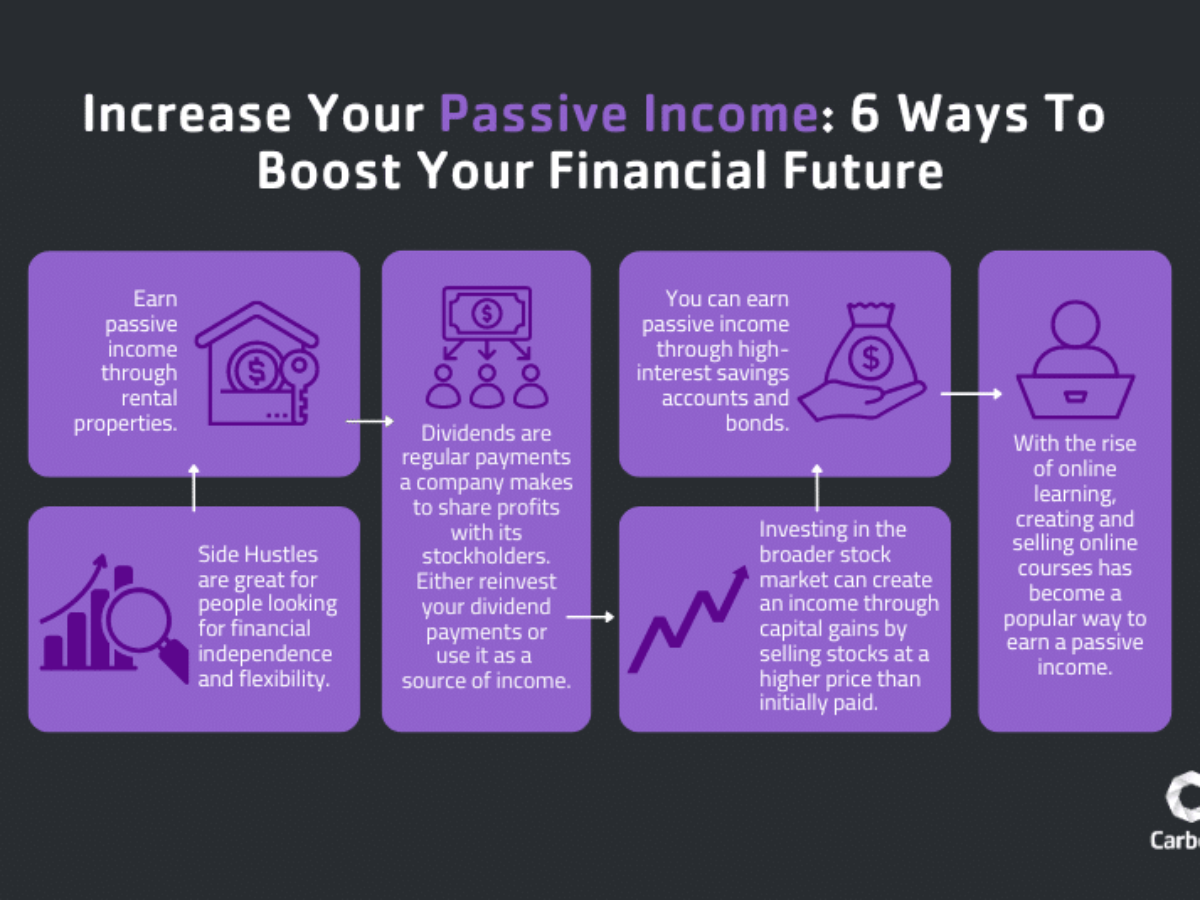
Dividend investing involves purchasing shares of companies that distribute a portion of their earnings to shareholders. For the passive investor, “Dividend Aristocrats”—companies that have increased their dividend payouts for at least 25 consecutive years—offer a blend of stability and growth. The magic of this strategy lies in dividend reinvestment. By using payouts to purchase more shares, you trigger a compounding effect that can exponentially increase your portfolio’s value and income-generating capacity over decades.
Real Estate Investment Trusts (REITs)
For those who want exposure to the real estate market without the headaches of property management, REITs are an ideal financial tool. REITs are companies that own, operate, or finance income-producing real estate across various sectors (residential, commercial, or industrial). By law, REITs must distribute at least 90% of their taxable income to shareholders as dividends. This allows individual investors to earn a share of the income produced through commercial real estate ownership—all through a liquid asset that can be traded on major exchanges.
Index Funds and the Long-Game Approach
While individual stocks require research and monitoring, broad-market index funds or Exchange-Traded Funds (ETFs) offer a “set-it-and-forget-it” alternative. By investing in a fund that tracks the S&P 500, for example, you are betting on the long-term growth of the economy. Over time, the combination of capital appreciation and modest dividends creates a significant nest egg that can be systematically drawn upon during retirement, providing a steady stream of passive cash flow.
Leveraging the Digital Economy for Scale
The rise of the digital age has democratized the ability to create passive income streams that were once reserved for those with massive capital. Today, “online income” is a cornerstone of many personal finance portfolios.
Creating and Monetizing Digital Assets
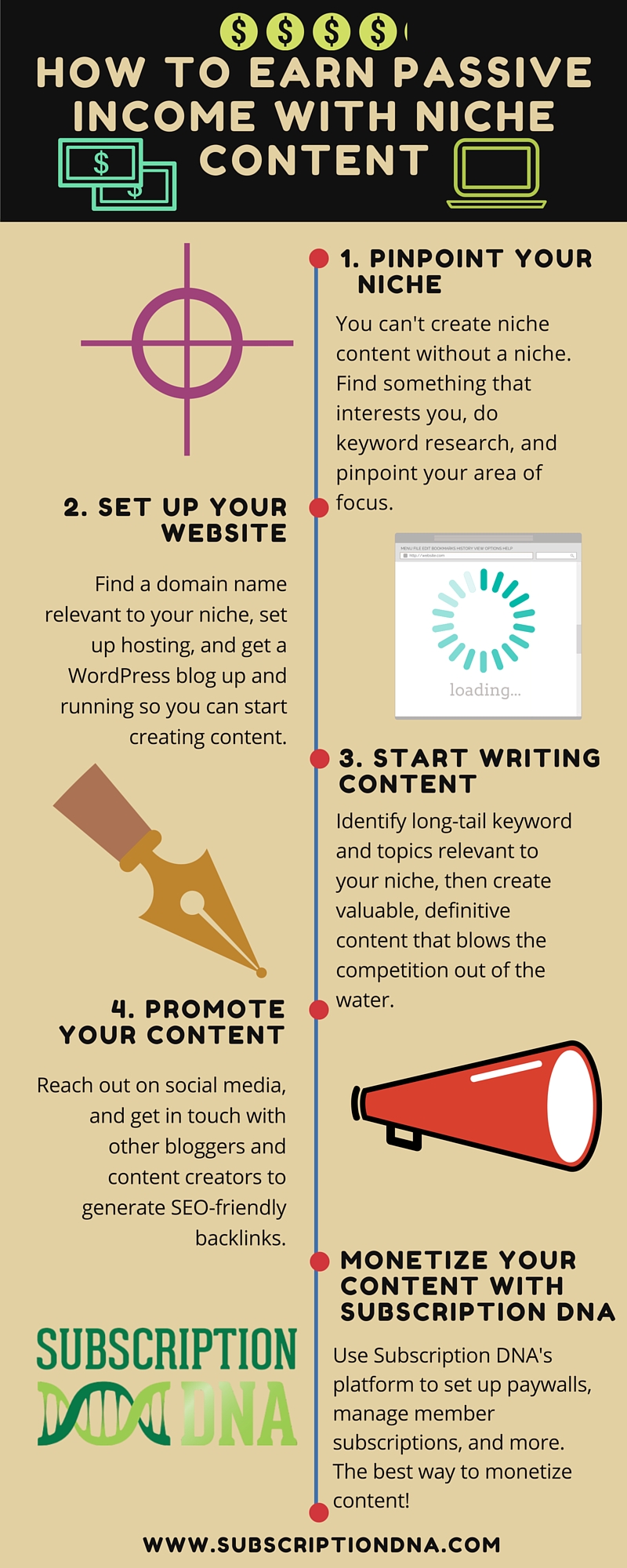
Digital products—such as e-books, online courses, or stock photography—represent a classic “work once, sell forever” model. Once the initial content is created and hosted on a platform (like Amazon KDP, Udemy, or Shutterstock), the marginal cost of selling an additional unit is near zero. These assets are highly scalable; whether you sell ten copies or ten thousand, your workload remains largely the same, making the resulting income almost entirely passive after the launch phase.
Affiliate Marketing and Automated Sales Funnels
Affiliate marketing involves earning a commission by promoting another company’s products or services. When integrated into a content-rich website or a specialized niche blog, affiliate links can generate revenue for years. The key to making this passive is the implementation of automated sales funnels. By using email marketing sequences and search engine optimization (SEO), you can attract traffic and convert leads into sales without manual intervention. This transforms a blog or social media presence into a self-sustaining financial asset.
Peer-to-Peer (P2P) Lending and Private Debt
The fintech revolution has introduced P2P lending platforms, which allow individuals to act as the bank. By lending money to peers or small businesses through regulated platforms, you earn interest on the principal. While this carries a higher risk of default than a savings account, diversifying your investment across hundreds of small loans can mitigate risk and provide yields that significantly outperform traditional fixed-income products.
Physical Assets and Real Estate Strategies
Physical real estate remains one of the most proven paths to wealth, offering a combination of monthly cash flow, tax advantages, and equity buildup.
Residential and Commercial Rental Properties
The traditional rental model involves purchasing a property and leasing it to tenants. To make this truly passive, an investor must factor in the cost of professional property management. A management firm handles tenant screening, maintenance requests, and rent collection in exchange for a percentage of the monthly income. This turns a high-effort “side hustle” into a passive investment, allowing the owner to focus on acquiring more assets rather than fixing leaky faucets.
Short-Term Rentals and the Sharing Economy
Platforms like Airbnb and VRBO have revolutionized property monetization. Short-term rentals often yield significantly higher monthly revenue than long-term leases, especially in tourist-heavy areas. While they require more “churn” in terms of cleaning and guest communication, these tasks can be fully outsourced to specialized management agencies. Furthermore, the “sharing economy” extends beyond housing; assets like vehicles or specialized equipment can also be rented out through peer-to-peer marketplaces to generate recurring revenue from underutilized property.
Risk Management and Long-Term Sustainability
No income stream is perfectly passive or entirely risk-free. Successful financial management requires a proactive approach to protecting your assets.
Diversification as a Safety Net
The greatest risk to passive income is over-concentration. Relying solely on one rental property or one dividend stock leaves you vulnerable to market shifts or localized economic downturns. A robust passive income strategy involves “layering”—combining different types of assets (e.g., a mix of stocks, real estate, and digital products). This ensures that if one sector underperforms, the others can provide a financial buffer.
The Tax Implications of Passive Gains
Passive income is often taxed differently than earned income. For instance, long-term capital gains and qualified dividends typically enjoy lower tax rates than a standard salary. Conversely, rental income may be subject to different deductions, such as depreciation. Understanding the tax code—or hiring a professional who does—is vital for maximizing your “take-home” passive pay. Effective tax planning can often save an investor more money than a marginal increase in investment yield.
Continuous Monitoring and Optimization
While the goal is to minimize active work, passive income still requires occasional “portfolio hygiene.” This involves rebalancing your stock allocations, reviewing the performance of your digital assets, and ensuring your physical properties are being maintained. By spending a few hours a month reviewing your systems, you ensure that your passive streams remain healthy, relevant, and profitable for years to come.
In conclusion, generating passive income is a journey of shifting from consumer to creator and from employee to investor. By strategically deploying capital into the markets, leveraging the scalability of the digital world, or acquiring physical assets, you can build a diversified financial ecosystem. This foundation not only provides a hedge against economic volatility but also grants you the ultimate currency: the freedom to choose how you spend your time.
aViewFromTheCave is a participant in the Amazon Services LLC Associates Program, an affiliate advertising program designed to provide a means for sites to earn advertising fees by advertising and linking to Amazon.com. Amazon, the Amazon logo, AmazonSupply, and the AmazonSupply logo are trademarks of Amazon.com, Inc. or its affiliates. As an Amazon Associate we earn affiliate commissions from qualifying purchases.