
In the realm of personal finance and business management, numbers are the fundamental building blocks of strategy. However, raw figures—such as a $500 profit or a $2,000 debt—rarely tell the full story in isolation. To truly understand the health of an investment, the efficiency of a budget, or the growth of a business, one must master the art of the percentage.
Finding the percentage of two numbers is more than a simple mathematical exercise; it is a vital financial skill that allows you to compare values across different scales. Whether you are calculating the return on an investment (ROI), determining a discount during a market downturn, or analyzing your debt-to-income ratio, understanding how these two numbers interact is the first step toward financial literacy.

The Foundation: Why Percentage Calculations Matter in Personal Finance
At its core, a percentage is a way to express a number as a fraction of 100. In the world of money, this provides a standardized “yardstick” to measure performance. Without percentages, it would be nearly impossible to compare a $50 gain on a $100 investment with a $500 gain on a $10,000 investment. Through the lens of percentages, we quickly see that the first is a staggering 50% return, while the second is a modest 5% return.
Understanding the Basic Formula
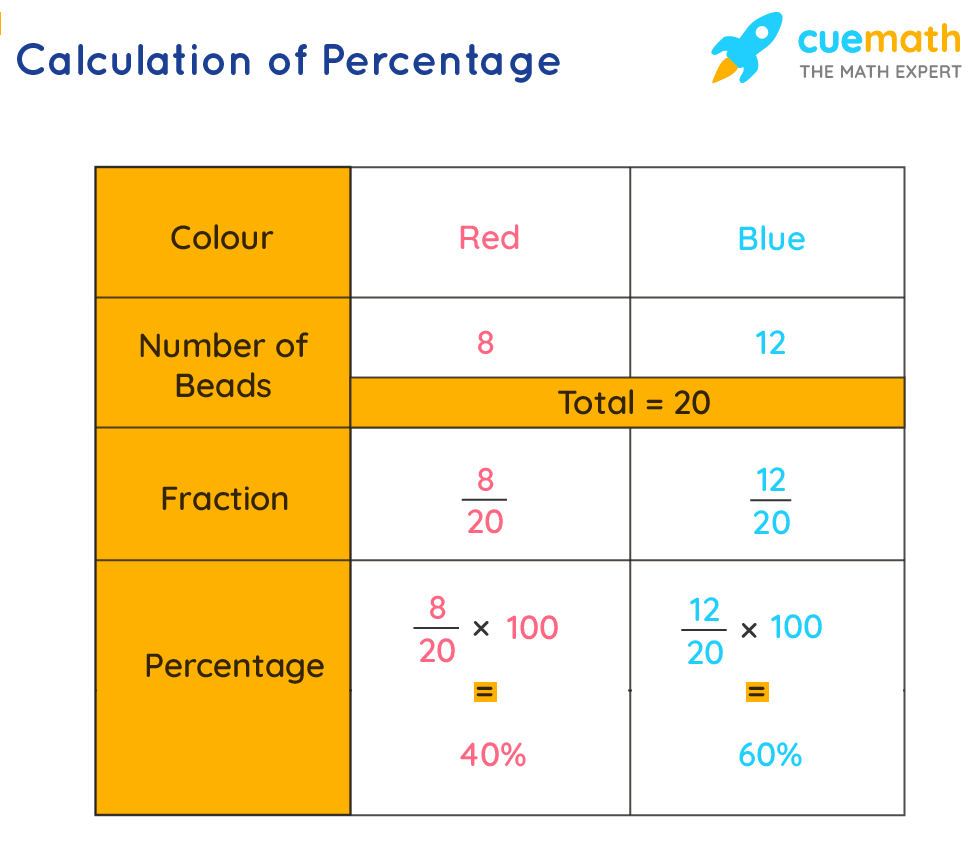
The mathematical formula to find the percentage of two numbers is straightforward:
(Part / Whole) × 100 = Percentage
In a financial context, the “part” is usually the specific amount you are looking at (like interest earned or a price increase), and the “whole” is the original value or the total amount (like your initial principal or your total monthly income).
For example, if you save $600 out of a $3,000 monthly paycheck, you divide 600 by 3,000 to get 0.20. Multiplying this by 100 gives you 20%. This simple calculation is the bedrock of the “50/30/20” budgeting rule, where 20% of income is allocated to savings.
The Role of Percentages in Budgeting and Expense Tracking
Budgeting is essentially an exercise in percentage allocation. When financial advisors suggest that housing costs should not exceed 30% of your gross income, they are asking you to perform a percentage calculation of two numbers: your rent/mortgage and your total earnings.
By converting your expenses into percentages, you gain a clearer picture of where your money is going. If you spend $400 a month on dining out and your income is $4,000, that is 10%. If your income drops to $3,000 but your spending remains the same, your “dining out” percentage jumps to over 13%. This relative increase signals a need for behavioral adjustment that raw numbers might obscure.
Measuring Investment Success: Calculating ROI and Yield
For investors, percentages are the primary language of communication. Whether you are trading stocks, flipping real estate, or holding bonds, your success is measured by the percentage increase (or decrease) of your capital.
Simple Returns vs. Compound Growth
To find the percentage growth of an investment, you take the current value, subtract the original value, and then divide that difference by the original value.
Formula: [(Current Value – Original Value) / Original Value] × 100
If you purchased a share of a tech company for $150 and it is now worth $180, the “part” is the $30 gain. Dividing $30 by the “whole” of $150 gives you 0.20, or a 20% return. Understanding this allows you to compare the performance of that stock against a benchmark like the S&P 500, which might have returned 10% in the same period, indicating your investment outperformed the market.
Analyzing Portfolio Yield and Dividend Ratios
For income-focused investors, the “dividend yield” is a crucial percentage. This is calculated by taking the annual dividend payment (the part) and dividing it by the current stock price (the whole). If a company pays $5 in dividends annually and the stock costs $100, the yield is 5%. This percentage allows investors to compare the cash-flow potential of different assets, such as comparing a high-yield savings account at 4% versus a dividend stock at 5%.
Business and Income: Profit Margins and Tax Obligations
In a business context, finding the percentage of two numbers is the difference between a thriving enterprise and a failing one. Revenue is a “vanity metric”; profit margin—a percentage—is a “sanity metric.”
Gross vs. Net Profit Margin

A business owner must constantly calculate margins to ensure sustainability. The gross profit margin is found by taking the gross profit (Revenue minus Cost of Goods Sold) and dividing it by the total revenue.
If a product sells for $100 and costs $60 to manufacture, the profit is $40. The margin is 40%. However, the net profit margin is even more critical. It takes the final profit after all expenses (rent, payroll, taxes) and divides it by revenue. If that same $100 sale results in only $10 of actual take-home profit, the net margin is 10%. Recognizing these percentages helps business owners identify “leaks” in their operational efficiency.
Effective Tax Rates and Deductions
For both individuals and corporations, understanding the effective tax rate is essential for financial planning. Because tax systems are often progressive (with different brackets), your “top” tax bracket doesn’t represent what you actually pay.
To find your effective tax rate, you divide your total tax owed (the part) by your total taxable income (the whole). If you earned $100,000 but paid $15,000 in taxes after deductions, your effective tax rate is 15%. Knowing this percentage allows for better tax-loss harvesting strategies and more accurate retirement projections.
The Impact of Inflation and Purchasing Power
One of the most insidious ways percentages affect our money is through inflation. Inflation is the percentage rate at which the general level of prices for goods and services rises, and subsequently, purchasing power falls.
Real vs. Nominal Returns
When you see a 5% return on a savings account, that is the “nominal” rate. To find your “real” return, you must factor in the percentage of inflation. If inflation is 3%, your real gain in purchasing power is only approximately 2%.
By calculating the percentage difference between your wage growth and the inflation rate, you can determine if you are actually getting wealthier or if you are effectively taking a pay cut. If your boss gives you a 3% raise but the Consumer Price Index (CPI) shows a 5% increase in costs, your “real” income has decreased by 2%.
The Cost of Living Adjustment (COLA)
Many financial contracts, from social security benefits to alimony and corporate salaries, use percentage-based adjustments to keep pace with the economy. Finding the percentage change in the CPI between two years allows individuals to negotiate for fair compensation. The formula remains the same: (New Price – Old Price) / Old Price. Mastering this math ensures that you are not losing ground in a fluctuating economy.
Leveraging Financial Tools for Accuracy and Optimization
While the manual calculation of percentages is a vital skill, modern financial management often requires handling vast amounts of data where manual entry is prone to error.
Excel and Spreadsheet Automation
For those managing complex portfolios or business accounts, using spreadsheet software like Excel or Google Sheets is standard practice. To find the percentage of two numbers in these tools, you use cell references. If cell A1 contains your “part” and B1 contains your “whole,” the formula =A1/B1 formatted as a percentage will give you an instant, dynamic result. This allows for “what-if” modeling—for example, seeing how a 5% increase in marketing spend might affect a 10% increase in sales.
Financial Apps and Real-Time Tracking
In the age of Fintech, many apps do these calculations for you, but the user must still interpret the results. Wealth management platforms often show “Percentage of Asset Allocation.” This helps investors maintain a balanced portfolio. If your goal is to have 60% stocks and 40% bonds, and a market rally pushes your stocks to 70% of your total portfolio value, you know—based on the percentage—that it is time to rebalance.
Understanding the underlying math of how the app arrived at that 70% empowers you to make informed decisions rather than blindly following an algorithm.
Conclusion: The Power of Proportional Thinking
Finding the percentage of two numbers is the gateway to professional-grade financial management. It shifts your perspective from absolute values to proportional relationships, allowing you to see the “why” behind the “how much.”
By mastering these calculations, you can evaluate investment opportunities with a critical eye, manage a business with precision, and navigate the complexities of taxes and inflation with confidence. In the world of money, those who understand percentages are the ones who truly understand value. Percentages turn data into information, and information into wealth.
aViewFromTheCave is a participant in the Amazon Services LLC Associates Program, an affiliate advertising program designed to provide a means for sites to earn advertising fees by advertising and linking to Amazon.com. Amazon, the Amazon logo, AmazonSupply, and the AmazonSupply logo are trademarks of Amazon.com, Inc. or its affiliates. As an Amazon Associate we earn affiliate commissions from qualifying purchases.