
In the realm of personal and business finance, the ability to calculate a percentage is more than just a vestigial skill from middle school math—it is the fundamental language of wealth. Whether you are evaluating the performance of a stock portfolio, determining the true cost of a high-interest loan, or calculating the tax implications of a major purchase, percentages provide the necessary context to make informed decisions. Without a firm grasp on how to find the percentage of a number, a financial statement is merely a collection of digits. With it, those digits transform into a narrative of growth, risk, and opportunity.

This guide explores the essential techniques for calculating percentages within a financial framework, moving from basic formulas to complex applications in investing and debt management.
The Foundations of Financial Percentages
Before diving into complex market analysis, one must master the basic mechanics of percentage calculation. In finance, a percentage represents a portion of a whole, expressed as a fraction of 100. This standardization allows investors and budgeters to compare “apples to oranges”—for instance, comparing the growth of a $1,000 account to that of a $1,000,000 fund.
The Core Formula and Financial Context
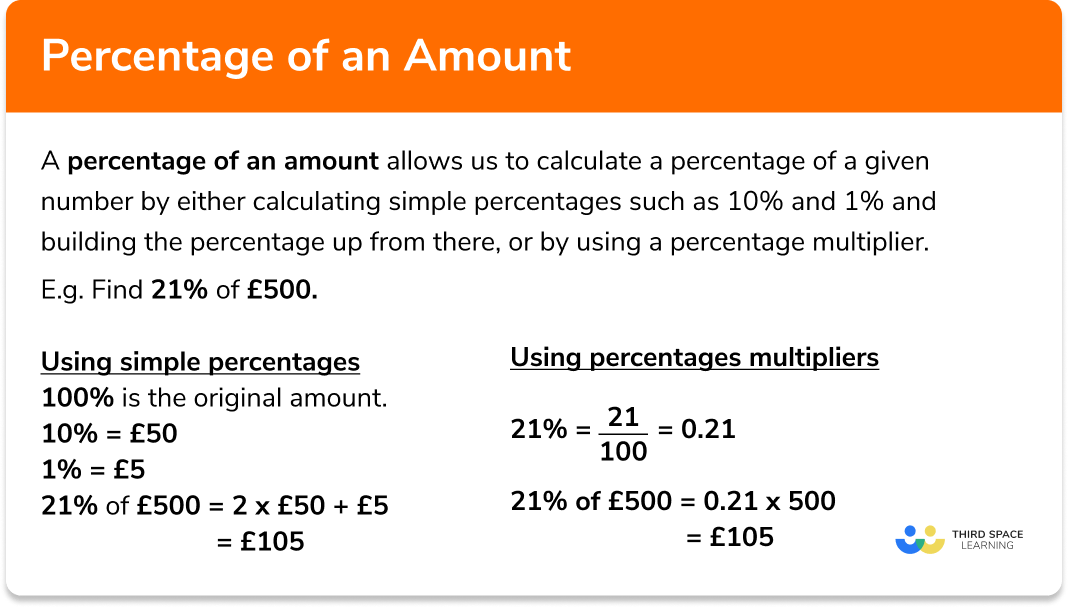
The most basic way to find the percentage of a number is to multiply the “whole” amount by the “percentage” in decimal form. The universal formula is:
Part = (Percentage / 100) × Whole
In a financial context, if you want to find 15% of a $5,000 investment (perhaps to calculate a performance fee or a target profit), you would convert 15% to 0.15 and multiply:
$5,000 × 0.15 = $750.
Understanding this relationship is the first step in financial literacy. It allows you to quickly estimate sales tax, service gratuities, and initial down payments on property.
Decimals, Fractions, and the Power of 100
Proficiency in money management requires the ability to switch between percentages, decimals, and fractions fluidly. For example, a 25% capital gains tax is the same as multiplying your profit by 0.25 or dividing it by four. In fast-paced trading environments or during high-stakes negotiations, being able to mentally pivot between these forms enables quicker decision-making. High-net-worth individuals often view their expenses not in dollar amounts, but as percentages of their total cash flow, ensuring that no single category consumes a disproportionate share of their wealth.
Calculating Returns on Investment (ROI)
The most common application of percentages in the “Money” niche is the calculation of investment performance. Raw numbers can be deceiving; a $500 gain is impressive on a $1,000 investment but negligible on a $500,000 investment. Percentages provide the “Rate of Return,” which is the ultimate metric for efficiency.
Analyzing Capital Gains and Growth
To find the percentage increase of an investment—often called the “percent change”—you use a variation of the basic formula:
Percentage Increase = [(New Value – Original Value) / Original Value] × 100
Consider a scenario where you purchase shares of a fintech company at $150 per share and sell them a year later for $180. The raw gain is $30. To find the percentage:
($180 – $150) / $150 = 30 / 150 = 0.20.
Multiplying by 100 gives you a 20% return.
This percentage allows you to compare this stock’s performance against benchmarks like the S&P 500 or a high-yield savings account. If the benchmark returned 8% in the same period, your 20% return indicates significant outperformance.
Understanding Yield and Dividend Percentages
For income-focused investors, the “Dividend Yield” is a crucial percentage. It tells you how much cash flow you are receiving relative to the price of the asset.
Yield = (Annual Dividend / Share Price) × 100
If a stock pays $5 in dividends annually and is trading at $100, the yield is 5%. However, if the stock price drops to $80 while the dividend remains the same, the yield rises to 6.25%. Knowing how to calculate these shifts helps investors identify when an income-generating asset has become undervalued or overvalued.

Managing Debt and the True Cost of Borrowing
While percentages can represent wealth accumulation, they also represent the cost of capital. In the world of debt—credit cards, mortgages, and business loans—the “percentage” is the interest rate, and it is the primary factor determining your long-term financial health.
The Impact of Annual Percentage Rates (APR)
When you take out a loan, the lender quotes an Annual Percentage Rate (APR). Understanding how to find the percentage of interest you will pay monthly is vital for budgeting. While the APR is annual, interest is often calculated monthly or even daily.
To find the monthly interest on a $10,000 credit card balance with an 18% APR, you would first divide the percentage by 12 (1.5% per month) and then apply it to the balance:
$10,000 × 0.015 = $150 in interest for that month alone.
This calculation reveals why carrying high-interest debt is so damaging to personal finance; the “percentage” of your payment going toward interest can often exceed the amount going toward the principal.
Compound Interest: The Percentage That Builds (or Breaks) Wealth
Compound interest is often called the eighth wonder of the world because it involves calculating a percentage on top of a percentage. When you earn interest on an investment, that interest is added to the principal, and the next period’s percentage is calculated on the new, larger total.
Conversely, in debt, compounding can be predatory. If you do not pay off the interest on a loan, that interest is capitalized (added to the principal), and you begin paying “interest on interest.” Mastering the math of compound interest allows you to project future wealth and understand the urgency of debt repayment.
Percentages in Budgeting and Tax Planning
On a day-to-day level, percentages act as the guardrails for a sustainable financial plan. They help categorize spending and ensure that a rise in income doesn’t lead to “lifestyle creep” without a proportional rise in savings.
The 50/30/20 Rule: Percentages in Action
A popular financial framework is the 50/30/20 rule. It suggests allocating your after-tax income into three percentage-based buckets:
- 50% for Needs: Housing, utilities, groceries, and insurance.
- 30% for Wants: Dining out, travel, and hobbies.
- 20% for Savings and Debt Repayment: Retirement accounts, emergency funds, and extra loan payments.
By using percentages instead of fixed dollar amounts, this budget remains scalable. Whether you earn $40,000 or $400,000, the percentage-based approach ensures that you are always prioritizing your future self.
Calculating Tax Brackets and Effective Tax Rates
Taxation is perhaps the most complex application of percentages. Most modern economies use a “progressive” tax system, where different portions of your income are taxed at different percentages.
Finding your “Effective Tax Rate” is the process of determining what percentage of your total income actually goes to the government.
Effective Tax Rate = (Total Tax Paid / Total Taxable Income) × 100
If you earn $100,000 and pay $15,000 in total taxes, your effective rate is 15%, even if your “marginal” bracket (the percentage paid on your last dollar earned) is 22% or 24%. Understanding this distinction is critical for tax-loss harvesting and making strategic contributions to tax-advantaged accounts like a 401(k) or IRA.
Advanced Financial Projections and Risk Management
For those looking to move beyond basic personal finance into the realm of business finance or professional investing, percentages are used to measure risk and future value.
Inflation and Purchasing Power
Inflation is a percentage that represents the rate at which the general level of prices for goods and services is rising. If the inflation rate is 3%, the “real” value of your money is decreasing by that percentage annually. To find the “Real Rate of Return” on an investment, you must subtract the inflation percentage from your nominal percentage return.
If your savings account pays 4% interest but inflation is 3%, your purchasing power is only growing by 1%. Calculating this percentage is essential for long-term retirement planning, as it helps determine if your future nest egg will actually cover the cost of living.
Discount Rates and Future Valuation
In corporate finance, analysts use “Discount Rates”—a specific type of percentage—to determine what a future sum of money is worth today. This is known as the Time Value of Money. By applying a percentage (the discount rate) to future projected earnings, a business can decide whether a current investment is worth the risk. This process, known as Discounted Cash Flow (DCF) analysis, is the gold standard for valuing companies and real estate.
Conclusion: The Strategic Advantage of Numerical Literacy
Knowing how to find the percentage of a number is not merely a mathematical exercise; it is a strategic necessity in the world of money. From the simplicity of a 20% tip to the complexity of a 7% discount rate in a multi-million dollar acquisition, percentages provide the clarity needed to navigate a capitalist society. By mastering these calculations, you gain the ability to strip away the noise of raw data and see the underlying health of your financial life. Whether you are saving, spending, or investing, let the power of percentages be the compass that guides your capital toward growth.
aViewFromTheCave is a participant in the Amazon Services LLC Associates Program, an affiliate advertising program designed to provide a means for sites to earn advertising fees by advertising and linking to Amazon.com. Amazon, the Amazon logo, AmazonSupply, and the AmazonSupply logo are trademarks of Amazon.com, Inc. or its affiliates. As an Amazon Associate we earn affiliate commissions from qualifying purchases.