
In the world of finance, numbers are rarely meaningful in isolation. Knowing that a stock gained $10 or that a business’s revenue grew by $10,000 tells only half the story. To understand the true velocity of growth, an investor or business owner must look at the “percent increase.” This mathematical tool provides the necessary context to compare different assets, evaluate the health of a company, and track personal wealth accumulation over time. Whether you are analyzing a portfolio’s performance or calculating the rising cost of living due to inflation, mastering the percent increase formula is a fundamental skill in financial literacy.
The Fundamentals of Percent Increase in Personal Finance
At its core, percent increase measures the relative change between an initial value and a final value. In personal finance, this is the primary metric used to determine how much your money has actually worked for you. Understanding the mechanics of this calculation allows you to move past the surface-level “dollar amount” and see the efficiency of your financial decisions.
The Core Formula for Financial Success
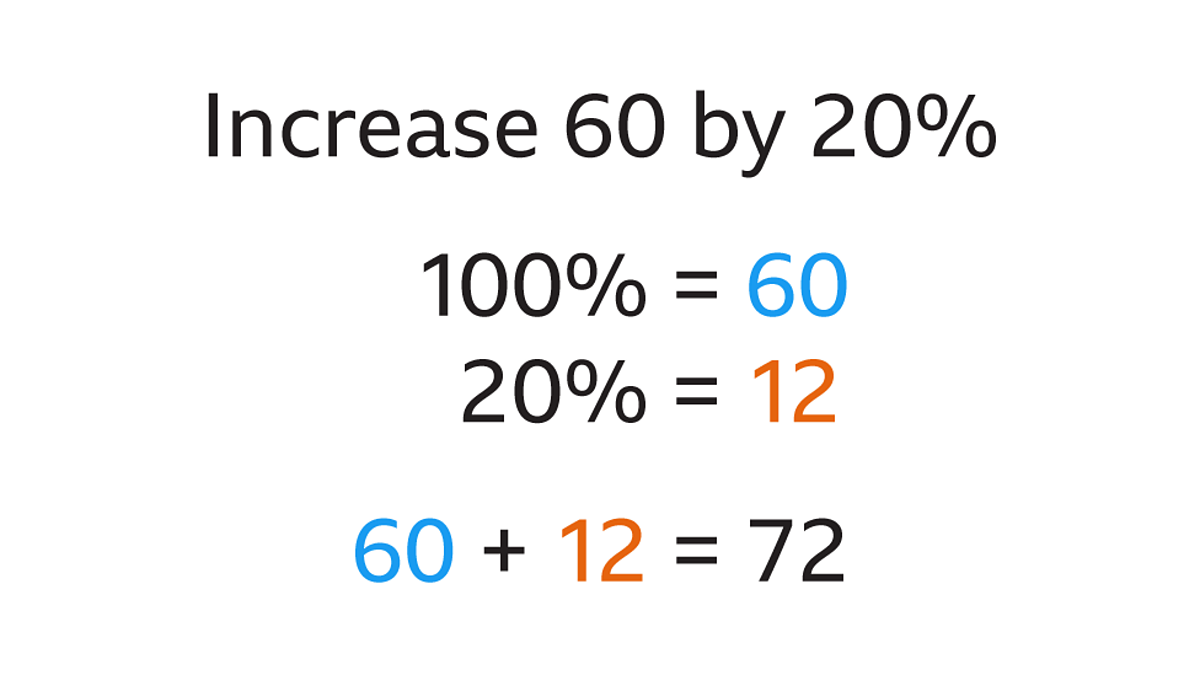
To find the percent increase, you follow a straightforward three-step process. First, subtract the original value (the starting point) from the new value (the current or ending point) to find the absolute increase. Second, divide that increase by the original value. Finally, multiply the result by 100 to convert it into a percentage.
The formula is expressed as:
((New Value – Original Value) / Original Value) x 100 = Percent Increase
For example, if you saved $2,000 last year and managed to save $2,500 this year, the absolute increase is $500. Dividing $500 by the original $2,000 gives you 0.25. Multiplying by 100 results in a 25% increase in your annual savings rate.
Applying Percent Increase to Budgeting and Expenses
Percent increase isn’t just for tracking gains; it’s a critical tool for monitoring the “creep” of expenses. If your monthly utility bill jumps from $150 to $180, calculating the percent increase (20%) helps you realize that your energy costs are rising significantly faster than the typical 2-3% inflation rate. By applying this formula to recurring expenses, you can identify which areas of your budget are experiencing the most aggressive cost hikes and adjust your financial strategy accordingly.
The Psychological Importance of Relative Growth
In money management, the percent increase helps remove emotional bias. A $1,000 gain feels significant, but if it required a $100,000 investment, it is only a 1% increase. Conversely, a $500 gain on a $1,000 investment is a 50% increase. Focusing on the percentage allows you to evaluate the efficiency of your capital, ensuring you aren’t over-allocating resources to low-yield opportunities.
Measuring Investment Performance and Portfolio Health
For investors, the percent increase is the ultimate yardstick for performance. It allows for a “head-to-head” comparison between disparate asset classes, such as real estate, stocks, and commodities. Without the ability to calculate percent increase, it would be impossible to determine if a high-priced blue-chip stock is performing better than a low-priced growth stock.
Capital Gains and Total Returns
When you buy a stock at $100 and sell it at $150, your capital gain is $50, representing a 50% increase. However, sophisticated financial analysis often requires looking at the “total return,” which includes dividends. If that same stock paid $5 in dividends during the period you held it, your new value for the calculation becomes $155. The percent increase then rises to 55%. This distinction is vital for income-focused investors who rely on dividends to bolster their wealth.
The Role of the Compound Annual Growth Rate (CAGR)
While a simple percent increase tells you how much an investment grew from point A to point B, it doesn’t account for the time it took to get there. This is where the concept of CAGR becomes relevant. If Investment A grows by 50% over two years and Investment B grows by 50% over five years, Investment A is the superior financial choice. Investors use the percent increase as the foundation for calculating annualized returns, allowing them to normalize performance across different time horizons.

Assessing Risk Through Volatility Percentages
Percent increase is also used to measure the “beta” or volatility of an investment. By calculating the daily or monthly percent increases (and decreases) of an asset, investors can determine its risk profile. A stock that frequently sees 5% to 10% increases in a single week is considered much more volatile than a bond that moves by 0.1% in the same period. Understanding these fluctuations helps in constructing a balanced portfolio that aligns with an individual’s risk tolerance.
Business Finance and Corporate Growth Metrics
For business owners and corporate executives, finding the percent increase is a daily requirement. It is the language of quarterly earnings reports and the primary way stakeholders judge the viability of a company. From revenue growth to profit margin expansion, these percentages tell the story of a company’s scale and efficiency.
Year-over-Year (YoY) and Quarter-over-Quarter (QoQ) Analysis
In business finance, seasonality can distort raw numbers. A retail business might make more money in December than in July, but that doesn’t necessarily mean the business is “growing.” Instead, analysts look at the Year-over-Year (YoY) percent increase, comparing December of the current year to December of the previous year. This provides a clear picture of whether the company is actually expanding or just experiencing a standard seasonal peak.
Profit Margin Expansion and Efficiency
Finding the percent increase is also applied to margins. If a company’s revenue increases by 10%, but its net profit increases by 20%, the company is experiencing “operating leverage.” This means the business is becoming more efficient as it scales, earning more profit for every dollar of sales. Tracking the percent increase in profit margins is often more important to investors than tracking the increase in raw sales, as it indicates a sustainable and scalable business model.
Customer Acquisition Costs (CAC) and Lifetime Value (LTV)
In the modern subscription economy, businesses track the percent increase in the cost to acquire a customer versus the percent increase in the value that customer brings over time. If the CAC is increasing at a faster percentage than the LTV, the business model is heading toward a crisis. Financial managers use these percentages to decide where to allocate marketing budgets and when to pivot strategies to maintain profitability.
Economic Indicators and the Erosion of Purchasing Power
Beyond individual investments and business balance sheets, the percent increase is a vital tool for understanding the broader economic environment. It helps individuals navigate the complexities of the macroeconomy, particularly regarding the value of the currency they earn and spend.
Understanding Inflation as a Percent Increase
Inflation is, by definition, the percent increase in the price of a basket of goods and services over a specific period. When the government reports an inflation rate of 7%, they are stating that, on average, the cost of living has increased by that percentage. For the average person, this means that if they do not see a corresponding 7% increase in their income, their “real” wealth has actually decreased. Calculating the percent increase in your salary versus the percent increase in inflation is the only way to know if you are truly getting ahead or falling behind.
Real vs. Nominal Growth
In finance, “nominal” refers to the raw percent increase, while “real” refers to the increase after adjusting for inflation. If your investment portfolio grew by 10% in a year where inflation was 4%, your real percent increase is 6%. Understanding this distinction is crucial for long-term retirement planning. If you project a 5% annual increase in your retirement fund but fail to account for a 3% annual increase in the cost of living, your future purchasing power will be significantly lower than anticipated.
The Impact of Interest Rates on Debt and Savings
Central banks use interest rates to control the percent increase of the money supply. When interest rates rise, the cost of borrowing increases. For a homeowner with a variable-rate mortgage, a 1% increase in the interest rate does not mean their payment goes up by 1%; it could represent a much larger percent increase in their monthly interest expense. Conversely, for a saver, an increase in the Federal Funds Rate can lead to a significant percent increase in the yield of a high-yield savings account or a Certificate of Deposit (CD).

Conclusion: Mastering the Metric of Momentum
Finding the percent increase is more than a simple mathematical exercise; it is a vital lens through which all financial decisions should be viewed. In personal finance, it helps you track your journey toward independence. In investing, it allows you to strip away the noise and compare the true performance of your assets. In business, it serves as a North Star for growth and operational efficiency.
By consistently applying the percent increase formula—subtracting the old from the new and dividing by the old—you gain the ability to quantify momentum. In a world where financial data is abundant but often overwhelming, the percent increase remains the most reliable way to measure progress, identify risks, and ultimately, build lasting wealth.
aViewFromTheCave is a participant in the Amazon Services LLC Associates Program, an affiliate advertising program designed to provide a means for sites to earn advertising fees by advertising and linking to Amazon.com. Amazon, the Amazon logo, AmazonSupply, and the AmazonSupply logo are trademarks of Amazon.com, Inc. or its affiliates. As an Amazon Associate we earn affiliate commissions from qualifying purchases.