
In the realm of personal and professional finance, the ability to calculate percentages is not merely a mathematical skill; it is a fundamental tool for survival and growth. Whether you are assessing the performance of a stock portfolio, determining the impact of inflation on your purchasing power, or negotiating a salary increase, percentages provide a universal language for comparison and evaluation. Understanding how to find out the percentage of a number allows you to strip away the noise of raw data and see the underlying trends that dictate your financial health.

This guide explores the essential applications of percentage calculations within the “Money” niche, providing you with the analytical framework necessary to manage your wealth with precision and confidence.
The Fundamental Role of Percentages in Personal Finance
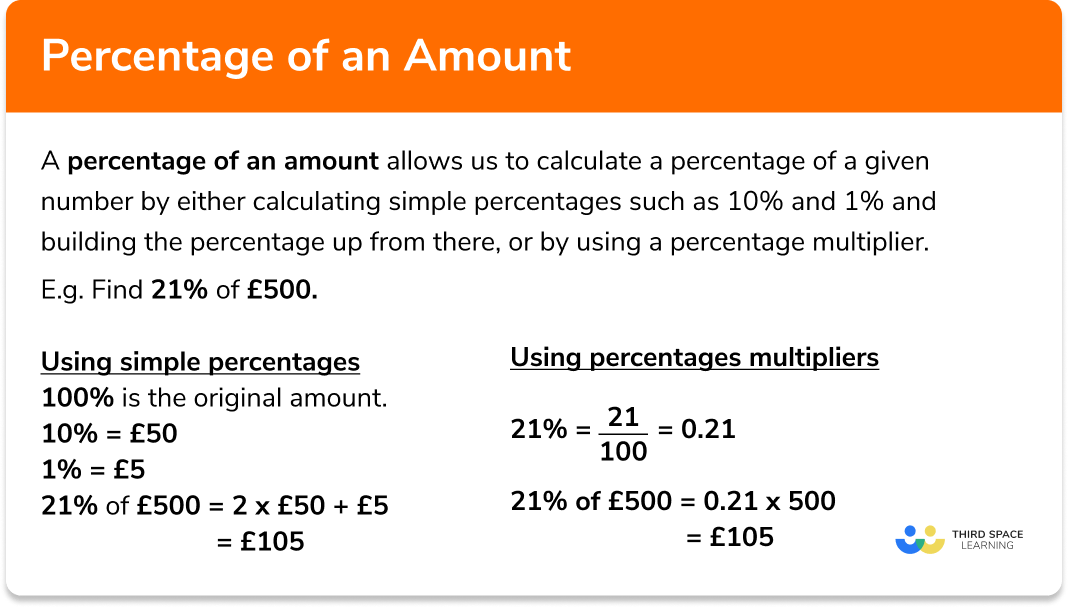
At its core, a percentage is a way of expressing a number as a fraction of 100. In finance, this translates to understanding “how much” of a whole—be it a budget, a debt, or a savings goal—a specific amount represents. The basic formula is simple: (Part / Whole) × 100 = Percentage. Conversely, to find a specific percentage of a number, you multiply the number by the decimal equivalent of the percentage (e.g., 20% of $500 is 500 × 0.20).
Understanding Simple Percentages for Budgeting
Budgeting is the cornerstone of financial stability, and it relies almost entirely on percentage-based allocations. One of the most popular frameworks is the 50/30/20 rule. To apply this, you must calculate percentages based on your net (after-tax) income.
For instance, if your take-home pay is $5,000 per month:
- Needs (50%): $5,000 × 0.50 = $2,500. This covers housing, utilities, and groceries.
- Wants (30%): $5,000 × 0.30 = $1,500. This covers dining out, hobbies, and entertainment.
- Savings/Debt Repayment (20%): $5,000 × 0.20 = $1,000.
By mastering these calculations, you gain a clear perspective on your spending habits. If you find that your “Needs” are consuming 70% of your income, you don’t just see a dollar amount; you see a percentage imbalance that signals a need for lifestyle adjustment or income growth.
The Rule of 72 and Compounding Interest
Percentages also dictate the speed at which your money grows. While simple interest is calculated only on the principal, compound interest is calculated on the principal plus the accumulated interest. To understand the power of your investment’s annual percentage yield (APY), you can use the “Rule of 72.”
The Rule of 72 is a shortcut to estimate how many years it will take for your money to double at a fixed annual percentage rate. You simply divide 72 by the annual interest rate. For example, if your investment returns a steady 8% annually, your money will double in approximately 9 years (72 / 8 = 9). This calculation is vital for long-term retirement planning, as it highlights how even a 1% or 2% difference in interest rates can lead to massive discrepancies in wealth over several decades.
Navigating Investment Returns and Market Fluctuations
In the world of investing, raw numbers can be deceiving. A $1,000 gain on a $10,000 investment is excellent, but a $1,000 gain on a $1,000,000 investment is negligible. Percentages normalize these figures, allowing investors to compare the efficiency of different assets regardless of their price.
Calculating Return on Investment (ROI)
The most critical percentage for any investor is the Return on Investment (ROI). This metric tells you how much profit or loss you have made relative to the amount of money you invested. The formula is: [(Current Value – Initial Cost) / Initial Cost] × 100.
Suppose you purchased shares of a technology company for $2,500 and sold them a year later for $3,100. To find your percentage gain:
- Subtract the cost from the final value ($3,100 – $2,500 = $600).
- Divide the gain by the initial cost ($600 / $2,500 = 0.24).
- Multiply by 100 to get 24%.
Understanding this percentage allows you to compare this investment against benchmarks, such as the S&P 500 or the interest rate of a high-yield savings account. It provides an objective measure of whether your capital is being deployed effectively.
Analyzing Portfolio Allocation and Diversification
Risk management is largely an exercise in percentage tracking. Modern Portfolio Theory suggests that an investor should spread their capital across various asset classes (stocks, bonds, real estate, cash) to minimize risk. Finding out the percentage of your total portfolio held in a single stock is crucial for avoiding “concentration risk.”
If you have a total portfolio value of $100,000 and you hold $30,000 in a single volatile stock, that stock represents 30% of your wealth. If that stock drops by 50%, your entire portfolio loses 15% of its value ($15,000). By calculating these percentages regularly—a process known as rebalancing—you can ensure that your exposure to risk remains within your comfort zone.
Business Finance: Calculating Margins and Growth Metrics
For entrepreneurs and business professionals, percentages are the heartbeat of the income statement. Knowing how to calculate percentages of revenue is the difference between a profitable enterprise and one that is slowly bleeding cash.
Profit Margins vs. Markup
One of the most common financial errors is confusing “markup” with “margin.”
- Markup is the percentage added to the cost price to arrive at the selling price. (Selling Price – Cost) / Cost.
- Gross Profit Margin is the percentage of the selling price that is profit. (Selling Price – Cost) / Selling Price.
If a product costs $100 to produce and you sell it for $150, your markup is 50% ($50 / $100). However, your profit margin is only 33.3% ($50 / $150). Business owners who fail to understand this percentage distinction often underprice their services, failing to account for overhead costs that the lower margin cannot cover.
Year-over-Year (YoY) Growth Calculations
To assess the health of a business or a side hustle, you must calculate percentage growth over time. Year-over-Year (YoY) growth compares a financial metric in one period to the same period the previous year.
The formula is: [(Current Year Value – Previous Year Value) / Previous Year Value] × 100.
If your freelance business earned $40,000 in 2022 and $55,000 in 2023, your YoY growth is 37.5%. This percentage is more descriptive than the $15,000 raw increase because it shows the rate of acceleration. High percentage growth is often what attracts investors and allows for easier access to business credit.
Taxes and Debt Management: The Impact of Interest and Rates
Perhaps the most “expensive” area where percentage calculations matter is in debt management and taxation. Most people look at the monthly payment, but the wealthy look at the annual percentage rate (APR) and the effective tax rate.
Calculating Effective Tax Rates
In many countries, income tax is progressive, meaning different portions of your income are taxed at different percentages. Your “marginal tax rate” is the percentage of tax paid on your last dollar of income, but your “effective tax rate” is the actual percentage of your total income that goes to the government.
To find your effective tax rate, divide your total tax paid by your total earned income. If you earned $100,000 but, after deductions and credits, paid $15,000 in taxes, your effective tax rate is 15%. Understanding this percentage is vital for tax planning and determining the true “net” value of a potential raise or new business contract.
Deconstructing Interest Rates on Loans and Credit
When you borrow money, the percentage (interest rate) is the cost of “renting” that capital. However, the way that percentage is applied can vary.
- APR (Annual Percentage Rate): Includes the interest rate plus any fees associated with the loan. This is the “real” percentage cost of borrowing.
- Credit Card Interest: Often calculated daily. If you have a 24% APR, your daily periodic rate is roughly 0.065% (24% / 365).
By calculating the percentage of your monthly payment that goes toward interest versus principal, you can see how debt “snowballs.” On a high-interest credit card, a significant percentage of your minimum payment may go entirely toward interest, meaning your “Part” of the “Whole” debt remains unchanged. Recognizing this math is often the catalyst for aggressive debt repayment strategies.

Digital Tools and Financial Calculators for Precision
While understanding the manual formulas is essential for conceptual clarity, the modern financial landscape offers various tools to handle complex percentage calculations.
- Spreadsheet Software (Excel/Google Sheets): The “Percentage” format button is a staple. Using formulas like
=(B2-A2)/A2can instantly provide percentage change across thousands of data points. - Financial Calculators: Specialized calculators for ROI, CAGR (Compound Annual Growth Rate), and Mortgage Amortization do the heavy lifting of percentage math, especially when time-value-of-money is involved.
- Investment Apps: Most brokerage platforms automatically calculate your “unrealized gain/loss” as a percentage. Monitoring these daily helps in maintaining an unemotional, data-driven approach to market volatility.
In conclusion, knowing how to find out the percentage of a number is the gateway to financial literacy. It transforms abstract figures into actionable insights. By mastering these calculations, you can budget with intent, invest with logic, run a business with profitability, and manage debt with a clear exit strategy. In the world of money, those who understand the percentages are the ones who ultimately control the numbers.
aViewFromTheCave is a participant in the Amazon Services LLC Associates Program, an affiliate advertising program designed to provide a means for sites to earn advertising fees by advertising and linking to Amazon.com. Amazon, the Amazon logo, AmazonSupply, and the AmazonSupply logo are trademarks of Amazon.com, Inc. or its affiliates. As an Amazon Associate we earn affiliate commissions from qualifying purchases.