
For many, the annual tax season is met with a combination of dread and confusion. However, viewed through the lens of personal finance, filing your own taxes is one of the most empowering steps you can take toward financial literacy and independence. Understanding the flow of your money—where it goes, how much the government claims, and how you can legally retain more of it—is the cornerstone of wealth management.
Filing your own taxes is no longer the Herculean task of manual arithmetic it once was. With the right preparation and a strategic mindset, you can navigate the internal revenue landscape, ensure compliance, and maximize your potential refund. This guide provides a professional roadmap to mastering your tax return within the broader context of your financial health.

Preparation: The Foundation of Financial Literacy
Effective tax filing does not begin in April; it begins with the systematic organization of your financial life throughout the year. Preparation is the phase where most errors are avoided and most opportunities for savings are identified.
Organizing Your Income Statements (W-2s and 1099s)
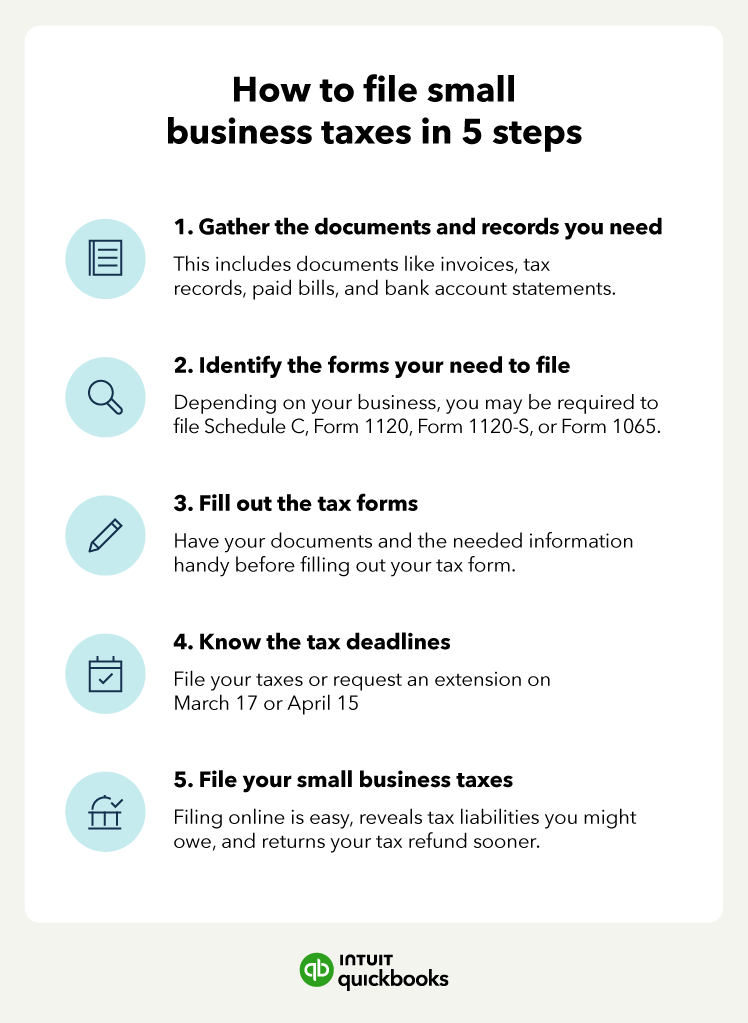
Before you open any tax software or forms, you must aggregate your sources of income. For traditional employees, this is straightforward: the W-2 form provided by your employer summarizes your earnings and the taxes already withheld. However, in the modern “Money” niche, many individuals have diversified income streams. This includes 1099-NEC forms for freelance work, 1099-K forms from payment processors, and 1099-INT or 1099-DIV forms from your bank or brokerage. Tracking these documents is vital; the IRS receives copies of these forms, and any discrepancy between your filing and their records is a primary trigger for an audit.
Identifying Deductions and Credits
Understanding the difference between a deduction and a credit is fundamental to personal finance. A tax deduction reduces the amount of your income that is subject to tax. For example, if you earn $70,000 and have $10,000 in deductions, you are only taxed on $60,000. Most filers opt for the Standard Deduction, which the IRS adjusts annually for inflation. However, if your eligible expenses—such as mortgage interest, state and local taxes (SALT), and charitable contributions—exceed the standard amount, itemizing may save you thousands.
Tax credits, on the other hand, are even more valuable. They provide a dollar-for-dollar reduction of your actual tax bill. The Earned Income Tax Credit (EITC) and the Child Tax Credit (CTC) are two of the most significant credits available to eligible taxpayers, directly boosting your bottom line.
Understanding Tax Brackets and Your Liability
A common misconception in personal finance is that moving into a higher tax bracket means all your money is taxed at that higher rate. The U.S. uses a progressive tax system. Only the portion of your income that falls within a specific range is taxed at that range’s rate. Knowing your “effective tax rate” (the actual percentage of your total income that goes to taxes) is a more accurate metric for your financial planning than simply knowing your top marginal bracket.
Choosing the Right Filing Method for Your Financial Profile
Once your documents are in order, the next step is selecting the mechanism through which you will submit your return. Your choice should be dictated by the complexity of your financial portfolio and your budget.
The IRS Free File Program
If your Adjusted Gross Income (AGI) falls below a certain threshold (typically around $79,000), you are eligible for the IRS Free File program. This is a public-private partnership that allows you to use high-end tax software at no cost. For those focused on aggressive saving and lean personal finance, this is the most efficient way to ensure accuracy without the overhead of professional fees.
Utilizing Commercial Tax Software
For those with more complex financial lives—such as rental properties, significant stock market activity, or cryptocurrency transactions—commercial software like TurboTax, H&R Block, or FreeTaxUSA offers a more robust interface. These tools use “interview-style” questions to guide you through the process, often identifying deductions you might have overlooked. While there is usually a fee for federal and state filings, the “financial tool” aspect of these programs provides a safety net for those who are not tax professionals.
The Manual Filing Option
While it is technically possible to download PDF forms (such as Form 1040) from the IRS website and mail them in, this is generally discouraged in modern finance. Electronic filing (e-filing) is significantly faster, reduces the margin for mathematical error, and ensures that your refund is processed in weeks rather than months. In the world of money management, the time-value of money dictates that getting your refund back quickly so it can be invested or used to pay down debt is always the superior strategy.
Navigating Complex Income Streams and Side Hustles

In today’s economy, “filing your own taxes” often involves more than just a single salary. Side hustles and investments require a deeper level of financial reporting.
Self-Employment and the Schedule C
If you operate as a freelancer, gig worker, or small business owner, you are essentially both the employer and the employee. This means you are responsible for the Self-Employment Tax (Social Security and Medicare). Using Schedule C allows you to deduct “ordinary and necessary” business expenses—such as a portion of your home office, internet costs, and marketing expenses—from your gross business income. Mastering these deductions is key to maintaining a profitable side hustle.
Reporting Investment Gains and Dividends
For the savvy investor, tax season is a time to reconcile capital gains and losses. If you sold stocks or assets during the year, you must report these on Schedule D. Personal finance experts often utilize “tax-loss harvesting”—the practice of selling losing investments to offset gains from winning ones—to lower their overall tax liability. Understanding the difference between short-term capital gains (taxed at ordinary income rates) and long-term capital gains (taxed at lower, preferential rates) is essential for long-term wealth building.
Rental Property and Passive Income
Rental income is reported on Schedule E. This area of tax law is particularly beneficial for building wealth because it allows for depreciation. Depreciation is a non-cash expense that reduces your taxable income based on the perceived wear and tear of the property over time. When combined with deductions for repairs, insurance, and property management fees, rental income can often be “tax-neutral” while still providing positive cash flow.
Strategic Tax Planning: Beyond the Annual Deadline
Filing your taxes shouldn’t just be a look back at the previous year; it should be a forward-looking financial strategy. The most successful individuals in the “Money” niche treat tax season as a performance review for their wealth-building efforts.
Maximizing Retirement Contributions
One of the most effective ways to lower your tax bill while simultaneously increasing your net worth is through contributions to tax-advantaged accounts. Contributions to a traditional 401(k) or a Traditional IRA are typically “pre-tax,” meaning they reduce your taxable income for the year. If you find yourself in a high tax bracket during the filing process, increasing these contributions for the following year is a primary strategy for tax avoidance (the legal minimization of tax liability).
Health Savings Accounts (HSAs) as a Tax Shield
The HSA is often cited as the ultimate financial tool. It offers a “triple tax advantage”: contributions are tax-deductible, the money grows tax-free through investments, and withdrawals for qualified medical expenses are tax-free. If you have a high-deductible health plan, utilizing an HSA can significantly lower your AGI while building a robust fund for future healthcare costs.
Estimating Quarterly Payments
If your side hustle or investment income grows significantly, you may move beyond the world of annual filing and into the world of estimated quarterly payments. The IRS requires you to pay taxes as you earn income. If you owe more than $1,000 at the end of the year, you may face underpayment penalties. A professional approach to money management involves calculating your projected income and sending vouchers to the IRS in April, June, September, and January to avoid these unnecessary costs.
Finalizing the Return and Managing Your Refund
The final stage of filing your own taxes is the submission and the subsequent management of the results. This is where attention to detail pays off.
Double-Checking for Common Errors
Before hitting “submit,” review the basics. Ensure your Social Security number is correct, your filing status (Single, Married Filing Jointly, Head of Household) is accurate, and all income sources are accounted for. Simple typos are the leading cause of delayed refunds. In professional finance, accuracy is paramount; a small error today can lead to an expensive notice from the IRS three years from now.
Direct Deposit vs. Check: The Speed of Liquidity
Always choose direct deposit for your refund. In the context of personal finance, liquidity is king. Having your refund deposited directly into a high-yield savings account or a brokerage account allows that money to begin earning interest or dividends immediately. Conversely, if you owe money, ensure you pay by the deadline to avoid interest charges that can compound quickly, eroding your financial progress.
Storing Records for Future Financial Audits
The process of filing your own taxes concludes with record-keeping. You should maintain copies of your returns and all supporting documentation for at least three to seven years. Digitizing these records and securing them in an encrypted environment is a best practice. Not only does this protect you in the event of an audit, but it also provides a historical map of your financial growth, allowing you to track your income trends and tax efficiency over the decades.
Filing your own taxes is more than a seasonal chore; it is a vital exercise in financial stewardship. By taking the reins of this process, you gain a granular understanding of the laws that govern your wealth, ensuring that you are not just working for your money, but that your money—and the tax code—is working for you.
aViewFromTheCave is a participant in the Amazon Services LLC Associates Program, an affiliate advertising program designed to provide a means for sites to earn advertising fees by advertising and linking to Amazon.com. Amazon, the Amazon logo, AmazonSupply, and the AmazonSupply logo are trademarks of Amazon.com, Inc. or its affiliates. As an Amazon Associate we earn affiliate commissions from qualifying purchases.