
In the world of finance, percentages are more than just mathematical abstractions; they are the fundamental language of value, growth, and risk. Whether you are calculating the interest on a high-yield savings account, determining the tax implications of a stock sale, or evaluating the profit margins of a burgeoning startup, your ability to “figure percentages” is the barrier between financial confusion and professional mastery.
Understanding how to manipulate these numbers allows an individual to move beyond simple arithmetic and into the realm of strategic wealth management. In this guide, we will explore the critical applications of percentage calculations within the financial sector, providing you with the tools to audit your own economic health and make data-driven investment decisions.

The Fundamentals of Financial Percentages
Before diving into complex portfolio analysis, one must master the basic mechanics of percentage calculations as they apply to monetary values. In finance, a percentage represents a rate or a proportion per hundred, serving as a standardized way to compare different financial instruments regardless of their absolute dollar value.
Understanding the Basic Formula
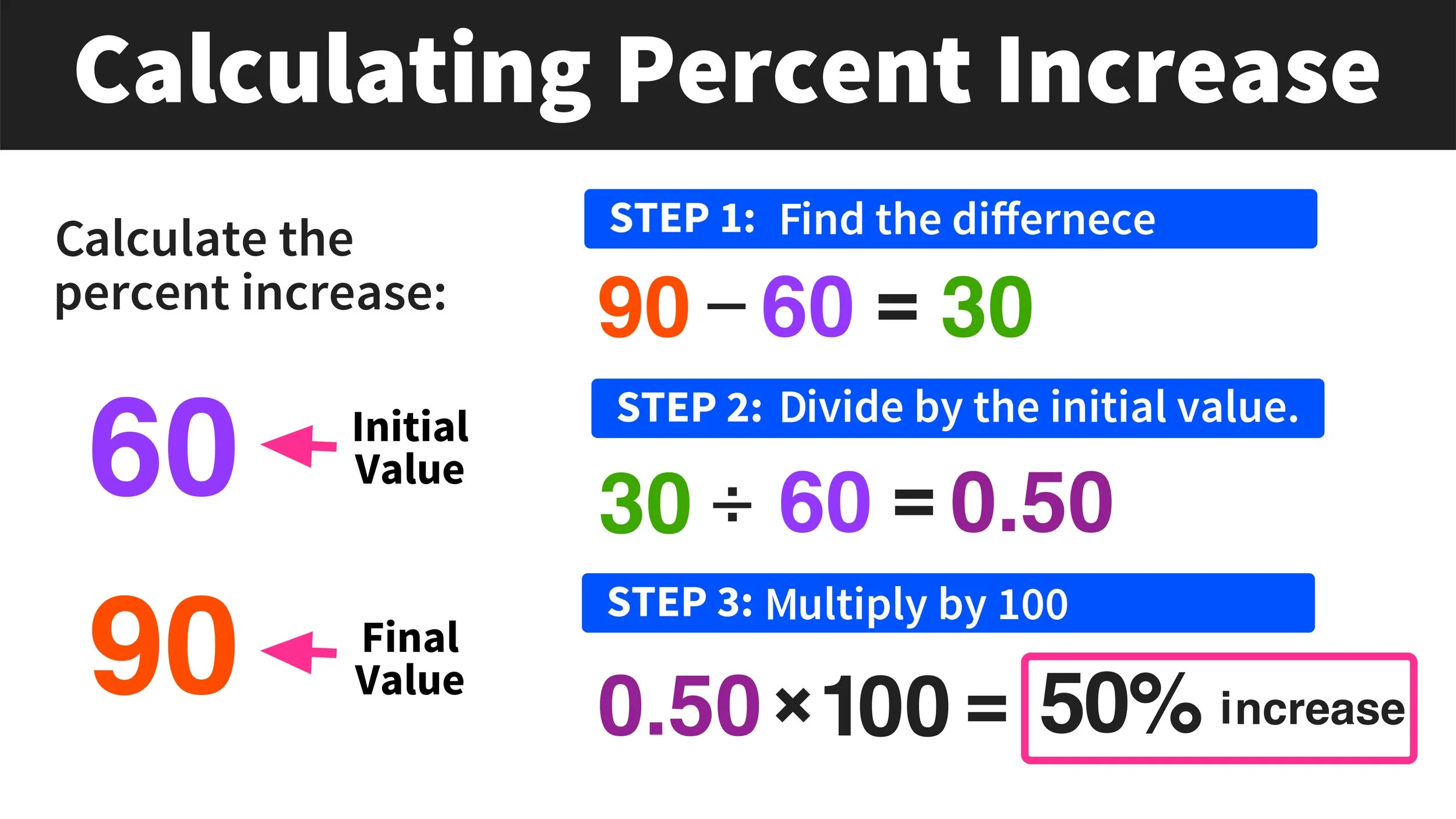
At its core, calculating a percentage involves taking the “part” (the amount of change or the specific portion) and dividing it by the “whole” (the original principal or total value), then multiplying by 100. In a financial context, this is often expressed as:
[(Current Value – Original Value) / Original Value] x 100 = Percentage Change.
This formula is the bedrock of performance tracking. For instance, if you purchased a share of a tech company at $150 and it is now trading at $180, your percentage gain is 20%. Understanding this allows you to compare that 20% gain against other opportunities, such as a bond yielding 5% or an index fund returning 10%, giving you a clear picture of relative performance.
Percentages vs. Basis Points (BPS)
In professional finance, especially regarding interest rates and bond yields, the term “percentage” is often replaced by “basis points” to ensure precision. One basis point is equal to 1/100th of 1 percent (0.01%). Therefore, 100 basis points equal 1%.
When a central bank raises interest rates by “50 basis points,” they are raising the rate by 0.5%. For the savvy investor, being able to toggle between these units is essential. Small shifts in basis points can result in thousands of dollars in difference over the life of a multi-million dollar mortgage or a corporate loan. Figuring percentages at this level of granularity is what separates retail participants from institutional-grade strategists.
Optimizing Your Personal Budget with the Percentage Rule
The most immediate application of percentage calculation is in the construction of a sustainable personal budget. Flat dollar amounts are often misleading because they don’t account for the scalability of expenses as income rises. By using percentages, you create a financial framework that remains robust regardless of whether you earn $50,000 or $500,000 a year.
The 50/30/20 Rule Explained
A hallmark of personal finance strategy is the 50/30/20 rule. This framework dictates that:
- 50% of your income should go to “Needs” (housing, utilities, groceries).
- 30% of your income should go to “Wants” (lifestyle, dining out, hobbies).
- 20% of your income should go to “Financial Goals” (debt repayment, savings, investments).
To figure these percentages, you must first calculate your “net” or take-home pay. If your monthly paycheck is $6,000, you simply multiply $6,000 by 0.50, 0.30, and 0.20 respectively. This gives you clear boundaries: $3,000 for survival, $1,800 for enjoyment, and $1,200 for your future self. If your “Needs” exceed 50%, you are “house poor” or over-leveraged, and the math tells you exactly where you need to cut back.
Calculating Debt-to-Income (DTI) Ratios
Lenders use percentages to determine your creditworthiness, primarily through the Debt-to-Income (DTI) ratio. This is figured by dividing your total monthly debt payments by your gross monthly income.
A DTI of 36% or lower is generally considered healthy. If you are applying for a mortgage, the lender will calculate your potential new payment as a percentage of your income. Knowing how to figure this percentage yourself allows you to “stress test” your finances before a bank does. If your debts consume 45% of your income, you are statistically at a higher risk of default, and understanding this percentage helps you prioritize debt “snowball” or “avalanche” methods to bring that ratio down.
Evaluating Investment Performance
In the realm of investing, percentages are the ultimate yardstick. They allow for an “apples-to-apples” comparison between disparate asset classes, such as real estate, gold, and equities.
Return on Investment (ROI) and Compound Annual Growth Rate (CAGR)
The most common metric is the Return on Investment (ROI). While the basic percentage change formula covers simple gains, serious investors look at the Compound Annual Growth Rate (CAGR). This accounts for the time value of money.
If an investment grows by 50% over five years, it did not grow by 10% each year due to the effects of compounding. Figuring the CAGR requires a more complex formula: [(Ending Value / Beginning Value)^(1 / Number of Years)] – 1. This percentage tells you the “smoothed” annual return, which is vital for comparing a volatile stock to a steady high-yield bond.
Understanding Dividend Yields and Expense Ratios
When choosing where to park your capital, two specific percentages are paramount:
- Dividend Yield: Calculated as (Annual Dividends per Share / Price per Share). A 4% yield on a $100 stock means you get $4 back annually just for owning it.
- Expense Ratio: This is the percentage of your investment that a fund manager takes as a fee. While 1% might sound small, figuring the long-term percentage impact is shocking. A 1% fee over 30 years can eat up nearly 25% of your total potential portfolio value due to lost compounding. Mastering these percentages helps you identify “low-cost” index funds that maximize your take-home wealth.
Navigating Interest Rates and Taxes
Interest and taxes are the two “certainties” of finance, and both are expressed exclusively in percentages. Failing to understand how to figure these can lead to significant wealth erosion.
Simple vs. Compound Interest
Interest can work for you (savings) or against you (credit cards).
- Simple Interest is figured only on the principal: (Principal x Rate x Time).
- Compound Interest is figured on the principal plus the accumulated interest.
The “Rule of 72” is a quick mental percentage tool used by financial advisors to estimate how long it will take for an investment to double. You divide 72 by your annual fixed interest rate. For example, at a 6% return, your money doubles every 12 years (72/6). At 10%, it doubles every 7.2 years. This simple percentage-based mental shortcut is invaluable for long-term retirement planning.
Calculating Marginal Tax Brackets and Effective Tax Rates
Many taxpayers are confused by the difference between their marginal tax bracket and their effective tax rate. If you are in the 24% tax bracket, you do not pay 24% on every dollar you earn. You pay a percentage based on progressive tiers.
Your Effective Tax Rate is the percentage of your total income that actually goes to the government: (Total Tax Paid / Total Taxable Income). Figuring this percentage is crucial for “tax-loss harvesting” and deciding whether to contribute to a traditional 401(k) (pre-tax) or a Roth 401(k) (post-tax). If your effective tax rate is currently low, it may make sense to pay the percentage now rather than later.
Business Finance: Profit Margins and Markup
For entrepreneurs and business owners, percentages are the indicators of operational efficiency and pricing power. Miscalculating these can lead to a business that is growing in revenue but dying in cash flow.
Gross vs. Net Profit Margins
A business must figure its margins to survive.
- Gross Profit Margin: [(Revenue – Cost of Goods Sold) / Revenue] x 100. This measures how efficiently a company produces its core products.
- Net Profit Margin: [(Revenue – All Expenses) / Revenue] x 100. This is the “bottom line” percentage—the amount of each dollar that actually ends up as profit.
A software company might have an 80% gross margin but only a 10% net margin if its marketing costs are too high. By figuring these percentages, a business owner can identify exactly where the “leakage” is occurring in their financial funnel.

Scaling and Growth Rate Projections
Finally, percentages are used to project future success. Investors often look at Month-over-Month (MoM) or Year-over-Year (YoY) growth rates. If a business increased its revenue from $10,000 to $15,000 in a month, that is a 50% MoM growth rate. While the $5,000 increase is small in absolute terms, the 50% rate is what attracts venture capital. In the world of money, the rate of change—the percentage—is often more valuable than the current balance.
In conclusion, the ability to figure percentages is the cornerstone of financial intelligence. It transforms “money” from a source of anxiety into a manageable set of data points. By mastering these calculations—from personal budgeting to complex investment yields—you gain the clarity necessary to build, protect, and scale your wealth in an increasingly complex economic landscape.
aViewFromTheCave is a participant in the Amazon Services LLC Associates Program, an affiliate advertising program designed to provide a means for sites to earn advertising fees by advertising and linking to Amazon.com. Amazon, the Amazon logo, AmazonSupply, and the AmazonSupply logo are trademarks of Amazon.com, Inc. or its affiliates. As an Amazon Associate we earn affiliate commissions from qualifying purchases.