
Navigating the complexities of the tax system is often viewed as a seasonal chore—a bureaucratic hurdle to be cleared once a year. However, in the realm of personal finance and wealth management, “doing your taxes” is far more than a filing obligation; it is a critical component of a robust financial strategy. Effective tax management can mean the difference between stagnant savings and exponential wealth growth. By understanding the mechanics of taxable income, leveraging deductions, and integrating tax planning into your broader investment portfolio, you can transform your relationship with the Internal Revenue Service (IRS) from one of passive compliance to active optimization.
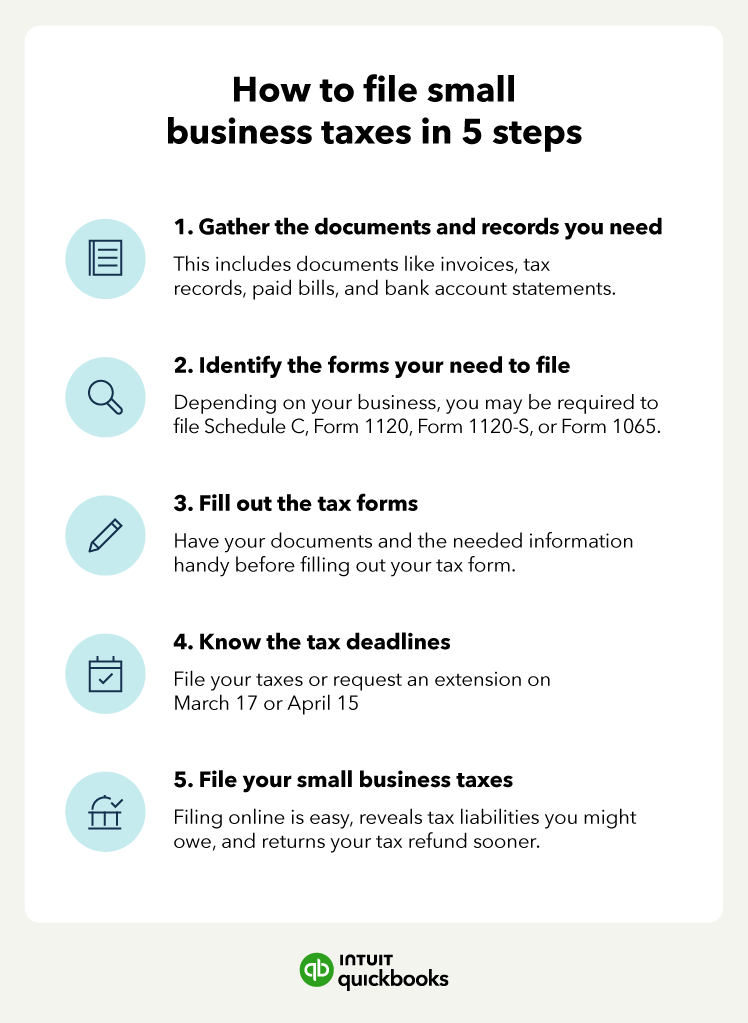
Mastering the Fundamentals of Personal Tax Filing
Before diving into complex strategies, one must master the foundational elements of the tax process. In the world of money management, clarity is the first step toward efficiency. “Doing a tax” starts with a clear understanding of what you owe and why you owe it.
Understanding Taxable Income and Filing Status
The starting point for any tax return is the calculation of your Gross Income. This includes wages, interest, dividends, capital gains, and any other form of earnings. However, not all income is treated equally. Your filing status—Single, Married Filing Jointly, Married Filing Separately, or Head of Household—determines your tax brackets and your standard deduction. Choosing the correct status is vital, as it dictates the baseline from which all your financial calculations will flow. For instance, the “Head of Household” status offers more favorable tax rates and a higher standard deduction than filing as “Single,” provided you meet the specific criteria regarding dependents and household maintenance.
The Documentation Phase: Organizing Your Financial Life
Financial literacy begins with organization. To file an accurate return, you must aggregate various information returns such as W-2s (for employees) and 1099s (for independent contractors or investors). Beyond income statements, you must track “adjustments to income,” often referred to as “above-the-line” deductions. These include student loan interest, educator expenses, and contributions to a Health Savings Account (HSA). Maintaining a digital paper trail throughout the year—using dedicated financial tools or even simple spreadsheets—reduces the “tax season friction” and ensures you don’t leave money on the table due to lost receipts or forgotten expenses.
Navigating Deductions and Credits to Maximize Returns
The most effective way to improve your financial position during tax season is to minimize your tax liability through a deep understanding of deductions and credits. While both reduce the amount you owe, they function in fundamentally different ways.
Standard vs. Itemized Deductions
The IRS provides a “Standard Deduction,” which is a flat dollar amount that reduces your taxable income. For many, this is the most efficient route. However, if your eligible expenses—such as mortgage interest, state and local taxes (SALT) up to certain limits, and significant medical expenses—exceed the standard deduction, “itemizing” becomes the superior financial choice. This decision requires a cost-benefit analysis of your annual spending. In years where you have high charitable contributions or significant out-of-pocket medical costs, itemizing can lead to substantial tax savings, effectively keeping more capital in your investment accounts rather than the government’s coffers.
Leveraging Tax Credits for Long-term Wealth
While deductions lower the income you are taxed on, tax credits are even more powerful because they provide a dollar-for-dollar reduction in your actual tax bill. In the context of personal finance, credits like the Earned Income Tax Credit (EITC), the Child Tax Credit, and the Lifetime Learning Credit are essential tools. Furthermore, for those looking toward the future of energy and infrastructure, “green” tax credits for home energy improvements or electric vehicles represent a convergence of lifestyle choices and financial savvy. Understanding which credits you qualify for is a key pillar of maximizing your annual net worth.
Tax Strategies for the Modern Entrepreneur and Side-Hustler

In the modern economy, more individuals are generating income through side hustles, freelance work, and small businesses. This shift requires a more sophisticated approach to “doing a tax,” as the simplicity of a W-2 is replaced by the complexity of self-employment tax and business expense tracking.
Quarterly Estimated Taxes: Avoiding Penalties
Unlike traditional employees, the self-employed do not have taxes automatically withheld from their paychecks. This places the onus of “pay-as-you-go” taxation on the individual. To avoid underpayment penalties, entrepreneurs must calculate and pay estimated taxes on a quarterly basis. This requires a proactive view of your cash flow. By setting aside roughly 25-30% of every freelance check into a high-yield savings account, you ensure that the money is available when the quarterly deadline arrives, while also earning a small amount of interest in the interim.
Deductible Business Expenses in the Digital Age
For those with a side income, the “Money” niche of tax filing offers a unique advantage: the ability to deduct “ordinary and necessary” business expenses. This includes a portion of your home office, internet costs, software subscriptions, and professional development. The key to successful business filing is the strict separation of personal and professional finances. Using a dedicated business bank account and credit card simplifies this process, allowing you to clearly demonstrate to the IRS that your deductions are legitimate. When handled correctly, business deductions can significantly lower your self-employment tax burden, effectively subsidizing the growth of your venture.
Advanced Financial Tools and Long-term Planning
The goal of tax management should not just be to “finish” your return, but to use the tax code as a tool for long-term wealth accumulation. This involves integrating your tax strategy with your investment philosophy.
Utilizing Tax-Advantaged Retirement Accounts
One of the most potent financial tools available is the tax-advantaged retirement account. Contributions to a traditional 401(k) or IRA (Individual Retirement Account) are often tax-deductible, meaning they reduce your taxable income in the year you contribute. Conversely, a Roth IRA or Roth 401(k) uses after-tax dollars but allows for tax-free withdrawals in retirement. Choosing between these options is a strategic financial move based on your current tax bracket versus your expected bracket in the future. Maximizing these contributions is a cornerstone of “smart money” management, as it allows your investments to grow shielded from the annual drag of capital gains taxes.
The Role of Tax Loss Harvesting in Investment Portfolios
For those with taxable brokerage accounts, “tax loss harvesting” is a sophisticated method to improve overall returns. This involves selling investments that are at a loss to offset capital gains realized from other investments. If your losses exceed your gains, you can even use up to $3,000 of those losses to offset your ordinary income. This strategy requires a careful understanding of the “wash-sale rule,” which prevents you from buying a “substantially identical” security within 30 days. When executed correctly, tax loss harvesting turns an investment “failure” into a strategic “win” for your bottom line.
Ensuring Compliance and Mitigating Audit Risks
Finally, a professional approach to taxes requires a focus on digital security and compliance. As the IRS increases its focus on data analytics, the accuracy of your filing is more important than ever to protect your financial reputation and avoid costly audits.
Common Mistakes and How to Avoid Them
Many taxpayers lose money not because of the law, but because of simple errors. Math mistakes, incorrect Social Security numbers, and failing to sign the return can lead to delays and interest charges. In the digital age, using reputable financial software can mitigate these risks by cross-referencing data and flagging inconsistencies. However, the software is only as good as the data provided. Ensuring that you have accounted for all 1099-INTs from your bank accounts and 1099-DIVs from your investments is crucial for a clean filing.

Seeking Professional Help: When to Hire a CPA
While many individuals can handle their own taxes using online tools, there comes a point in one’s financial journey where professional help is a justified investment. If you own multiple rental properties, have complex international investments, or are managing a rapidly scaling business, a Certified Public Accountant (CPA) or a tax strategist provides value far beyond their fee. They offer “tax planning” rather than just “tax preparation,” helping you structure your finances year-round to minimize your lifetime tax liability. In the world of high-level personal finance, a good tax professional is an asset, not an expense.
In conclusion, “doing a tax” is a multifaceted discipline that sits at the heart of personal finance. By mastering the basics, aggressively pursuing deductions and credits, managing side-income obligations, and thinking long-term through retirement accounts and loss harvesting, you transform the tax code from a burden into a roadmap for financial success. Knowledge is the most valuable currency in the world of money, and in the context of taxes, it is the key to preserving your wealth and ensuring your financial future.
aViewFromTheCave is a participant in the Amazon Services LLC Associates Program, an affiliate advertising program designed to provide a means for sites to earn advertising fees by advertising and linking to Amazon.com. Amazon, the Amazon logo, AmazonSupply, and the AmazonSupply logo are trademarks of Amazon.com, Inc. or its affiliates. As an Amazon Associate we earn affiliate commissions from qualifying purchases.