
In a world increasingly driven by data and financial transactions, understanding percentages is not merely a mathematical skill; it’s a cornerstone of financial literacy. From calculating discounts on your weekly shopping to deciphering interest rates on a mortgage, or tracking the performance of your investments, percentages permeate nearly every aspect of our monetary lives. Yet, for many, the concept remains shrouded in a fog of confusion, leading to missed opportunities, poor financial decisions, and a general feeling of being out of control.
This comprehensive guide aims to demystify percentages, transforming them from an intimidating mathematical hurdle into an empowering financial tool. We’ll break down the core principles of percentage calculation, explore their myriad applications across personal finance, investing, and business, and equip you with the knowledge to navigate your financial landscape with newfound confidence and insight. Whether you’re a budding investor, an aspiring entrepreneur, or simply seeking to make smarter everyday spending choices, mastering percentages is your first step towards true financial fluency.
The Fundamentals of Percentage Calculation
At its heart, a percentage is a way of expressing a number as a fraction of 100. It’s a standardized method to compare parts to a whole, making complex figures easier to understand and relate across different contexts. The term “percent” literally means “per one hundred,” derived from the Latin “per centum.”
What is a Percentage?
Imagine you have a pie cut into 100 slices. If you eat 25 slices, you’ve eaten 25 percent of the pie. If a survey finds that 60 out of every 100 people prefer a certain product, then 60 percent of people prefer that product. It’s a universal language for ratios and proportions, simplifying comparisons by always setting the ‘whole’ as 100. This standardization is incredibly powerful because it allows us to quickly grasp magnitudes and relationships, whether we’re talking about a small fraction of a budget or a significant portion of market share. Without this common denominator, comparing disparate fractions (e.g., 3/15 vs. 7/35) would be far more cumbersome.
The Basic Formula: Part / Whole × 100
The core formula for calculating any percentage is remarkably simple:
Percentage = (Part / Whole) × 100
Let’s break down each component:
- Part: This is the specific amount or quantity you are interested in. It represents a portion of the total.
- Whole: This is the total amount, the entire quantity, or the base value against which the ‘part’ is being compared.
- 100: Multiplying by 100 converts the resulting decimal or fraction into a percentage format (e.g., 0.25 becomes 25%).
Example: If you earned $15 in interest on a $500 investment, what percentage is the interest of your initial investment?
- Part = $15 (the interest earned)
- Whole = $500 (the initial investment)
- Percentage = ($15 / $500) × 100 = 0.03 × 100 = 3%
So, your interest earned is 3% of your initial investment.
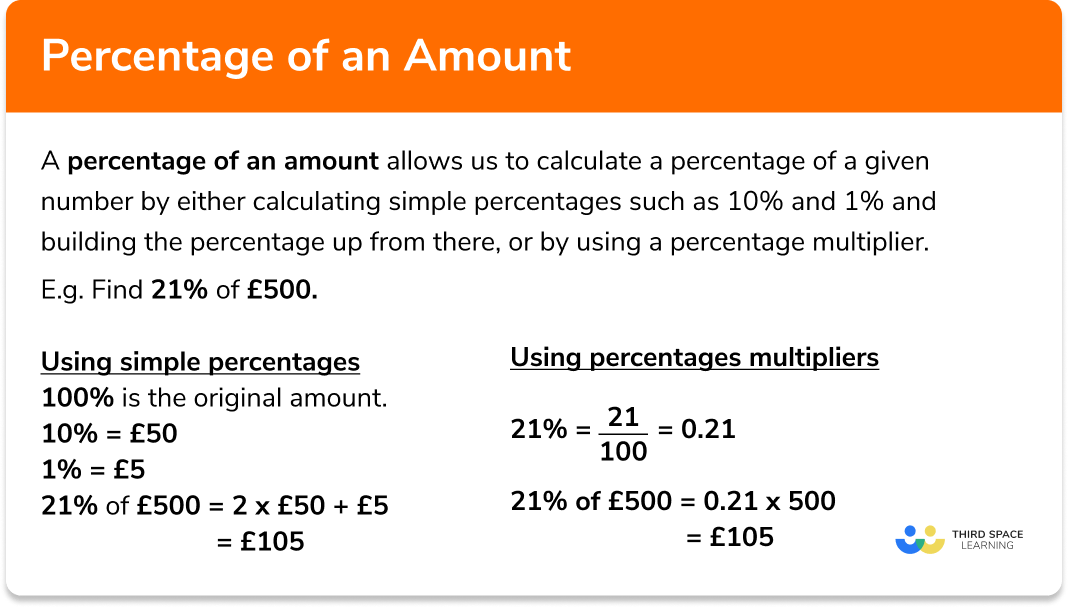
Another common use is finding a percentage of a number. For example, to find 20% of $500:
- Convert the percentage to a decimal: 20% = 20/100 = 0.20
- Multiply the decimal by the whole: 0.20 × $500 = $100
This means 20% of $500 is $100. These two fundamental calculations form the bedrock for almost all percentage-related financial computations.
Practical Tools for Calculation
While the formulas are simple, mental arithmetic isn’t always feasible, especially with complex numbers. Fortunately, a range of tools can assist:
- Calculators: Standard scientific or financial calculators are invaluable. Most have a dedicated ‘%’ button, or you can simply perform the division and multiplication manually.
- Spreadsheets (Excel, Google Sheets): These are perhaps the most powerful tools for financial calculations involving percentages. You can input formulas (e.g.,
= (A2/B2)*100) and apply them across large datasets, making it easy to track budgets, investment returns, or sales figures. They also offer built-in percentage formatting. - Online Percentage Calculators: Numerous websites offer free, easy-to-use percentage calculators for quick computations like “what is X percent of Y,” “X is what percent of Y,” or “percentage increase/decrease.”
- Financial Calculators (Apps/Dedicated Devices): For more advanced financial planning, apps on your smartphone or dedicated financial calculators (like the HP 12c or BA II Plus) can quickly compute loan payments, compound interest, and investment growth, all of which heavily rely on percentage calculations.
Familiarity with at least one of these tools is crucial for efficient and accurate financial management, allowing you to focus on the interpretation rather than the manual computation.
Everyday Financial Applications of Percentages
Percentages are not just abstract numbers; they are practical tools that empower us to make smarter decisions in our daily financial lives. Understanding their application in common scenarios can save you money, help you budget effectively, and ensure you’re getting the best value.
Navigating Discounts and Sales
One of the most frequent encounters with percentages is during shopping. Sales, promotions, and clearance events often advertise discounts as percentages off the original price.
Example: A shirt originally priced at $50 is on sale for 30% off.
- Discount amount = 30% of $50 = 0.30 × $50 = $15
- Sale price = Original price – Discount amount = $50 – $15 = $35
Understanding this calculation prevents overspending and allows you to quickly compare offers. Is “20% off all items” better than “buy one get one 50% off” when shopping for two items of equal value? Knowing how to convert these into actual dollar amounts makes the choice clear. Furthermore, some stores offer additional percentages off the sale price, requiring you to calculate a discount on a discount, a common point of confusion that a solid understanding of the base ‘whole’ can resolve.
Understanding Interest Rates (Loans, Savings)
Interest rates are arguably one of the most critical percentage applications in personal finance, affecting everything from your savings account growth to the cost of your debt.
- Savings Accounts & Investments: When you deposit money into a savings account, the bank pays you interest, typically expressed as an Annual Percentage Yield (APY). This is the percentage return your money earns over a year.
Example: If you have $1,000 in a savings account with a 2% APY, you’ll earn $20 in interest over a year ($1,000 × 0.02 = $20). Over time, compound interest (interest on interest) can significantly boost your wealth, making even small percentage differences impactful. - Loans & Credit Cards: Conversely, when you borrow money, you pay interest to the lender. This is often expressed as an Annual Percentage Rate (APR). High APRs on credit cards, for instance, can quickly escalate debt.
Example: A credit card balance of $500 with an 18% APR. If you carry that balance for a month, the interest charged might be calculated as 18%/12 = 1.5% for that month. So, $500 × 0.015 = $7.50 in interest for the month. This understanding is vital for managing debt and minimizing interest payments.
Calculating Tips and Service Charges

In many service industries, tipping is customary, and it’s typically calculated as a percentage of the total bill. Service charges, too, are often a fixed percentage.
Example: Your restaurant bill is $75, and you want to leave a 15% tip.
- Tip amount = 15% of $75 = 0.15 × $75 = $11.25
- Total amount paid = $75 + $11.25 = $86.25
Quickly estimating percentages in your head (e.g., finding 10% by moving the decimal one place, then adding half of that for 15%) can be incredibly useful for everyday transactions, ensuring fair compensation without overpaying. Some services might also include a mandatory service charge, which you should factor in before calculating an additional tip.
Percentages in Personal Finance and Investing
Moving beyond daily transactions, percentages are indispensable for strategic financial planning, budgeting, and wealth creation. They provide a standardized way to measure performance, allocate resources, and assess financial health.
Budgeting and Expense Analysis
Effective budgeting relies heavily on percentages to understand where your money is going and to set realistic spending goals.
- The 50/30/20 Rule: A popular budgeting guideline suggests allocating:
- 50% of your after-tax income to needs (housing, utilities, groceries)
- 30% to wants (entertainment, dining out, hobbies)
- 20% to savings and debt repayment
Calculating these percentages of your income helps you quickly assess if your spending aligns with your financial goals and identify areas for adjustment.
- Expense Breakdown: Analyzing your monthly expenses as percentages of your total income or total expenditure reveals your spending patterns. If 40% of your income goes to housing, and another 25% to food, you might quickly realize you have limited funds for savings or other priorities. This percentage-based insight is far more impactful than just seeing raw dollar figures, as it contextualizes the spending relative to your overall financial picture.
Tracking Investment Returns and Portfolio Allocation
For investors, percentages are the language of performance and strategy.
- Return on Investment (ROI): This is a key metric for evaluating investment performance.
ROI = ((Current Value – Initial Investment) / Initial Investment) × 100
Example: You invested $10,000 in a stock, and it’s now worth $12,000.
ROI = (($12,000 – $10,000) / $10,000) × 100 = ($2,000 / $10,000) × 100 = 0.20 × 100 = 20%
This tells you your investment has grown by 20%. Comparing ROIs across different investments, regardless of their initial cost, allows for an apples-to-apples comparison of their profitability. - Portfolio Allocation: A diversified investment portfolio spreads risk by allocating funds across different asset classes (stocks, bonds, real estate). This allocation is always expressed in percentages.
Example: A common aggressive portfolio might be 70% stocks, 20% bonds, and 10% real estate. As asset values fluctuate, these percentages change. Regularly rebalancing your portfolio means adjusting your holdings to bring these percentages back to your target allocation, a crucial step in maintaining your desired risk profile.
Understanding Inflation and Purchasing Power
Inflation, the rate at which the general level of prices for goods and services is rising, is expressed as a percentage.
Example: If the annual inflation rate is 3%, it means that on average, goods and services cost 3% more than they did a year ago.
- Impact on Savings: A 3% inflation rate means your $100 today will only buy about $97 worth of goods next year. This erosion of purchasing power is why it’s crucial for your investments to grow at a rate higher than inflation.
- Real Returns: Investors often calculate “real returns,” which is their nominal return minus the inflation rate. If your investment grew by 5% but inflation was 3%, your real return (the actual increase in your purchasing power) was only 2%. Understanding this percentage difference is vital for long-term financial planning and ensuring your money maintains or increases its value over time.
Percentages in Business and Income Generation
For entrepreneurs, side hustlers, and anyone engaging in income-generating activities, percentages are the language of profitability, growth, and compensation. They are essential for strategic decision-making and performance evaluation.
Profit Margins and Revenue Growth
In business, understanding profit as a percentage of revenue is far more insightful than just looking at dollar amounts.
- Gross Profit Margin: This tells you what percentage of your revenue is left after covering the direct costs of producing goods or services (Cost of Goods Sold – COGS).
Gross Profit Margin = ((Revenue – COGS) / Revenue) × 100
A higher gross profit margin indicates more efficient production. - Net Profit Margin: This is the ultimate measure of a company’s profitability, showing what percentage of revenue is left after all expenses (COGS, operating expenses, taxes) have been deducted.
Net Profit Margin = (Net Income / Revenue) × 100
Comparing net profit margins across different businesses or industries helps assess financial health and operational efficiency. - Revenue Growth: Businesses constantly track their revenue growth, typically expressed as a percentage increase year-over-year (YOY) or quarter-over-quarter (QoQ).
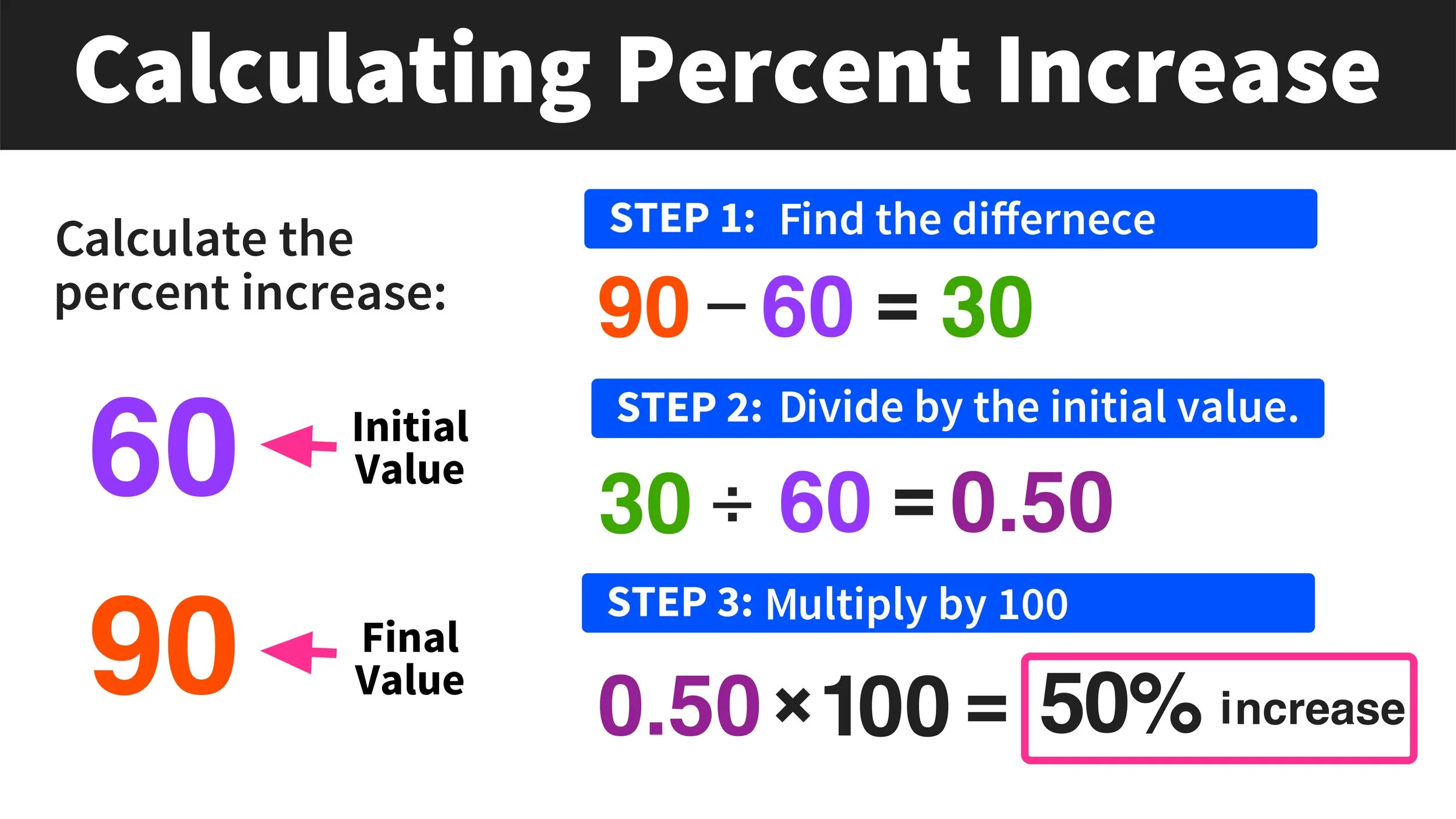
Percentage Growth = ((Current Period Revenue – Previous Period Revenue) / Previous Period Revenue) × 100
This metric is crucial for gauging a company’s expansion, market penetration, and overall trajectory.
Commission Structures and Side Hustle Earnings
Many sales roles, online income opportunities, and side hustles involve compensation based on percentages.
- Sales Commissions: Sales professionals often earn a percentage of the sales they generate.
Example: If you sell a product for $1,000 and earn a 10% commission, you receive $100. Understanding your commission rate allows you to project potential earnings and motivate sales efforts. - Affiliate Marketing: Many online income streams, such as affiliate marketing, pay a percentage of each sale made through a unique referral link.
Example: If an e-commerce platform offers a 5% commission on sales, and you drive $500 worth of sales, you earn $25. Scaling this up, managing various commission rates, and tracking conversion percentages are fundamental to maximizing online income. - Gig Economy: Platforms like Uber or Airbnb take a percentage of the earnings from their drivers or hosts. Knowing these percentages helps gig workers calculate their net income and evaluate the profitability of their time and effort.
Tax Calculations and Deductions
Taxes are an unavoidable part of earning income, and they are almost universally calculated using percentages.
- Income Tax Brackets: Most countries use progressive income tax systems, where different portions of your income are taxed at different percentage rates (tax brackets).
Example: If your income falls into the 10% bracket for the first $10,000 and the 12% bracket for income above that, you need to calculate the percentage for each segment to determine your total tax liability. This isn’t a flat percentage on your total income, but a marginal one, requiring careful calculation. - Sales Tax: When you purchase goods and services, a sales tax (a percentage of the purchase price) is often added. Knowing the local sales tax rate helps you budget for your spending.
- Tax Deductions and Credits: Certain expenses or situations can lead to tax deductions or credits, which reduce your taxable income or your actual tax bill. Understanding how these reduce your overall tax percentage can lead to significant savings. For instance, a tax credit might reduce your tax liability by a certain percentage, rather than just a dollar amount.
Conclusion: Empowering Your Financial Journey
Computing percentages might seem like a basic mathematical task, but its implications for your financial life are profound. From the simplest daily transactions to complex investment strategies and business analyses, percentages provide a universal, standardized language that clarifies relationships, quantifies impacts, and enables informed decision-making.
By mastering the fundamental formula—Part / Whole × 100—and understanding its diverse applications, you gain the ability to:
- Accurately assess sales and discounts, saving money.
- Decipher interest rates on loans and savings, optimizing your debt and growth.
- Craft realistic budgets and analyze your spending patterns.
- Evaluate investment performance and strategically allocate your portfolio.
- Understand profitability and compensation in business and side hustles.
- Navigate the complexities of tax obligations.
In essence, a firm grasp of percentages transforms you from a passive observer of your finances into an active, empowered participant. It allows you to ask critical questions, challenge assumptions, and make choices that align with your financial goals. So, embrace the power of percentages – they are not just numbers, but key tools on your journey to financial fluency and enduring prosperity.
aViewFromTheCave is a participant in the Amazon Services LLC Associates Program, an affiliate advertising program designed to provide a means for sites to earn advertising fees by advertising and linking to Amazon.com. Amazon, the Amazon logo, AmazonSupply, and the AmazonSupply logo are trademarks of Amazon.com, Inc. or its affiliates. As an Amazon Associate we earn affiliate commissions from qualifying purchases.