
Managing your financial portfolio often requires making the difficult decision to part ways with a long-standing banking institution. Whether you are moving to a high-yield savings account, switching to a local credit union for better customer service, or consolidating your assets into a single digital-first platform, closing a bank account is a significant financial move. In the United States, the process is more than just a simple “stop payment” or a zeroed-out balance; it is a meticulous procedure that, if handled incorrectly, can lead to unexpected fees, damaged credit, or administrative headaches.
This guide provides a professional roadmap for closing your U.S. bank account while maintaining your financial integrity and ensuring a seamless transition to your next institution.
1. The Pre-Closure Audit: Preparing Your Financial Infrastructure
Before you notify your bank of your intent to leave, you must ensure that your financial life is not disrupted. Closing an account prematurely is a common mistake that leads to bounced checks and missed bill payments.
Selecting and Funding Your New Account
The first step in closing an account is having its replacement ready. You should never close your primary checking account until your new one is fully functional. This includes receiving your new debit card, setting up online banking, and ensuring the account is funded with at least two months’ worth of expenses. By overlapping the two accounts for 30 to 60 days, you create a “buffer period” that allows you to catch any stray transactions you might have overlooked.
Auditing Direct Deposits and Automatic Payments
The most complex part of switching banks is redirecting the “pipes” of your cash flow. You must perform a deep audit of your last 12 months of bank statements. Look specifically for:
- Direct Deposits: Notify your employer’s HR or payroll department. Keep in mind that payroll changes often take one to two billing cycles to synchronize.
- Recurring Subscriptions: From streaming services to gym memberships, ensure every merchant has your new card details.
- Automated Clearing House (ACH) Transfers: This includes utility bills, insurance premiums, and mortgage or rent payments.
Managing the “Vampire” Subscriptions
“Vampire” subscriptions are those small, forgotten monthly charges that can cause an account to go into the negative after you think you’ve emptied it. If a $10 subscription hits an account with a $0 balance, the bank may cover the payment but charge you a $35 overdraft fee. Worse, they might “re-open” the account you thought was closed to process the transaction, leading to a spiral of fees.
2. Navigating the Closure Process: Execution and Communication
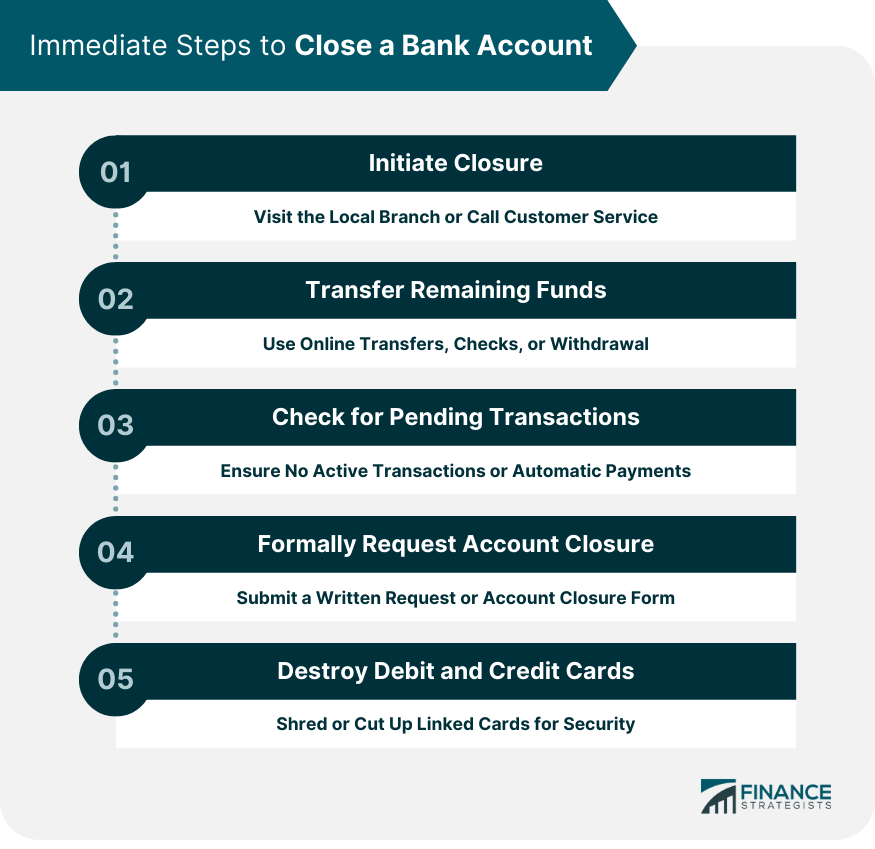
Once your new account is operational and your old account has been cleared of all scheduled activity, it is time to execute the closure. U.S. banks have different protocols for this, and understanding your options is key to a smooth exit.
Choosing Your Method: In-Person vs. Remote
If your bank has physical branches, visiting in person is often the most efficient method. It allows you to speak with a personal banker, sign necessary documents on the spot, and receive a printed receipt confirming the closure.
However, if you are using an online-only bank or have moved away from a branch location, you will need to close the account via:
- Phone: Call the customer service department. Be prepared for a “retention pitch” where the representative may offer to waive fees or increase your interest rate to keep you. Stay firm but professional.
- Secure Message/Online Portal: Some modern banks allow you to close accounts through their app.
- Written Request: In some cases, especially with older institutions, a notarized letter sent via certified mail is the most secure way to ensure your request is documented.
Addressing the “Early Account Closure” Fee
Many people are unaware that banks often charge an “early account closure fee” if the account has been open for less than 90 or 180 days. These fees can range from $25 to $50. If you are closing a relatively new account, check the fee schedule in your original account agreement. If you are closing the account due to poor service or a change in terms, you may be able to negotiate a waiver of this fee.
Calculating the Final Balance and Interest
If your account is interest-bearing (like a savings account or a premium checking account), ensure you account for “accrued interest.” This is interest you’ve earned during the current month that hasn’t been credited to your balance yet. Ask the banker to calculate the “payoff amount” including this interest so that you can transfer every cent out of the institution.
3. Mitigating Risks: Protecting Your Credit and Reputation
Closing a bank account does not usually impact your credit score directly, as deposit accounts are not reported to credit bureaus like the way loans or credit cards are. However, the way you close it can have long-lasting effects on your financial reputation.
Understanding ChexSystems
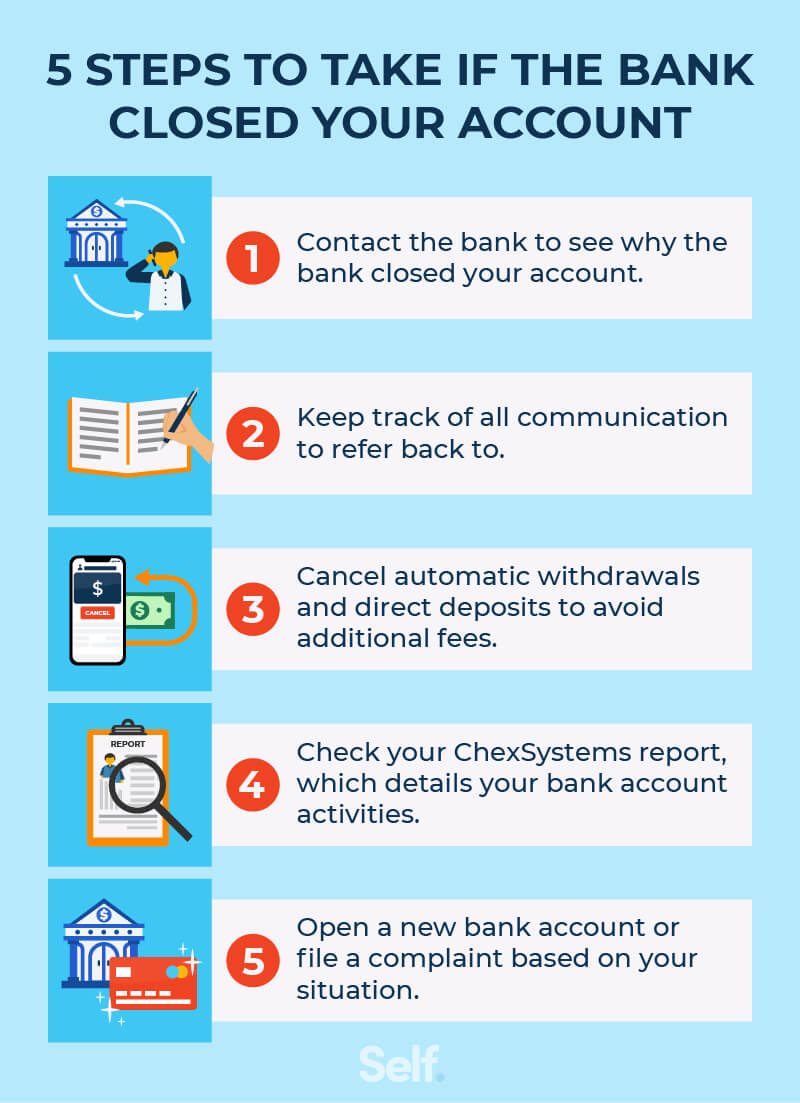
While credit cards use FICO scores, banks use a system called ChexSystems. This is a consumer reporting agency that tracks “mishandled” checking and savings accounts. If you close an account with a negative balance—even if it’s just a few dollars in unpaid fees—the bank may report you to ChexSystems. A negative report here can make it nearly impossible to open a bank account at a different institution for up to five years. Always ensure your balance is at zero or positive before the final closure.
Avoiding the “Zombie Account” Phenomenon
A “zombie account” occurs when a bank account is closed, but a stray automated payment or deposit “wakes it up.” Many U.S. banks have policies that automatically re-open a closed account if an ACH transaction is attempted. To prevent this, monitor your mail and email for at least three months after closure. If you receive a statement for a closed account, contact the bank immediately to resolve the transaction and re-close the account.
Dealing with Joint Accounts and Power of Attorney
If you are closing a joint account, most banks require the consent or signature of both parties. Similarly, if you are acting as an executor or have Power of Attorney for another individual, you will need to provide the legal documentation (such as a death certificate or the POA agreement) to the bank’s legal department before they will authorize the closure and the disbursement of funds.
4. Post-Closure Protocol: Finalizing Your Financial Shift
The process isn’t over just because the banker said “all set.” Proper follow-up is essential to protect your identity and ensure your records are accurate for tax and legal purposes.
Securing Written Confirmation
Never take a verbal confirmation as final. Always request a formal “Account Closure Letter.” This document should state the date of closure, the final balance (ideally $0.00), and a statement that the account was closed in good standing. This letter is your primary evidence if the bank later claims you owe fees or if a “zombie” transaction occurs. Store this letter with your permanent financial records or digital vault.
Secure Disposal of Banking Materials
Once the account is closed, your old debit cards, unused checks, and deposit slips are liabilities. They contain your old account number and routing number, which can be exploited by identity thieves.
- Debit Cards: Use a cross-cut shredder or cut through the chip and the magnetic stripe.
- Checks: Shred all remaining checks. Do not simply throw them in the trash.
- Old Statements: While you should keep digital copies of the last seven years of statements for tax purposes, physical copies should be shredded once digitized.
Updating Your Investment and Side Hustle Links
For those with diversified income streams, remember to update your “linked accounts” on investment platforms (like Vanguard or Charles Schwab), payment processors (like PayPal or Stripe), and side hustle apps (like Uber, Airbnb, or Etsy). Forgetting to update these links can result in your earnings being sent to a closed account, which can take weeks for the banking system to “reject” and return to the sender, significantly delaying your access to your money.

Conclusion: Empowering Your Financial Future
Closing a U.S. bank account is a powerful act of financial agency. It signals that you are actively managing your wealth and seeking the best possible environment for your capital to grow. By following a structured approach—conducting a pre-closure audit, executing the closure through the proper channels, mitigating ChexSystems risks, and securing final documentation—you transform a potentially stressful administrative task into a strategic financial win.
In the modern era of finance, your loyalty should lie with your financial goals, not a specific institution. Whether you are moving toward higher APYs, lower fees, or better digital tools, a clean exit from your old bank ensures that your transition to a new financial partner is a foundation for future success rather than a source of lingering complications.
aViewFromTheCave is a participant in the Amazon Services LLC Associates Program, an affiliate advertising program designed to provide a means for sites to earn advertising fees by advertising and linking to Amazon.com. Amazon, the Amazon logo, AmazonSupply, and the AmazonSupply logo are trademarks of Amazon.com, Inc. or its affiliates. As an Amazon Associate we earn affiliate commissions from qualifying purchases.