
Social Security is the cornerstone of retirement planning for millions of Americans, yet the methodology behind how benefits are calculated remains a mystery to many. It is not a simple flat-rate pension; rather, it is a sophisticated financial system based on your lifetime earnings, the age at which you claim, and your contribution history. Understanding the math behind your monthly check is essential for making informed decisions about when to stop working and how to supplement your income through private investments or side hustles.
To effectively plan your financial future, you must look beyond the surface-level estimates. By mastering the variables—from “bend points” to “indexed earnings”—you can strategically position yourself to receive the maximum benefit allowed under the law.

1. The Core Formula: From Lifetime Earnings to the Primary Insurance Amount (PIA)
The calculation of Social Security benefits begins with your entire work history, but it doesn’t just average your raw salary. The Social Security Administration (SSA) uses a multi-step process to ensure that your benefits reflect the relative value of your earnings over time.
Understanding Average Indexed Monthly Earnings (AIME)
The first step in the calculation is determining your Average Indexed Monthly Earnings (AIME). The SSA looks at your top 35 years of earnings. If you have worked fewer than 35 years, the remaining years are averaged in as zeros, which can significantly drag down your total benefit.
To account for inflation and wage growth, the SSA “indexes” your past earnings. This means your salary from 1990 is multiplied by a factor to make it comparable to today’s dollar value. Once your earnings are indexed, the SSA takes the 35 highest-earning years, adds them together, and divides by 420 (the number of months in 35 years). The resulting figure is your AIME.
The Role of Bend Points in the PIA
Once the AIME is established, the SSA applies a formula to determine your Primary Insurance Amount (PIA). The PIA is the base amount you would receive if you retired exactly at your Full Retirement Age (FRA).
The formula is progressive, meaning it replaces a higher percentage of income for lower-earning workers than for higher-earning workers. This is achieved through “bend points.” For example, in a typical year, the SSA might take 90% of the first $1,100 of your AIME, 32% of the amount between $1,100 and $6,700, and 15% of any amount above that. These thresholds (the “bends”) are adjusted annually to keep pace with national wage trends.
The Maximum Taxable Earnings Limit
It is important to note that Social Security calculations only account for income up to the annual taxable maximum. Any income earned above this threshold—which changes annually based on the National Average Wage Index—is not taxed for Social Security and, consequently, does not increase your future benefit. For high earners, this creates a “ceiling” on how much they can expect to receive, emphasizing the need for additional private investment vehicles.
2. The Impact of Timing: Full Retirement Age vs. Early and Delayed Filing
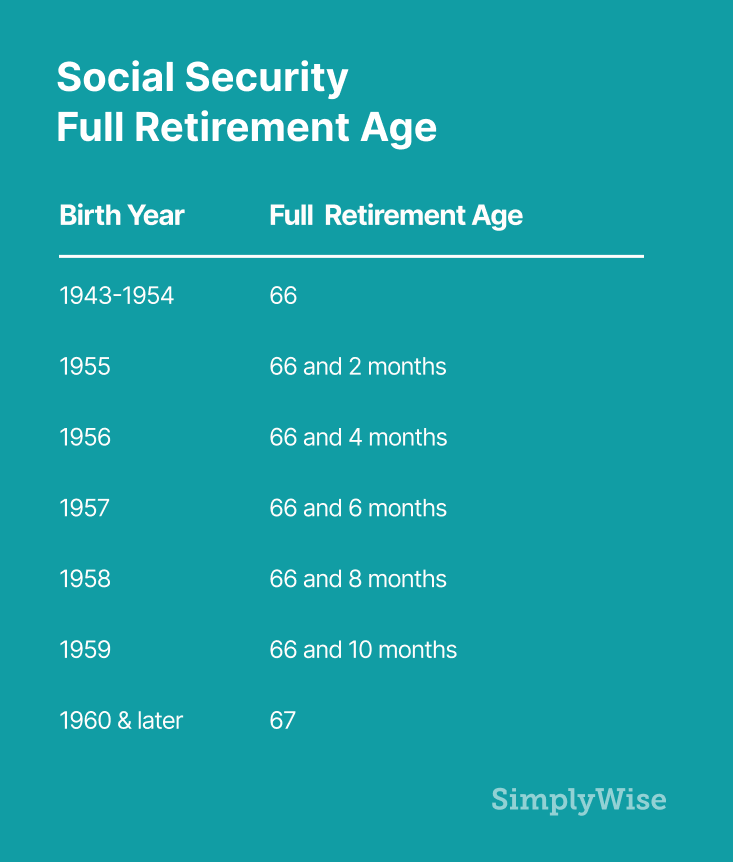
While the PIA represents your base benefit, the actual amount you receive depends heavily on when you choose to start collecting. The “Full Retirement Age” (FRA) is no longer 65 for most workers; for those born in 1960 or later, the FRA is 67.
The Cost of Early Filing at Age 62
You can begin collecting Social Security as early as age 62, but doing so comes at a permanent financial cost. If you claim at 62 when your FRA is 67, your monthly benefit is reduced by approximately 30%. This reduction is calculated month-by-month; for the first 36 months of early retirement, the benefit is reduced by 5/9 of 1% per month. If you retire even earlier, the reduction drops to 5/12 of 1% per month.
While taking the money early provides immediate cash flow, it significantly lowers your “break-even” point—the age at which the total sum of higher delayed payments surpasses the total sum of smaller early payments.
The Power of Delayed Retirement Credits
On the opposite end of the spectrum, you can choose to delay your benefits past your FRA. For every year you wait beyond your Full Retirement Age (up to age 70), your benefit increases by 8% per year. This is known as a Delayed Retirement Credit.
Between age 67 and age 70, a retiree can increase their monthly check by 24% through patience alone. In the context of personal finance, a guaranteed 8% annual return is nearly impossible to find in any other low-risk investment. For those in good health with other assets to draw from, delaying benefits is often the most effective way to “index” their retirement against the risks of longevity and inflation.
Calculating the Break-Even Point
Financial advisors often use a “break-even analysis” to help clients decide when to file. If you take benefits at 62, you get a five-year head start on payments. However, the larger checks starting at age 70 will eventually catch up. Usually, the break-even age is around 80 to 83. If you expect to live past your early 80s based on family history and health, waiting is mathematically superior.
3. Workplace Dynamics: How Continuing to Work Affects Your Calculation
Many people believe that once they reach 62, they must stop working to collect Social Security. This is a misconception, but working while receiving benefits can trigger certain adjustments and tax implications that change the net value of your check.
The Retirement Earnings Test
If you are under your Full Retirement Age and continue to work while receiving benefits, the SSA applies an “Earnings Test.” If your income exceeds a certain annual limit (which is adjusted annually), the SSA will temporarily withhold a portion of your benefits.
Specifically, if you are under the FRA for the entire year, $1 is deducted for every $2 you earn above the limit. In the year you reach your FRA, the deduction drops to $1 for every $3 earned above a higher limit. It is crucial to understand that these withheld benefits are not “lost” forever. Once you reach your FRA, the SSA recalculates your monthly benefit upward to account for the months that were withheld, effectively giving you a “raise” for the rest of your life.
The Impact of “Zero Years” and Replacing Income
Because the Social Security calculation is based on your top 35 years of work, continuing to work can actually increase your benefit even after you have reached retirement age. If you are currently in a high-earning phase of your career, each new year of high earnings can “bump out” a lower-earning year from your early 20s. This recalculation happens automatically every year, ensuring that your benefit reflects your most productive financial years.
Self-Employment and Social Security Math
For entrepreneurs and side-hustlers, calculating Social Security requires extra diligence. Since self-employed individuals pay both the employer and employee portions of the Social Security tax (totaling 12.4%), they must ensure they are reporting net earnings accurately. While maximizing deductions reduces your current tax bill, it also lowers your AIME, which can result in a smaller Social Security check decades down the line. Balancing current tax savings with future benefit totals is a key component of business finance strategy.
4. Taxation and Deductions: Calculating Your “Net” Benefit
The number you see on your Social Security statement is rarely the exact amount that lands in your bank account. To calculate your true spendable income, you must factor in federal taxes and Medicare premiums.
Combined Income and Benefit Taxation
Social Security benefits are taxable if your “combined income” exceeds specific thresholds. Combined income is calculated as your Adjusted Gross Income (AGI) + Non-taxable Interest + 50% of your Social Security benefits.
- Individual Filers: If your combined income is between $25,000 and $34,000, you may pay income tax on up to 50% of your benefits. If it’s over $34,000, up to 85% of your benefits may be taxable.
- Joint Filers: For couples, the thresholds are $32,000 to $44,000 (up to 50% taxable) and over $44,000 (up to 85% taxable).
Understanding these tiers is vital for tax-efficient withdrawal strategies. Sometimes, drawing more from a Roth IRA (which is tax-free) and less from a traditional 401(k) can keep your combined income below these thresholds, preserving more of your Social Security check.
Medicare Part B Premiums
For most retirees, Medicare Part B premiums are deducted directly from their Social Security checks. This is an “off-the-top” deduction that many fail to account for when budgeting. High-income earners may also be subject to the Income Related Monthly Adjustment Amount (IRMAA), which increases Part B and Part D premiums based on tax returns from two years prior. Calculating these deductions is essential for an accurate view of your monthly cash flow.
5. Maximizing the Strategy: Spousal and Survivor Benefits
Calculating Social Security is not just an individual endeavor; for married couples, it is a joint financial strategy. The SSA provides provisions that allow one spouse to benefit from the other’s higher earnings history.
The 50% Spousal Benefit Rule
A spouse is entitled to up to 50% of the higher earner’s Primary Insurance Amount, provided they are at least at their own Full Retirement Age. If your own work history results in a $1,000 benefit, but your spouse’s PIA is $3,000, you can opt to receive $1,500 (half of theirs) instead of your own. This does not reduce the higher earner’s benefit.
Survivor Benefits and Long-Term Protection
One of the most important reasons for the higher-earning spouse to delay benefits until age 70 is to “lock in” a higher survivor benefit. When one spouse passes away, the survivor has the right to switch to the higher of the two checks. By maximizing the larger benefit through delayed filing, the higher earner provides a form of life insurance for the surviving spouse, ensuring they are not left with a significantly reduced household income in their later years.

Utilizing Online Tools for Precision
While manual calculations provide a solid foundation, the best way to get a precise figure is to use the tools provided at SSA.gov. By creating a “my Social Security” account, you can access your actual earnings record and see real-time estimates based on different retirement ages. However, for complex scenarios involving pensions from “non-covered” work (like some government jobs) or complex divorce settlements, consulting with a financial planner who specializes in Social Security optimization is highly recommended.
In conclusion, calculating Social Security is an exercise in both math and strategy. By understanding how your AIME is formed, how bend points favor various income levels, and how timing affects your lifetime payout, you can turn a complex government program into a powerful, predictable component of your wealth management plan.
aViewFromTheCave is a participant in the Amazon Services LLC Associates Program, an affiliate advertising program designed to provide a means for sites to earn advertising fees by advertising and linking to Amazon.com. Amazon, the Amazon logo, AmazonSupply, and the AmazonSupply logo are trademarks of Amazon.com, Inc. or its affiliates. As an Amazon Associate we earn affiliate commissions from qualifying purchases.